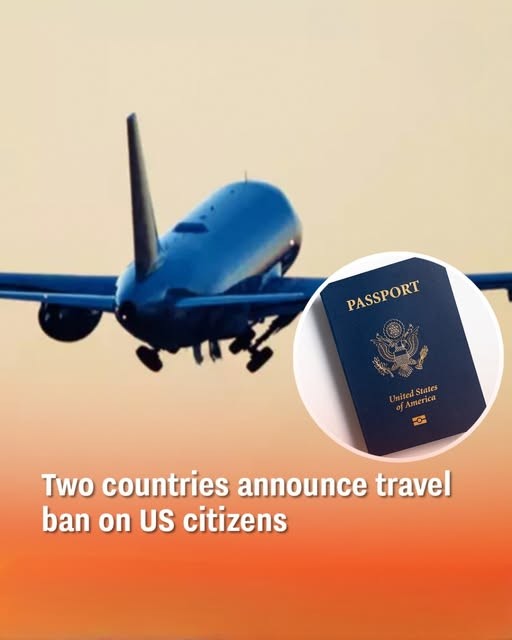
Upon his return to the U.S. presidency, Donald Trump rapidly reenergized his focus on immigration control and border enforcement, reinstating these issues as primary agenda items for his administration. Early in his renewed term, Trump’s government announced a major expansion of the travel ban policy, extending coverage to a total of 39 countries—a move marking one of the largest restrictions on international mobility in recent U.S. history.
The administration has positioned this renewed push for travel bans as a national security measure, arguing that stricter control on entry protects the United States against potential threats. Supporters claim that such policies incentivize foreign governments to improve their security protocols and border controls, while critics argue they risk straining international relations, inflicting economic harm, and unjustly impacting civilians who do not pose security risks.
Scope of the Expanded Travel Bans
The latest policy iteration targets a broad range of countries with full or partial travel bans. Comprehensive visa suspensions now affect citizens from Afghanistan, Burma (Myanmar), Chad, Congo, Eritrea, Haiti, Iran, Libya, Somalia, Sudan, Yemen, and Syria, among others. For individuals from these nations, nearly all categories of U.S. visas are suspended, with only rare exceptions permitted under highly specific circumstances.
Some other countries—including Angola, Nigeria, Tanzania, and Zambia—face partial bans impacting select visa categories such as business, immigrant, or diversity visas. According to U.S. officials, these distinctions are determined by each country’s level of document security, effectiveness at sharing security-related information with U.S. authorities, and overall compliance with American immigration standards. The administration contends that these standards are essential to maintaining secure and manageable entry into the U.S.
However, critics—among them foreign governments, legal experts, and advocacy organizations—contend that the criteria behind these bans lack clarity and transparency. They argue that affected nations often do not receive sufficient detail on how to address identified deficiencies, making compliance and future removal from the list a complex challenge.
Policy Justification and Critiques
The Trump administration has justified the expanded travel bans on the basis of national security. Officials cite intelligence reports and security reviews which, they claim, indicate that countries facing bans do not adequately verify travelers’ identities or share critical information about potential threats.
Proponents argue that these strong measures serve both as deterrents and as incentives for foreign governments to enhance the integrity of their travel documents and their cooperation with U.S. security agencies. They further maintain that these steps are necessary in light of ongoing global security concerns, including terrorism, document fraud, and trafficking networks.
On the other hand, many diplomatic and humanitarian voices have highlighted the risk of undermining international cooperation and collaboration. Critics warn that the bans may be perceived as collective punishment, especially since they impact a broad population regardless of individual circumstances. Among the main concerns expressed are the potential harm to refugees, students, professionals, and families with ties to the United States.
Advocacy organizations such as the American Civil Liberties Union (ACLU) have voiced concerns that broad and indiscriminate travel suspensions do not serve security interests in a proportional or targeted manner. International human rights groups have also called for regular reviews and clear benchmarks to ensure that such bans are used sparingly and only as a last resort.
Reciprocal Measures and Diplomatic Fallout
The introduction and rapid expansion of U.S. travel restrictions have led to prompt retaliation from several affected countries. Mali and Burkina Faso, for instance, imposed reciprocal restrictions on American citizens, citing the principle of reciprocity and the defense of national sovereignty. These measures have translated into American travelers needing special clearances or facing additional barriers when seeking to enter those countries.
Niger escalated the matter by announcing a permanent ban on U.S. visa issuance in response to the American restrictions. Chad previously instituted its own suspension of visas for Americans, further deepening the potential for diplomatic tension and complicating U.S. strategic relationships in Africa.
Diplomats and foreign policy analysts warn that such reciprocal actions could undermine international cooperation on major issues ranging from regional security to public health and economic development. The uncertainty these evolving policies create can affect not just government-to-government relations, but also the work of humanitarian aid organizations, international businesses, journalists, students, and tourists.
Economic and Humanitarian Implications
The economic ramifications of the expanded travel bans are increasingly notable. Restrictions have contributed to a decline in visits from some countries, affecting sectors such as tourism, hospitality, higher education, and global supply chains. American institutions and companies have reported challenges in recruiting skilled workers and students from affected nations, impacting research initiatives and innovation in sectors reliant on international talent.
Humanitarian organizations also face considerable obstacles. Groups involved in health missions, disaster response, educational projects, and development assistance have reported that their operations are hampered by the inability of field staff or local partners to secure U.S. visas. In some cases, projects must be relocated or scaled down, potentially diminishing their impact.
On an individual level, families remain separated, and international students or professionals who had hoped to pursue education or employment in the United States must make alternative plans or face prolonged uncertainty about their status.
Expansion of Biometric Controls at U.S. Borders
Alongside expanded travel bans, the Trump administration has introduced stricter biometric data collection protocols at U.S. entry points. Non-citizen travelers arriving at American airports are now subject to advanced screening measures including facial recognition technology, with further suggestions of future requirements for fingerprint and even DNA collection.
Officials claim that these biometric controls are necessary to reliably verify identities and prevent the use of fraudulent documents. They emphasize that advances in technology allow for quick, contactless assessments, offering improved border security and faster processing times.
Nonetheless, these moves raise ongoing privacy concerns. Civil liberties advocates and privacy experts point out the sensitive nature of biometric data and the potential risks associated with its collection and retention. They urge the administration to ensure that clear rules, strong safeguards, and oversight mechanisms are in place to prevent misuse or unauthorized data sharing.
Global Reactions and International Perspectives
U.S. allies and international partners have monitored the expansion of travel bans and biometric screening with caution. European governments, including the United Kingdom and Germany, have issued travel advisories to their own citizens. These notices warn travelers bound for the U.S. that neither a valid visa nor ESTA (Electronic System for Travel Authorization) approval is a guarantee of entry under the current policies.
Internal government memos in several countries suggest preparations for the possibility that the U.S. might expand restrictions to additional states. Some analysts anticipate a broader effect on global mobility patterns and highlight the challenge of ensuring predictable, fair processes for all travelers.
International organizations such as the United Nations and World Travel & Tourism Council have emphasized that secure borders are vital, but encourage governments to implement measures in a way that respects human rights, upholds non-discrimination, and allows for humanitarian exemptions.
Conclusion: A New Era for Global Mobility
The United States’ expanded travel bans, reciprocal international restrictions, and implementation of advanced biometric screening collectively signal a significant transformation in global mobility. For governments, travelers, businesses, and civil society, this ongoing process brings new challenges, uncertainties, and debates over the balance between security and openness.
The coming years will likely see continued discourse on how best to strengthen national security and border integrity without sacrificing international cooperation or individual rights. As new technologies and security threats emerge, the policies of today will lay the groundwork for the future contours of cross-border movement and international engagement.
Sources
Disclaimer: This content is intended for entertainment purposes only and is not based on real events.