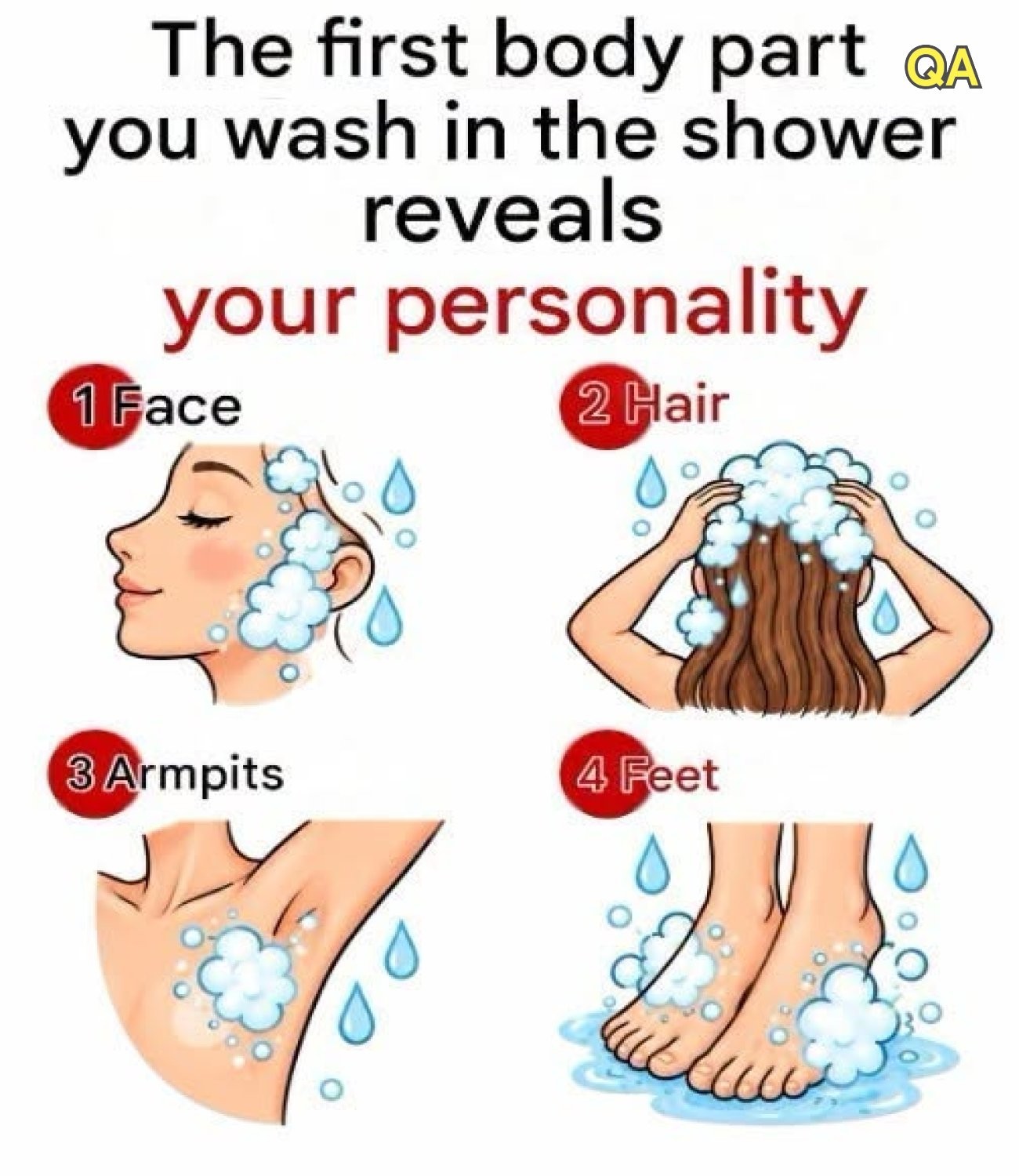
Many people follow a familiar routine when they shower. Some begin by washing their hair, while others start with the chest, face, or another part of the body. These small habits can feel personal, and online personality quizzes often suggest that the order of washing may reveal whether someone is organized, confident, logical, independent, or decisive.
However, there is no reliable scientific evidence showing that washing the hair first or washing the chest first can accurately identify a person’s personality traits. A shower routine may reflect convenience, hair type, skin-care needs, exercise habits, family routines, cultural preferences, or simply a pattern that has become automatic over time. It should not be treated as a psychological test or a way to judge someone’s character.
Understanding why people develop routines can still be useful. Habits are an important part of everyday behavior, and personal-care routines can provide comfort, save time, and help people meet practical hygiene needs. The most important factor is not the order in which body parts are washed, but whether a routine is safe, comfortable, effective, and appropriate for an individual’s health needs.
Can Shower Order Reveal Personality?
Claims that a person’s shower sequence reveals hidden personality traits are usually based on symbolism rather than evidence. For example, the head may be described as representing intellect, while the chest may be linked with confidence or emotional openness. These interpretations can sound appealing because they provide a simple explanation for ordinary behavior. Yet symbolism is not the same as scientific proof.
Personality is a complex area of psychology. Researchers generally assess personality using validated questionnaires, long-term behavioral observations, and statistical research involving many participants. Widely studied personality frameworks, such as the Five-Factor Model, examine traits including openness, conscientiousness, extraversion, agreeableness, and neuroticism. A single everyday preference, such as which area a person washes first, cannot provide a dependable measure of these traits.
People may also change their shower sequence depending on the day. Someone who has exercised may wash their body first. A person with long, thick, curly, or treated hair may begin with shampoo and conditioner because those products need time to work. Another person may start with their face after applying makeup, sunscreen, or skincare products. These decisions are practical and may have little or nothing to do with personality.
For that reason, shower-order personality claims are best viewed as light entertainment rather than factual assessment. They may encourage reflection on personal preferences, but they should not be used to label people as “alpha,” overly controlling, emotionally distant, or any other fixed type.
Why People Prefer a Particular Shower Routine
Shower habits often develop through repetition. Behavioral science shows that routines can become automatic when they are repeated in the same context. A person may start at the top of the body because that is how a parent taught them to wash. Another may begin with the torso because it feels faster after a workout. Over time, the sequence becomes familiar and requires very little conscious thought.
Several practical factors can shape a shower routine:
- Hair length and texture: People with longer or textured hair may need more time for shampoo, conditioner, detangling, or scalp care.
- Physical activity: After exercise, many people prioritize rinsing sweat from the body and changing into clean clothing.
- Skin conditions: Those with acne, eczema, sensitive skin, or other dermatological concerns may use a routine recommended by a healthcare professional.
- Time and schedule: A quick morning shower may look very different from a longer evening routine.
- Products used: Conditioner, medicated shampoo, body wash, facial cleanser, and shaving products can influence the most convenient order.
- Personal comfort: Some people find that beginning with warm water on the shoulders or chest helps them relax before washing their hair.
None of these choices automatically signals a particular personality style. A person can be highly organized and still wash their chest first. Someone can be confident and prefer to shampoo first. Human behavior is influenced by context, health, learned habits, and changing daily needs.
Washing Hair First: Practical Considerations
Beginning a shower by washing the hair is common. For many people, it is simply an efficient choice. Shampooing first allows conditioner to remain on the hair briefly while the person washes the rest of the body. This may be especially useful for people whose hair requires detangling or additional moisture.
Hair-care products can also affect the skin. Some conditioners, hair oils, and styling-product residues may contribute to clogged pores or irritation in certain people, particularly around the back, shoulders, and chest. Dermatology guidance often emphasizes the value of keeping skin clean and using products suitable for an individual’s skin type. For people who experience body acne or irritation, rinsing hair products thoroughly before washing the body may be helpful.
That does not mean everyone must wash their hair first. The best order depends on the person. Those with very dry hair may not shampoo every day, while others may use a gentle cleanser after swimming or sweating. Frequency and product choice should be based on hair texture, scalp condition, lifestyle, and advice from a qualified healthcare professional when needed.
The American Academy of Dermatology notes that hair-washing needs vary widely. Some people may need to wash more often because of oiliness or activity levels, while others may benefit from less frequent shampooing to avoid dryness. A consistent routine can be useful, but there is no universal sequence that works for everyone.
Washing the Chest First: Comfort and Skin Care
Starting with the chest or upper body can also be a practical preference. The chest and shoulders are areas where sweat may collect, particularly after physical activity or in warm weather. Rinsing these areas early may feel refreshing and can help someone transition from exercise or a busy day into a calmer routine.
For people who use body wash on the chest and torso, beginning there may simply be the quickest way to clean the areas they consider most important. Some may also start with the body because they do not wash their hair every time they shower. Others prefer to wet and rinse their body before applying facial or hair-care products.
Skin-care needs vary. The chest can be prone to irritation, acne, folliculitis, or dryness, particularly when harsh cleansers, fragrances, tight clothing, sweat, or product buildup are involved. A gentle cleanser and lukewarm water are often more appropriate than aggressive scrubbing. People with persistent rashes, pain, itching, or acne concerns should consider speaking with a dermatologist or other qualified clinician.
Starting with the chest does not prove that a person is more assertive, self-assured, or direct than someone who starts with their hair. It only shows that they have chosen a sequence that works for them at that moment.

The Role of Habits in Daily Well-Being
Although shower order is not a personality test, routines can have a meaningful role in daily life. Repeated rituals may reduce the number of small decisions a person has to make and can create a sense of predictability. For many people, bathing is a quiet period of self-care before work, school, sleep, or social activities.
Healthy routines are usually flexible rather than rigid. A person may have a preferred sequence but adjust it when their schedule changes, when they have exercised, or when their skin and hair need different care. Flexibility is often more valuable than trying to follow a supposedly “correct” routine based on personality claims.
It is also important to avoid turning harmless preferences into judgments. Social media content can encourage people to interpret every small behavior as evidence of hidden strengths or flaws. While these ideas can be fun to discuss, they may oversimplify human behavior. Personality develops through a combination of biological factors, life experiences, relationships, culture, environment, and individual choices. It cannot be accurately reduced to one shower habit.
How to Build a Healthy Shower Routine
A good shower routine should support hygiene while protecting the skin and hair barrier. Public health and dermatology organizations generally recommend simple, gentle practices that fit an individual’s needs.
Consider these evidence-informed shower habits:
- Use warm rather than very hot water, as prolonged hot showers can contribute to dry or irritated skin.
- Choose mild cleansers, especially if you have sensitive or dry skin.
- Focus on areas that commonly collect sweat or bacteria, including the underarms, groin, feet, and skin folds.
- Rinse shampoo and conditioner thoroughly, particularly if hair products tend to contact the back or chest.
- Pat the skin dry with a clean towel instead of rubbing vigorously.
- Apply moisturizer after bathing if your skin is dry or prone to irritation.
- Clean shower accessories, such as washcloths and loofahs, regularly and allow them to dry between uses.
- Seek professional medical advice for ongoing scalp, skin, or allergy symptoms.
There is no need to force a new washing order unless it improves comfort, saves time, or supports a health goal. Someone who enjoys washing their hair first can continue doing so. Someone who prefers to start with the chest can do that as well. What matters is using suitable products, rinsing thoroughly, and listening to the body’s needs.
The Bottom Line on Hair-First and Chest-First Shower Habits
Washing the hair first or the chest first does not provide a scientifically valid explanation of personality. It may reflect a familiar routine, hair-care requirements, skin-care goals, physical activity, time constraints, or personal comfort. Ideas linking shower order to discipline, intelligence, confidence, leadership, or other traits should be approached with caution.
Personal habits can be interesting, but they are not a substitute for evidence-based psychology. The healthiest approach is to treat shower preferences as individual choices rather than labels. A thoughtful routine should be based on hygiene, skin and hair needs, and what helps a person feel clean and comfortable.
Sources
Disclaimer: This content is intended for entertainment purposes only and is not based on real events.