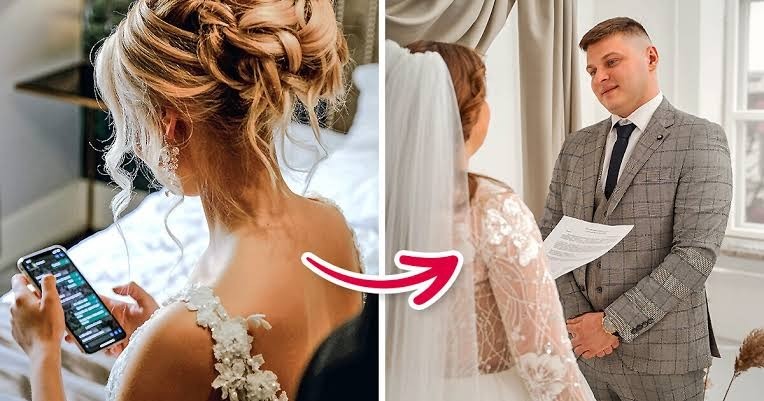
A wedding is supposed to be one of the happiest days in a couple’s life. After months of planning, countless decisions, and promises about the future, two people finally stand before their loved ones to begin a new chapter together. For one Australian bride, however, the night before her wedding brought a discovery that completely changed the meaning of the celebration she had spent so long preparing.
The woman, identified by the pseudonym Casey, had been looking forward to marrying her longtime partner, referred to as Alex in her account. The couple had reportedly been together for six years, and their families and social lives had become closely connected. Like many couples preparing for marriage, they had made plans for a future they believed they would share.
But everything changed when Casey received an unexpected message from an unfamiliar phone number while spending the evening with her closest friends in a hotel room.
Attached to the message were screenshots of conversations between Alex and another woman. The accompanying words were brief but devastating: “I wouldn’t marry him. Will you?”
According to Casey’s account, the messages revealed intimate exchanges that appeared to have continued over several months, including conversations dated only days before the planned wedding. What should have been a night filled with excitement suddenly became a period of disbelief, heartbreak, and difficult decisions.
Yet the most unexpected part of the story was still to come. Rather than quietly canceling the ceremony, Casey decided to walk down the aisle as planned. When she finally reached the front of the room, however, she had something very different from traditional wedding vows to share with the assembled guests.
Her decision turned an anticipated celebration into a moment that would later attract attention from media outlets around the world.
An Anonymous Message Arrives Just Hours Before the Wedding
According to Casey’s first-person account, the discovery happened on the evening before her wedding. She was relaxing in a hotel room with her closest friends, enjoying what was supposed to be a memorable final evening before becoming a married woman.
The atmosphere was reportedly relaxed until her phone began receiving messages from a number she did not recognize.
At first, there was no obvious reason to expect anything unusual. But when Casey opened the messages, she found a collection of screenshots showing conversations between her fiancé and another woman.
The anonymous sender had included photographs of the two people together, along with text exchanges that appeared to reveal a relationship extending beyond ordinary friendship.
The message accompanying the screenshots asked a question that Casey would likely never forget: “I wouldn’t marry him. Will you?”
The timing made the discovery especially painful. Her wedding was only hours away, and the people closest to her had already gathered in anticipation of the ceremony.
The screenshots reportedly contained messages from different periods, with some dating back months and others appearing to have been exchanged just days earlier. In one exchange, Alex allegedly compared the other woman’s intimate abilities favorably with those of his girlfriend. Another message suggested that he felt a connection with the woman that he had not experienced before.
For Casey, the information was difficult to reconcile with the relationship she believed she had.
She later described the emotional impact in her account to Australian publication Whimn, explaining that every word felt like a painful blow while her wedding preparations were almost complete.
There was also the question of what to do next. Canceling a wedding is not simply a matter of changing one’s mind. Guests may have traveled long distances, venues and vendors may already have been paid, and families may have invested considerable time and money in the celebration.
But those practical concerns were only part of the problem. Casey also had to confront the possibility that the man she was preparing to marry had been hiding an important part of his life from her.
The Screenshots Raised Questions About a Six-Year Relationship
One reason the discovery was reportedly so difficult for Casey was the length of the relationship.
According to her account, she and Alex had been together for approximately six years. Over that time, they had developed shared routines, relationships with one another’s families, and expectations about their future.
A long relationship can create a powerful sense of familiarity. People become accustomed to relying on one another, making plans together, and believing they understand their partner’s character.
That sense of security can make an unexpected revelation particularly difficult to process.
Casey described struggling to understand how the person she believed she knew could also be the person represented in the messages. The screenshots reportedly included exchanges that were not limited to a single date or isolated conversation.
The apparent timeline made the situation even more upsetting because some of the messages were said to have been exchanged shortly before the wedding.
Rather than discovering a distant incident from the early stages of their relationship, Casey was confronted with information that appeared directly connected to the present.
Her friends reportedly encouraged her to contact Alex and cancel the wedding. They were understandably concerned about her emotional wellbeing and did not want her to enter a marriage under such circumstances.
But Casey faced a decision that was both personal and practical.
Should she immediately stop the wedding and explain the situation privately? Should she confront Alex before the ceremony? Or should she wait until the following morning and decide how to respond?
The account does not provide every detail of the conversations that took place that night. What it does describe is a bride who was devastated by what she had seen but determined to make her own decision about the next step.
Why Casey Decided Not to Cancel the Wedding Immediately
For many people, discovering apparent infidelity immediately before a wedding would be enough reason to cancel the ceremony without hesitation.
Casey’s response was different.
She reportedly considered the fact that friends and relatives had already traveled to attend the event. The arrangements had been made, the expenses had been paid, and the people she cared about were preparing to witness what they believed would be the beginning of her marriage.
However, continuing with the ceremony did not mean that she had decided to forgive Alex or proceed with the marriage.
According to her account, she eventually settled on a different plan. She would arrive at the wedding venue as expected, walk down the aisle, and confront the situation in front of the people who had gathered.
It was a decision that carried considerable emotional weight.
A wedding ceremony is usually carefully structured. The bride enters, the guests stand, and the couple takes their places before the person conducting the ceremony. Traditional vows follow, expressing promises of loyalty, respect, and commitment.
Casey knew that she could no longer make those promises to Alex in the same way.
Instead of pretending that everything was normal, she chose to use the moment when everyone was paying attention to reveal what she had discovered.
Her decision was not presented as a conventional response to relationship difficulties. It was a dramatic personal choice made after an unexpected and deeply upsetting revelation.
Whatever people might think about the way she handled the situation, the central point remained clear: she did not want to enter a marriage while believing that her fiancé had been dishonest with her.
The Bride Walked Down the Aisle With a Different Purpose
When the wedding day arrived, Casey reportedly went ahead with the planned arrival at the venue.
She put on her wedding dress, carried her bouquet, and walked down the aisle in front of family members and friends who had gathered to celebrate the couple.
For the guests, everything initially appeared to be following the expected schedule.
But Casey was carrying information that completely changed the meaning of the occasion.
As she reached the front, she turned toward the assembled guests and announced that there would be no wedding that day.
She explained that Alex was not the person she had believed him to be.
The announcement reportedly created a wave of shock among the people in attendance. Guests had arrived expecting to witness an exchange of vows, not the sudden collapse of a six-year relationship.
According to Casey’s account, she then put down her bouquet, revealing the phone she had brought with her.
Instead of reading the promises she had prepared, she began reading the messages contained in the screenshots.
The words reportedly revealed the nature of Alex’s conversations with the other woman, including intimate comments and statements that suggested a connection beyond friendship.
For the guests, the announcement provided an explanation for why the ceremony was not going ahead.
For Alex, it was an unexpected confrontation in front of family and friends.
Casey later described watching the color disappear from his face as she continued reading. She also recalled looking toward him through her tears and receiving no meaningful response.
The ceremony that had been planned as a public celebration of their relationship had become an account of why she could no longer proceed with the marriage.
The Groom Left the Church Without Giving an Explanation
One of the most striking details in Casey’s account was Alex’s reported reaction.
As the bride read the messages aloud, he reportedly became increasingly pale and appeared unable to respond.
According to the story published by Whimn and subsequently covered by other outlets, Alex eventually left the church, with his best man following behind him.
His family reportedly remained in the venue and watched the confrontation unfold.
The available account does not establish what Alex said privately afterward, whether he attempted to contact Casey again, or what happened to their relationship in the longer term.
Those details are important because viral stories often encourage readers to imagine an entire aftermath that has never actually been reported.
What can be established from the published account is more limited: Casey said she received the screenshots, decided not to marry Alex, read the messages at the ceremony, and watched him leave the venue.
The story became widely discussed because of the unusual setting of the confrontation.
Infidelity is unfortunately a familiar subject in relationship discussions, but discovering an apparent affair immediately before a wedding creates a particularly difficult situation.
The contrast between the promises expected at a wedding and the information revealed by Casey made the incident especially memorable.
The Wedding Reception Took on a Different Meaning
After Alex reportedly left the church, Casey still had to decide what to do about the people who had gathered for the celebration.
A wedding involves more than the couple getting married. Family members and friends may have traveled, taken time off work, purchased gifts, and prepared to spend the day supporting the newly married couple.
The emotional atmosphere was now completely different, but the guests were still there.
In her account, Casey addressed the people who had attended and expressed appreciation for their presence despite the painful circumstances.
She explained that the planned celebration would no longer be a traditional wedding reception. Instead, she wanted the gathering to represent honesty, finding genuine love, and following one’s heart even when doing so was difficult.
The story described how the bride and her friends continued with the gathering rather than allowing the entire day to become defined by the failed relationship.
This detail became an important part of the story’s wider appeal.
Although the wedding itself did not take place, Casey was surrounded by people who had come to support her. Their presence offered a reminder that relationships with friends and family can remain meaningful even when a romantic relationship comes to an unexpected end.
It is also worth remembering that people respond differently to emotional situations. Some may prefer to continue a planned gathering with loved ones, while others may need privacy and time away from everyone.
There is no single correct response to a canceled wedding.
What matters is that the person most affected has the freedom to decide what kind of support they need.
Why Discovering Betrayal Before Marriage Can Be So Painful
Casey’s story highlights a difficult aspect of relationships: the emotional consequences of discovering that a partner may have been dishonest at a moment when a major commitment is about to take place.
Marriage represents more than a ceremony or a legal agreement. For many couples, it reflects years of shared experiences, personal sacrifices, and plans for a common future.
When someone discovers information that contradicts their understanding of a partner, the impact can extend beyond the immediate relationship.
They may begin questioning earlier conversations, memories, decisions, and moments that once appeared completely ordinary.
A person might wonder whether warning signs were missed or whether certain explanations had been accepted too easily.
These questions can create confusion and emotional distress, particularly when the discovery happens under intense time pressure.
There may also be social and financial considerations. A canceled wedding can involve communication with guests, discussions with vendors, changes to travel plans, and decisions about shared expenses.
However, those responsibilities should not force someone to enter a marriage when they have serious concerns about honesty and commitment.
The cost of a wedding, the expectations of relatives, and the inconvenience of changing plans are not reasons to ignore a fundamental relationship problem.
A ceremony can be postponed or canceled. A marriage, by contrast, creates a much longer set of personal and legal responsibilities.
Trust Is More Important Than the Wedding Celebration
One broader lesson from this story concerns the role of trust in a healthy marriage.
Trust is not simply the belief that a partner will never make a mistake. It involves confidence that both people will communicate honestly, respect agreed boundaries, and take responsibility for their actions.
Couples do not need to agree about every subject to build a strong relationship. They may have different personalities, priorities, and ways of handling conflict.
But they need a shared understanding of important commitments.
For example, partners should discuss what fidelity means to them, what boundaries they expect in relationships with other people, and how they intend to handle situations that could damage their trust.
These conversations may not always be comfortable, but they can help prevent misunderstandings and reveal important differences before marriage.
Premarital counseling can also provide a useful opportunity to discuss expectations about communication, finances, family responsibilities, and future plans.
Such conversations cannot guarantee that a relationship will never encounter difficulties. However, they can help couples understand one another more clearly before making a major commitment.
Casey’s reported experience illustrates why emotional connection alone may not be enough to sustain a marriage. Affection and shared history matter, but honesty and mutual respect are equally important.
The Importance of Verifying Information Before Making Major Decisions
There is another aspect of this story that deserves attention: the information reportedly arrived through an anonymous sender.
Screenshots and private messages can provide important information, but digital evidence should always be considered carefully.
Images can be cropped, conversations can be presented without context, and accounts can sometimes be impersonated. An unknown sender may also have motivations that the recipient does not understand.
In Casey’s account, she said that the screenshots included conversations and photographs involving her fiancé and another woman. She believed the material was genuine and decided that it was sufficient to change her plans.
However, readers should distinguish between what Casey reported and what has been independently established.
The published articles primarily repeat her first-person account. They do not provide a comprehensive independent investigation into the identity of the sender, the complete relationship between the people involved, or Alex’s response to every allegation.
That does not mean the story should automatically be dismissed. It means that responsible reporting requires clear language about the available evidence.
For anyone who receives unexpected information about a partner, it can be helpful to preserve the original messages, consider the source, and seek clarification where appropriate and safe.
People should also be allowed to take their concerns seriously without feeling pressured to make an immediate public decision.
The important principle is to combine careful judgment with respect for personal boundaries and emotional wellbeing.
A Viral Story That Raises Questions About Commitment and Self-Respect
The story of Casey and Alex attracted attention because it combined several emotionally powerful elements: an anonymous message, an impending wedding, an apparent betrayal, and an unexpected announcement at the altar.
But beyond the dramatic circumstances, the story raises a more personal question.
What should someone do when the future they have planned suddenly conflicts with information they can no longer ignore?
For some people, the answer may involve a private conversation and an attempt to understand what happened. Others may decide that a serious breach of trust means the relationship cannot continue.
Neither decision should be made simply to satisfy the expectations of an audience.
Friends and relatives can offer advice, but the people directly involved must ultimately decide what is right for their own lives.
Self-respect does not always mean making a dramatic public statement. Sometimes it means taking time to think, asking difficult questions, seeking support, or choosing not to proceed with a commitment that no longer feels right.
In Casey’s reported experience, the public confrontation became the defining moment of her wedding day.
For other people, protecting their privacy and handling the situation quietly may be a better choice.
There is no universal formula for dealing with betrayal. Each relationship has its own circumstances, and every person deserves the opportunity to make an informed decision without unnecessary pressure.
A Wedding That Never Became a Marriage, but Left a Lasting Lesson
The story began with an anonymous message received during what should have been a joyful evening before a wedding.
It ended with a bride standing before her family and friends, explaining why she could not exchange vows with the man she had expected to marry.
According to the account she shared, Casey discovered messages that appeared to reveal her fiancé’s involvement with another woman. Rather than proceeding with the marriage, she chose to expose the conversations at the altar and end the planned ceremony.
The story does not provide a complete account of everything that happened afterward. Nor does it independently establish every detail surrounding the alleged affair.
Nevertheless, the central experience described by Casey offers an opportunity to reflect on honesty, trust, and the importance of making major life decisions with confidence in the person standing beside you.
A wedding can represent months of preparation and years of hope, but the celebration itself should never become more important than the relationship it is meant to honor.
For anyone approaching marriage, the most valuable promises are not necessarily the ones spoken in front of a crowd. They are the commitments demonstrated through everyday actions, honesty, respect, and consistency.
Sometimes, the most difficult decision is not whether to walk down the aisle. It is recognizing when the future you imagined is no longer the future you should choose.
Sources and Fact-Checking Notes
This article is based primarily on a first-person account attributed to Casey, who used a pseudonym when sharing her experience with the Australian publication Whimn. The following publications subsequently covered the story:
-
Whimn / Body+Soul: The original first-person account, titled “I Read My Cheating Fiancé’s Texts Instead of My Vows at Our Wedding.” The original Whimn URL now redirects to Body+Soul.
-
Glamour (November 26, 2018): “This Bride Read Her Cheating Fiancé’s Texts at the Altar Instead of Her Vows.” https://www.glamour.com/story/this-bride-read-her-cheating-fiances-texts-at-the-altar-instead-of-her-vows
-
ELLE (November 26, 2018): “An Australian Bride Recited Her Cheating Fiancé’s Texts Instead of Her Vows.” https://www.elle.com/life-love/sex-relationships/a25306395/australian-bride-exposes-cheating-fiances-texts-wedding/
-
VICE (November 22, 2018): “Instead of Her Vows, a Bride Read Out Her Cheating Fiancé’s Texts.” https://www.vice.com/en/article/instead-of-her-vows-a-bride-read-out-her-cheating-fiances-texts/
Accuracy note: Casey and Alex are pseudonyms. The story is based on the woman’s published account and subsequent media coverage, not an independently verified investigation. The article therefore attributes personal details and allegations to her account rather than presenting every claim as independently established.
Disclaimer: This article discusses a reported personal experience and provides general commentary on relationships. It does not claim to establish the identities of the individuals involved or independently verify every detail of the account.