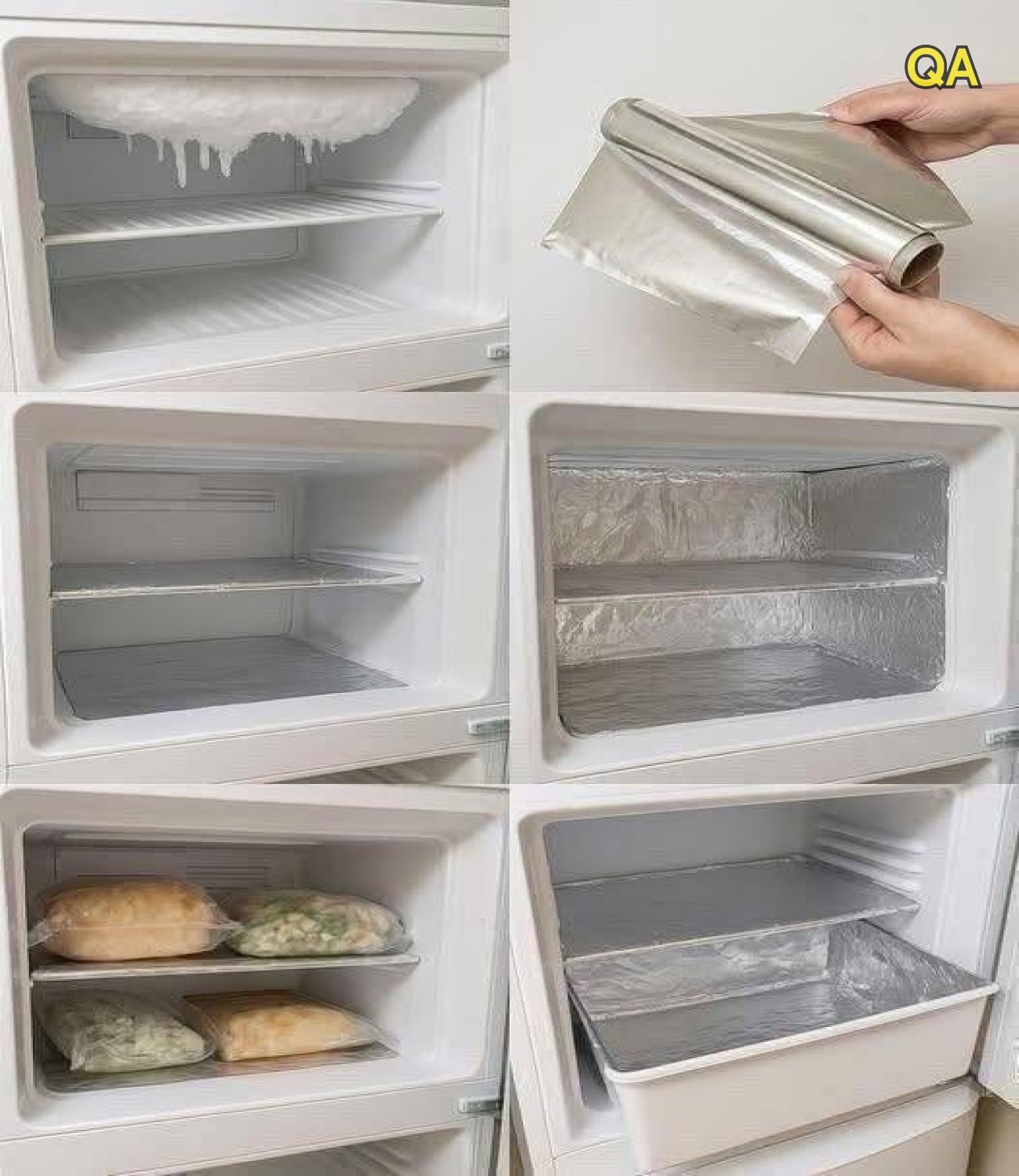
The Simple Kitchen Trick That Could Make Freezer Frost Easier to Manage
Freezer frost is a familiar kitchen nuisance. It often begins as a light coating of white ice around the walls, shelves, drawer edges, or door frame. Left unchecked, that thin layer can gradually become thick enough to reduce storage space, make drawers difficult to move, and turn everyday food storage into an inconvenient task.
Many people postpone defrosting because it requires planning: frozen food must be protected, melting water has to be managed, and the appliance needs time to return to its normal temperature. As a result, household advice about quick freezer fixes is common. One frequently discussed suggestion is using aluminum foil to make frost easier to remove.
There is a sensible idea behind the tip. Aluminum foil is smooth, inexpensive, and easy to replace, so it may seem like a convenient removable surface. However, it is important to separate a cleaning convenience from a proven frost-prevention method. Foil does not eliminate the moisture that causes frost, and lining the inside of a freezer may not be suitable for every appliance.
The most reliable approach is to understand why frost forms, maintain the freezer according to its manual, and use safe defrosting practices. These steps can make frost easier to manage while helping the appliance operate as intended.
Why Freezer Frost Builds Up
Frost forms when moisture in the air enters a cold freezer and freezes onto interior surfaces. Each time the door is opened, warmer household air can enter the compartment. Because warm air can hold more moisture than cold air, this air may leave water vapor behind as it cools. That moisture then freezes on the freezer walls, shelves, and other cold surfaces.
A small amount of frost may be normal in some manual-defrost freezers, especially around the door opening. But repeated or heavy accumulation can signal that too much humid air is entering the appliance or that the freezer is not circulating air as designed.
Frost can create several practical problems:
- Reduced usable space: Ice takes up room intended for food packages and containers.
- Sticking drawers and doors: Frost can freeze drawers, baskets, and packages together.
- More difficult cleaning: Thick ice can trap crumbs, spills, and packaging debris in hard-to-reach areas.
- Potential operating concerns: In some appliances, excessive frost can affect airflow or heat transfer and may make normal operation less efficient.
- Harder food organisation: When food is buried behind ice, it is easier to lose track of what is stored and waste items that have been kept too long.
Not every freezer is designed in the same way. Frost-free models use automatic defrost systems to limit ice buildup during regular operation. Manual-defrost models, by contrast, need periodic defrosting. The owner’s manual remains the best source for appliance-specific guidance, including where frost may be expected and how it should be removed.
Can Aluminum Foil Prevent Freezer Frost?
Aluminum foil is useful in many parts of the kitchen, including wrapping food and covering baking dishes. Some household tips suggest placing foil on freezer surfaces so that frost can be lifted away with the foil later. In theory, a removable and smooth layer could make certain cleaning tasks feel easier.
However, aluminum foil is not an established solution for preventing freezer frost. Frost is driven primarily by moisture entering the freezer. Foil does not repair a worn door gasket, stop humid air from entering during frequent door openings, or correct blocked vents and temperature problems.
There is also a practical caution. Many freezer interiors are designed with vents, sensors, liners, shelves, and components that need unobstructed airflow. Covering walls, shelves, vents, or drawer areas with foil could interfere with circulation or with the appliance’s intended operation. Some manufacturers specifically advise against using liners or materials that could restrict airflow.
For that reason, it is best not to line the freezer interior with aluminum foil unless the appliance manufacturer clearly states that it is safe. The manual or the manufacturer’s customer-support guidance should take priority over general household advice found online.
If a person chooses to use foil only for a temporary food-storage purpose, such as wrapping an item before freezing, it should be used in a way that does not block vents or prevent the door from closing properly. For long-term frost management, addressing moisture and maintenance is more dependable than adding a liner.
Common Causes of Excessive Freezer Frost
Warm, Humid Air Entering Through an Open Door
Opening the freezer door is one of the most common ways moisture enters. This does not mean the door should never be opened; it simply means that reducing unnecessary searching can help. An organised freezer allows household members to find food quickly, limiting how long warm air enters the compartment.
Clear containers, labeled bags, and grouping similar foods together can make a meaningful difference. Keeping frequently used items near the front may also reduce time spent with the door open.
A Dirty, Damaged, or Loose Door Gasket
The flexible rubber seal around the freezer door is called a gasket. Its job is to create a close seal between the door and the cabinet. If the gasket is coated with crumbs, sticky residue, or grease, it may not sit correctly. If it is cracked, torn, hardened, or loose, humid room air may leak inside even when the door appears shut.
Cleaning the gasket periodically with a soft cloth and mild soapy water can help remove residue. It should then be dried thoroughly. Homeowners should also inspect the seal for visible damage and check whether food packages or ice buildup are preventing the door from closing fully. If the gasket no longer seals properly, a qualified technician or the manufacturer may be able to advise on replacement parts.
Adding Food That Is Still Warm
Warm food releases heat and water vapor. Putting large quantities of hot food directly into a freezer can temporarily raise the temperature inside and introduce moisture that can later freeze onto surfaces.
Food should be cooled safely before freezing, but it should not be left at room temperature for extended periods. The U.S. Department of Agriculture advises refrigerating perishable foods within two hours, or within one hour when the temperature is above 90°F (32°C). Dividing cooked food into smaller, shallow containers can help it cool more quickly in the refrigerator before it is transferred to the freezer.
Blocked Air Vents and Overcrowding
Many freezers rely on air circulation to maintain a stable temperature. When packages are pressed against vents or the compartment is packed too tightly, cold air may not move properly. This can contribute to uneven temperatures and may affect how the appliance performs.
Freezers work best when food is arranged with the manufacturer’s recommended clearance around vents. A reasonably full freezer can help retain cold air when the door is opened, but overfilling it can interfere with circulation. The goal is orderly storage rather than cramming every available space.
Mechanical or Defrost-System Problems
When frost returns very quickly in a frost-free appliance, the issue may go beyond daily habits. A faulty door switch, defrost system component, fan, sensor, or gasket can contribute to abnormal ice accumulation. These components should not be dismantled without appropriate knowledge or manufacturer guidance.
If the freezer develops recurring heavy frost despite a clean seal, clear vents, and careful use, professional servicing may be appropriate. Timely attention can help prevent a small appliance issue from becoming more disruptive.
How to Defrost a Freezer Safely
For manual-defrost freezers, defrosting is the standard and most effective way to remove substantial ice buildup. The exact process varies by model, so the manufacturer’s instructions should always come first. In general, a careful approach can reduce mess and protect the appliance.
- Plan ahead and protect frozen food. Move food to another freezer if possible. Otherwise, use insulated coolers with ice packs and keep them closed as much as possible.
- Switch off or unplug the appliance if instructed. Follow the directions in the owner’s manual. Some built-in appliances have specific shutdown procedures.
- Remove shelves, drawers, and loose items. If removable parts are icy, allow them to warm gradually rather than forcing them.
- Place towels around the base. Towels or shallow trays can help absorb melting water and protect nearby flooring.
- Allow the ice to melt naturally. This is usually the safest method unless the manufacturer provides another approved procedure.
- Clean and dry the compartment. Once the ice has melted, wipe away water and clean interior surfaces with a suitable mild cleaner. Drying thoroughly is important before restarting the freezer.
- Restart and return food after safe temperatures are restored. The freezer should return to its proper operating temperature before food is put back.
Sharp tools, including knives, screwdrivers, and ice picks, should never be used to chip away frost. They can puncture the interior liner or damage refrigeration components. Similarly, hairdryers, portable heaters, boiling water, and other improvised heating methods can create electrical, burn, or appliance-damage risks unless the manufacturer explicitly approves a method.
Freezer Temperature and Food Safety
Maintaining the correct freezer temperature is important for food quality and safety. The U.S. Food and Drug Administration and USDA recommend keeping a freezer at 0°F (-18°C) or below. At this temperature, food remains frozen and microbial growth is stopped, although food quality can still decline over time.
A freezer thermometer is a simple way to verify that the appliance is maintaining the chosen setting. Built-in controls may not always show the exact internal temperature, particularly when the freezer is heavily loaded, recently opened often, or recovering after a power interruption.
Proper packaging also matters. Food should be sealed in moisture-resistant freezer bags, containers, or wraps designed for freezing. Removing as much excess air as practical can help limit freezer burn, which affects food quality but is different from frost accumulating on the freezer walls.
Does Frost Affect Energy Use?
Heavy frost can make a freezer less convenient and may affect the way some appliances operate. In manual-defrost models, a substantial ice layer can reduce usable space and may interfere with normal cooling efficiency. Regular maintenance helps the freezer work under the conditions for which it was designed.
Still, it is important not to overstate the impact. There is no reliable basis for claiming that aluminum foil directly lowers electricity bills. Savings depend on the appliance model, the condition of its seals and components, room temperature, usage habits, and the amount of frost present.
More reliable energy-conscious practices include keeping the door gasket clean, positioning the appliance according to manufacturer ventilation recommendations, avoiding prolonged door openings, setting the freezer to the recommended temperature, and defrosting a manual-defrost unit when ice buildup becomes significant.
Simple Habits for Managing Freezer Frost
Preventing frost is usually easier than removing a thick layer of ice. A few regular habits can reduce the conditions that encourage buildup:
- Know what you need before opening the freezer door.
- Keep an inventory or label frozen foods with dates.
- Check that packages do not block the door from closing completely.
- Clean the door gasket and inspect it for wear.
- Keep vents and airflow channels clear.
- Cool foods safely before freezing them.
- Use freezer-safe packaging that closes securely.
- Keep the freezer at 0°F (-18°C) or below.
- Follow the defrosting schedule and instructions in the appliance manual.
The Bottom Line on the Aluminum Foil Freezer Trick
Aluminum foil may sound like an easy answer to freezer frost, but it is not a proven method for preventing ice from forming. Because foil can potentially block airflow or interfere with internal components, lining a freezer with it should not be treated as a universal household solution.
The most effective strategy is less dramatic and more practical: limit moisture entering the appliance, keep the door seal clean and functional, avoid blocking vents, store food in an orderly way, and defrost according to the manufacturer’s instructions. These measures address the causes of frost rather than simply covering the surfaces where it appears.
For persistent or unusually rapid frost buildup, consulting the appliance manual and seeking professional advice can be worthwhile. With regular attention, most households can keep freezer storage cleaner, more accessible, and easier to manage without relying on an unverified shortcut.
Sources
Disclaimer: This content is intended for entertainment purposes only and is not based on real events.