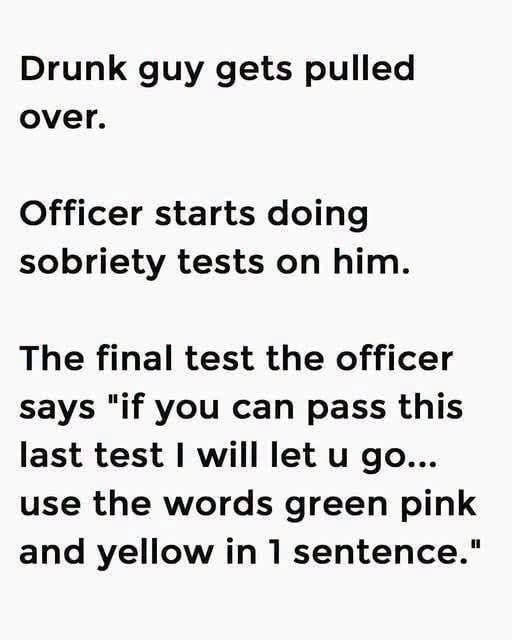
Driving after consuming alcohol or other impairing substances remains a serious road-safety concern in countries around the world. A quiet road, a short journey, or confidence in one’s ability to “handle it” does not remove the risks associated with impaired judgment, slower reaction times, reduced coordination, and poor decision-making.
Stories about drivers attempting to explain away concerning behavior during a traffic stop can sometimes be presented as entertainment. The underlying issue, however, is not humorous. Impaired driving can endanger the driver, passengers, pedestrians, cyclists, emergency workers, and other road users. It can also lead to substantial legal, financial, professional, and personal consequences.
Road safety experts consistently emphasize a simple principle: if alcohol, drugs, certain medications, fatigue, or a medical condition may affect a person’s ability to drive safely, the safest choice is not to drive. Planning ahead is more effective than relying on confidence, excuses, or the belief that an empty road makes dangerous behavior acceptable.
Why Impairment Affects Driving Ability
Safe driving requires a complex combination of skills. A driver must observe traffic conditions, process information quickly, make judgments, steer accurately, brake at the right moment, and respond appropriately to unexpected hazards. Alcohol can interfere with many of these functions, even when a person feels capable of driving.
According to the U.S. Centers for Disease Control and Prevention, alcohol affects brain function and can impair thinking, reasoning, muscle coordination, and judgment. These abilities are essential for operating a vehicle safely. The effects can include difficulty maintaining a steady lane position, reduced awareness of hazards, delayed braking, poor speed control, and increased willingness to take risks.
One reason impaired driving remains difficult to prevent is that self-assessment becomes less reliable after alcohol consumption. A person may feel relaxed, sociable, or unusually confident while their actual driving performance is declining. This mismatch between perceived ability and real-world impairment can lead someone to make unsafe decisions, including choosing to drive when they should arrange another way home.
Alcohol is not the only concern. Illicit drugs, cannabis, some prescription medicines, over-the-counter medications that cause drowsiness, and combinations of substances can all affect driving. Fatigue, illness, and emotional distress may also reduce attention and reaction time. The key safety question is not whether someone believes they can drive; it is whether they can operate a vehicle safely and lawfully.
Traffic Stops and Observable Signs of Possible Impairment
Law enforcement officers may stop a vehicle when they observe a potential traffic violation or behavior that raises safety concerns. Depending on the jurisdiction, this may include drifting between lanes, inconsistent speeds, failing to follow traffic signals, making unsafe turns, or driving in a manner that suggests the driver may not be fully alert.
During a lawful traffic stop, officers commonly observe and document relevant facts. These can include speech patterns, responses to questions, coordination, demeanor, driving behavior, and whether the driver can provide required documentation. However, individual signs alone do not prove alcohol impairment. Slurred speech, unsteadiness, red eyes, or confusion may also have medical, neurological, physical, or environmental explanations.
This distinction matters. Responsible policing and fair legal processes rely on evidence, established procedures, and applicable laws rather than assumptions. If a driver appears unwell or disoriented, officers may need to consider whether the person requires medical attention. In many places, additional testing procedures and evidentiary rules apply before an impairment-related charge can be established in court.
Understanding Roadside Sobriety Assessments
Roadside assessments are often discussed in popular culture, but they are more complicated than casual portrayals suggest. In the United States, the National Highway Traffic Safety Administration has developed standardized field sobriety tests that trained officers may use as part of an impairment investigation. These commonly include the horizontal gaze nystagmus test, the walk-and-turn test, and the one-leg stand test.
These assessments are intended to help officers evaluate specific observable indicators. They are not games, intelligence tests, or opportunities for a driver to negotiate their way out of a situation. Their administration, interpretation, legal status, and relationship to chemical testing vary by jurisdiction. Other questions or informal observations may occur during a stop, but they should not be confused with scientifically validated standardized procedures.
Physical limitations can affect performance on coordination-based tasks. Age, injuries, footwear, uneven surfaces, poor lighting, certain health conditions, and language barriers may all be relevant. For this reason, legal systems typically evaluate the full circumstances of a case, including officer observations, video footage where available, chemical-test results, witness evidence, and procedural compliance.
Why Excuses and Overconfidence Do Not Improve Safety
When confronted by law enforcement, some drivers may blame road design, darkness, footwear, tiredness, or other factors for unsafe driving behavior. Road conditions and personal circumstances can indeed affect driving performance, which is why everyone should adjust speed and driving choices to match weather, visibility, traffic, and physical condition.
But acknowledging difficult road conditions does not remove a driver’s responsibility to act safely. If darkness, fatigue, medication, alcohol, or any other factor makes driving more difficult, the appropriate response is to slow down, stop driving if necessary, or choose alternative transportation. Attempting to minimize a dangerous situation can delay the safer decision that should have been made before getting behind the wheel.
Overconfidence is especially risky because it can encourage a driver to ignore warning signs. Someone may believe that they are speaking normally, walking steadily, or driving carefully when objective observations suggest otherwise. This is not a reliable basis for deciding whether it is safe to drive. Planning before drinking or taking an impairing medication is a far more dependable approach.
Legal and Personal Consequences of Impaired Driving
Laws on impaired driving differ internationally and between states, provinces, and regions. In many jurisdictions, consequences may include arrest, fines, licence suspension or revocation, mandatory education or treatment programs, insurance increases, vehicle-related penalties, and criminal prosecution. A conviction can also affect employment, professional licensing, travel, family responsibilities, and future opportunities.
Legal consequences are only one part of the issue. Impaired driving can have lasting emotional and social effects on families and communities. Crashes can result in life-changing injuries, bereavement, and long-term trauma. Even when no collision occurs, an arrest or licence loss can disrupt work, education, caregiving, and access to essential services.
Public-health organizations frame impaired driving as preventable rather than inevitable. That perspective is important. The objective is not simply to punish poor decisions after the fact. It is to reduce the likelihood that a person will be placed in a position where impairment and driving overlap at all.
How to Prevent Impaired Driving
Preventing impaired driving starts before a social event, meal, celebration, or medical appointment. A practical plan removes the need to make a difficult decision after a person’s judgment may already be affected. Individuals and groups can use several straightforward strategies:
- Choose a designated driver who will not drink or use impairing substances.
- Use public transportation, a taxi, or a reputable ride-hailing service where available.
- Arrange to stay overnight with a friend, family member, or at nearby accommodation.
- Ask a sober friend or relative for a ride.
- Keep vehicle keys away from anyone who may be impaired.
- Consider whether prescription or over-the-counter medicines carry warnings about driving or operating machinery.
- Do not assume that coffee, food, a shower, or fresh air will reverse alcohol impairment.
Friends, hosts, and family members can play an important role. Offering a ride, helping arrange transportation, or encouraging someone to stay overnight may feel inconvenient in the moment, but it can prevent a much more serious outcome. A supportive conversation is often more effective than ridicule or confrontation.
Alcohol, Medication, and the Importance of Accurate Information
People should follow medication labels and advice from pharmacists or healthcare professionals. Some medicines can cause dizziness, sedation, blurred vision, slowed reactions, or difficulty concentrating. Combining medication with alcohol may increase impairment and create additional health risks. Anyone with questions about whether a medicine affects driving should consult a qualified healthcare professional.
It is also important to avoid misconceptions about alcohol metabolism. Time is the primary factor that reduces blood alcohol concentration. Personal characteristics and drinking patterns can influence alcohol’s effects, but they do not make someone immune to impairment. Because the effects of alcohol can persist longer than expected, driving the following morning may also be unsafe for some people.
A Shared Responsibility for Safer Roads
Safer roads depend on individual choices, responsible social norms, effective public transportation, evidence-based enforcement, and public-health education. Governments, schools, employers, hospitality businesses, and community organizations all have roles in reducing impaired driving.
Campaigns that emphasize prevention can help reshape attitudes. Rather than treating impaired driving as a private mistake or a story of clever excuses, communities can recognize it as a predictable and preventable risk. The most responsible decision is made before the engine starts: if there is any doubt about a person’s ability to drive safely, they should not drive.
Confidence cannot restore coordination, improve reaction time, or make impairment disappear. A safe ride home, a designated driver, or a decision to wait is always a better outcome than relying on luck.
Sources
- Centers for Disease Control and Prevention: Impaired Driving
- National Highway Traffic Safety Administration: Drunk Driving
- National Highway Traffic Safety Administration: Standardized Field Sobriety Test Manual
- World Health Organization: Road Traffic Injuries
- National Institute on Alcohol Abuse and Alcoholism: Alcohol’s Effects on the Body
Disclaimer: This content is intended for entertainment purposes only and is not based on real events.