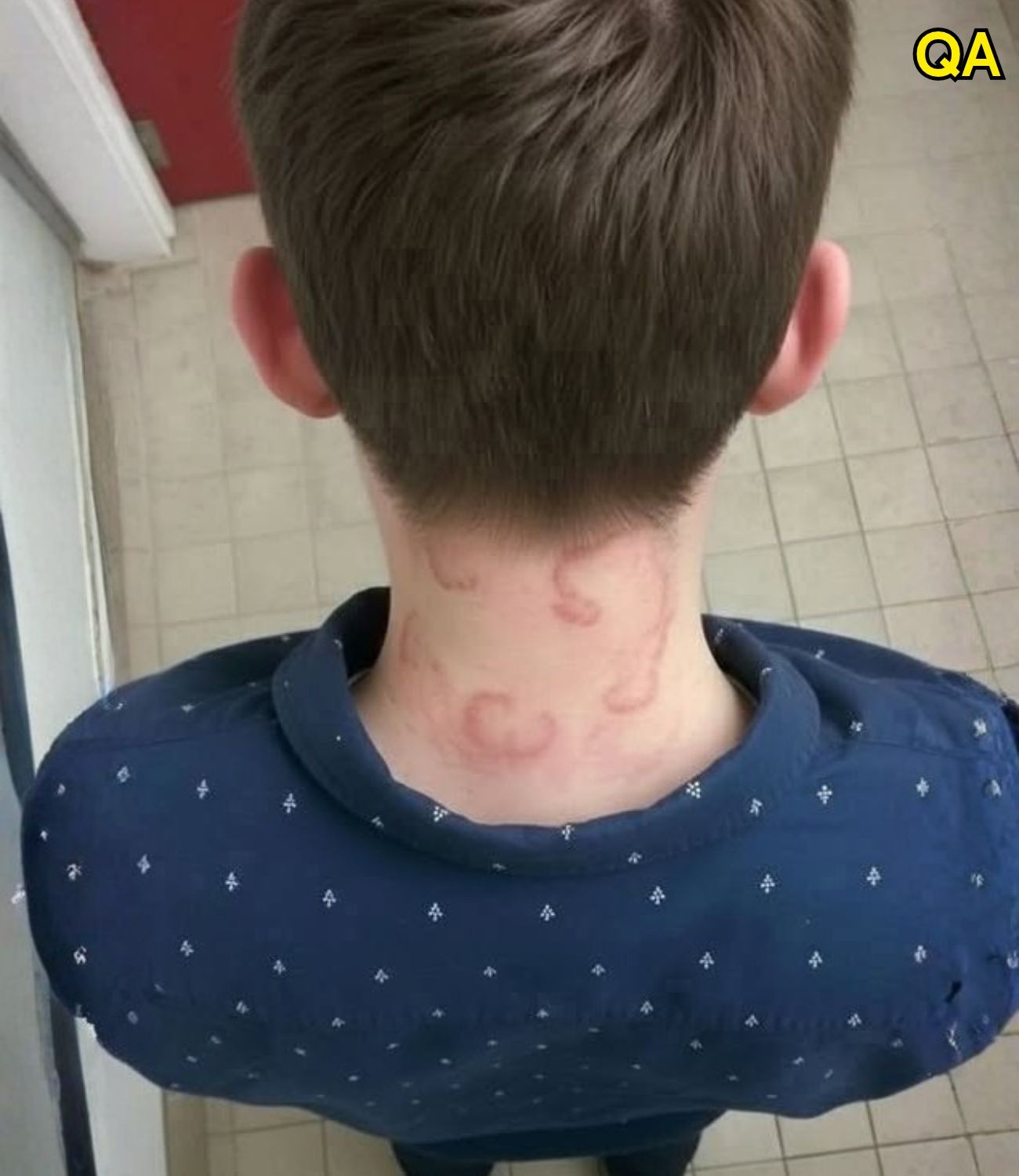
An itchy rash may seem like a minor skin problem at first. However, when raised welts keep returning, spread across the body, or appear alongside swelling around the lips and eyes, the symptoms deserve closer attention. In some cases, swelling can affect deeper tissues and become a medical emergency if it involves the throat or airway.
An online account describes an 18-year-old who reportedly experienced recurring symptoms for two months, with the condition becoming worse over time. The account mentions red, itchy welts, swelling around the lips and eyelids, and a sensation of throat tightness. It identifies the condition as urticaria, commonly known as hives, accompanied by angioedema.
Although the account does not include independent medical records, the symptoms provide an opportunity to explain these two conditions, why they can occur together, and which warning signs should never be ignored.

What Is Urticaria, or Hives?
Urticaria is a skin reaction that causes raised, itchy welts. These welts can appear in different sizes and shapes, sometimes forming small patches and sometimes spreading across larger areas of the body.
The rash may appear suddenly, disappear, and return elsewhere. Individual welts often fade within 24 hours, although new ones may continue to develop.
Hives occur when certain immune cells, particularly mast cells, release histamine and other inflammatory chemicals. These substances affect small blood vessels in the skin, allowing fluid to move into surrounding tissue. This process produces the raised and swollen appearance associated with the rash.
Common symptoms include:
-
Raised, itchy patches that may be red or similar to the surrounding skin.
-
Welts that change shape or location.
-
Itching that becomes more noticeable at night or after certain activities.
-
Episodes that disappear and return.
Hives can affect people of different ages. They are not necessarily a sign of a serious underlying illness, but recurring or worsening symptoms should be assessed by a healthcare professional.

What Is Angioedema, and Why Can It Be More Serious?
Angioedema is swelling that develops deeper beneath the skin or in the body’s soft tissues. It commonly affects the lips, eyelids, face, hands, feet, and sometimes the tongue or throat.
Unlike typical hives, which mainly affect the surface layers of the skin, angioedema can cause more substantial swelling beneath the surface. It may occur alongside urticaria, although it can also develop independently.
The location of the swelling is particularly important.
Swelling around the lips or eyelids can be uncomfortable and may require medical assessment. However, swelling involving the tongue or throat can interfere with swallowing and breathing. A person may experience throat tightness, difficulty speaking, noisy breathing, or a feeling that the airway is becoming restricted.
These symptoms should never be treated as an ordinary skin flare.
According to the NHS, sudden swelling of the lips, mouth, tongue, or throat, difficulty breathing, or throat tightness can indicate a serious allergic reaction requiring immediate emergency treatment. [Cite: turn536403search0, turn536403search6]
Why Can Hives Continue for Two Months?
Hives are generally classified according to how long they have been occurring.
Acute urticaria lasts less than six weeks. Chronic urticaria is diagnosed when hives occur repeatedly or persist for more than six weeks.
An episode lasting two months therefore falls within the time period used to define chronic urticaria, provided the symptoms have continued or repeatedly returned during that period.
However, chronic hives do not automatically mean that someone has a food allergy. In fact, many people with chronic spontaneous urticaria never identify a specific external trigger.
Possible factors associated with hives include:
Medications: Some medicines can cause hives or swelling in susceptible individuals. A healthcare professional should review any recently started medication or changes in treatment.
Infections: Certain viral or other infections can trigger temporary episodes of hives, particularly in younger people.
Food-related reactions: Foods can cause hives in some individuals, especially when symptoms consistently appear after exposure to a particular food. However, food allergy should not be assumed without an appropriate clinical history and assessment.
Physical triggers: Pressure, heat, cold, sweating, exercise, and friction can trigger certain forms of urticaria.
No identifiable cause: Chronic spontaneous urticaria often occurs without a clear external trigger. This does not mean the symptoms are imaginary; it means the underlying process may not be linked to one obvious exposure.
Keeping a symptom diary can help identify patterns. Recording when the rash appears, how long it lasts, possible triggers, medications, and accompanying symptoms may help a doctor decide whether further investigation is needed.
How Do Doctors Diagnose Chronic Hives?
Diagnosis usually begins with a medical history and a physical examination.
A doctor may ask when the symptoms first appeared, how frequently the welts occur, whether individual patches disappear within a day, and whether swelling or breathing symptoms have accompanied the rash.
The healthcare professional may also review:
-
Current and recently used medications.
-
Recent infections or illnesses.
-
Possible food or environmental exposures.
-
Reactions to heat, cold, pressure, or exercise.
-
Family history and other relevant medical conditions.
Photographs can be especially helpful because hives may disappear before an appointment.
Not everyone needs extensive allergy testing. Investigations should be guided by the patient’s history and examination rather than a broad search for every possible allergen. If symptoms are persistent, unusual, or accompanied by other concerning signs, a clinician may recommend additional tests or referral to a dermatologist or allergy specialist.
How Is Chronic Urticaria Treated?
Treatment aims to reduce itching, control swelling, and prevent recurring episodes.
Second-generation H1 antihistamines are generally recommended as the first-line treatment for urticaria. Examples include cetirizine, loratadine, and fexofenadine. These medicines reduce the effects of histamine, helping control itching and the development of hives.
For people whose symptoms remain uncontrolled, doctors may adjust the treatment plan. International guidance supports increasing the dose of a suitable second-generation antihistamine in certain patients, but this must be directed by a healthcare professional. Patients should not increase doses or combine medicines on their own.
For more difficult cases, specialist treatments may be considered. Depending on the diagnosis and response to earlier treatment, options can include omalizumab and other prescription therapies.
Corticosteroids may sometimes be used for a short period during a severe flare. However, long-term use is generally discouraged because of potential side effects. They are not a routine long-term solution for chronic hives.
The appropriate treatment depends on the person’s age, medical history, symptoms, and other medications. [Cite: turn536403search2, turn536403search5, turn536403search3]
When Do Hives Become a Medical Emergency?
One of the most important lessons about urticaria and angioedema is that not every episode carries the same level of risk.
Itching and raised welts may be uncomfortable, but certain symptoms suggest a potentially serious allergic reaction called anaphylaxis.
Seek emergency medical help immediately if someone develops:
-
Sudden swelling of the tongue, mouth, or throat.
-
Tightness in the throat or difficulty swallowing.
-
Shortness of breath, wheezing, or noisy breathing.
-
A sudden hoarse voice or difficulty speaking.
-
Severe dizziness, confusion, or fainting.
-
Rapidly worsening symptoms involving several parts of the body.
If anaphylaxis is suspected and the person has been prescribed an epinephrine auto-injector, it should be used promptly according to their emergency instructions. Emergency medical services should still be contacted.
Antihistamines may help with itching and hives, but they do not replace epinephrine in the treatment of anaphylaxis. Someone experiencing airway symptoms should not wait to see whether an antihistamine works.
In Vietnam, call 115 for emergency medical assistance when these warning signs occur. [Cite: turn536403search6, turn536403search0]
What Should Someone Do When Hives Keep Returning?
Recurring hives can affect sleep, concentration, school, work, and everyday activities. Even when the symptoms are not immediately dangerous, experiencing them for weeks can become physically and emotionally exhausting.
Anyone whose hives have continued for two months should arrange a medical evaluation rather than relying only on over-the-counter remedies. A doctor can confirm whether the symptoms are consistent with chronic urticaria, assess any episodes of angioedema, and create an appropriate treatment plan.
A few practical steps may also help:
Track the symptoms. Take photographs of the rash and record when each episode occurs. Note how long individual welts remain visible.
Review possible triggers. Write down recent infections, medication changes, physical activities, and exposures that appear to coincide with symptoms. Avoid eliminating large groups of foods without medical advice.
Follow the prescribed treatment plan. Take medication as directed and discuss persistent symptoms with the treating clinician.
Know the emergency warning signs. Throat tightness, tongue swelling, difficulty breathing, and faintness require immediate attention, even if previous episodes were mild.
Understanding the Difference Can Make a Difference
Hives and angioedema can look alarming, but they are not always signs of the same underlying problem. Urticaria mainly produces raised, itchy welts on the skin, while angioedema involves deeper swelling that may affect the lips, eyelids, tongue, or throat.
A two-month history of recurring hives deserves proper medical assessment, but it does not automatically mean that a person has a dangerous allergy. The most important distinction is whether symptoms remain limited to the skin or begin affecting breathing and swallowing.
The account of the 18-year-old cannot be independently verified from the information provided. Nevertheless, the medical lesson is important: recognize recurring symptoms, seek professional advice, and never ignore signs that may indicate an emergency.
Understanding what the body is signaling can help people respond calmly and seek the right level of care at the right time.
Sources
-
NHS: Hives
-
NHS: Angioedema
-
NHS: Anaphylaxis
-
American Academy of Dermatology: Urticaria Guidelines