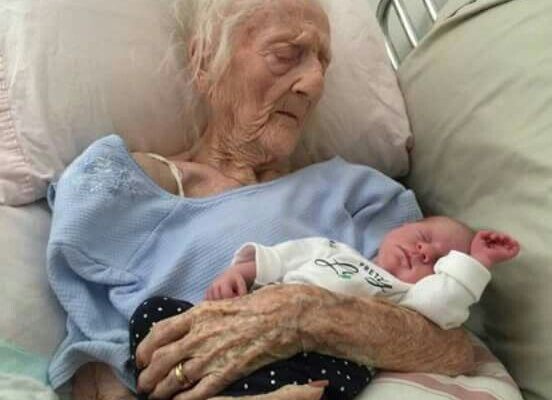
Editor’s note: The account presented in the original draft is not accompanied by names that can be independently verified, hospital records, police documentation, court filings, or reporting from a credible news outlet. It should therefore be treated as an unverified, fictional-style viral narrative rather than as established fact. The themes it raises—family separation, unanswered questions about identity, aging, adoption, and reconciliation—are real and can be discussed responsibly without presenting unconfirmed details as news.
Why Emotional Family-Secret Stories Spread Online
Stories built around a sudden revelation often travel quickly on social media. A hospital room, a newborn child, an elderly relative, a missing family member, and a long-hidden secret are all powerful narrative devices. They create immediate emotional stakes and encourage readers to continue to “the first comment” for an alleged conclusion.
That format does not, by itself, prove that a story is false. However, it is not evidence that the events occurred. Reliable reporting generally identifies the source of information, explains what facts have been confirmed, distinguishes allegations from evidence, and provides enough context for readers to assess a claim. Viral posts often do the opposite: they use dramatic dialogue, vague locations, unnamed institutions, and cliff-hanger wording while offering no way to verify the central events.
In this case, the story describes an older woman named Eleanor, a daughter named Margaret, a previously missing daughter named Clara, and a newborn called Noah. It also describes a hospital encounter and police involvement. No independently verifiable information accompanies those claims. Readers should avoid sharing such material as a factual report unless credible local journalism, official statements, or public records substantiate it.
How to Assess an Unverified Hospital or Family-Reunion Claim
Health-care settings frequently appear in online fiction because they provide an emotionally intense backdrop. In real life, hospitals have privacy duties and strict procedures for newborn care, patient information, discharge planning, and safeguarding. Details of an individual’s medical treatment or family circumstances are usually protected by privacy laws and professional confidentiality standards.
When evaluating a post involving a hospital, a child, or a possible missing-person case, readers can ask several practical questions:
- Is the story reported by a recognized news organization that names its sources and methods?
- Does it identify a real location, agency, hospital, or case number that can be checked?
- Are direct quotes attributed to people who can be independently identified?
- Does the post rely on urgent emotional language rather than evidence?
- Does it ask readers to click elsewhere for the supposed ending, donation, or “proof”?
- Have public authorities or established fact-checking organizations confirmed the central claim?
The absence of publicly available evidence does not settle every private family matter. Many legitimate reunions are private, and people have good reasons not to publicize personal histories. Still, privacy is different from proof. A responsible article should be clear about what is known, what is claimed, and what cannot be confirmed.
Family Separation and Lost Contact: Real Issues Behind Fictional-Style Posts
Although this particular account cannot be verified, separation from relatives is a serious experience shared by many families around the world. Separation can result from adoption, migration, conflict, domestic instability, incarceration, illness, estrangement, incomplete records, or decisions made under social and economic pressure. The emotional consequences may last for decades.
People who learn new information about their origins or relatives later in life can experience several feelings at once: relief, grief, anger, curiosity, loyalty conflicts, and uncertainty. Family members may also hold different versions of the past, especially where records are limited or decisions were made without open communication. Mental-health professionals often emphasize that there is no single “correct” emotional response to a reunion or the discovery of a family secret.
In the United States and many other countries, adoption and child-welfare records are governed by different laws depending on jurisdiction and the date of an event. Some adults seeking information may be able to use official record offices, licensed intermediary services, reputable reunion registries, or DNA databases, subject to informed consent and local legal requirements. It is important to approach these searches carefully because unexpected contact can affect multiple people, including individuals who were unaware of the search.
The Importance of Trauma-Informed Communication
When a family has experienced separation, secrecy, or long-term estrangement, an unexpected discovery can be overwhelming. Trauma-informed communication does not assume that every person has experienced trauma. Instead, it promotes safety, choice, trust, collaboration, and respect in sensitive conversations.
For relatives considering contact after years apart, a measured approach can be helpful. A brief initial message, shared through an appropriate intermediary when possible, may give the recipient time to decide whether and how to respond. People may benefit from speaking with a counselor, social worker, adoption-competent therapist, or legal adviser before making major decisions or sharing sensitive personal information.
It is also wise to avoid pressuring older relatives, new parents, or children to participate in a reunion for the sake of a social-media post. Family stories belong first to the people living them. Consent, privacy, and emotional readiness should be more important than producing a dramatic public narrative.
What Hospitals and Authorities Typically Do When a Child Needs Protection
Posts that suggest someone simply left a newborn in a hospital room with an unrelated patient can create misleading impressions about child safeguarding. Actual procedures differ by country and state, but hospitals generally have established systems for ensuring that a newborn’s care, identity, guardianship, and medical needs are addressed appropriately.
Medical staff are trained to escalate safeguarding concerns through designated channels. Depending on the circumstances, this can involve hospital social workers, child-protection agencies, law enforcement, or other relevant authorities. These professionals are expected to focus on the safety and welfare of the child while respecting legal due process and patient confidentiality.
People who believe a child is in immediate danger should contact local emergency services or the appropriate child-protection authority rather than relying on social-media speculation. In the United States, the Childhelp National Child Abuse Hotline provides confidential support and can help people identify relevant resources. For medical emergencies, local emergency services remain the appropriate option.

Why “Read the Continuation” Posts Require Extra Caution
Many viral narratives are designed around a technique called engagement bait. The opening offers an emotionally charged mystery; the reader is then directed to another comment, page, or link for an answer. This approach can increase clicks and shares even when a post lacks reporting or documentation.
Readers can protect themselves by pausing before reacting. Check whether the account behind the post has a record of publishing clearly labeled fiction, copied content, fabricated stories, or misleading headlines. Search distinctive phrases from the post alongside terms such as “fact check,” “news,” or “official statement.” Reverse-image search tools can also help determine whether an image has appeared in an unrelated context.
It is especially important not to identify or accuse real people based on vague online stories. Speculation can harm families, compromise privacy, and spread false information. A name, a photograph, or a shared physical feature should never be treated as proof of family connection or wrongdoing.
Supporting Families Through Reunions, Grief, and Uncertainty
The appeal of stories about reconciliation reflects a genuine human hope: that lost relationships can sometimes be repaired. Real reunions can be meaningful, but they are rarely as simple as a single dramatic encounter. They may involve gradual trust-building, difficult questions, conflicting memories, and boundaries that need to be honored.
Older adults may face particular challenges when major family information emerges later in life. They may be managing illness, limited mobility, caregiving needs, or bereavement alongside the emotional impact of the news. Family members can help by allowing time, listening without demanding immediate answers, and ensuring that the person has access to medical and emotional support.
New parents and grandparents may also need reassurance that a child should not become the symbol or solution for unresolved adult pain. The well-being of the child should remain central. This means protecting routine, privacy, caregiving stability, and age-appropriate boundaries.
For families dealing with unresolved questions about adoption, separation, or identity, support may be available through licensed mental-health professionals, social-service organizations, and official records services. Reputable guidance should be evidence-based, respectful of consent, and tailored to the laws and resources in the relevant location.
A Responsible Conclusion on the Viral Story
The original account uses a highly dramatic chain of events: a newborn arrives in a hospital room, a daughter recognizes a name, police are called, and a long-separated relative appears. Without credible evidence, it should not be repeated as a verified human-interest news story.
Its popularity nevertheless highlights enduring public interest in family identity, caregiving across generations, and the consequences of secrecy. These are meaningful subjects that deserve careful, factual coverage. The most constructive response to a viral story of this kind is not to assume it happened, but to recognize the real-life issues it echoes: families can be separated, people can seek answers for decades, and compassionate, professional support can matter when difficult truths emerge.
Readers should seek verified reporting when evaluating extraordinary personal claims, avoid amplifying unconfirmed allegations, and turn to qualified local services when a real child-safety or family-welfare concern arises.
Sources
Disclaimer: This content is intended for entertainment purposes only and is not based on real events.