A Baby’s Hair, a Family Superstition, and an Unverified Online Story
Stories about newborns, family secrets, inherited superstitions, and dramatic discoveries often spread quickly online. They are designed to create emotional tension: a baby is born with an unusual feature, an older relative warns of danger, and a hidden family history seems to explain the fear. While such narratives can be compelling as fiction or social-media storytelling, readers should be cautious about treating them as factual accounts without credible reporting or independent verification.
The story presented here centers on a newborn named Charlotte, her unusually thick hair, a crescent-shaped birthmark, and a family belief that these traits are connected to past misfortune. It also includes extraordinary claims involving a missing infant, a hidden locket, and a woman who says she has found her daughter. No verifiable evidence, named records, official statements, or credible news reporting is provided to establish that these events occurred.
What can be examined responsibly, however, are the real-world topics raised by the narrative: newborn hair, common birthmarks, the emotional influence of family beliefs, and the importance of relying on medical professionals and appropriate authorities when a child’s health, safety, or identity is involved.
Newborn Hair Can Vary Widely
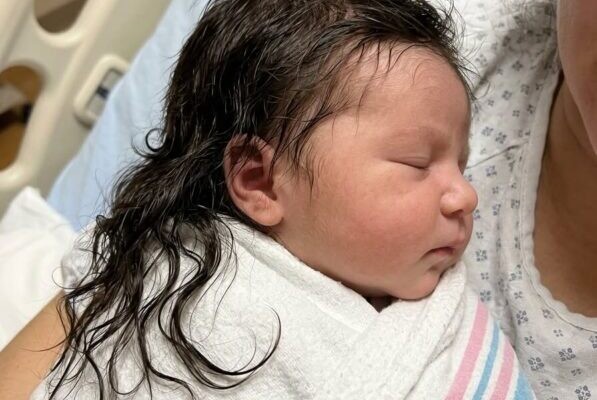
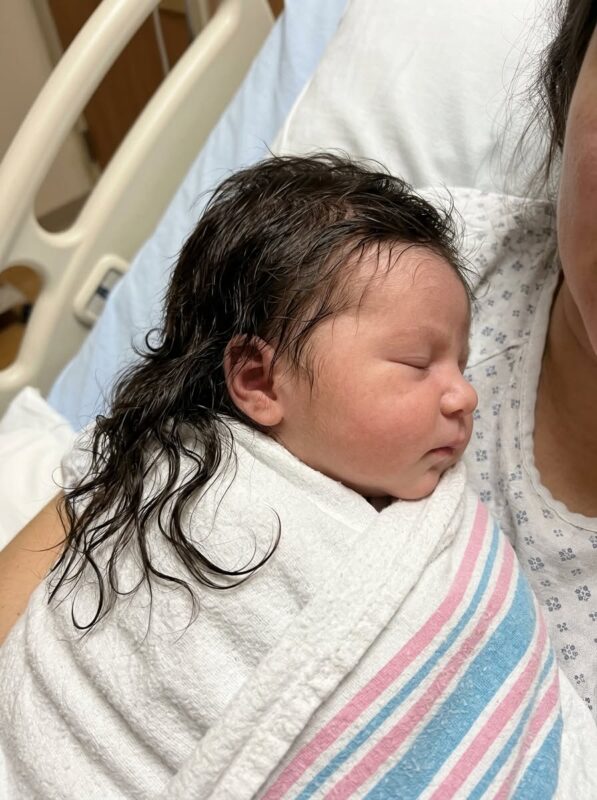
A baby being born with a full head of hair is not unusual. Newborn hair varies substantially in color, texture, thickness, and distribution. Some infants have very little visible hair at birth, while others have thick hair that can appear especially long when wet. These differences are generally normal and reflect genetics as well as normal prenatal development.
Parents may notice that a newborn’s hair changes during the first several months of life. Hair can thin or shed after birth, and the hair that grows later may have a different color or texture. According to pediatric health guidance, temporary hair shedding in infancy is common and usually does not signal a medical problem. A child born with dark, thick hair may later develop lighter or finer hair, while other children retain a similar appearance.
Hair care for infants should be gentle. A soft brush, mild baby shampoo when needed, and avoiding tight styles are commonly recommended approaches. If hair is long enough to gather, parents and caregivers should take care that ties are not tight around delicate strands or close to the scalp. Any concerns about scalp irritation, hair loss, rashes, or unusual skin changes should be discussed with a pediatrician.
Birthmarks Are Common and Usually Harmless
The narrative focuses on a small, round birthmark shaped like a crescent moon. In real life, birthmarks are common. They may be present at birth or become more visible during the first weeks or months of life. Their size, color, shape, and location vary widely.
Many birthmarks are harmless and require no treatment. Common examples include pigmented marks, such as café-au-lait spots or congenital moles, and vascular marks caused by blood vessels near the skin. Some vascular birthmarks may fade over time, while others remain visible. A pediatrician can usually assess a birthmark during routine infant visits and determine whether monitoring or referral to a dermatologist is appropriate.
A birthmark’s shape does not provide evidence of a family curse, inherited sorrow, or a prediction about a child’s future. Medical evidence does not support the idea that a visible skin mark can foretell tragedy or transmit misfortune from one generation to another. Families may attach cultural, spiritual, or personal meanings to physical features, but these beliefs should not replace medical assessment or affect a child’s care.
There are circumstances in which clinicians may recommend further evaluation. For example, a birthmark that changes rapidly, bleeds, ulcerates, covers a large area, appears near the eye, or is accompanied by other medical concerns may warrant professional review. Parents do not need to panic when they notice a mark, but documenting it with clear photographs and raising it during a routine medical appointment can be helpful.
Why Family Superstitions Can Feel Powerful After Birth
The period after a child is born can bring intense emotions. Parents may feel joy, exhaustion, uncertainty, protectiveness, and anxiety at the same time. Grandparents and other relatives may also experience powerful reactions, especially when they connect a new baby to past family experiences or unresolved grief.
Superstitions often develop as people seek explanations for painful events that were difficult to understand or control. In many cultures, families have traditions involving names, mirrors, hair, clothing, birthmarks, or rituals intended to protect a child. These beliefs can be meaningful as cultural practices when they are voluntary, non-harmful, and respectful of the parents’ role.
Problems can arise when fear-based beliefs pressure parents into making decisions that are not supported by evidence. Demanding that a child’s hair be cut, hiding mirrors, or insisting that a normal birthmark signals danger may increase anxiety rather than provide reassurance. New parents deserve calm, factual support from trusted medical professionals, family members, and community resources.
If relatives disagree strongly about a baby’s appearance, care, or traditions, a respectful conversation can help establish boundaries. Parents may acknowledge a relative’s feelings while making clear that healthcare decisions will be guided by qualified clinicians. For example, a parent might say: “I understand this reminds you of something painful. We will ask the pediatrician about the birthmark, but we will not make decisions based on fear.”
Grief, Uncertainty, and the Need for Compassion
The story includes a family member describing the disappearance of an infant many years earlier. The loss of a child, whether through death, disappearance, separation, or unresolved circumstances, can have lifelong psychological effects on relatives. Grief may resurface during later family milestones, including pregnancies and births.
It is important to approach such circumstances with compassion while avoiding unsupported assumptions. A person experiencing unresolved grief may interpret ordinary events through the lens of past trauma. That response does not make a supernatural explanation accurate, but it does signal that emotional support may be needed.
Families facing a history of loss can consider speaking with a licensed mental health professional, grief counselor, or primary care provider. Professional support can help relatives communicate about difficult memories without placing fear or responsibility on a new child. It can also help parents protect their own well-being during a demanding stage of life.
In urgent situations, including concerns that someone may harm themselves, another person, or a child, families should contact local emergency services or an appropriate crisis service. For non-emergency emotional support, reputable healthcare providers and community organizations can offer referrals to counseling and bereavement resources.
Extraordinary Claims Require Reliable Evidence
The more dramatic elements of the narrative—a concealed locket, a photograph of a missing child, an engraved message, and an unexpected visitor claiming a biological connection—should not be accepted as fact simply because they are presented in a suspenseful format.
Real cases involving missing children, disputed parentage, adoption records, or possible family reunification require careful handling. They are not resolved through speculation, appearance, social-media posts, or assumptions based on birthmarks. Depending on the circumstances, appropriate steps may include contacting law enforcement, child-protection authorities, legal representatives, accredited adoption agencies, or qualified medical and genetic professionals.
DNA testing can sometimes help establish biological relationships, but it must be conducted responsibly and interpreted within legal, ethical, and family contexts. Consumer genetic tests may provide clues about family connections, but they are not a substitute for legal documentation, professional testing, or an official investigation when a child’s identity or safety is in question.
Readers should be especially careful before sharing claims about allegedly missing people. Publishing or repeating unverified allegations can cause distress, spread misinformation, and potentially interfere with legitimate investigations. Credible reporting on such cases normally cites named authorities, court documents, police statements, verified family representatives, or established news organizations with clear editorial standards.
How to Evaluate Emotional Online Stories
Emotionally charged posts often use familiar techniques to encourage readers to continue scrolling or share the content. These may include cliffhanger language, vague references to a “full story,” dramatic dialogue without context, and claims that are impossible to confirm from the post alone. The presence of these techniques does not automatically prove that a story is false, but it should encourage skepticism.
Before accepting or sharing a viral family story, readers can ask several practical questions:
- Does the post identify a credible reporter, publication, organization, or official source?
- Are dates, locations, records, or statements from relevant authorities available?
- Do independent reputable outlets report the same facts?
- Does the story use sensational language while withholding basic verifiable details?
- Could the account be fictional, embellished, copied, or generated primarily to attract engagement?
Reliable information about infant health should come from pediatricians, public-health agencies, major medical institutions, and peer-reviewed research. When it comes to missing-person cases or family identity claims, readers should rely on official authorities and established news organizations rather than anonymous posts or viral comment threads.
Supporting New Parents With Evidence-Based Advice
For parents of a newborn, the most useful response to questions about hair, skin marks, feeding, sleep, or development is usually straightforward: bring the concern to a healthcare professional who knows the child’s medical history. Routine well-child visits provide an opportunity to discuss visible birthmarks, scalp care, developmental milestones, and any family health history that may be relevant.
Parents can also keep a simple record of questions that arise between appointments. If a birthmark changes in appearance, a dated photograph can help a clinician assess whether there has been meaningful change. If relatives raise concerns based on tradition, parents can ask their pediatrician for clear information that may ease worries without dismissing family members harshly.
Above all, a newborn should not be burdened with a family’s fears, unresolved losses, or superstition. A baby’s thick hair or distinctive birthmark is a physical characteristic, not a forecast. Compassion for family history and commitment to evidence-based care can coexist.
Conclusion: Curiosity Should Be Paired With Care
The account of Charlotte, the family’s superstition, and the alleged discovery of a hidden past is best approached as an unverified dramatic narrative rather than documented reporting. Its themes may resonate because birth, family memory, and unanswered questions are emotionally powerful. Yet real-life decisions about infants must be rooted in medical evidence, calm communication, and trusted professional guidance.
Newborn hair and birthmarks are common topics for parents, and most are normal variations in early development. When concerns arise, a pediatrician or dermatologist can provide appropriate evaluation. When families carry grief or fear from the past, counseling and supportive conversations can help prevent those feelings from shaping a child’s future. And when extraordinary claims appear online, the most responsible response is to seek credible evidence before believing or sharing them.
Sources
Disclaimer: This content is intended for entertainment purposes only and is not based on real events.