
From Modeling Dreams to Social Media Recognition
Gracie Bon, a model and social media personality from Panama, has built a large online audience by sharing fashion content, personal experiences, and messages about body confidence. Known for her distinctive figure and confident presence, she has become a recognizable name in the world of plus-size modeling.
Her journey into the fashion industry was not always straightforward. Like many aspiring models, Bon wanted to appear in magazines, work with fashion brands, and build a career in front of the camera. However, traditional beauty standards often left limited space for women whose bodies did not fit the industry’s preferred measurements.
Rather than abandoning her ambitions, she gradually developed an audience through social media. Online platforms gave her an opportunity to present her own style, connect with followers, and work with brands interested in a broader range of body types.
Her visibility has also made her a frequent subject of online discussion. While many followers admire her confidence, others focus on her appearance, speculate about cosmetic procedures, or question how much of her figure is natural.
Bon has repeatedly responded to this attention by speaking about her experiences and explaining that her body cannot be understood through photographs alone.
Gracie Bon Has Spoken Publicly About Lipedema
One of the most important parts of Bon’s personal story is her experience with lipedema.
In February 2025, the Panamanian model discussed the condition in a social media video. According to reports by Panamanian publication Día a Día and People en Español, she explained that she had lived with lipedema for much of her life and wanted to correct assumptions about the appearance of her legs.
She described experiencing bruising, swelling, and discomfort. She also explained that some people had accused her of using cosmetic procedures or injections to change the appearance of her lower body. Bon said that her condition was responsible for the features people were questioning.
Lipedema is a medical condition involving an abnormal accumulation of fat, most commonly affecting the legs and sometimes the arms. It is seen primarily in women and can create a noticeable difference in proportions between the lower and upper body.
According to the UK’s National Health Service, people with lipedema may experience tenderness, pain, heaviness, and easy bruising in affected areas. The condition can also affect everyday activities and quality of life.
Importantly, lipedema is not simply another term for being overweight. A person can have the condition at different body weights, and ordinary weight-loss efforts do not necessarily remove the affected fat.
The condition also varies from person to person. Some individuals experience relatively mild symptoms, while others face significant discomfort or mobility challenges.
Bon’s decision to discuss her experience has helped bring more attention to a condition that many people may not recognize. Her personal account should not be treated as medical advice or as a way to diagnose lipedema in someone else. However, it illustrates why judging a person’s health from appearance alone can be misleading.
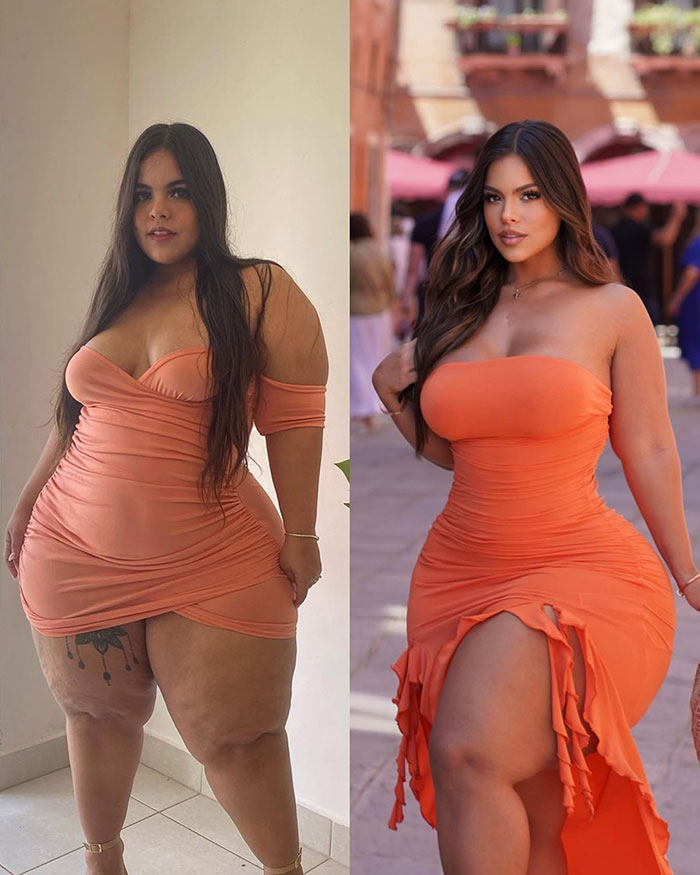
Her Weight-Loss and Cosmetic Surgery Journey
Lipedema is only one part of Bon’s story. She has also spoken openly about undergoing weight-loss and cosmetic procedures.
In a television appearance in June 2024, she discussed her earlier struggles with her weight and the decisions that led her to undergo gastric bypass surgery. Reports from Spanish-language media covering the interview described how she had experienced physical discomfort and difficulty with her body image before the operation.
Bon said that her decision was influenced by her relationship at the time. According to her account, her former husband made comments about her appearance, and she wanted to change her body partly because she hoped to please him.
She later described regretting the circumstances in which she made that decision. Her reflections focused not only on the physical consequences of surgery but also on the emotional pressure she felt when she was younger.
In the same interview, she discussed additional procedures following significant weight loss. These included operations intended to address excess skin and alter the appearance of different parts of her body.
Media reports have described several procedures in her history, including gastric bypass, abdominal surgery, and liposuction. However, accounts do not always present an identical list of operations, so it is more accurate to describe her experience broadly rather than claim that every reported procedure has been independently confirmed.
Bon’s story highlights an important distinction: weight-loss surgery and cosmetic surgery are not interchangeable. Gastric bypass is a major medical procedure used in the treatment of certain cases of obesity. Cosmetic procedures, meanwhile, are intended to change particular physical features. Both involve individual decisions and potential risks that require careful consideration with qualified medical professionals.
Her experience should not be interpreted as a recommendation for or against any particular operation. It is a personal account of choices she has discussed publicly.
The Difference Between Lipedema and Cosmetic Procedures
Online discussions about Bon often become focused on whether her appearance is the result of lipedema, surgery, or both.
This debate can overlook an important point: medical conditions and cosmetic procedures are not mutually exclusive.
A person may have a medical condition affecting the distribution of body fat while also choosing to undergo surgery for other reasons. The existence of one does not automatically rule out the other.
In Bon’s case, she has publicly discussed both lipedema and previous operations. She has also specifically challenged claims that her legs were created through injections or cosmetic procedures.
The NHS explains that lipedema commonly affects the legs and may also involve the arms. Symptoms can include pain, tenderness, swelling, and easy bruising. The condition is generally assessed through medical history and physical examination rather than by judging photographs.
That distinction matters because social media images cannot establish the cause of someone’s body shape. Lighting, camera angles, clothing, editing, surgery, genetics, and medical conditions can all influence how a person appears in photographs.
It is therefore more responsible to rely on what Bon has actually shared rather than treating online speculation as established fact.
Building a Career Beyond Traditional Beauty Standards
Bon’s popularity also reflects a wider change in the way models and influencers build their careers.
For many years, mainstream fashion advertising often presented a narrow image of beauty. Models were expected to meet specific height, weight, and proportion requirements, leaving fewer opportunities for people with different body types.
Social media has created additional routes into the industry. Models can now build audiences independently, share their own photographs, collaborate with fashion labels, and develop commercial opportunities without relying entirely on traditional agencies.
Bon has used this environment to establish her public identity. Her content includes fashion, lifestyle posts, and discussions about confidence and her personal experiences.
Her visibility has also attracted commercial opportunities and attention from audiences beyond Panama. She has been associated with fashion brands and has developed a significant following across social platforms.
For plus-size models, this kind of visibility can matter. It gives audiences access to clothing inspiration and representation that may have been less common in traditional advertising.
However, online popularity also comes with challenges. Public figures can face constant commentary about their bodies, relationships, and personal decisions. The same platforms that create opportunities can expose creators to criticism and intrusive speculation.
Responding to Criticism and Embracing Her Appearance
Bon’s appearance has become one of the most frequently discussed aspects of her online presence. Some people praise her confidence, while others question whether her proportions are natural or appropriate for fashion modeling.
She has responded by emphasizing that she does not believe women should feel ashamed of their bodies simply because they look different from conventional beauty ideals.
Her message has included a defense of stretch marks, cellulite, and other features that are often criticized in heavily edited images.
This position is consistent with a broader body-confidence movement that encourages people to avoid measuring their worth against unrealistic expectations.
Body confidence does not mean that everyone must feel positive about their appearance every day. Nor does it require people to avoid medical treatment, weight changes, or cosmetic procedures. It is better understood as the freedom to make personal choices without being defined entirely by other people’s judgments.
Bon’s own story illustrates that complexity. She has discussed changing her body through surgery while also encouraging others not to feel pressured to meet someone else’s ideal.
Her message is not that every person should make the same choices. Instead, her public comments suggest that decisions about appearance should belong to the individual rather than being dictated by online criticism or relationship pressure.
The Personal Side of an Online Career
Bon’s public life also includes a commercial side. Like other social media personalities, she has used her audience to develop income opportunities beyond conventional modeling.
Reports have described her work as a creator of subscription-based adult content. This is part of her professional activity, but it should not overshadow the other aspects of her career.
Influencers increasingly operate across several platforms and business models. Their work may involve brand partnerships, fashion campaigns, sponsored posts, subscriptions, and direct engagement with followers.
For creators with large audiences, social media can become both a marketing channel and a professional platform. At the same time, the attention they receive can make it difficult to separate public content from private life.
Bon’s experience demonstrates how a recognizable online image can create opportunities while also inviting intense public scrutiny.
Why Her Story Deserves More Than Comments About Her Appearance
It is easy to reduce a social media personality to the physical feature that first attracts attention. In Bon’s case, much of the online discussion has centered on her figure.
But her story includes more than appearance. It involves the difficulties of entering a competitive modeling industry, the experience of living with a medical condition, decisions about weight-loss surgery, and the process of developing confidence after difficult personal experiences.
Her openness has also created opportunities to discuss lipedema, a condition that is often misunderstood. Although one influencer’s experience cannot represent everyone living with the condition, personal accounts can encourage people to learn more and approach unfamiliar medical issues with greater understanding.
At the same time, her surgical history is a reminder that decisions about the body can be complicated. They may involve physical health, emotional well-being, personal relationships, and social expectations.
No single photograph can tell that entire story.
Gracie Bon continues to build her career in the public eye, where admiration and criticism often appear side by side. Whatever opinions people may have about her fashion choices or appearance, her experiences are best understood through the statements she has actually made rather than exaggerated headlines or assumptions.
Her journey offers a broader reminder: people are more than their measurements, and a person’s health, confidence, and personal history cannot be accurately judged from the outside.