After a long day of sitting, standing, commuting or exercising, many people look for a simple way to rest their legs and settle their mind. The Legs Up the Wall position is a gentle, restorative yoga-inspired posture that requires little more than clear floor space, a wall and a few quiet minutes.
Known in yoga as Viparita Karani, the practice involves lying on your back while resting your legs vertically against a wall. It is not a cure for medical conditions, and its effects should not be overstated. However, elevating the legs can be a comfortable self-care measure for temporary leg heaviness after everyday activity, while the slow breathing and stillness involved may help people relax.
Its accessibility is a major reason for its popularity. You do not need advanced flexibility, special clothing or a gym membership. The posture can be adjusted with cushions, bent knees or more distance from the wall, making it easier to adapt to individual comfort levels.
What Is the Legs Up the Wall Position?
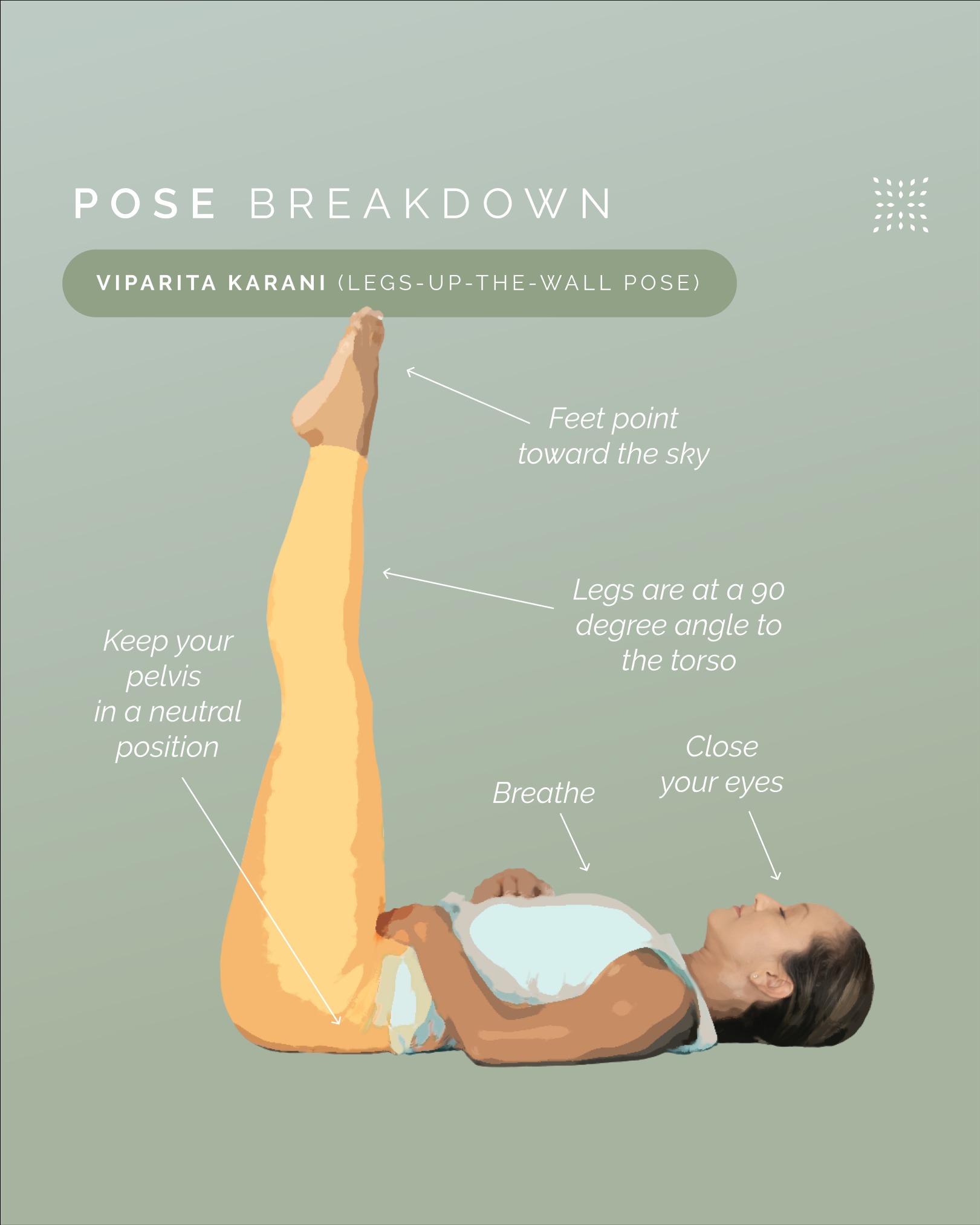
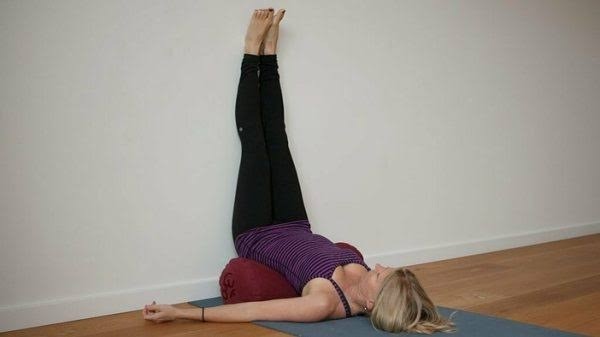
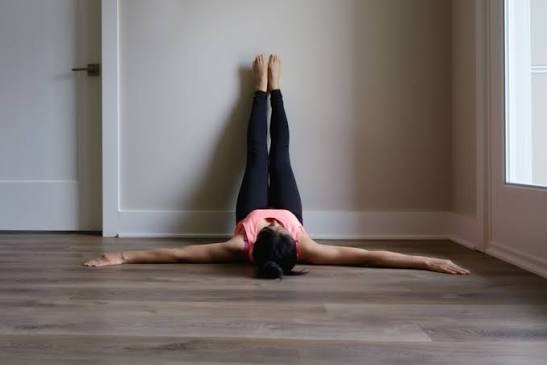
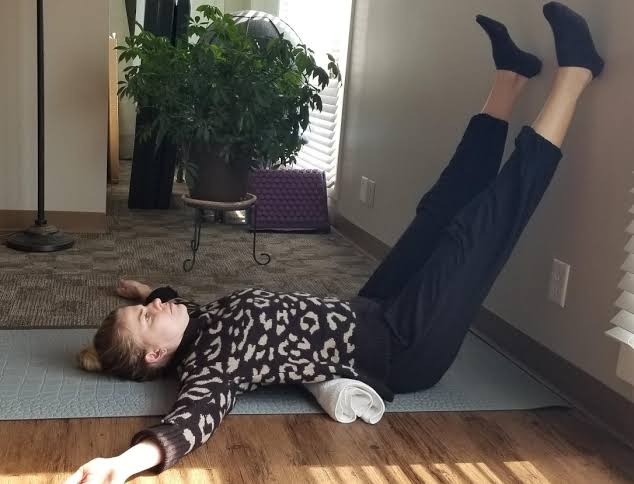
Legs Up the Wall is a supported inversion, meaning the legs are elevated while the upper body remains on the floor. In its most familiar form, a person sits sideways beside a wall, gently rolls onto their back and swings both legs upward so that the calves and heels rest against the wall. The body forms a soft L shape.
Your hips do not have to touch the wall. In fact, moving them several inches away can reduce the stretch in the hamstrings and make the posture more comfortable. Some people also place a folded blanket or firm cushion under the pelvis, but this is optional. The goal is not to create a dramatic stretch or force a precise yoga shape. It is to find a stable position in which the body can rest comfortably.
The underlying idea is straightforward: when the legs are raised, gravity may help reduce the temporary pooling of fluid in the feet and lower legs that can occur after prolonged sitting or standing. Elevation is commonly included in general self-care guidance for mild swelling related to everyday activity or minor injury. Still, swelling can have many causes, and leg elevation is not a substitute for clinical evaluation when symptoms are new, severe or persistent.
Potential Benefits of Legs Up the Wall
May Ease Temporary Feelings of Heavy or Tired Legs
Long periods on one’s feet can leave the calves, ankles and feet feeling tired or heavy. Likewise, extended sitting can contribute to stiffness and reduced movement in the lower body. Resting with the legs elevated may provide a pleasant sense of relief by taking pressure off the feet and allowing the lower body to rest.
This can be especially appealing after travel, office work or a day involving prolonged standing. The position does not repair damaged veins, treat circulation disorders or replace regular movement. Yet, for otherwise healthy people experiencing ordinary fatigue, a brief period of supported rest can be a reasonable part of an end-of-day routine.
May Help With Mild, Temporary Lower-Leg Swelling
Mild ankle or foot swelling can occur after sitting or standing for many hours, during hot weather, or following certain routine activities. Raising the legs above the level of the heart may help gravity encourage fluid to move away from the lower extremities. The Mayo Clinic and other health organizations commonly recommend leg elevation as one possible self-care strategy for some forms of minor swelling.
It is important to distinguish temporary swelling from symptoms that need medical attention. Sudden swelling, swelling in only one leg, or swelling accompanied by pain, redness, warmth, chest discomfort or shortness of breath may indicate a serious health concern. These symptoms should be assessed promptly by a qualified clinician rather than managed at home with a yoga pose.
Supports a Relaxation Routine
One of the clearest benefits of Legs Up the Wall may be the opportunity it creates to pause. The pose naturally limits multitasking: you lie down, let the shoulders soften and spend a few minutes away from screens, work and household demands. Pairing the posture with calm, unforced breathing can make it a useful relaxation ritual.
Research on yoga and mind-body practices suggests that these approaches may help some people manage stress and improve general well-being, although effects vary between individuals and studies. A single posture should not be presented as a treatment for anxiety, depression or insomnia. Still, a quiet routine that encourages slow breathing and rest may be a helpful complement to evidence-based care and healthy sleep habits.
Offers a Gentle Stretch for Some People
Depending on how close the hips are to the wall, the position may create a mild stretch through the calves, hamstrings and the back of the legs. Those with tight hamstrings should move farther from the wall or bend their knees. Stretching should feel mild and manageable, never sharp, painful or numbing.
Because the posture is supported, it can feel less demanding than standing stretches. It is not a replacement for a complete mobility or exercise programme, but it may complement regular walking, strength training and movement breaks throughout the day. Public health guidance generally recommends regular physical activity because it benefits cardiovascular health, muscle strength, mobility and overall well-being.
May Feel Comforting After Sitting or Standing
Comfort is personal, but many people enjoy this pose because it changes the usual load on the body. The feet no longer support body weight, the lower back can rest against the floor, and the legs can relax without needing to stay active. For people who spend most of the day in one position, that change alone may feel restorative.
Regular movement remains important. If work requires prolonged sitting, brief walking and stretching breaks are generally more useful for overall health than staying in any one position for too long. Legs Up the Wall can be a restful addition to those habits, rather than a replacement for them.
Can Become a Simple Bedtime Wind-Down Practice
A predictable evening routine can help signal that the day is ending. Some people use Legs Up the Wall for five to 10 minutes before bed, perhaps while listening to calm music or practising gentle breathing. This may help create a transition between daily responsibilities and rest.
However, people with reflux or heartburn may find lying flat after eating uncomfortable. The National Institute of Diabetes and Digestive and Kidney Diseases advises people with gastroesophageal reflux symptoms to avoid lying down for several hours after a meal. If reflux is an issue, consider doing the pose earlier in the day or choose a more upright position instead.
What Legs Up the Wall Cannot Do
Online wellness claims can make simple practices sound more powerful than the evidence supports. Legs Up the Wall does not “detox” the body, eliminate varicose veins, cure digestive problems, reverse poor circulation or replace medical treatment. The liver, kidneys, lungs and digestive system have established roles in processing and eliminating waste; a particular yoga posture does not take over those functions.
There is also limited direct scientific evidence that this specific position improves digestion, treats constipation, relieves menstrual pain or produces lasting changes in circulation. People may feel calmer or more comfortable after practising it, but individual experience should not be confused with proof of treatment effectiveness.
For varicose veins, leg elevation may temporarily ease discomfort for some people, but it does not remove enlarged veins or address their underlying cause. Anyone concerned about ongoing leg pain, visible vein changes, skin changes or repeated swelling should seek personalised medical advice.
How to Do Legs Up the Wall Safely
The safest version is the one that feels comfortable and does not cause pain. Follow these simple steps:
- Choose an open area beside a stable wall and place a yoga mat, blanket or soft surface on the floor.
- Sit sideways with one hip near the wall.
- Lower your upper body to the floor while gently swinging your legs up the wall.
- Adjust your distance from the wall. Move farther away if the backs of your legs feel too tight.
- Rest your arms comfortably by your sides, on your abdomen or in another relaxed position.
- Breathe naturally. There is no need to hold your breath or use a demanding breathing technique.
- Start with about five minutes. If you remain comfortable, gradually work up to 10 or 15 minutes.
- To come out, bend your knees, roll gently onto one side and pause before standing up.
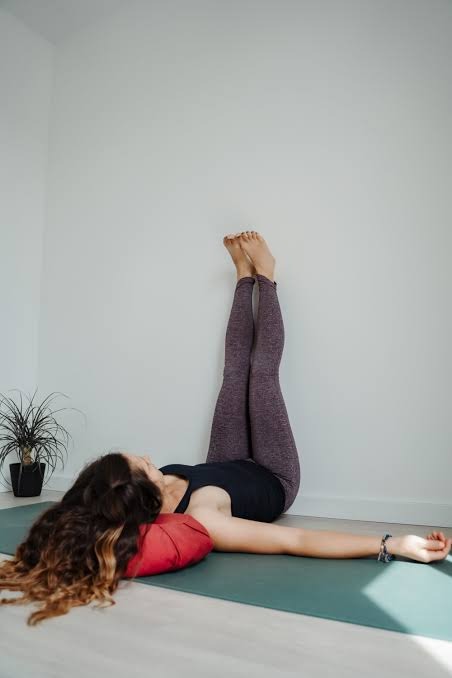
A folded blanket under the head may make the neck more comfortable. A bolster under the pelvis can also be pleasant for some people, but it may make the position feel more intense. If you feel pressure in the head, eye discomfort, tingling, numbness, dizziness or pain, leave the pose slowly and rest in a neutral position.
Who Should Use Extra Caution?
Even gentle exercise positions are not appropriate for everyone. Speak with a healthcare professional before trying Legs Up the Wall if you have a heart condition, uncontrolled high blood pressure, significant circulation problems, glaucoma or another eye condition affected by changes in pressure, or if lying flat causes breathing difficulties.
People with reduced mobility should consider whether they can enter and leave the position safely. A bed, sofa or cushioned chair may offer a more practical way to elevate the legs. Assistance from another person may be appropriate when balance or fall risk is a concern.
Do not rely on leg elevation for unexplained symptoms. Seek urgent medical care for sudden one-sided leg swelling, leg pain with warmth or redness, fainting, chest pain, or difficulty breathing. These can be warning signs of conditions that require prompt assessment.
Making the Practice Part of Everyday Self-Care
Legs Up the Wall works best when viewed realistically: it is a small, low-cost practice that may help you rest, relax and temporarily relieve everyday leg fatigue. It is not necessary to do it every day, and there is no ideal time that suits everyone.
You might try it after work, after a long journey, following a walk, or as part of a calm evening routine. Keep the session short at first, stay attentive to comfort and avoid treating the pose as a test of flexibility. A few quiet minutes can be enough.
For long-term leg and general health, combine rest with regular movement, adequate hydration, balanced nutrition and medical care when needed. The simplest message is also the most accurate: putting your feet up can feel good, and for many people, it can be a practical moment of rest in an otherwise busy day.
Sources
Disclaimer: This content is intended for entertainment purposes only and is not based on real events.