Inside a $65,000 Unfinished Curved House: Potential, Costs, and Renovation Considerations
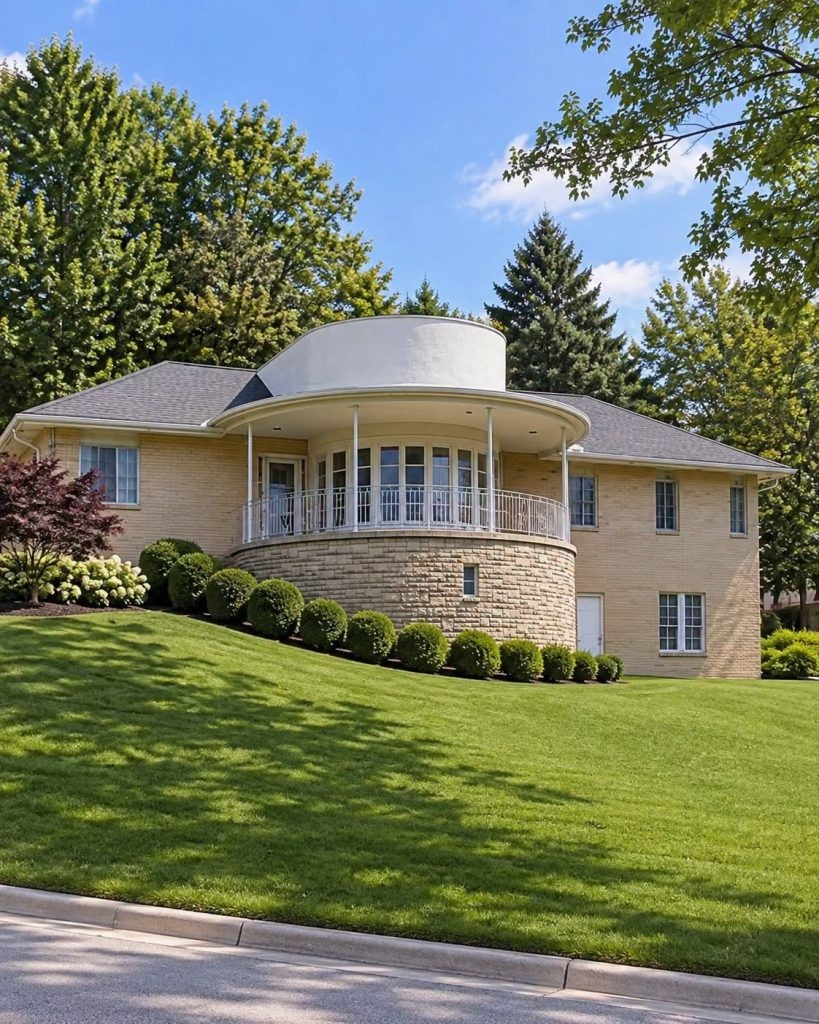
At first glance, this unusual house appears to belong in an architectural magazine rather than a conventional property listing. Smooth curves, cylindrical forms, elevated sections, and lines reminiscent of a ship’s deck give the structure a distinctive visual identity. It does not blend quietly into the landscape. Instead, it presents a bold design statement that may appeal to buyers seeking a home with personality, creative potential, and a clear departure from standard residential construction.
Yet the striking exterior tells only part of the story. Behind its sculptural appearance, the property is unfinished. Its interior reportedly includes raw surfaces, exposed structural components, and rooms that have not yet been completed as conventional living spaces. That contrast is central to the home’s appeal and its challenge: buyers are not simply purchasing a ready-to-move-in residence, but an incomplete project that may require detailed planning, specialist advice, financing, and a realistic construction budget.
With an advertised price of $65,000, the property may initially seem like an affordable route into distinctive architecture. However, the purchase price of an unfinished house is only one part of the financial picture. The ultimate value depends on the building’s condition, location, land ownership arrangements, permits, utilities, code compliance, and the cost of completing the work.
A Home Defined by Curves and Character
Architectural design can strongly influence the way people experience a home. Straight walls, rectangular rooms, and standard rooflines dominate most residential construction because they are familiar, efficient, and generally easier to build. A curved structure introduces a different spatial language. Rounded forms can create flowing transitions between rooms, unusual sightlines, and exterior silhouettes that feel more sculptural than conventional.
The house described here appears to use bold cylindrical and ship-like elements that may bring Art Deco, modernist, or futuristic architecture to mind. Art Deco, an influential design movement that reached prominence during the 1920s and 1930s, often featured streamlined forms, geometric decoration, and a fascination with modern transportation and industry. While a property does not need to be an officially documented Art Deco building to evoke that style, visual references to ocean liners, portholes, curves, and horizontal lines can create a similar impression.
For some prospective buyers, this individuality is the property’s greatest asset. A home with a memorable exterior can offer an alternative to mass-produced housing and may suit owners interested in design, restoration, artistic projects, or unconventional living. It could also appeal to people who want to create a studio, retreat, guest accommodation, or personal residence, subject to all local planning and zoning requirements.
However, distinctive architecture is not automatically easier to maintain or renovate. Curved walls can require custom cabinetry, specialized finishes, non-standard roofing materials, and careful waterproofing. Before making an offer, a buyer would need qualified professionals to evaluate how the design affects practical issues such as drainage, insulation, ventilation, structural stability, access, and future repairs.
The Reality of an Unfinished Interior
An unfinished home can be difficult to assess from photographs alone. Exposed walls and incomplete rooms may represent an early stage of a well-planned renovation, or they may indicate a project that stopped because of cost, permitting, ownership, or structural complications. The difference matters greatly.
In a partially completed building, buyers should establish what has already been done and whether the work was approved where permits are required. Important questions may include whether the foundation is sound, whether the roof is watertight, whether electrical and plumbing systems are installed correctly, and whether heating, cooling, water, wastewater, and internet services are available or feasible. A property that looks close to completion may still need substantial work before it can legally and safely be occupied.
The U.S. Department of Housing and Urban Development notes that homebuyers should obtain an independent inspection when appropriate, rather than relying solely on a seller’s description or visible condition. For an unusual or incomplete property, a standard inspection may not be enough. Depending on the building’s materials and design, buyers may need a structural engineer, licensed electrician, plumber, roofing specialist, surveyor, or architect to provide additional evaluations.
A professional assessment can help distinguish cosmetic incompleteness from serious construction concerns. Unpainted surfaces and unfinished flooring may be relatively manageable. Problems involving foundations, moisture intrusion, electrical safety, load-bearing walls, or unapproved additions can be far more expensive and time-consuming to resolve. No prospective buyer should assume that a low listing price reflects the full cost of ownership.
Why a $65,000 Price Tag Requires Context
A $65,000 listing price can attract attention, especially in housing markets where finished homes often cost far more. But real estate prices depend heavily on local conditions. Without verified information about the property’s location, acreage, legal status, taxes, utility access, and condition, it is not possible to determine whether the price represents a bargain, a fair valuation, or a reflection of major work still required.
The cost of finishing a house can vary widely. Labor rates, material prices, availability of contractors, local building rules, and the extent of structural work all affect the final budget. Renovating an unconventional structure may also limit the number of contractors willing to take on the project. Those with the necessary experience may charge more because custom work often requires extra time, planning, and specialized materials.
Buyers should also account for costs beyond construction. These can include inspections, surveys, title work, insurance, permits, architectural plans, engineering reports, legal advice, property taxes, utility connections, temporary accommodation, and contingency funds. A commonly discussed approach to renovation budgeting is to reserve money for unexpected issues, since older, unfinished, or unusual buildings can reveal problems after work begins. The appropriate contingency will depend on the project and should be discussed with qualified local professionals.
Financing can also be more complicated than for a conventional completed home. Lenders may apply stricter standards to properties that are not habitable, lack a certificate of occupancy, or require major rehabilitation. Some buyers may need renovation-specific loans, construction financing, or cash resources. Mortgage availability and requirements differ by country, region, lender, and borrower circumstances, so professional financial guidance is important before committing to a purchase.
Key Due Diligence Steps Before Buying an Unfinished House
Anyone considering an unfinished architectural property should approach the decision with patience and careful documentation. Emotional attachment to a dramatic design can be understandable, but it should be balanced with practical investigation.
Confirm ownership, boundaries, and land status
A title search or equivalent legal review can help confirm who owns the property and whether there are liens, easements, restrictions, boundary questions, or other issues affecting its use. A current survey may be necessary if boundaries are unclear or if additions appear close to neighboring land.
Review permits and planning records
Local planning and building authorities may hold records showing whether construction permits were issued, whether inspections were completed, and whether any violations remain unresolved. Buyers should ask whether the structure can be legally occupied in its current state and what approvals may be needed to finish it.
Commission independent inspections
An independent inspector can identify visible concerns, but specialized reviews may be needed for foundations, framing, roof systems, mechanical installations, septic systems, wells, or drainage. For a house built with unusual curves or custom shapes, an engineer or architect may be particularly valuable.
Obtain written renovation estimates
It is wise to seek estimates from licensed contractors before completing a purchase, where access and local rules allow. Estimates should identify what is included, what remains uncertain, and whether custom fabrication or code upgrades are likely. Comparing more than one estimate can offer a clearer view of likely costs.
Assess insurance and occupancy options
Insurance providers may have specific requirements for vacant, unfinished, or under-renovation properties. Buyers should confirm whether coverage is available during construction and whether the home can be occupied while work is underway. Safety, legal occupancy standards, and insurer conditions should always guide these decisions.
The Appeal of a Blank Canvas
Despite the risks, unfinished homes can offer meaningful creative freedom. Rather than adapting to someone else’s choices of layout, finishes, lighting, and storage, a buyer may be able to shape the interior around personal needs. A curved home could potentially feature custom built-in furniture, open-plan gathering areas, carefully placed windows, and materials chosen to complement the building’s unusual geometry.
Thoughtful renovation can also improve comfort and efficiency. Depending on the structure and local climate, upgrades might include insulation, high-performance windows, efficient heating and cooling equipment, low-flow plumbing fixtures, and durable exterior materials. The feasibility of each improvement depends on the home’s construction and should be evaluated by qualified professionals.
Adaptive reuse and restoration have broader cultural value as well. Preserving an unusual building can prevent a distinctive piece of local architecture from being lost. Across many countries, architects, preservation groups, and communities have supported the reuse of older or unconventional structures when projects can be completed safely, lawfully, and sustainably. Not every unusual property has formal heritage status, but architectural diversity can contribute to the character of neighborhoods and communities.
Who Might Be Suited to This Type of Property?
This kind of house is unlikely to suit every buyer. People who need immediate occupancy, have a fixed and limited budget, or prefer predictable maintenance costs may find a completed conventional home more practical. Unfinished construction can create delays, stress, and expenses that are difficult to forecast.
On the other hand, the property may appeal to a buyer who has renovation experience, access to trusted professionals, adequate reserves, and a genuine appreciation for non-traditional design. It may also interest someone prepared to manage a phased project over time, provided that the building can be secured, insured, and legally maintained during the process.
The best buyer is not simply someone attracted to the low asking price. It is someone who understands both the possibilities and the responsibilities involved. A unique house can become an exceptional home, but only when creative ambition is matched by sound engineering, clear legal documentation, realistic finances, and careful project management.
Final Perspective on the Unfinished Curved House
The real story behind this $65,000 unfinished house is not merely its unusual shape or attention-grabbing price. It is the tension between imagination and practical reality. From the outside, its curves and ship-like form suggest a bold architectural vision. Inside, the unfinished spaces represent work still to be done and decisions still to be made.
For a well-prepared buyer, the home may offer an opportunity to complete a rare and highly personal living space. For others, the unknowns may outweigh the appeal. The most responsible way to view the property is neither as an effortless bargain nor as an impossible challenge, but as a potential renovation project requiring careful due diligence.
Before purchasing any unfinished home, buyers should verify the listing details, seek independent inspections, review permits, calculate total costs, and obtain professional legal and financial advice. With those safeguards in place, an unconventional structure can be evaluated on more than appearance alone—and its future can be decided with confidence rather than assumption.
Sources
Disclaimer: This content is intended for entertainment purposes only and is not based on real events.