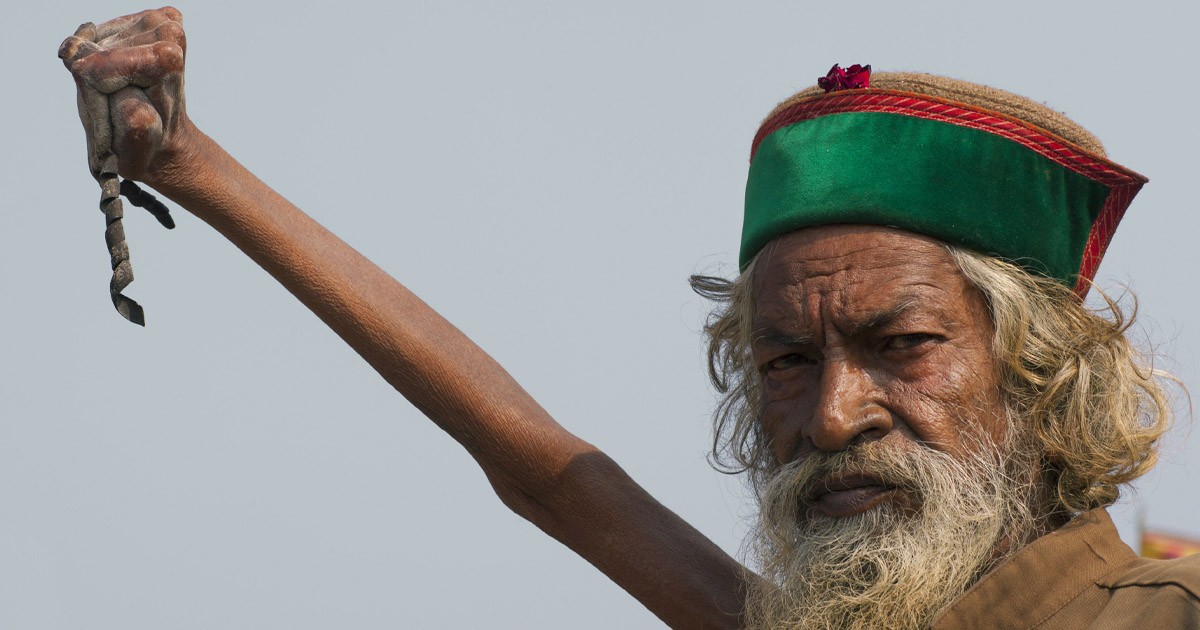
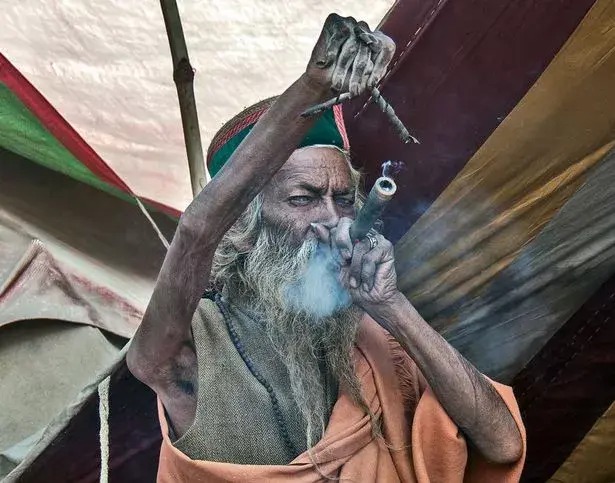
For more than five decades, photographs of an Indian ascetic named Amar Bharati have fascinated people around the world. His right arm remains raised above his head, a position that appears almost impossible to maintain for such a long period.
At first glance, the image naturally creates questions. Why would someone voluntarily keep an arm raised for years? What happens to the human body when a limb remains almost completely still for decades? And perhaps most importantly, what does such an extraordinary gesture mean to the person who made the commitment?
Amar Bharati’s story sits at the intersection of spirituality, cultural tradition, physical endurance, and human curiosity. While some accounts surrounding his condition contain extraordinary claims that are difficult to independently verify, the broader story is connected to the Hindu tradition of asceticism and the concept of making personal sacrifices as an expression of devotion.
His raised arm has reportedly become a symbol of his dedication to Shiva and his desire for peace.
Who Is Amar Bharati?
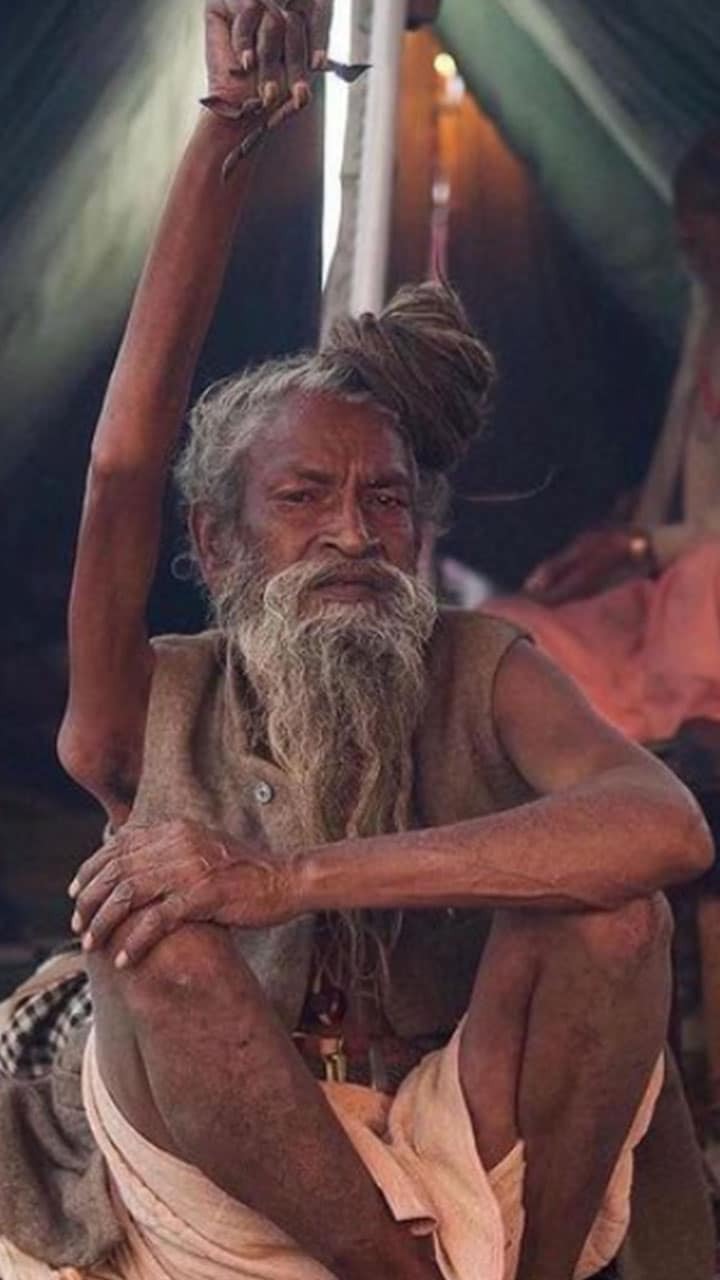
According to accounts published by outlets including The Jerusalem Post, Amar Bharati was born into an ordinary family in India and was working at a bank when his life took a dramatic turn.
In 1973, at the age of 28, he reportedly decided to leave his previous lifestyle and become a sadhu.
A sadhu is generally understood as a person who chooses an ascetic way of life, often giving up many conventional material and social attachments in pursuit of spiritual goals.
For Bharati, this transformation represented a profound change.
He reportedly left behind his career and family life and devoted himself to religious practice centered on Shiva.
His decision was not simply about withdrawing from ordinary life. According to accounts of his story, he wanted his spiritual journey to communicate a broader message of peace.
That message would eventually become inseparable from one extraordinary physical gesture.
The Day He Raised His Arm
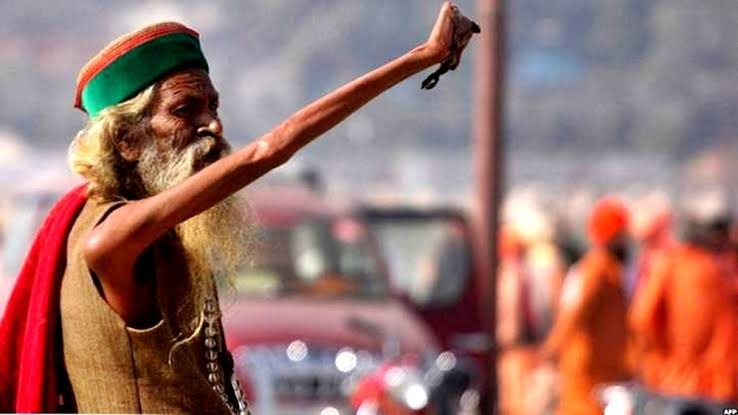
At some point during his spiritual journey, Bharati reportedly raised his right arm above his head and made a personal vow not to lower it.
The gesture was connected to his devotion and his desire to encourage peace.
According to statements attributed to Bharati in historical accounts, he questioned why people should live with hatred and conflict and expressed a wish for peace among Indians and throughout the world.
The gesture therefore had a meaning far beyond physical endurance.
To an outside observer, it can appear like an unusual feat of strength.
Within the context of Bharati’s spiritual life, however, it represents commitment.
The central idea is not simply how long he can keep his arm elevated.
It is the willingness to make a permanent personal sacrifice in support of a belief.
What Does a Raised Arm Symbolize?
Ascetic practices have existed in many cultures throughout human history.
People have voluntarily adopted difficult lifestyles for religious, philosophical, or spiritual reasons. These practices can involve fasting, meditation, solitude, simplicity, pilgrimage, or other forms of self-discipline.
Within Hindu traditions, sadhus may renounce conventional possessions and social expectations as part of a spiritual path.
The precise meaning of a particular practice can vary considerably between individuals and traditions.
For Bharati, the raised arm has reportedly become an expression of devotion to Shiva and a personal appeal for peace.
This is important because photographs alone cannot explain the meaning behind the gesture.
Without understanding the cultural context, someone seeing the image for the first time might interpret it simply as a strange physical challenge.
For Bharati, however, it reportedly represents decades of spiritual commitment.
What Happens to the Human Body When a Limb Remains Still?
There is a scientific side to Bharati’s story that is easier to understand through established medical principles.
Human muscles depend on regular movement and use. When muscles remain inactive for extended periods, they can become weaker and smaller. This process is generally known as muscle atrophy.
Joint movement can also become restricted when a limb remains immobile for prolonged periods.
The body’s musculoskeletal system is designed around movement. Muscles contract, joints move through their normal ranges, and connective tissues adapt to regular activity.
When normal movement is dramatically reduced, those systems can change.
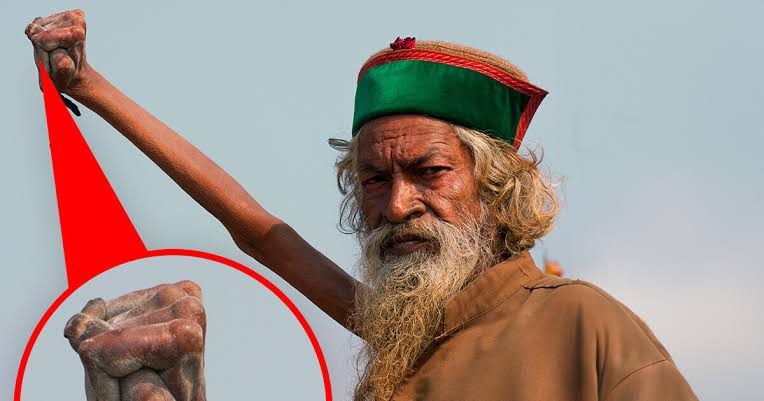
This provides a scientific explanation for why photographs of Bharati’s arm appear so different from a normally functioning limb.
His arm reportedly became extremely thin over the decades, reflecting the effects of prolonged disuse.
Why Did the Pain Eventually Change?
Accounts of Bharati’s experience describe intense discomfort during the early years of his vow.
That is understandable from a physiological perspective.
Holding an arm above the head for extended periods places unusual demands on muscles, joints, nerves, and circulation.
However, some later descriptions suggest that Bharati eventually experienced significant loss of sensation in the limb.
That claim should be treated cautiously because detailed medical documentation of his condition is not widely available.
There are several possible physiological explanations for changes in sensation after prolonged immobility, but only a qualified medical examination could determine the exact condition of his arm.
It would therefore be misleading to present every dramatic detail reported about Bharati as scientifically confirmed.
What can reasonably be understood is that decades of restricted movement would be expected to produce significant physical changes.
The Question of Whether He Could Lower His Arm
One of the most fascinating questions surrounding Bharati concerns whether he could physically lower his arm today.
Accounts disagree.
Some reports have suggested that his arm may be effectively fixed in its current position because of changes to the muscles and joints.
Other accounts suggest that he could potentially move it but chooses not to because doing so would violate the spiritual vow he made.
Without a current medical examination, it is difficult to establish precisely what movement remains possible.
This is where separating documented information from speculation becomes important.
Extraordinary stories often accumulate additional details as they travel through newspapers, websites, social media, and retellings.
A claim repeated many times does not necessarily become medically verified.
The most reliable conclusion is simply that decades of immobility would be expected to have significantly affected the limb.
The Spiritual Dimension Matters
It is tempting to view Bharati’s story entirely through a scientific lens.
We can discuss muscle atrophy, joint stiffness, reduced mobility, and changes in sensation.
But doing so would leave out the reason the practice began.
Bharati did not reportedly raise his arm as an experiment designed to test the limits of human physiology.
He did it as an act of faith.
For believers and observers familiar with ascetic traditions, the sacrifice itself can carry spiritual meaning.
The physical difficulty becomes part of the devotion.
This distinction is important when considering unusual religious practices. What appears irrational or incomprehensible from one cultural perspective can have a very different significance within another.
Understanding does not require agreement.
It simply requires context.
Amar Bharati and the Message of Peace
Perhaps the most enduring aspect of Bharati’s story is not the physical appearance of his arm but the message he has associated with it.
His stated desire for peace gives the practice a broader social meaning.
Rather than using his unusual appearance simply to attract attention, he has reportedly presented the gesture as a reminder of the suffering created by conflict and hostility.
That interpretation has helped make his story memorable far beyond India.
People who encounter photographs of Bharati may initially be fascinated by the physical transformation.
But the story often leaves them thinking about a much simpler question:
What would someone be willing to sacrifice for an idea they genuinely believed in?
For Bharati, the answer has reportedly been his own physical comfort and normal use of one arm.
Other Ascetics Have Adopted Similar Practices
Bharati’s example has reportedly influenced other sadhus who have also raised an arm as an expression of devotion.
However, accounts indicate that few, if any, have maintained the position for a comparable length of time.
This illustrates an important aspect of religious practice.
Spiritual traditions are not always static. Individuals sometimes create personal expressions of devotion that become recognized by others.
Over time, unusual practices can become symbols within communities, even when they are not universal religious requirements.
Bharati’s raised arm therefore represents both an intensely personal vow and a cultural phenomenon that has attracted international attention.
Why His Story Continues to Fascinate People
Human beings have always been fascinated by extraordinary endurance.
Stories about monks, athletes, explorers, pilgrims, and spiritual practitioners often attract attention because they challenge assumptions about what people can tolerate or accomplish.
Bharati’s story combines several elements that naturally create curiosity.
There is the physical transformation.
There is the spiritual commitment.
There is the cultural context.
And there is the unanswered question of how much of the commonly repeated story can be independently verified.
That combination makes his story particularly compelling.
It also provides an opportunity to think about the difference between fascination and understanding.
A photograph may capture the unusual appearance of Bharati’s arm, but it cannot capture the decades of belief, discipline, intention, and cultural meaning behind it.
A Story That Connects Science and Spirituality
Amar Bharati’s raised arm can be viewed from two different but complementary perspectives.
Science helps explain what prolonged immobility can do to the human body. Muscle atrophy, reduced mobility, joint changes, and altered sensation are consistent with the general effects of long-term disuse.
Culture and spirituality help explain why someone might voluntarily undertake such a commitment in the first place.
Neither perspective completely replaces the other.
Science can describe the physical consequences without explaining the personal meaning.
Spirituality can explain the intention without providing a medical diagnosis.
Together, they create a more complete picture of an unusual human story.
The Meaning Behind an Extraordinary Commitment
More than fifty years after Amar Bharati reportedly raised his arm, the gesture continues to attract attention.
Some people see extraordinary devotion.
Others see an extreme example of physical endurance.
Still others are simply curious about what happens to the human body under such unusual circumstances.
All of these reactions are understandable.
Yet perhaps the most interesting part of the story is the question beneath the photograph.
Human beings routinely make sacrifices for things they believe are important. They devote years to careers, families, causes, religions, artistic pursuits, and ideals.
Bharati’s commitment simply makes that familiar human tendency visible in an unusually dramatic form.
His raised arm has become a physical representation of a promise made more than half a century ago.
Final Reflection
Amar Bharati’s story reminds us that human curiosity often begins with something we cannot immediately explain.
A photograph raises a question.
The question leads to research.
Research introduces culture, history, physiology, and personal belief.
And eventually, the unusual image becomes an invitation to understand rather than simply react.
Whether one views Bharati’s vow primarily as a spiritual practice, a symbol of peace, or an extraordinary example of physical adaptation, his story demonstrates how deeply personal beliefs can shape a person’s life.
The scientific perspective helps us understand the body’s response to prolonged immobility. The cultural perspective helps us understand the meaning Bharati attached to his sacrifice.
Perhaps the most valuable lesson is that extraordinary human stories deserve both curiosity and caution. Not every detail repeated online is necessarily verified, but behind the most unusual photograph there may be a much deeper story of belief, identity, and purpose.
And in the end, it may be that enduring fascination is not really about the raised arm at all.
It is about the timeless human desire to understand why people choose the paths they do, what they are willing to sacrifice for their beliefs, and how culture and faith can give extraordinary meaning to an ordinary human life.
Sources
The Jerusalem Post — Background reporting on Amar Bharati, his decision to become a sadhu, and the reported history of his raised-arm vow.
History of Yesterday — Historical and cultural discussion of Bharati’s spiritual commitment and stated message of peace.
Eric LAFFORGUE / Gamma-Rapho via Getty Images — Photographic documentation associated with widely published images of Amar Bharati.
Encyclopaedia Britannica — Background information on Hinduism, Shiva, and Hindu religious traditions.
American Academy of Orthopaedic Surgeons — General medical information concerning muscle atrophy, immobility, and changes affecting the musculoskeletal system.