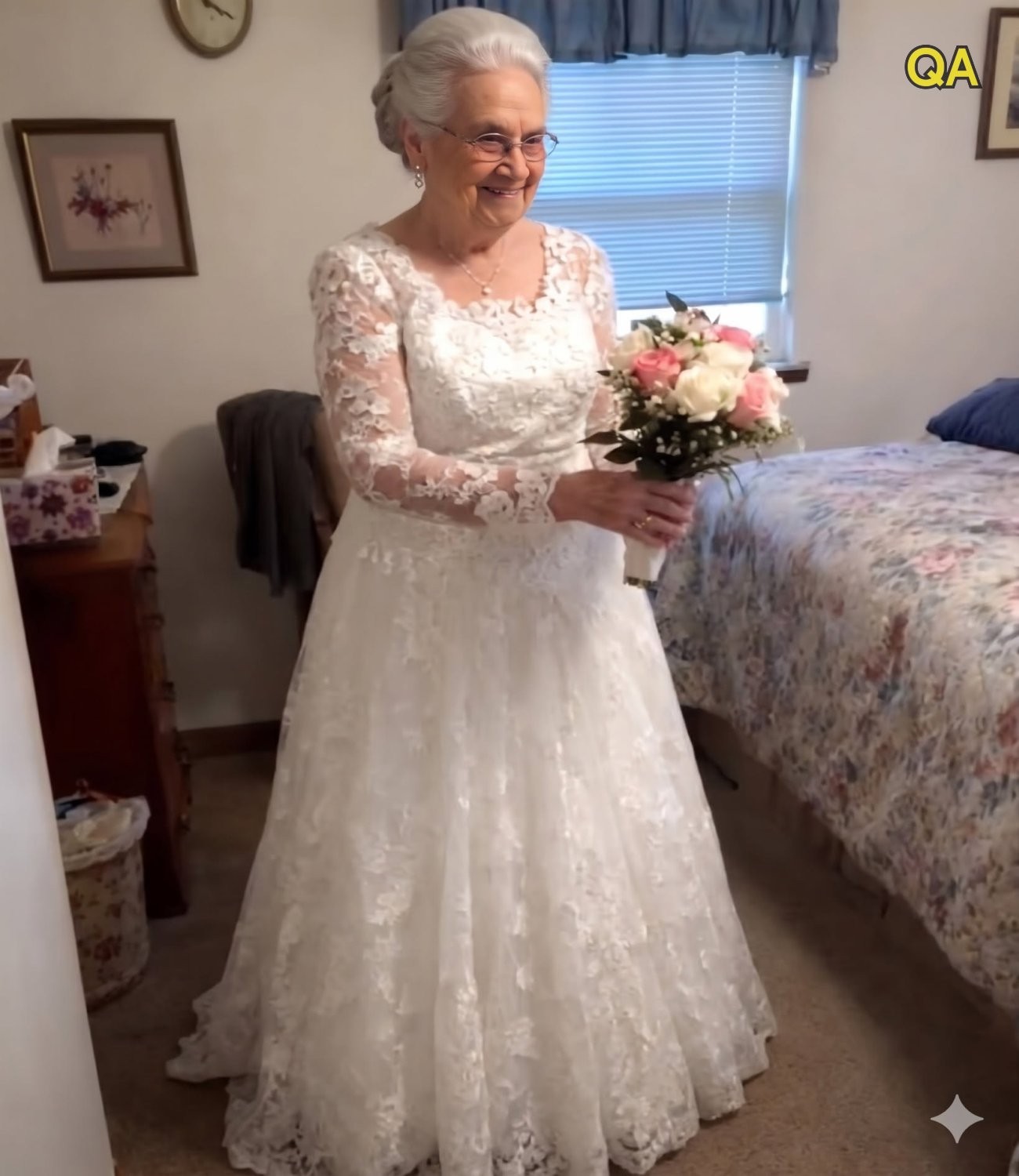
Editor’s note: The account in the original draft is presented as a personal, dramatic story and cannot be independently verified. This rewritten article uses its themes to examine factual issues surrounding love in later life, bereavement, blended families, estate planning, and housing security. Legal outcomes differ widely by country, state, marital status, property ownership, and the documents involved.
Later-Life Love Is Real, Meaningful, and Increasingly Visible
Finding companionship after the death of a spouse can bring hope, comfort, and a renewed sense of purpose. For many older adults, a new relationship does not erase a previous marriage or diminish the memory of a late partner. Instead, it can reflect a natural human need for connection after loss.
The story of Eleanor and Garrett, two widowed people reunited decades after their youth, speaks to a familiar emotional experience: life can change unexpectedly at any age. A relationship that begins later in life may carry less pressure than one formed in early adulthood, but it can also involve complex family, financial, and practical considerations.
Older adults may bring long personal histories, established routines, adult children, grandchildren, retirement income, property, healthcare needs, and previous estate plans into a new relationship. These realities do not make love less valuable. They simply make clear communication and careful planning especially important.
Research and public health guidance consistently recognize social connection as an important part of well-being. The U.S. Centers for Disease Control and Prevention notes that social isolation and loneliness can affect health, while supportive relationships can help people remain engaged in their communities. For a widowed person, companionship may be one meaningful part of rebuilding a life after grief.
Grief Does Not Follow a Fixed Timeline
After a spouse dies, people may experience sadness, loneliness, uncertainty, relief, guilt, anger, or a mixture of emotions. There is no universal timetable for grieving, and there is no single “correct” point at which a surviving spouse should consider dating or remarriage.
In the original narrative, Eleanor had spent years volunteering, attending church activities, and helping people in need before reconnecting with Garrett. That detail reflects an important reality: many bereaved people gradually develop new routines and sources of meaning. Volunteering, social groups, faith communities, friendships, exercise, hobbies, and counselling can all offer structure during a difficult transition.
A new relationship may also raise concerns among relatives. Adult children can worry that a surviving parent is vulnerable, acting quickly, or being influenced by someone with financial motives. Sometimes those concerns are sincere. However, older adults retain the right to make personal decisions when they have the mental capacity to do so. Respectful conversations are generally more constructive than assumptions, accusations, or attempts to control a parent’s choices.
Health professionals and grief organizations often emphasize that grief is individual. A person can continue to miss a late spouse while also developing affection for someone new. Love after loss is not necessarily a replacement; it can be another chapter in a person’s life.
Why Blended Families Can Face Tension After Remarriage
When widowed adults remarry, family relationships can become emotionally complicated. Adult children may feel that a new spouse is changing traditions, altering access to a family home, or affecting an inheritance they expected to receive. A new spouse may feel unwelcome, judged, or treated as an outsider in the home they now share.
These tensions are often about more than money. Children may still be mourning their own parent and may find a remarriage difficult to accept emotionally. They may fear that family photographs, belongings, or traditions connected to their late parent will disappear. Meanwhile, the new spouse may be grieving too, perhaps after years of living alone, and may need acceptance rather than suspicion.
Conflict can worsen when family members avoid direct conversations. In the story, the children’s hostility appears through remarks about inheritance and objections to the marriage. In real life, conversations about estate plans, housing, sentimental belongings, and caregiving can be uncomfortable, but avoiding them may create greater conflict later.
A calmer approach is to recognize that several people can have valid feelings at the same time. Adult children may wish to preserve their parent’s legacy. A surviving spouse may need stable housing and financial independence. The person entering a new marriage may want both a loving relationship and peace between family members. These interests are not always incompatible, particularly when plans are made early and clearly documented.
Estate Planning Can Protect Both a Spouse and Adult Children
The most practical lesson suggested by the story is the importance of estate planning. A will, trust, beneficiary designation, property deed, retirement account, insurance policy, and healthcare directive can each affect what happens after a person dies. The rules are complicated, and they vary significantly by jurisdiction.
In many places, a surviving spouse may have legal rights to part of an estate even if a will says otherwise. In other situations, assets that are held in a trust, jointly owned, transferred by beneficiary designation, or owned before the marriage may be treated differently. A house may be owned by one person, jointly owned by spouses, placed in a family trust, or subject to a right of occupancy. These distinctions can determine whether a surviving spouse can remain in a home.
For that reason, people entering a later-life marriage should not rely on informal promises. A statement such as “you will always be taken care of” may be heartfelt, but it may not provide legal protection. A qualified estate-planning lawyer can explain local inheritance laws and help create documents that reflect a person’s intentions.
Possible planning tools may include:
- A current will that clearly identifies beneficiaries and personal representatives.
- A revocable or irrevocable trust, where appropriate under local law and financial circumstances.
- A life estate or legally defined right for a surviving spouse to live in a home for a specified period or for life.
- Joint ownership arrangements, where suitable and fully understood.
- Life insurance or retirement beneficiary designations that provide direct financial support.
- A prenuptial or postnuptial agreement, particularly where both partners have children from earlier relationships.
- Written directions for family heirlooms, photographs, jewellery, and other sentimental possessions.
- Durable powers of attorney and healthcare directives in case illness affects decision-making capacity.
Not every tool is right for every family. Trusts and property transfers can have tax, benefit, creditor, and control implications. Professional advice is important, especially when significant assets, a family business, long-term care needs, or children from prior relationships are involved.
Housing Security Should Be Addressed Before a Crisis
Housing is one of the most urgent concerns after the death of a spouse. The loss of a partner can be emotionally overwhelming, and uncertainty about where to live can intensify that distress. Older adults may be particularly affected if they have limited income, health concerns, or a long attachment to a family home.
The dramatic situation described in the original story—being told to leave a home after a spouse’s funeral—highlights why it is wise to understand ownership and occupancy rights in advance. A person should know whether their name appears on the deed, lease, mortgage, trust, or other relevant agreement. They should also know where key documents are stored and how to contact the family lawyer, financial adviser, or executor.
It can be helpful for couples to keep an organized, secure record of important information. This may include property documents, account details, insurance policies, passwords or access instructions, funeral wishes, contact details for advisers, and copies of wills or trusts. Such preparation can reduce confusion during bereavement.
If a surviving spouse faces a housing dispute, they should seek timely local legal advice rather than relying on family members’ interpretations of documents. In some areas, legal-aid organizations, bar association referral services, elder-law clinics, and community advocacy groups may offer low-cost or free guidance. If there is immediate risk of homelessness, local housing services and social support agencies may also be able to help.
How Families Can Discuss Inheritance Without Causing Harm
Inheritance discussions are often emotionally charged because they combine finances, memories, family identity, and grief. Still, respectful planning conversations can prevent misunderstandings.
Parents who remarry later in life may consider speaking openly with adult children about broad intentions. They do not necessarily need to disclose every financial detail, but they can explain the values behind their decisions. For example, a parent might say that they intend to provide stable housing and income for a spouse while preserving certain assets or heirlooms for children.
Likewise, adult children can express worries without making accusations. Questions such as “Have you had independent legal advice?” or “Could we make sure everyone understands the plan?” are more constructive than implying that a new spouse is pursuing money. The goal should be transparency, dignity, and reduced uncertainty.
Some families benefit from a meeting with an estate-planning lawyer, mediator, financial planner, or counsellor. A neutral professional cannot remove grief, but they may help people focus on practical decisions and respectful communication.
Emotional Support Matters After Bereavement and Family Conflict
In the story, Eleanor begins recovering through friendship, church gatherings, baking, and a renewed connection to her community. That pattern is credible and important. After a major loss, many people need a combination of emotional support and practical assistance.
Friends and neighbours can help in simple but meaningful ways: delivering food, offering a ride, sitting quietly with someone, helping organize paperwork, or checking in regularly. Faith communities, senior centres, bereavement groups, and local charities can also provide connection.
Professional support may be useful when grief becomes overwhelming or interferes substantially with daily life. A primary-care clinician, licensed therapist, grief counsellor, or community mental-health service can help a person identify appropriate support. Immediate help should be sought through local emergency services or crisis resources if someone feels unsafe or unable to cope.
A Lasting Lesson About Dignity, Planning, and Connection
“I Found Love Again At 72 …But After My Husband Died, His Children Threw Me Out of His Mansion” is ultimately a story about vulnerability after loss and the desire to be treated with dignity. Its central themes resonate because many families face difficult questions when love, ageing, grief, property, and inheritance intersect.
The most reliable protection is not a dramatic last-minute revelation. It is thoughtful planning completed while a person is healthy, informed, and able to make decisions freely. Clear documents, independent legal advice, honest family communication, and attention to housing needs can help reduce the risk of conflict.
At the same time, practical planning should not overshadow the human side of the issue. Older adults deserve companionship, autonomy, and respect. Adult children deserve space to grieve and ask reasonable questions. New spouses deserve to be recognized as family members rather than automatically viewed as rivals. When families approach these changes with patience and clarity, they are more likely to protect both relationships and legacies.
Sources
Disclaimer: This content is intended for entertainment purposes only and is not based on real events.