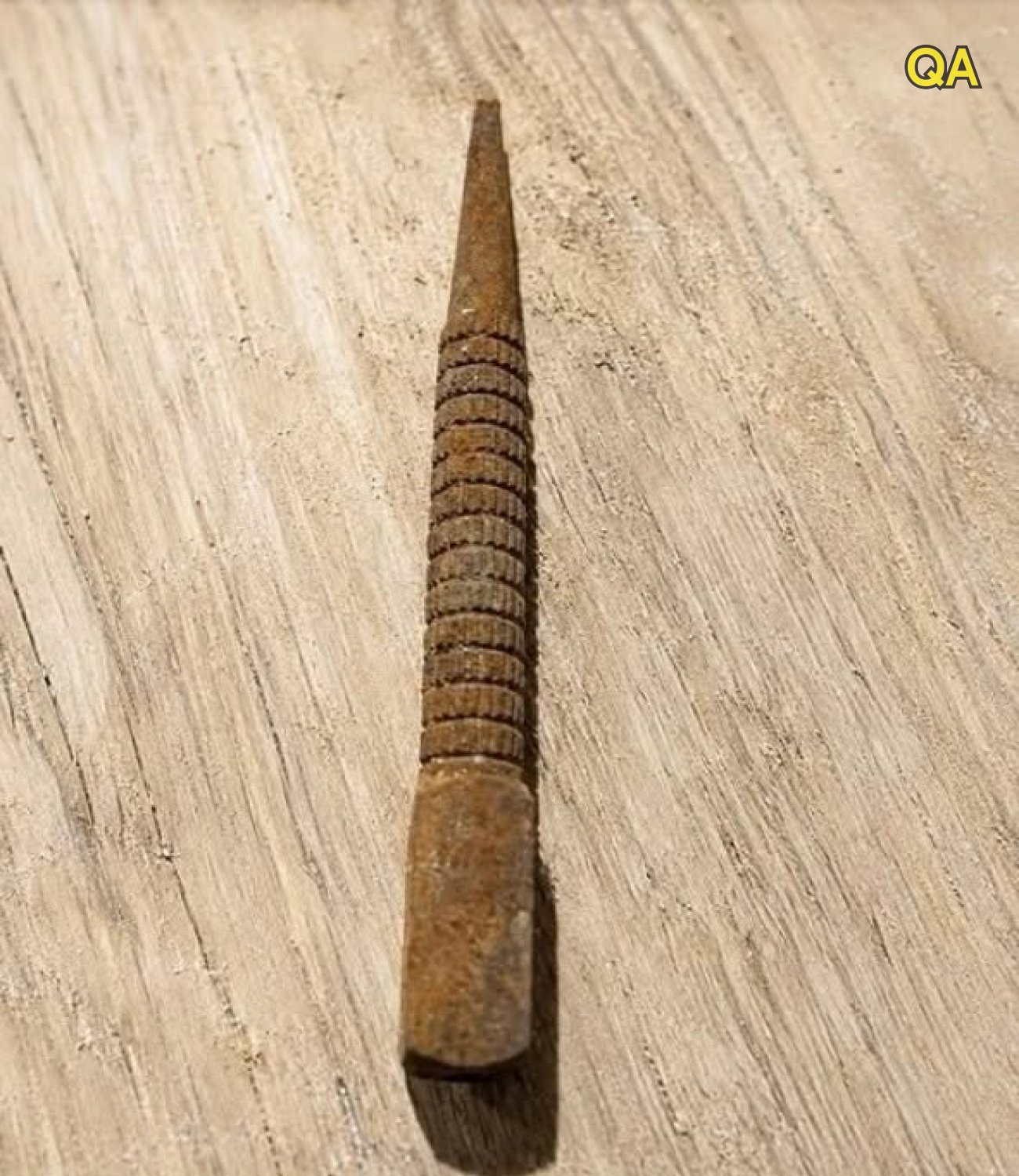
Walk into an old woodworking shop and you may notice something that looks almost surprisingly simple.
It may be made from wood or metal, have a sturdy body, a handle or grip, and a small blade hidden beneath its surface. There is no motor, no digital display, and no complicated mechanism.
Yet this humble tool has helped craftspeople shape wood for centuries.
The hand plane is one of the oldest woodworking tools still recognizable in modern workshops. Although today’s woodworkers have access to electric planers, sanders, routers, and precision machinery, the traditional hand plane has never completely disappeared.
Why?

Because sometimes the simplest tools offer something machines cannot easily replace: control, feel, and a direct connection between the craftsperson and the material.
What Is a Hand Plane?

A hand plane is a woodworking tool designed to remove thin layers of material from a wooden surface.
The basic principle is remarkably straightforward.
A sharp blade extends slightly through the bottom of the tool. When the plane is pushed across a piece of wood, the blade removes a thin shaving from the surface.
By repeating this movement, a craftsperson can gradually flatten, straighten, smooth, or shape the wood.
Modern hand planes come in many forms and sizes. Some are designed for flattening large surfaces, while others are specialized for creating precise edges, smoothing finished pieces, or working in narrow spaces.
Despite these differences, they all rely on the same fundamental idea.
A sharp edge removes a controlled amount of material.
That simple principle is part of what has made the tool so enduring.
A Tool With Ancient Roots

The basic concept behind planing wood is far older than the modern woodworking plane.
Ancient craftspeople needed ways to make timber flatter and more uniform as woodworking techniques became increasingly sophisticated.
Archaeological discoveries have revealed early woodworking tools that demonstrate how advanced ancient craftsmanship could be.
Roman woodworking, for example, included tools that resemble the basic concept of a modern plane. Archaeologists have discovered examples of ancient woodworking planes containing wooden bodies and iron cutting components.
These discoveries are particularly fascinating because they demonstrate that craftspeople were already searching for efficient ways to create smoother and more accurate wooden surfaces many centuries ago.
The exact design of the tool changed over time, but the underlying principle remained remarkably consistent.
A sharp cutting edge.
A stable body.
Controlled movement.
How the Hand Plane Became More Refined

As woodworking developed across Europe and other regions, craftsmen continued to refine their tools.
Wooden planes became increasingly specialized.
Different shapes were developed for different tasks. Some were long and narrow, helping craftsmen straighten large surfaces. Others were smaller and easier to control when working on detailed pieces.
Eventually, manufacturers began experimenting with metal components and more standardized designs.
One of the most influential developments came during the Industrial Revolution, when improved manufacturing techniques allowed woodworking tools to be produced with greater consistency.
By the nineteenth century, cast iron planes had become increasingly popular.
Manufacturers such as Stanley helped establish designs that became familiar to generations of woodworkers.
The introduction of adjustable components also made it easier for craftsmen to control blade depth and adapt the tool to different tasks.
Why Woodworkers Still Use Them
At first glance, it might seem strange that anyone would continue using a hand-operated tool when electric equipment can remove wood much faster.
But speed isn’t everything in woodworking.
A hand plane allows the user to feel what is happening beneath the tool.
Experienced craftspeople can hear subtle changes in the sound of the blade, feel variations in resistance, and observe the shavings coming from the wood.
These details provide immediate feedback.
The user can adjust pressure, direction, blade depth, and technique almost instantly.
For precision work, that control can be extremely valuable.
A power tool may remove material quickly, but a hand plane can allow a craftsperson to approach the final surface gradually.
That makes it particularly useful when only a tiny amount of material needs to be removed.
The Importance of the Blade

One of the most important parts of a hand plane is also one of the simplest: the blade.
A sharp blade is essential for producing clean shavings.
If the blade is dull, the tool may require more force and can produce a rougher result.
Woodworkers therefore spend considerable time maintaining their cutting edges.
Sharpening has traditionally been considered an important part of woodworking skill.
Rather than treating sharpening as a separate chore, experienced craftspeople often view it as part of the craft itself.
The quality of the final surface depends not only on the plane but also on how carefully the blade has been prepared.
Different Planes for Different Jobs
There isn’t just one type of hand plane.
Woodworkers can choose from many specialized designs.
A smoothing plane is generally used toward the end of a project when the goal is to create a clean, refined surface.
A jack plane is more versatile and can be used for a variety of preparation tasks.
A jointer plane is longer and is designed to help create straight edges and surfaces.
Block planes are smaller and convenient for working on edges, end grain, and smaller pieces.
There are also specialty planes designed for specific woodworking tasks.
This variety reveals something important about traditional woodworking.
The hand plane was never simply one tool.
It became an entire family of tools developed around different problems that craftsmen encountered.
Hand Planes and Traditional Craftsmanship
The cultural importance of the hand plane goes beyond its practical function.
For generations, woodworking skills were passed from one craftsperson to another.
An apprentice might learn how to hold a plane correctly by watching an experienced craftsman. They would gradually learn how different types of wood behaved, how grain direction affected cutting, and how to recognize when a blade needed sharpening.
Much of this knowledge could not be learned from a written instruction alone.
It had to be practiced.
This helped create woodworking traditions in which tools became closely associated with craftsmanship, patience, and experience.
A well maintained hand plane could also remain useful for decades.
Some antique planes are still used today, sometimes after restoration.
That longevity contributes to their appeal among modern woodworkers.
Why Antique Tools Remain Popular
Walk through a modern woodworking community and you’ll find plenty of people interested in vintage tools.
There are practical reasons for this.
Older tools can sometimes be beautifully made, durable, and repairable. Collectors also appreciate the history behind them.
A century old woodworking plane may have been used by several generations of craftspeople before eventually reaching a modern workshop.
That creates a fascinating connection between past and present.
Of course, age alone does not make a tool better.
Condition, design, blade quality, and usability all matter.
Some vintage tools require restoration, while modern versions may offer easier adjustment and more consistent manufacturing.
For many woodworkers, the choice comes down to personal preference.
Hand Planes in the Modern Workshop
Today, hand planes coexist comfortably with modern technology.
A professional woodworker might use a thickness planer to remove material quickly and then switch to a hand plane for precision work.
Another craftsman may prefer traditional methods throughout an entire project.
Neither approach is necessarily superior.
Power tools are excellent for speed and repeatability.
Hand tools offer quiet operation, tactile feedback, and precise control.
Many workshops use both.
This combination allows craftspeople to take advantage of modern efficiency without completely abandoning traditional techniques.
The Science Behind the Simple Design
Although a hand plane looks simple, its effectiveness depends on several principles of physics and materials science.
The blade creates a cutting action as it passes through the wood.
The angle of the blade relative to the surface affects how the wood fibers are cut.
The thickness of the shaving depends on how far the blade extends beneath the plane’s sole.
The length and flatness of the plane body can also influence how effectively it bridges small variations in the wooden surface.
These principles explain why seemingly tiny adjustments can dramatically change the tool’s performance.
A difference of a fraction of a millimeter in blade projection can affect the feel of the plane and the thickness of the shaving.
That precision is part of the reason experienced woodworkers develop such a strong relationship with their tools.
Myth, Tradition, and What We Can Actually Know
Stories surrounding old tools sometimes become exaggerated over time.
People may describe a particular design as unchanged for hundreds or even thousands of years, when the reality is usually more complicated.
The underlying concept of controlled wood cutting is ancient, but individual plane designs evolved considerably.
Different cultures developed different woodworking traditions, and archaeological evidence does not always tell us exactly how every tool was used.
So when discussing the history of the hand plane, it is important to distinguish between documented archaeological evidence and popular storytelling.
The tool’s longevity is impressive enough without exaggeration.
Its basic concept has survived because it solves a real problem exceptionally well.
Why This Centuries Old Tool Still Matters
The continued use of hand planes offers an interesting lesson about technology.
Newer does not always mean better for every situation.
Modern machines can make woodworking faster and more efficient, but some tasks still benefit from slower, more controlled methods.
The hand plane also represents something increasingly valuable in a highly automated world: craftsmanship that depends on human judgment.
A machine can follow programmed instructions.
A skilled craftsperson can respond to the material itself.
They can feel the grain.
They can change direction.
They can make tiny corrections.
They can decide when the surface is finished.
That combination of technical knowledge and human judgment is difficult to replace completely.
A Small Tool With a Remarkably Long Story

The hand plane may not look particularly extraordinary.
It doesn’t have the complexity of modern machinery, and it certainly doesn’t look like a symbol of technological progress.
Yet its story stretches across centuries of human craftsmanship.
From early woodworking traditions to modern professional workshops, the basic concept has endured because it remains useful.
The next time you see an old wooden or metal plane sitting on a workbench, it may be worth looking at it differently.
It isn’t simply an old-fashioned tool.
It represents generations of people learning how to work with wood, passing techniques from one craftsperson to another, and finding increasingly precise ways to transform a rough piece of timber into something useful and beautiful.
Perhaps that is what makes traditional tools so fascinating.
They remind us that human curiosity does not always lead to something more complicated.
Sometimes, the most enduring inventions are the ones that solve a simple problem so well that generations of people see no reason to abandon them.
Sources
The Metropolitan Museum of Art: Woodworking and Furniture History
Smithsonian Institution: Woodworking and Tools Collections
Encyclopaedia Britannica: Hand Tool
The Museum of London: Roman Tools and Technology
Original source provided by Kadim Ansiklopedi