-
At first, it may look like nothing more than dry skin.
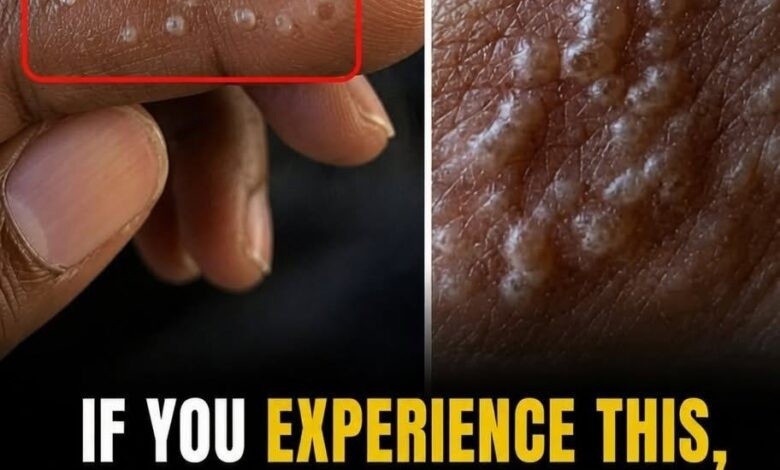
A few tiny bumps appear along the side of a finger. Then another shows up on the palm. Soon, the area begins to itch, burn, or feel unusually sensitive. Because the spots can be small and easy to overlook, many people assume they are simply the result of soap, weather, or everyday irritation.
But sometimes those tiny, fluid-filled blisters have a different explanation.
One possibility is dyshidrotic eczema, also known as dyshidrosis or pompholyx. It is a skin condition that commonly affects the palms, sides of the fingers, and sometimes the soles of the feet. Although it can look alarming, it is not contagious, and the condition can often be managed with appropriate skin care and medical treatment.
Understanding what is happening beneath the surface can make these mysterious flare-ups much easier to recognize.
What Is Dyshidrotic Eczema?
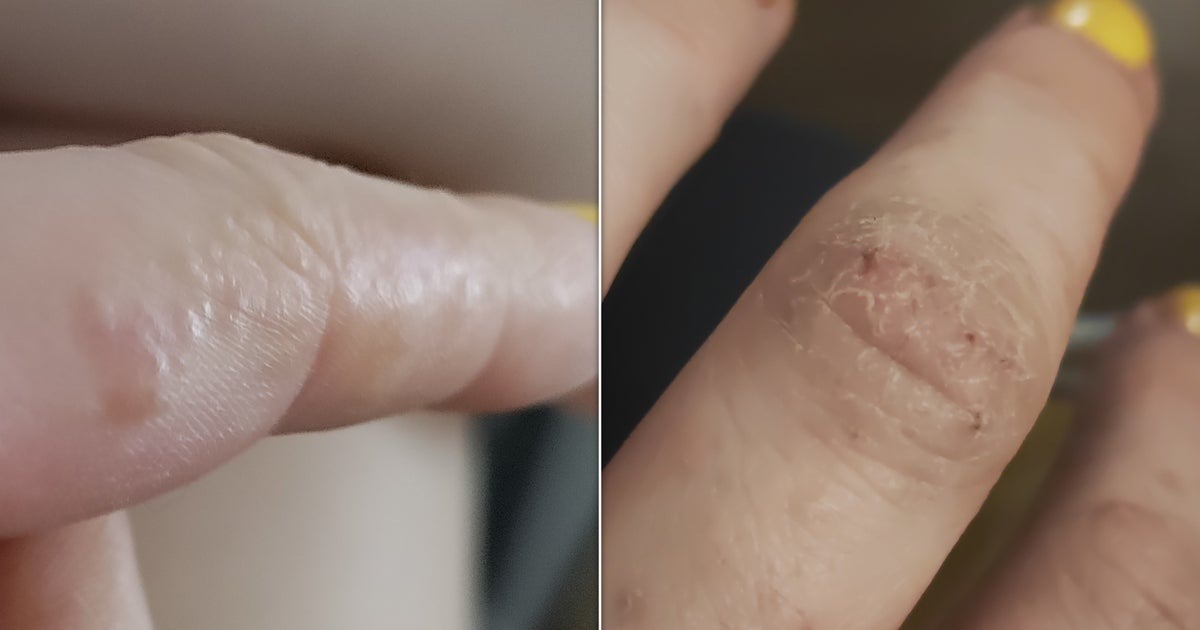
Dyshidrotic eczema is a form of eczema characterized by clusters of very small, itchy, fluid-filled blisters.
According to the American Academy of Dermatology, the condition occurs on the hands, feet, or both, with the hands being the most common location. The blisters can appear on the palms, along the sides of the fingers, or on the feet.
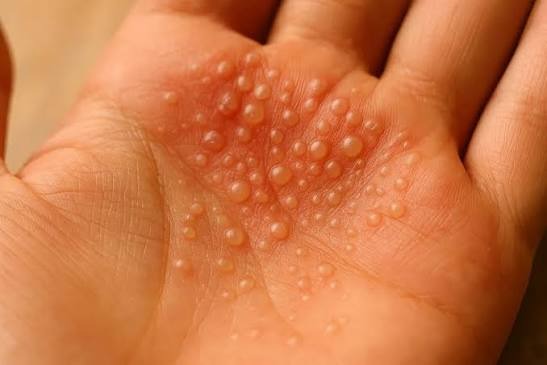
The name can make the condition sound unusual, but the basic appearance is relatively distinctive. The tiny blisters may appear grouped together and can sometimes resemble small tapioca pearls.
For some people, itching begins before the blisters are even visible. Others experience burning, prickling, tenderness, or irritation.
The symptoms can eventually settle, but dyshidrotic eczema often has a recurring pattern. Some people experience only one episode, while others notice flare-ups periodically over months or years.
Why Do These Tiny Blisters Appear?
One of the most frustrating things about dyshidrotic eczema is that there is no single confirmed cause.
Scientists and dermatologists believe several factors may contribute to flare-ups. Stress, sensitive skin, certain allergies, sweating, and exposure to particular metals such as nickel or cobalt have all been associated with the condition. People who already have atopic dermatitis or other allergic conditions may also be more susceptible.
Heat and sweating may be particularly relevant for some people.
This can help explain why certain individuals notice their hands becoming irritated during hot weather or after activities that cause significant sweating. However, a trigger for one person may not affect another in the same way.
That is why identifying personal patterns can be useful.
Keeping track of when flare-ups occur, what products were used, whether the weather was unusually hot, and whether there was increased stress can sometimes help reveal a connection.
What Does Dyshidrotic Eczema Look Like?
The earliest signs can be surprisingly subtle.
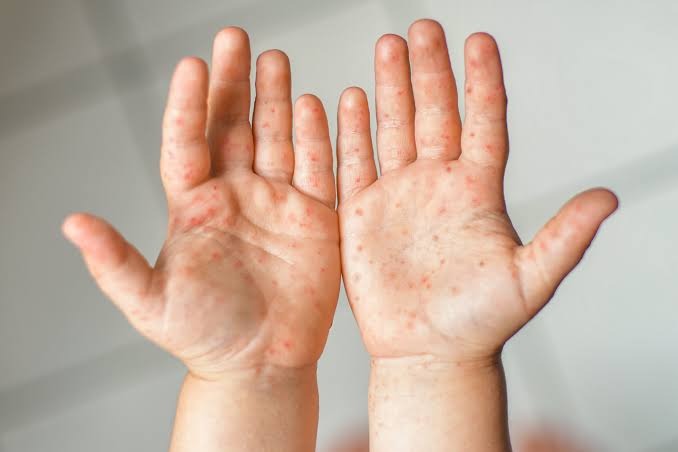
Small blisters may develop along the sides of the fingers or across the palms. On the feet, they can appear on the soles. They are usually small, closely grouped, and filled with clear fluid.
As the condition progresses, the affected skin may become dry or flaky. Once the blisters settle, peeling can occur, leaving the skin feeling unusually dry and sensitive.
Some people also notice changes in skin color after a flare-up. These changes can be more noticeable in people with darker skin tones and may gradually fade over time.
Repeated flare-ups can sometimes affect the nails as well, producing changes such as ridges, thickening, or small indentations.
Because several other skin conditions can create similar-looking symptoms, appearance alone is not always enough to determine the cause.
Could It Be Something Else?
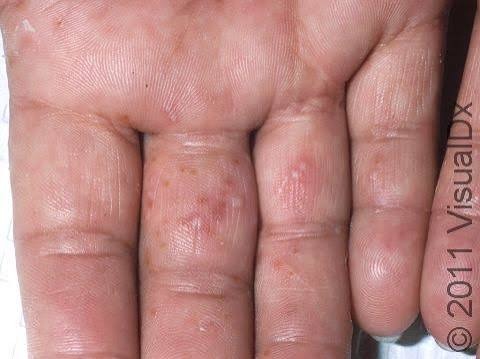
This is an important part of understanding unusual skin changes.
Not every small blister or itchy rash is dyshidrotic eczema. Allergic contact dermatitis, fungal infections, other forms of eczema, and several other skin conditions can produce overlapping symptoms.
That is why persistent or recurring symptoms deserve proper evaluation rather than relying solely on photographs or online descriptions.
The American Academy of Dermatology notes that dermatologists may examine the affected skin closely and, when appropriate, perform additional testing. If an allergy is suspected, patch testing can sometimes help identify a possible trigger.
Mayo Clinic similarly notes that doctors may use skin examinations and, when necessary, tests to rule out conditions that can resemble dyshidrosis.
In other words, recognizing the pattern can be helpful, but it should not replace professional diagnosis.
Why Scratching Can Make Things Worse
When skin becomes intensely itchy, scratching can feel almost automatic.
Unfortunately, repeated scratching may further irritate already sensitive skin. It can also damage the surface and increase the possibility of a secondary skin infection.
This creates an uncomfortable cycle.
The skin becomes itchy, scratching provides temporary relief, the skin becomes more irritated, and the urge to scratch may return.
Breaking that cycle is therefore an important part of managing flare-ups.
Cool compresses may provide temporary relief, while keeping the skin moisturized can help protect the skin barrier. Dermatologists may also recommend treatments specifically designed to reduce inflammation and itching.
Simple Skin Care Can Make a Difference
Daily habits may not eliminate dyshidrotic eczema entirely, but gentle skin care can help reduce irritation.
The American Academy of Dermatology recommends washing affected skin gently with lukewarm water and a mild, fragrance-free cleanser. Strong antibacterial or deodorant soaps may irritate sensitive skin.
Moisturizing is another important step.
A fragrance-free cream or ointment can help support the skin barrier, particularly after washing. Dermatologists generally recommend applying moisturizer whenever the skin feels dry and after handwashing.
It may also help to pay attention to environmental triggers.
Hot conditions, excessive sweating, irritating products, and certain materials can contribute to flare-ups in some individuals. If a particular product repeatedly seems to coincide with symptoms, discussing that pattern with a dermatologist can be worthwhile.
How Is Dyshidrotic Eczema Treated?
Treatment depends on how severe and persistent the condition is.
For some people, improving skin care and avoiding known triggers may be enough to keep symptoms under control. For others, a dermatologist may recommend prescription corticosteroid creams or ointments to reduce inflammation.
Cool soaks or compresses can also be used as part of a treatment plan. The American Academy of Dermatology notes that these may help dry blisters and provide relief.
When symptoms continue despite initial treatment, doctors have additional options. Depending on the individual situation, these can include other prescription medications, treatment aimed at excessive sweating, or light therapy.
The important point is that treatment should be individualized.
A product that works well for one person may not be appropriate for another, particularly when another skin condition is actually responsible for the symptoms.
When Should You See a Doctor?
Occasional mild irritation may settle on its own, but persistent or severe symptoms deserve medical attention.
Mayo Clinic recommends seeking medical care when a rash on the hands or feet is severe, does not go away, or begins spreading beyond those areas.
Medical evaluation is also especially important if the skin becomes increasingly swollen, red, or develops signs that could indicate an infection.
A dermatologist can determine whether the symptoms are consistent with dyshidrotic eczema or whether another condition needs to be considered.
This distinction matters because different causes require different treatments.
The Science Behind a Condition That Still Raises Questions
Perhaps the most interesting aspect of dyshidrotic eczema is that modern medicine understands many parts of the condition while still lacking a single explanation for why it develops.
Researchers have identified associations with stress, sweating, sensitive skin, allergies, and certain metals, but these factors do not explain every case.
That uncertainty is a reminder that skin is an extraordinarily complicated organ.
It constantly interacts with the environment, temperature, moisture, chemicals, microorganisms, immune responses, and the body’s broader physiological state.
Two people can experience the same environmental exposure and have completely different reactions.
This is also why extraordinary claims about food, supplements, or household remedies should be treated carefully. While some lifestyle changes may support healthier skin, there is no universal miracle solution for dyshidrotic eczema.
Evidence-based diagnosis and individualized treatment remain the more reliable approach.
A Small Skin Change Can Tell a Bigger Story
The next time a few unusual bumps appear on the hands or feet, it may be tempting to dismiss them as ordinary irritation.
Sometimes they are.
But recurring clusters of tiny, itchy, fluid-filled blisters can have a recognizable medical explanation. Dyshidrotic eczema is one possibility, particularly when the symptoms repeatedly affect the palms, fingers, or soles.
The encouraging part is that people do not have to simply tolerate recurring flare-ups without answers. Dermatologists have several approaches for diagnosis, symptom management, and long-term care.
The most useful response is not panic, but curiosity.
Pay attention to patterns. Notice potential triggers. Protect the skin barrier. And when symptoms persist, ask a qualified medical professional for an accurate diagnosis.
Our skin may sometimes seem mysterious, but every unusual change is also an opportunity to learn more about how remarkably complex the human body really is. That simple curiosity—looking closer rather than immediately assuming the worst—is often where better understanding begins.
HT1. I always wondered what that was You might have… See more