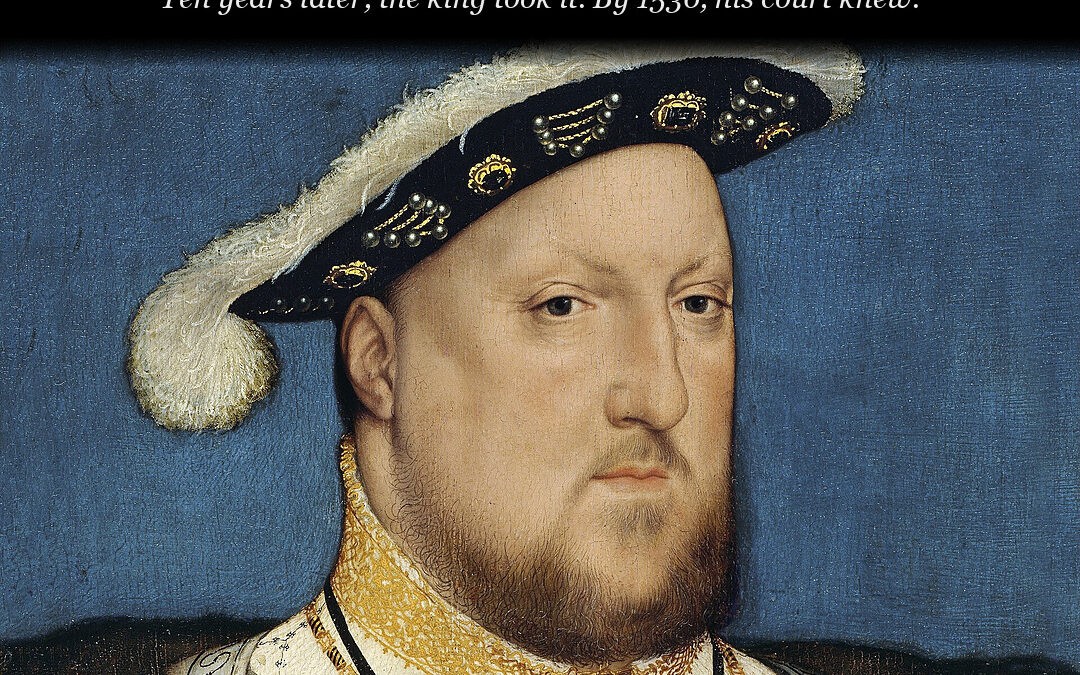
A Day in Hampton Court: Henry VIII in 1536
Early Morning Rising at Hampton Court
As dawn broke on a summer morning in 1536, the banks of the Thames were shrouded in mist. Hampton Court Palace, a showpiece of red brick, tall chimneys, and glittering windows, housed the largest royal household in England. Inside, the day began well before sunrise. Kitchen boys revived fires, porters delivered wood, and laundresses pressed and folded shirts by candlelight. Among the palace’s labyrinth of guarded chambers, King Henry VIII—then forty-five years old—awoke to start his day. From the moment Henry opened his eyes, privacy was almost nonexistent; nearly every act was conducted under surveillance by attendants or courtiers. Even Hampton Court itself told the story of ambition and power, as craftspeople in the Great Hall replaced Anne Boleyn’s initials in the woodwork with those of Jane Seymour, marking a turbulent shift at the heart of the monarchy.
The Influential Winter of 1536
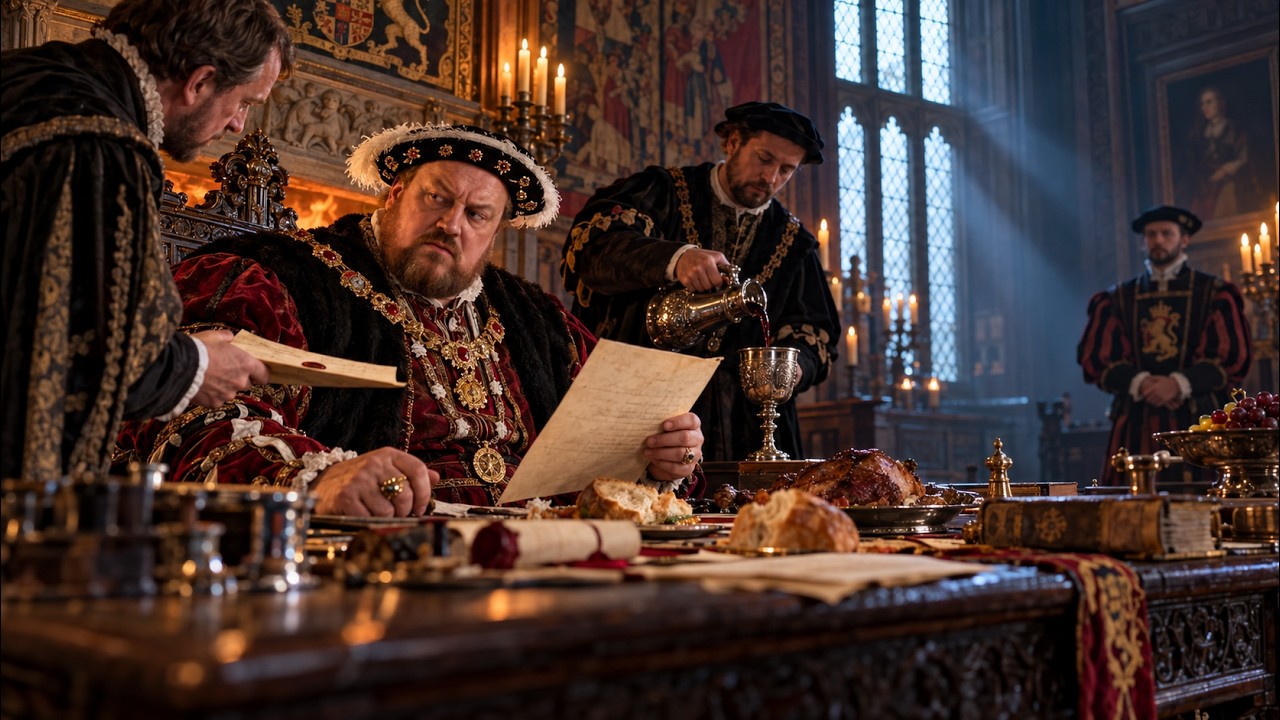
Henry’s day—and the character of the man who ruled—was shaped by recent events. That winter, the king suffered a calamitous accident during a joust at Greenwich. Reports varied: some claimed he was unconscious for hours, while others asserted he escaped severe injury. Nevertheless, the incident sent shockwaves through the court, coinciding with Queen Anne Boleyn’s miscarriage, a tragedy she attributed to the emotional impact of Henry’s fall. The child, thought to be a boy, might have secured the royal succession. The aftermath destabilized Henry’s marriage to Anne, leading to her imprisonment and execution in May. The king swiftly married Jane Seymour, and court life adjusted to the presence of a new queen. This period marked a turning point: Henry began to move through daily rituals convinced, as far as contemporary sources describe, that fate was on his side and responsibility for misfortune was never his own.
A Lingering Legacy: Henry’s Injured Leg
Henry VIII was once celebrated as the golden prince: tall, athletic, and charismatic. His armor reveals he stood over six feet, a rare height for the era. But by 1536, his physique had changed. Chronic problems with his left leg, exacerbated by the jousting accident, grew worse. He suffered from a persistent sore that never fully healed, requiring repeated treatment by court physicians. The pain, sometimes so severe that Henry’s face turned dark, forced a shift in lifestyle—from tournaments and dancing to less strenuous pursuits. Accounts suggest his temper became harsher, adding to the tension among courtiers, though he had never been especially gentle even in earlier years. The king’s declining health subtly influenced the dynamics and traditions of the royal household.

The Origins and Transformation of Hampton Court Palace
Hampton Court was not originally Henry’s residence. Cardinal Thomas Wolsey, chief minister and England’s wealthiest churchman, began construction in 1515, sparing no expense in its grandeur. The lavish scale raised uncomfortable questions about Wolsey’s role as a servant, prompting him to gift the palace to the king in 1525. Henry subsequently took full possession after Wolsey’s political fall. After Wolsey’s arrest and death in 1530, Henry undertook massive renovations to transform Hampton Court into an unmistakable symbol of royal authority. In the following decade, Henry invested heavily in architectural statements: the majestic Great Hall, new chapel ceiling, and running water from distant springs demonstrated his capacity for lavish display. The ongoing replacement of Anne Boleyn’s emblems with Jane Seymour’s underscored a commitment to asserting dominance and rewriting palace history with every change.
The Rituals of Royal Dressing
Henry’s morning routine involved a select group of attendants—the gentlemen and grooms of the Privy Chamber, many from noble families. Among them, the Groom of the Stool held unmatched access, assisting the king during the most private moments, managing personal affairs and confidential correspondence. As court proximity meant influence, these attendants held their positions in high regard, aware of the risks associated with the volatility of royal favor. In spring 1536, Henry Norris, Henry’s close confidant, was executed alongside Anne Boleyn’s alleged lovers. The replacement, Thomas Heneage, would have felt the pressure of a post claimed at great personal risk.
Dressing was a ceremonial process. Underlayers of linen preceded hose, doublets, luxurious velvet or satin gowns, gold chains, and jeweled accessories. The choice of attire signaled the tone of the day—whether Henry would meet ambassadors, confer with counselors, or enjoy leisure. The attendants became adept at navigating the king’s leg injury, carefully easing clothing over the sore limb. Every detail, from collar arrangement to ring selection, contributed to the display of royal power and pageantry.
Religious Observance and Political Contradiction
Once clothed, Henry VIII attended Mass. Uniquely, the king observed services from a private gallery, while courtiers watched below. In 1536, the religious landscape was precarious; Parliament had declared Henry Supreme Head of the Church of England, severing ties with Rome, but the king maintained traditional Catholic practices: Latin liturgy, veneration of saints, sacramental beliefs. This theological ambiguity bred anxiety among subjects and courtiers. Deviations in either direction—too loyal to Rome, or too enthusiastic for reform—could result in execution, exemplified by recent deaths of Sir Thomas More and Bishop John Fisher. Thomas Cromwell, Henry’s chief minister, favored reform, while nobles pressed for tradition. Henry maneuvered between factions, relying on his own judgment and maintaining daily religious ceremony as both personal devotion and public test of loyalty.
Music was central to court life. Henry maintained an esteemed choir, and his Masses featured elaborate choral performances. As a talented musician, Henry composed works still performed today, shaping the cultural and spiritual atmosphere of Hampton Court.
Breakfast and the Business of Governance
Breakfast after Mass was simple: bread, ale or wine, meat or fish depending on religious rules. The meal primed Henry for the administrative demands of monarchy. In 1536, Parliament ordered the dissolution of smaller monasteries, igniting a massive redistribution of church lands and wealth. While commissioners traveled the country, Henry reviewed reports, met with the council, received ambassadors, and managed correspondence. Determined and knowledgeable, he preferred to argue and debate rather than draft letters, using personal notes to correct and direct policy. Subjects seeking favor, bishops seeking guidance, and foreign diplomats all navigated his unpredictable moods. Letters from abroad chronicled the machinations of Emperor Charles V and Francis I of France, as well as intelligence on exiles and allies. The king’s direct involvement in affairs ensured that policy and court intrigue were intimately linked to his daily routine.
The Perilous Politics of the Tudor Court
Henry’s council was a crucible of danger. In the wake of Anne Boleyn’s execution, courtiers understood that proximity to the king did not guarantee safety. Thomas Cromwell, rewarded in July 1536 with the office of Lord Privy Seal, had built the case against Anne. The fate of fallen favorites, like Thomas More, served as cautionary tales. Decisions in council were fraught with uncertainty; alliances shifted, and every conversation was shadowed by the possibility of accusation or downfall. The politics of the day were inseparable from the rituals of power and presence demanded by Henry’s court.
Dining as Political Theater
Dinner, served mid-morning, was the main meal of the day, a spectacular ritual held in the Great Hall. Hundreds ate in two sittings amid tapestries, painted ceilings, and the elevated high table. The king rarely joined the mass of servants now, preferring private chambers. The palace kitchens operated like a small town, employing hundreds across dozens of rooms. Meals included a dazzling array of meats—beef, mutton, pork, venison, exotic birds—and fish on fast days. The type of bread signaled rank, with the finest reserved for the king and nobility. Beyond sustenance, dining was a performance of social hierarchy. Proximity to the king, change in seating, and the order of service communicated favor or warning. The spectacle reinforced royal authority and served as a barometer of political fortune.
Afternoon Activities: Hunting, Hawking, and Leisure
After dinner, Henry sought recreation outdoors, favoring hunting above all else. Despite his leg injury, he maintained a royal chase stocked with deer, pursuing stags with hounds and companions. Hawking—using trained falcons and hawks—offered prestige and quiet enjoyment, with each bird symbolizing the owner’s rank. On less active days, Henry played “real tennis,” enjoyed archery, bowling, and strolled through the privy garden. Even here, privacy was limited; guards and attendants lingered nearby. Leisure activities held symbolic meaning, reinforcing status and providing brief respite from the continuous demands of kingship.
Evening: Supper, Music, and the Queen’s Presence
Supper came in the early evening, again a feast by ordinary standards, preceded by music and entertainment. Henry’s court featured skilled musicians, often foreign artists, and the king himself played and composed. His works, like “Pastime with Good Company,” reflect genuine musical ability. Dance—once a personal passion—now took place before the king, who watched from his chair. Alongside him was Jane Seymour, the new queen, presented as modest and obedient, in contrast to Anne Boleyn’s assertive presence. The court scrutinized Jane as closely as Anne, aware that her standing depended on providing a male heir, a pressure heightened after the death of Henry’s illegitimate son, Henry Fitzroy. Jane maintained serenity, keeping dissociation from the intrigues that overwhelmed Anne.
The Private Realm: Night in the Privy Chamber
As darkness settled, the court dispersed to lodgings while Henry retreated to the privy chamber. Here, the ceremonial wardrobe came off, and attendants tended his wounded leg. The bedchamber, though guarded and occupied by loyal men, was not truly private—the Yeomen of the Guard patrolled nearby, and a gentleman slept close in case the king called. The need for vigilance and security reflected recent executions and brewing unrest, including religious discontent and the approach of rebellion in the north. The night-time routines underscored the isolation and wariness that characterized the king’s role and mindset.
Reflections on a Tudor Day: Power and Surveillance
Every hour in Henry VIII’s day had layers of meaning. Dressing was political ceremony; Mass measured allegiance; council meetings were fraught with peril; dinner signaled social hierarchies; hunting defied physical limitations; evening pleasures served as arenas for observation and calculation. Even the most intimate acts—washing, tending to his injury—were observed by trusted attendants. Hampton Court was not merely a palace: it was a complex machine built to manifest and protect royal power. The thousand staff, elaborate routines, and guarded chambers were not just luxuries but necessities for sustaining the idea that the king was divinely chosen and secure. Yet, for all the control, the question of trust loomed large, haunting Henry as alliances shifted and the court remained volatile and uncertain. As palace workers prepared for another day, Henry lay in bed, calculating his next moves, demonstrating that the performance of kingship never truly paused.
Sources
- BBC History: Henry VIII
- The Guardian: History of Hampton Court Palace
- Historic Royal Palaces: Henry VIII at Hampton Court
- Reuters: Henry VIII’s Political and Religious Legacy
- Al Jazeera: Henry VIII’s Religious Reforms
Disclaimer: This content is intended for entertainment purposes only and is not based on real events.