Anne Boleyn: The Final Hours of a Queen
The Shadowed Morning in the Tower
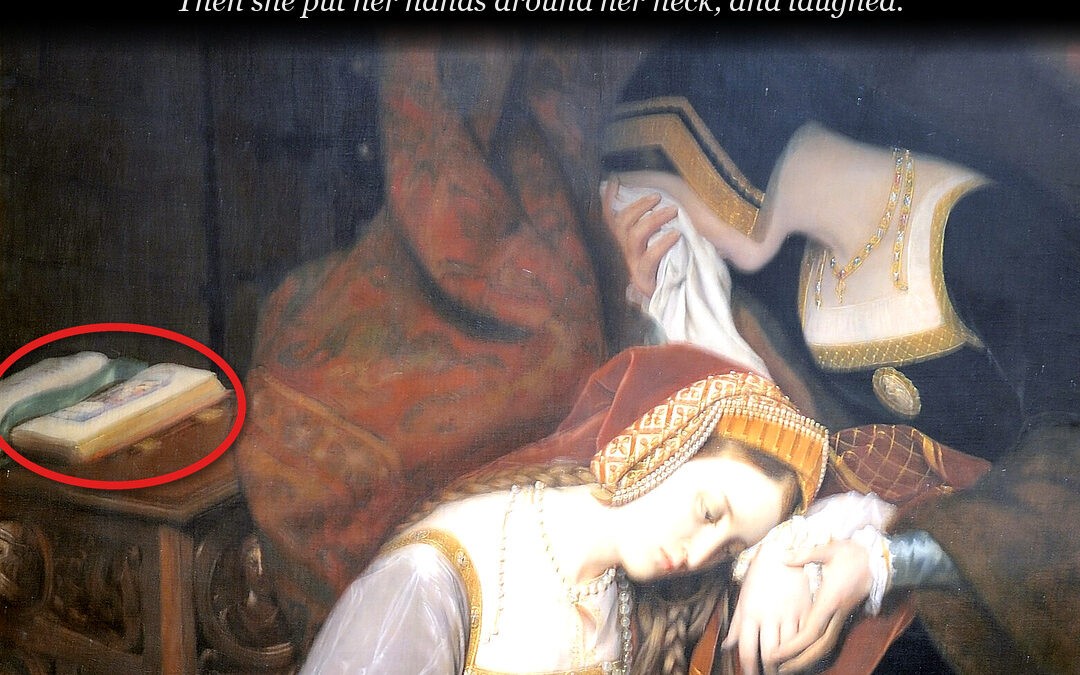
On a cool spring morning in May 1536, the historic walls of the Tower of London witnessed the final hours of Anne Boleyn. The pale sunlight filtered through the windows, illuminating a woman who had once worn England’s crown but was now preparing herself for execution. Anne Boleyn, then about thirty years old, sat in solemn stillness. With her was a priest, praying since early dawn. She had already privately bid farewell to her life and awaited the terrible certainty: she would die before noon.
Anne’s words and demeanor in these last hours have survived through detailed records, notably those sent by Sir William Kingston, Constable of the Tower, to Thomas Cromwell, Henry VIII’s chief minister. Kingston meticulously reported Anne’s statements—her tears, laughter, and the dark humor that became legendary, such as her comment: “I heard say the executioner was very good, and I have a little neck.” This mix of courage and wit is why Anne’s story continues to resonate, centuries later.
A Birth Without a Date
Anne Boleyn’s origins were shrouded in ambiguity. Historians debate whether she was born in 1501 or 1507, reflecting how little attention was paid to her early years. Her father, Thomas Boleyn, was a determined and upwardly mobile courtier and diplomat, while her mother, Lady Elizabeth Howard, hailed from one of England’s most esteemed noble families. The Boleyns were not among the highest aristocracy but were a family on the rise, strategically positioning Anne and her siblings in circles of influence.
Formative Years Abroad
To expand Anne’s horizons, her father sent her overseas at a young age. She first served at the court of Margaret of Austria in the Netherlands, gaining skills in etiquette, music, and diplomacy. Later, Anne moved to France, joining Queen Claude’s household. France was renowned for its artistic and intellectual vigor, and Anne absorbed the country’s culture and its evolving religious thought—ideas critical for the Reformation. When Anne returned to England around 1521, she stood out among court women, distinguished by her intelligence, articulate opinions, and worldly sophistication.
Romance and Political Intrigue
Anne’s presence attracted suitors, most notably Henry Percy, the heir to the Earl of Northumberland. Though their relationship hinted at secret marital intentions, it was ended by the intervention of Cardinal Thomas Wolsey, England’s most powerful church official. Percy was sent away, and Anne did not forget Wolsey’s interference. Later, when Wolsey fell from royal favor, contemporaries speculated Anne’s influence in his downfall—a claim still debated by historians.
Henry VIII’s Pursuit
King Henry VIII noticed Anne, but he was married to Catherine of Aragon, a union that had failed to produce a surviving male heir. Henry became convinced that his childlessness was a divine punishment for marrying his brother’s widow, as the Bible warned. Anne refused to become Henry’s mistress as her sister Mary had; instead, she insisted on marriage and queenship. This demand set in motion events that transformed England’s religious landscape.
Breaking with Rome and Seven Years of Waiting
Henry’s desire to marry Anne led to a seven-year struggle with the Papacy. The Pope refused to annul his marriage to Catherine. In response, Henry initiated the English Reformation, breaking with Rome and eventually being declared Supreme Head of the Church of England. In early 1533, Henry secretly married Anne. After Archbishop Thomas Cranmer voided his first marriage, Anne was recognized as queen. She was pregnant, then, and many hoped for a male heir.
The Ascendant Queen
Anne Boleyn’s reign began grandly. On June 1, 1533, she was crowned at Westminster Abbey, following a series of lavish ceremonies starting at the Tower of London. However, her first child, born in September 1533, was a girl, Elizabeth. Henry was disappointed, and further pregnancies ended in miscarriages, undermining Anne’s position. Tensions grew as Anne’s marriage soured, with her sharp disposition clashing with Henry’s changing attitudes.
The Rise of Jane Seymour and Cromwell’s Calculations
By 1536, Henry’s interests had shifted to Jane Seymour, Anne’s quiet lady-in-waiting. Meanwhile, Thomas Cromwell, Anne’s former ally, turned against her due to disputes over church wealth and politics. Cromwell, sensing the king’s desire for a decisive end to the marriage, orchestrated a plot that would condemn Anne and ensure her removal from power.
The Evidence and Arrest
In late April 1536, the court musician Mark Smeaton was detained, confessing under pressure to adultery with Anne. Within days, other men—Henry Norris, Sir Francis Weston, William Brereton, and Anne’s brother George Boleyn—were also arrested. The charges, including incest and plotting the king’s death, were thinly substantiated; historian inquiries have found inconsistencies related to dates and circumstances. Yet, in Tudor England, royal will often prevailed over evidence.
Imprisonment and Surveillance
Anne was arrested at Greenwich Palace on May 2, 1536, and brought by barge to the Tower. Contrary to popular legend, she likely entered through the Court Gate. Placed in familiar royal lodgings, Anne oscillated between despair and dark humor, a pattern reported by Kingston and observed by the women assigned to watch her. Lady Boleyn, Mrs. Coffin, and Kingston’s wife monitored Anne, not to comfort her but to record her words for Cromwell. Anne insisted on her innocence, revisited prior conversations, and reflected on how innocuous remarks had been twisted into accusations.

Trial by Peers
On May 12, the accused men were tried and pronounced guilty. Anne’s trial occurred inside the Tower on May 15, witnessed by about two thousand people. Presided over by the Duke of Norfolk—her uncle—the proceedings required Anne to defend herself without counsel. Chroniclers admired her wise responses, but the outcome was predetermined. Henry Percy, Anne’s early love, voted guilty; the sentence called for burning or beheading. Her brother George was similarly condemned, his attempted defense eclipsed by a damaging revelation about the king.
Condemnation and Legacy
Five men were executed on Tower Hill on May 17, their statements reflecting contrition but not confession. That day, Anne’s marriage was declared invalid, nullifying her queenship and rendering Elizabeth illegitimate. Anne’s erasure from royal history proceeded rapidly; she was to be executed within the Tower walls rather than outside, limiting the crowd.
The Delayed Execution and Anne’s Composure
Execution, initially planned for May 18, was postponed—possibly awaiting the swordsman from Calais. Anne expressed regret, wishing for the ordeal to end. In Kingston’s account, her mix of emotion, resilience, and humor stood out. Anne requested Kingston’s presence during communion, swearing her innocence before receiving the sacrament, a solemn declaration believed to risk her eternal soul if false. She spent the night in prayer, accompanied by her almoner, John Skip.

Dressing for Finality
On May 19, Anne dressed regally—gray damask gown, crimson kirtle, ermine mantle, English hood—signaling dignity amid adversity. Her preparations were witnessed by select officials: Cromwell, the Duke of Suffolk, Henry Fitzroy, Lord Audley, and civic leaders. Henry VIII was absent, awaiting confirmation of her death.
The Swordsman from Calais
A French swordsman was chosen for Anne’s execution, as opposed to the English axe. This method was seen as more merciful and efficient. While some suggest Anne requested this, others dispute it; the full truth remains uncertain.
The Final Walk and Address
Summoned around nine o’clock, Anne walked to the scaffold on Tower Green, followed by her ladies. Facing the crowd, she delivered a composed speech documented by Edward Hall. Anne accepted her sentence, spoke no ill of others, prayed for the king’s wellbeing, and requested prayers for herself. Her controlled remarks reflected the political expectations: denouncing the king could jeopardize her daughter’s future.
The Execution and Aftermath
Anne’s ladies removed her royal garments. Her hood was lifted, hair secured, and she knelt upright for the sword. The executioner’s blade, hidden to spare her fear, ended her life swiftly. No coffin had been prepared; Anne was laid in an elm chest, wrapped in cloth by her grieving ladies, and interred beneath the Chapel of St. Peter ad Vincula without ceremony or gravestone.
Immediate Consequences and Fate of Key Figures
Henry VIII moved on rapidly. He was betrothed to Jane Seymour the day after Anne’s death and married her eleven days later. Anne’s age remains debated—twenty-nine or thirty-five. Thomas Cromwell, who orchestrated Anne’s downfall, met a similar fate in 1540. Henry married multiple times, his later years marked by ill health and increasing paranoia.
The Legacy of Elizabeth I
Anne’s greatest legacy was her daughter, Elizabeth. Though declared illegitimate and stripped of her title, Elizabeth survived political uncertainty. In 1558, she ascended the throne, reigning for forty-four years. Her era, the Elizabethan Age, saw cultural and naval achievements. While Elizabeth rarely discussed her mother, a symbolic ring containing her portrait indicates lasting personal connection.
Anne Boleyn’s Memory in the Tower
The Tower of London and its chapel still exist. In 1876, the chapel’s restoration uncovered remains believed to be Anne’s, later reburied under a marked stone. A glass memorial on Tower Green commemorates victims of the Tower’s scaffold, including Anne, Catherine Howard, and Lady Jane Grey. The location of Anne’s execution remains debated among historians.
Historians’ Reassessment and Human Resilience
Contemporary historians uniformly reject the validity of Anne Boleyn’s charges. Her trial and execution illustrate not just political ambition and intrigue, but also individual courage. Anne’s conduct—her humor, assertion of innocence, and measured statements—reflects both resilience and performance in the face of peril. This is why, nearly five centuries later, Anne Boleyn’s story endures, outshining those who destroyed her. Her capacity to confront death with dignity and wit has made her a lasting figure in history.
Sources
- BBC History – Anne Boleyn
- Reuters – Anne Boleyn’s Execution
- The Guardian – Anne Boleyn & The Tower
- Encyclopaedia Britannica – Anne Boleyn
Disclaimer: This content is intended for entertainment purposes only and is not based on real events.