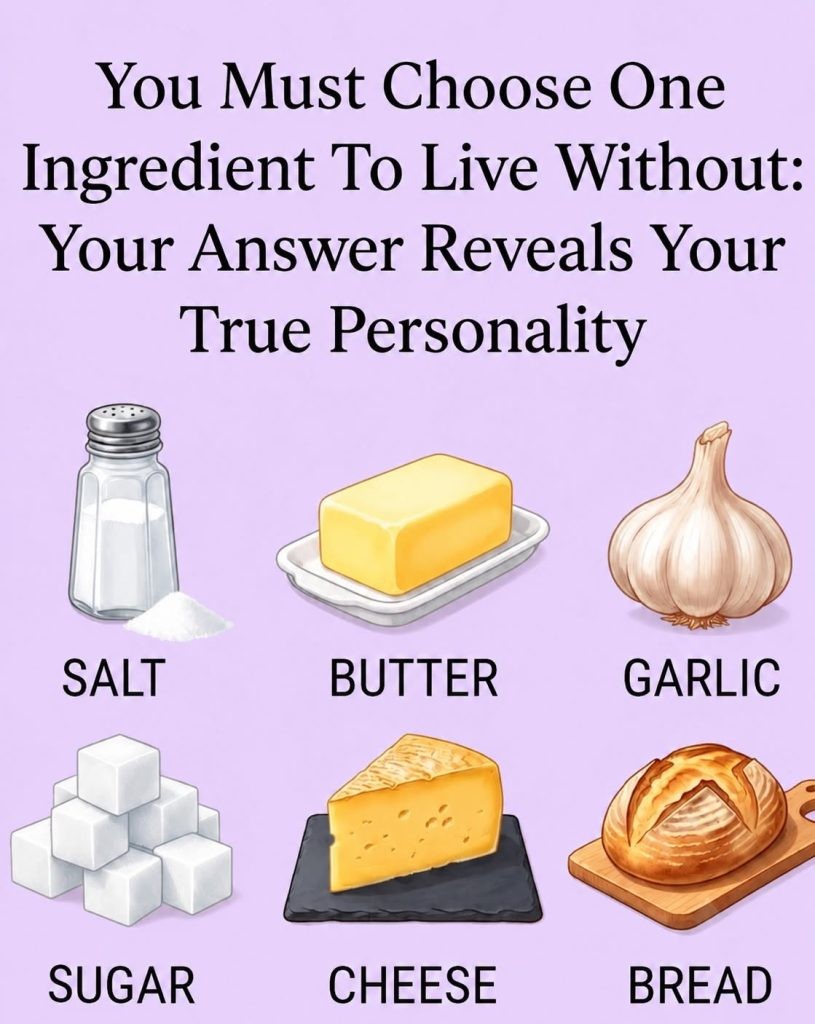
Imagine being asked to remove one familiar kitchen ingredient from your diet permanently. You could still enjoy meals, cook at home, and eat with friends, but one item would have to go: salt, butter, garlic, sugar, cheese, or bread. Which would be hardest to lose, and which would you choose to live without?
This type of food-choice question is often shared as a personality challenge. It can be a fun conversation starter because everyday ingredients carry practical, cultural, and emotional meaning. Salt may represent flavor and tradition, butter may evoke comfort, garlic may suggest bold cooking, while bread and cheese are closely associated with familiar meals in many parts of the world.
Still, it is important to approach these quizzes with perspective. There is no scientific evidence that choosing one ingredient over another can accurately identify a person’s personality, values, or future behavior. Food preferences are shaped by many factors, including culture, family traditions, health needs, budget, religion, food availability, allergies, and individual taste. The value of this challenge is not diagnosis or prediction. Instead, it offers a lighthearted opportunity to think about routines, priorities, and the role food plays in daily life.
Why Food Choices Feel Personal
Food is more than nutrition. Meals can connect people to childhood memories, cultural identity, celebrations, travel, and social relationships. A person may choose to give up an ingredient because they rarely use it, because it is easy to replace, or because a health professional has advised them to limit it. Someone else may make the opposite choice because that same ingredient is central to family recipes or a preferred style of cooking.
Researchers who study eating behavior generally recognize that food decisions are complex. Taste, smell, texture, convenience, price, marketing, social settings, and personal experience can all influence what people eat. For this reason, one answer to a hypothetical question cannot provide a reliable personality profile. It may, however, reveal which foods feel most essential to someone at a particular moment.
Nutrition also matters. Several of the ingredients in this challenge can be part of a balanced diet, but their role varies depending on quantity, overall dietary pattern, and a person’s individual health circumstances. A registered dietitian or qualified health professional can offer personalized advice, especially for people managing conditions such as high blood pressure, diabetes, celiac disease, food allergies, or lactose intolerance.
If You Would Give Up Salt
Choosing salt may seem practical to people who believe flavor can come from herbs, spices, citrus, vinegar, and other seasonings. In a playful personality interpretation, this choice is sometimes associated with simplicity, independence, and a preference for direct solutions. You may be someone who values function over excess and enjoys finding efficient ways to solve ordinary problems.
In real life, the decision may have much more to do with health than personality. Sodium is an essential nutrient, but most people consume more sodium than they need, often through packaged foods, restaurant meals, sauces, cured meats, and snacks rather than from salt added at the table. The World Health Organization recommends that adults consume less than 2,000 milligrams of sodium per day, which is equivalent to less than 5 grams of salt.
Reducing sodium does not mean food has to become bland. Cooks can build flavor with garlic, ginger, black pepper, chili, fresh herbs, dried spices, onions, lemon juice, and low-sodium ingredients. For people who need to limit sodium because of blood pressure concerns, gradual changes can help the palate adjust over time.
If You Would Give Up Butter
Butter is closely linked with baking, comforting meals, and shared traditions. A lighthearted quiz might describe someone who gives up butter as warm, caring, and thoughtful: a person who appreciates a welcoming home, small acts of kindness, and peaceful moments with others. These descriptions can be enjoyable to consider, but they should not be treated as factual assessments of character.
From a nutritional viewpoint, butter is high in saturated fat. Major health organizations generally advise limiting saturated fat as part of a heart-conscious eating pattern, particularly when intake is high. This does not necessarily require every person to eliminate butter entirely. Context matters, including serving size, frequency, and the wider pattern of foods eaten over time.
There are many practical alternatives for cooking and baking. Unsaturated oils, such as olive oil and canola oil, may be used in many recipes. Avocado, nut butters, yogurt, or fruit purées can sometimes replace butter in baking, though each option changes flavor and texture. People who avoid dairy because of allergy or intolerance should check labels carefully, as butter can still contain small amounts of milk proteins and lactose.
If You Would Give Up Garlic
Garlic has a distinctive aroma and is used in cuisines around the world, from Mediterranean dishes to South Asian curries, East Asian stir-fries, Latin American sauces, and Middle Eastern spreads. In a personality challenge, choosing garlic may be interpreted as a sign of adaptability, curiosity, and comfort with trying unfamiliar things. It may suggest that you are willing to make substitutions and explore new flavors.
However, there are many ordinary reasons someone might avoid garlic. Some people dislike its taste or smell. Others experience digestive discomfort, particularly people following dietary approaches that limit certain fermentable carbohydrates under professional guidance. Garlic allergies are less common but can also affect food choices. Cultural and religious dietary practices may also shape whether garlic is included in meals.
Giving up garlic does not mean giving up flavor. Cooks can experiment with ginger, scallions, chives, asafoetida where appropriate, citrus zest, fresh herbs, smoked paprika, cumin, or pepper. The best substitution depends on the recipe and the eater’s preferences. This flexibility is a useful reminder that cooking is often about adaptation rather than strict rules.
If You Would Give Up Sugar
Choosing sugar is often framed as a sign of discipline, patience, and focus on long-term goals. The interpretation may appeal to people who value structure or who enjoy making deliberate choices. Yet a decision to reduce sugar can also be influenced by personal taste, dental health, medical advice, cooking habits, or the simple fact that someone prefers savory foods.
It is useful to distinguish between naturally occurring sugars and added sugars. Fruits, milk, and some other foods contain naturally occurring sugars alongside nutrients such as fiber, vitamins, minerals, or protein. Added sugars are introduced during processing or preparation, including in many sweetened drinks, desserts, breakfast cereals, and packaged snacks.
The American Heart Association advises limiting added sugars as part of an overall healthy eating pattern. Excessive intake of sugary drinks and foods can contribute to excess calorie consumption and may increase the risk of health problems when combined with other dietary and lifestyle factors. At the same time, nutrition is not best understood through guilt or rigid labels. Enjoying occasional sweet foods can fit into many balanced diets, depending on individual needs and habits.
For people hoping to reduce added sugar, practical steps include checking nutrition labels, choosing water or unsweetened drinks more often, and adding sweetness through fruit, cinnamon, vanilla, or small portions of naturally sweet ingredients. Sustainable changes tend to be more useful than extreme restrictions that are difficult to maintain.
If You Would Give Up Cheese
Cheese can be deeply connected to comfort foods, celebrations, local traditions, and social eating. In a playful interpretation, giving it up may suggest flexibility and an ability to enjoy life without becoming overly attached to one pleasure. It may also reflect a willingness to adjust routines when circumstances change.
In practice, people avoid cheese for many different reasons. Some follow vegan diets, some have milk allergies, and some are lactose intolerant. Others may be reducing saturated fat or simply prefer other foods. Cheese can provide protein and calcium, but its nutrition varies widely by type and serving size. Many cheeses are also relatively high in sodium and saturated fat.
Those who stop eating cheese can obtain calcium and protein from a variety of foods, including fortified plant-based beverages, tofu made with calcium sulfate, beans, lentils, leafy green vegetables, fish with edible bones, nuts, seeds, and dairy products that fit their dietary needs. Nutritional adequacy is especially important for people eliminating multiple food groups. Consulting a registered dietitian can help ensure that important nutrients are not overlooked.
If You Would Give Up Bread
Bread is a staple food in many cultures and comes in countless forms, including loaves, flatbreads, rolls, sourdough, rye breads, and whole-grain varieties. A personality quiz may portray the choice to give up bread as a sign of independence, openness to change, or comfort with challenging familiar habits.
There are also practical reasons for this decision. People with celiac disease must avoid gluten, a protein found in wheat, barley, and rye. Others may have wheat allergy or may choose to reduce refined grains. These circumstances are very different, and they should not be confused. Anyone who suspects celiac disease should speak with a healthcare professional before beginning a gluten-free diet, because testing can be affected after gluten is removed.
For people who can eat gluten, whole-grain bread can contribute fiber, B vitamins, and minerals to the diet. Dietary guidelines in several countries encourage making at least some grain choices whole grain. Bread is not inherently unhealthy or unhealthy for everyone; its nutritional role depends on the type of bread, portion size, toppings, and the rest of the diet.
If bread is removed, alternatives may include oats, brown rice, quinoa, potatoes, corn, buckwheat, legumes, and gluten-free whole-grain products. The aim is not necessarily to replace bread item for item, but to maintain a varied and satisfying diet.
What This Kitchen Ingredient Challenge Really Reveals
The most meaningful part of this challenge may be the discussion it creates. One person might choose salt because they are thinking about blood pressure. Another might choose butter because olive oil is already their main cooking fat. A person who gives up bread may be responding to a diagnosed medical condition, while someone who gives up cheese may be thinking about environmental values or lactose intolerance. None of these decisions can be reduced to a single personality label.
Food choices can change over time as people move, travel, learn new cooking skills, receive health guidance, or encounter new cultural traditions. They can also change with access and affordability. What feels easy to eliminate in one household may be essential or difficult to replace in another. Recognizing these differences encourages a more respectful approach to conversations about eating.
If you use this question with friends or family, consider treating it as an invitation to share stories rather than to assign traits. Ask which recipes people would miss, what substitutions they would try, or which food traditions matter most to them. The answers may offer a richer picture of personal experience than any personality quiz could provide.
A Balanced Approach to Food and Self-Reflection
Personality quizzes based on food can be entertaining, but they are not psychological assessments. Reliable personality evaluation requires validated methods and careful interpretation by qualified professionals. A preference for garlic, bread, butter, sugar, salt, or cheese does not determine whether someone is kind, disciplined, adventurous, practical, or independent.
What these familiar ingredients can do is prompt thoughtful reflection. They can encourage people to consider taste, health, culture, convenience, and the importance of flexibility in everyday eating. Whether you would give up salt, butter, garlic, sugar, cheese, or bread, there is no right answer. The best choice is the one that makes sense for your own needs, traditions, and enjoyment of food.
Sources
Disclaimer: This content is intended for entertainment purposes only and is not based on real events.