
In 2009, the name Alfie Patten suddenly appeared across newspapers around the world.
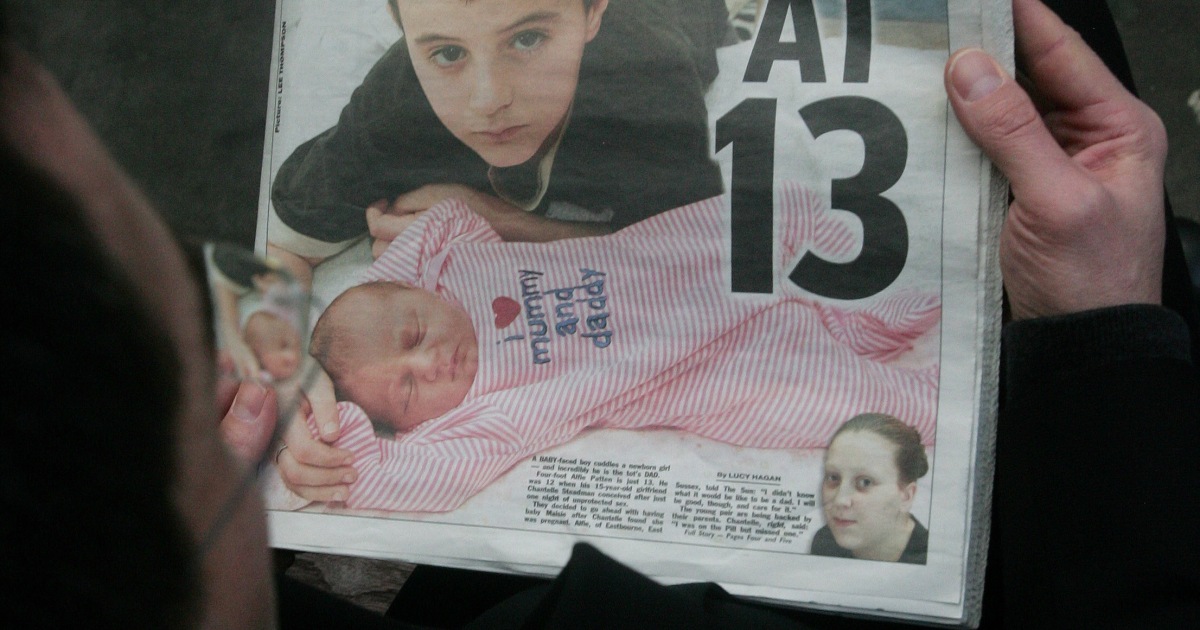
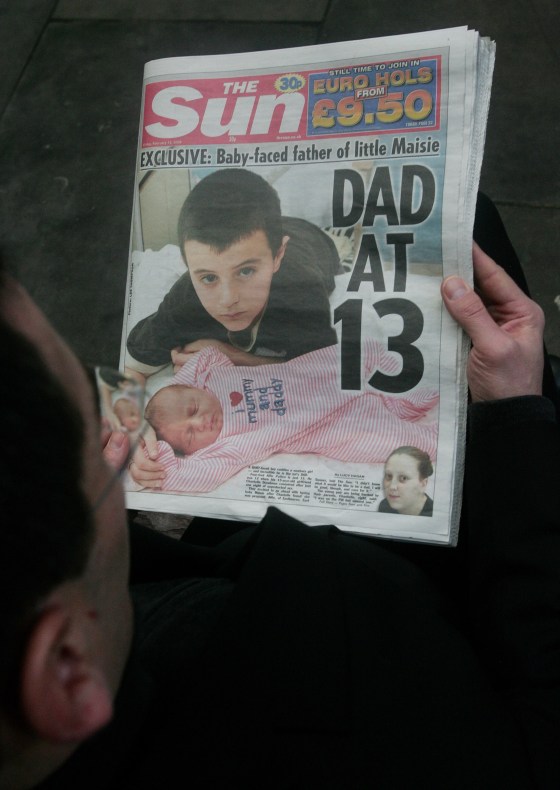
At just 13 years old, the schoolboy from East Sussex was presented by the media as Britain’s youngest father. Photographs of Alfie holding a newborn baby quickly became some of the most recognizable images associated with the story.
The attention was enormous.
His family found themselves at the center of public discussion, while strangers formed opinions about them based largely on newspaper reports. Questions were raised about parenting, education, teenage relationships, and the pressures facing young people in Britain.
But only weeks after the story became international news, a DNA test changed everything.
Alfie was not the baby’s biological father.
What followed became a complicated story about media attention, family life, public judgment, and the lasting effects that sensational headlines can have on young people.
Who Was Alfie Patten?
Alfie Patten was a schoolboy from East Sussex who became widely known in early 2009 after reports claimed that he had fathered a baby at the age of 13.
The baby, Maisie Roxanne, had been born in Eastbourne, and Alfie was photographed with the child shortly after her birth.
Because of Alfie’s extremely youthful appearance, the story attracted extraordinary attention. He looked much younger than his age, and photographs of him holding the newborn created a striking image that newspapers quickly circulated.
The story soon moved beyond British tabloids.
International media organizations picked it up, television programs discussed it, and politicians commented on what the case might reveal about education and young people’s lives.
For Alfie and his family, however, the story was not simply a headline.
It was their everyday life.
A Story That Became a National Conversation
The reports surrounding Alfie quickly became part of a broader discussion about teenage pregnancy and education in Britain.
Politicians and commentators debated whether schools were doing enough to prepare young people for relationships and the responsibilities associated with adulthood.
Others argued that the intense media coverage itself raised important questions.
How much attention should newspapers give to the private lives of children?
When does a story of public interest become an invasion of privacy?
And what happens when a young person becomes famous for something that later turns out to be untrue?
These questions would become increasingly important as more information about Alfie’s situation emerged.

The DNA Test Changed the Story
Only a few weeks after the baby was born, doubts emerged about whether Alfie was actually the father.
A DNA test eventually confirmed that he was not the biological father.
The test identified another teenage boy as the child’s biological father.
For Alfie, the revelation was emotionally difficult.
He had spent weeks being described around the world as a young father. His face had appeared in newspapers and television reports, and his family had faced intense public attention.
Suddenly, the central claim behind the entire story had changed.
The label that had followed him everywhere was no longer accurate.
Yet the publicity could not simply be erased.
The Emotional Impact of Sudden Fame
Most teenagers experience adolescence surrounded by classmates, relatives, teachers, and friends.
Alfie’s experience was very different.
For a period, millions of people knew his name.
His family later described the enormous pressure they experienced after the story became public. They said they felt judged by strangers and worried about leaving their home because of the attention.
His mother, Nicola, later spoke about how difficult it was for the family to return to ordinary life.
The experience highlights something that is often forgotten when sensational stories become popular: the people involved still have to live with the consequences after the headlines disappear.
For a young person, that pressure can be particularly difficult.
Questions About the Media Coverage
The Alfie Patten story also attracted attention from Britain’s Press Complaints Commission, which examined aspects of the newspaper coverage.
The controversy included questions about whether the family had received payments for sharing their story.
The investigation ultimately faced legal limitations, preventing the watchdog from pursuing some aspects of the matter further.
The episode nevertheless contributed to a larger debate about the responsibilities of newspapers when reporting stories involving children.
Media organizations have an important role in informing the public, but reporting on minors requires particular care.
Accuracy is especially important.
Once a dramatic story has been published, correcting it later may not undo the effects of the original coverage.
The Difference Between a Headline and a Human Being
One of the most lasting lessons from the Alfie Patten story is the difference between a public label and a real person.
For months, Alfie was primarily known as “Britain’s youngest father.”
That phrase became his identity in the public imagination.
But a human being cannot be reduced to a headline.
Alfie was a child navigating an extraordinary situation. He had a family, friends, school experiences, hopes, mistakes, and an entire future ahead of him.
The DNA results showed that one of the most important facts in the story had been incorrect.
Yet by then, the public had already formed opinions.
This demonstrates why sensational reporting can be particularly powerful. People often remember the original headline even after the details have changed.
Life After the Headlines
As Alfie grew older, his life continued to attract occasional media attention.
His later years were considerably more complicated than the simple image presented in the original headlines.
Reports published years later described various personal and legal difficulties.
However, these later events should not be treated as proof that his early media experience caused everything that happened afterward. Human lives are shaped by many factors, including family circumstances, personal decisions, environment, opportunities, and challenges.
What can be said with greater confidence is that Alfie experienced an extraordinary level of public attention at an unusually young age.
That is something few people would be prepared for.
Why His Story Still Matters
More than a decade after the original headlines, the Alfie Patten story remains interesting because it raises questions that extend far beyond one family.
It shows how quickly a personal story can become international news.
It demonstrates how powerful a photograph can be.
It reminds us that early reports are not always the complete story.
And perhaps most importantly, it encourages readers to think carefully before judging people based solely on sensational headlines.
The internet has made information spread faster than ever. A story can reach millions of people before all of the facts have been independently established.
Once information becomes viral, correcting misinformation becomes much more difficult.
The Responsibility of Telling Stories About Young People
Stories involving children require a different level of sensitivity.
Young people are still developing emotionally and socially. A public label created during adolescence can potentially follow someone for years.
That is why responsible journalism should prioritize accuracy, context, and dignity.
The Alfie Patten case offers a useful reminder that dramatic stories should not automatically be treated as complete stories.
There is often more happening behind a headline than readers initially realize.
And when the person involved is a child, the consequences of getting the story wrong can be particularly significant.
A Story About More Than a DNA Test
It would be easy to remember Alfie’s story simply because a DNA test overturned a sensational headline.
But the deeper story is about what happened when an ordinary teenager suddenly became a public figure.
His experience illustrates how quickly fame can arrive without being requested, how difficult it can be to escape a widely circulated label, and how complicated life can become when private circumstances are transformed into public entertainment.
It also reminds us that people continue growing long after their most famous moment.
A teenager who makes headlines at 13 is not necessarily the same person at 20, 25, or 30.
People change.
They learn.
They make mistakes.
They find new directions.
And they deserve the opportunity to move beyond the identity that others once assigned to them.
Final Thoughts
Alfie Patten’s story began with one of the most sensational headlines of 2009.
The world was introduced to him as a young father, only to learn weeks later that the central claim was incorrect.
The experience placed Alfie and his family under an extraordinary level of public scrutiny during a period of life when most young people are simply trying to grow up away from the spotlight.
Years later, the story remains a reminder of the importance of checking facts, questioning sensational headlines, and remembering the human being behind the story.
Perhaps that is the most valuable lesson of all.
Human curiosity is one of the reasons stories spread so quickly. We want to understand unusual events, unexpected discoveries, and stories that challenge what we think we know.
But curiosity should always be balanced with empathy.
Behind every headline is a real person whose life continues long after readers move on to the next story.
Sources
The Independent, contemporary reporting and commentary on the 2009 Alfie Patten story.
Press Gazette, reporting on the Press Complaints Commission’s examination of aspects of the newspaper coverage.
The Mirror, later reporting concerning Alfie Patten and his family.
Daily Mail, archived reporting and interviews concerning the original story and subsequent developments.
Press Complaints Commission archives and contemporary media reports concerning press standards and the coverage of the case.