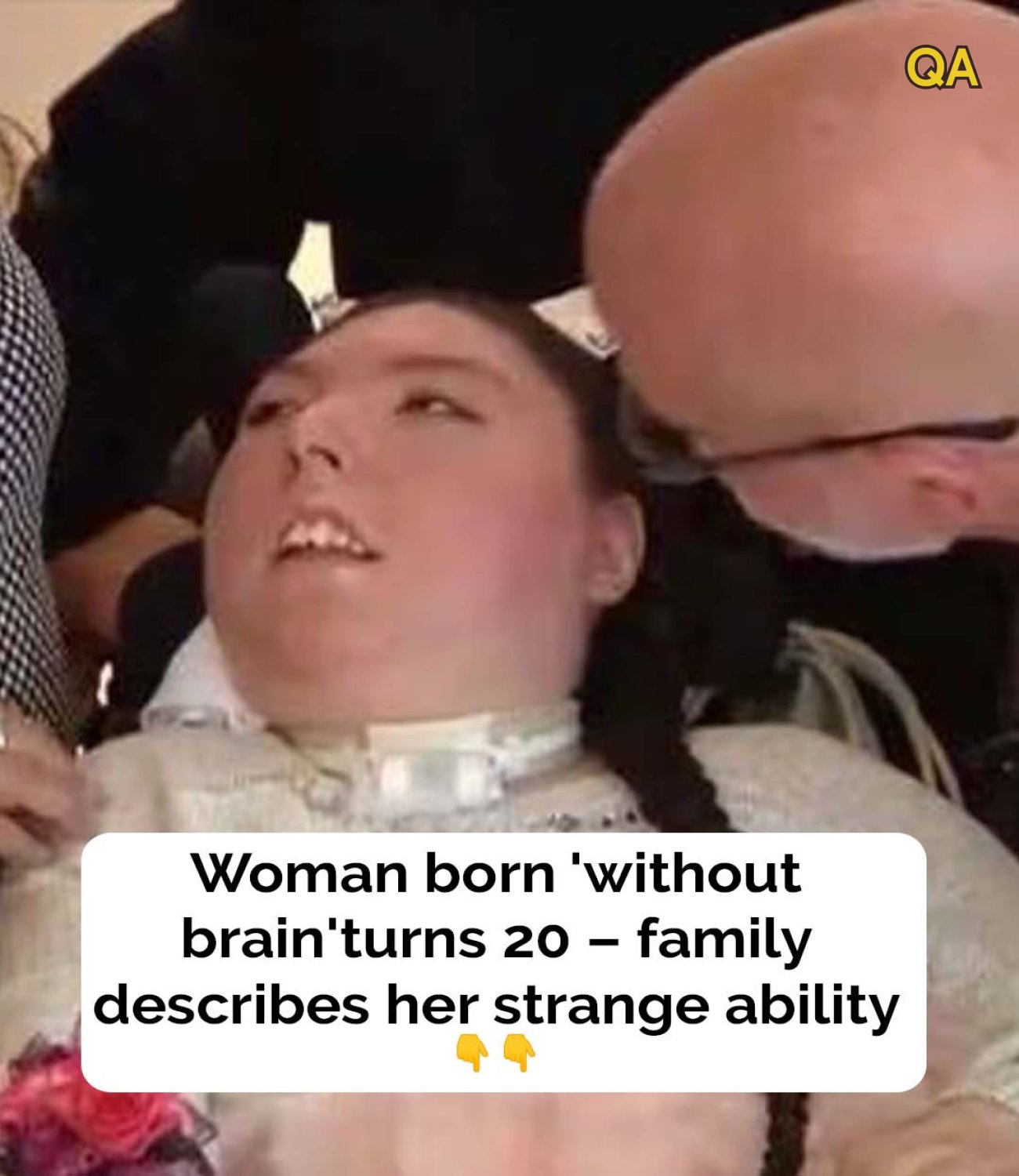
When Alex Simpson was born in Nebraska, her parents had every reason to believe they were bringing home a healthy baby girl. Like any new parents, Shawn and Lorena Simpson were preparing for the years ahead, imagining birthdays, family celebrations, and all the ordinary moments that come with raising a child.
Then, when Alex was just two months old, their world changed.
Doctors diagnosed her with hydranencephaly, a rare neurological condition affecting the development of the brain. The diagnosis brought uncertainty and fear, and the family was given a very limited expectation for how long Alex might live.
But Alex’s story did not follow the timeline doctors had anticipated.
Years passed.
Then another birthday arrived.
And another.
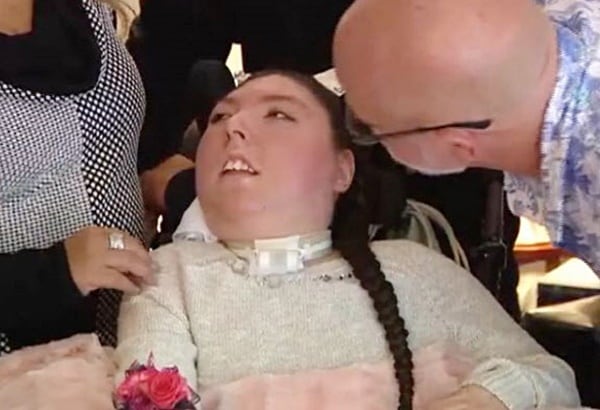
Eventually, Alex reached an age her family had once been told might never come. She celebrated her 20th birthday, marking two decades of life surrounded by people who have supported, cared for, and loved her.
For her family, the milestone represented much more than a birthday. It became a reminder of how unpredictable life can be and how important it is to recognize the value of every individual.
What Is Hydranencephaly?
Hydranencephaly is a rare condition involving significant differences in the development of the cerebral hemispheres, the largest portions of the brain.
According to the Cleveland Clinic, the condition is extremely uncommon and may occur in approximately one in 5,000 to 10,000 pregnancies.
The condition can vary considerably in how it affects an individual. Because the brain plays an essential role in movement, communication, sensory processing, and many other functions, children with hydranencephaly can have significant developmental and neurological challenges.
Alex’s case was particularly unusual because of the extent of the condition described by her family.
Rather than focusing only on the medical terminology, however, her story is ultimately about the person behind the diagnosis.
Alex is a daughter, a sister, and a beloved member of her family.
That distinction became particularly important to her parents.
A Diagnosis That Changed Everything
When Alex was diagnosed as an infant, her parents faced enormous uncertainty.
They did not know what the future would look like or how long they would have with their daughter.
Doctors reportedly believed she might not survive beyond early childhood.
For Shawn and Lorena, every day therefore became precious.
Instead of planning years into the future, they often focused on the immediate present: caring for Alex, making sure she was comfortable, and appreciating the time they had together.
Lorena has previously described how difficult those early years were.
She explained that she spent long periods close to Alex, particularly at night, worried about whether her daughter would continue breathing normally.
That constant uncertainty placed an enormous emotional burden on the family.
Yet it also strengthened the bond between mother and daughter.
Twenty Years of Unexpected Milestones
Alex eventually reached milestones that her family once feared they might never see.
Her 10th birthday was already a major moment.
Then came her teenage years.
And eventually, her 20th birthday.
For Shawn and Lorena, seeing their daughter reach adulthood was deeply meaningful because it challenged the expectations they had received when Alex was an infant.
The family has described love and faith as central parts of their journey.
Rather than measuring Alex’s life only through medical predictions, they chose to focus on the moments they could share with her.
That perspective became particularly important as Alex grew older.
Her birthday celebrations were not simply about numbers. Each additional year represented another chapter in a story that had unfolded differently from what anyone initially expected.
Alex’s Family Has Always Been at the Center of Her Life
Caring for someone with significant medical and developmental needs requires dedication.
Alex’s parents have spent years providing support and creating an environment in which she could be cared for and surrounded by people who know her well.
Her younger brother, SJ, has also grown up alongside her.
According to the family, SJ believes that Alex is highly sensitive to the emotions of people around her.
He has described situations in which Alex seemed to respond when someone nearby was stressed or upset, even when there was no obvious change in the environment.
These observations are personal experiences from people who know Alex closely rather than medical evidence about her sensory abilities.
Still, they reveal something important about family relationships.
People who spend years caring for someone often become familiar with subtle expressions, movements, sounds, and changes in behavior that outsiders may not immediately notice.
Looking Beyond a Medical Diagnosis
One of Shawn Simpson’s most important messages has been about the way society views people with disabilities.
He has spoken publicly about negative assumptions surrounding Alex and emphasized that disability should never be used as a reason to dismiss someone’s value.
This message is particularly relevant because medical diagnoses can sometimes become the first thing people notice about an individual.
But a diagnosis does not describe an entire person.
Alex’s story illustrates why it is important to see people with disabilities as individuals with families, relationships, personalities, and meaningful lives.
Her circumstances are different from those of many other people, but that does not make her life less valuable.
The Importance of Compassion
Stories involving rare medical conditions can easily become focused on statistics and medical terminology.
However, Alex’s experience offers another perspective.
Behind every unusual diagnosis is a family navigating real emotions and making decisions one day at a time.
For parents, receiving an unexpected diagnosis can bring fear, confusion, and countless questions.
There may be no simple answer about what the future will hold.
In such circumstances, compassion can make a significant difference.
Families benefit from accurate medical information, supportive healthcare professionals, practical resources, and communities that understand the challenges associated with disability and complex care needs.
Most importantly, families deserve to have their loved ones treated with dignity.
Why Alex’s 20th Birthday Matters
Turning 20 is a meaningful milestone for anyone.
For Alex and her family, however, it carried an additional significance.
Years earlier, her parents had been warned that she might have only a short time.
Instead, they watched her grow through childhood and adolescence and eventually reach young adulthood.
That does not mean that medical predictions are necessarily wrong. Prognoses are based on available medical knowledge and individual circumstances, and outcomes can vary significantly.
Alex’s experience simply demonstrates that individual lives do not always follow expected timelines.
Medicine can provide information about possibilities and risks, but it cannot always predict every detail of a person’s future.
A Family’s Message About the Value of Life
Throughout Alex’s story, one theme has remained consistent: her parents want others to understand that disability does not diminish a person’s worth.
That message goes beyond Alex herself.
Millions of people around the world live with physical, neurological, sensory, or developmental disabilities. Their experiences vary enormously, and no single story can represent everyone.
But every person deserves to be treated with dignity.
For Alex’s family, this has meant celebrating her life rather than defining her only by her medical condition.
Her 20th birthday therefore became an opportunity to recognize not only the years that had passed but also the people who had been part of her journey.
A Different Definition of Resilience
Resilience is often associated with dramatic achievements: overcoming major obstacles, reaching ambitious goals, or accomplishing something extraordinary.
But Alex’s story offers a quieter definition.
Sometimes resilience is simply continuing forward.
It can mean parents showing up every day, siblings growing alongside one another, caregivers providing support, and families appreciating small moments that might otherwise be overlooked.
There is nothing simple about that kind of commitment.
For the Simpson family, two decades of caring for Alex have undoubtedly involved challenges as well as joyful moments.
Yet their experience demonstrates how love and dedication can shape a family’s journey.
What Alex’s Story Can Teach Us
Alex Simpson’s story encourages us to reconsider how we define a meaningful life.
It is easy to measure a person’s achievements through conventional milestones such as education, employment, independence, or career success.
But those measures do not apply equally to every person.
A meaningful life can also be found in relationships, family connections, shared experiences, and the simple moments that bring people together.
Alex’s circumstances are unique, but the underlying message is universal.
Every family hopes to have more time with the people they love.
Every birthday can be an opportunity to appreciate that time.
And every person deserves to be recognized as more than a diagnosis.
Final Thoughts
Alex Simpson’s journey began with a diagnosis that brought enormous uncertainty to her family.
Twenty years later, her story looks very different from the early expectations surrounding her health.
Her milestone birthday became a celebration of family, perseverance, and the unexpected paths that life can take.
Perhaps the most meaningful lesson is not the rarity of Alex’s condition or the medical predictions surrounding her future.
It is the reminder that every individual life has value.
Alex’s parents chose to focus on love, care, and the moments they could share with their daughter. Their perspective also encourages society to look beyond assumptions and recognize the humanity of people living with disabilities.
Stories like Alex’s naturally awaken our curiosity because they challenge what we think we know about the human experience.
But curiosity is most meaningful when it is accompanied by compassion.
Alex’s 20 years are not simply a medical story. They are 20 years of family memories, relationships, care, and moments that matter to the people who love her.
And that is perhaps the most important part of her story.
Sources
Cleveland Clinic, information about hydranencephaly and its neurological characteristics.
National Organization for Rare Disorders (NORD), resources on rare neurological conditions.
MedlinePlus, U.S. National Library of Medicine, information about neurological and developmental conditions.
National Institutes of Health (NIH), medical research and resources relating to rare diseases and neurological development.
The original family interviews and published reports referenced in the source material, including interviews with Alex Simpson’s parents.