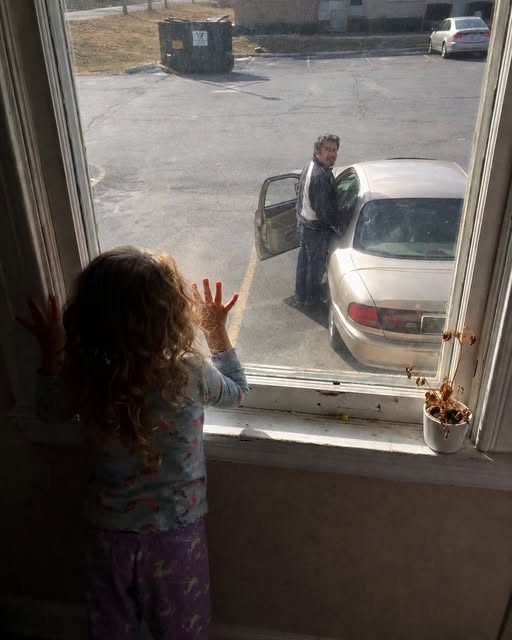
Chapter 1 — The Apartment on Palmer Street
For three years, I paid my rent on time every single month.
I never missed a payment.
I never asked for an extension.
And I never questioned the simple routine I had built around those eight hundred dollars.
Every first Friday of the month, I would sit at the small kitchen table in our garage apartment, take out my checkbook, and carefully write the same name on the payee line.
Mr. Alvarez.
Then I would place the check in a plain white envelope and leave it in the little wooden box beside his front door.
It was one of those routines that became so ordinary that I stopped thinking about it.
Until the morning I checked my bank account and realized something was wrong.
The money was still there.
At first, I stared at the screen without understanding what I was seeing.
The balance was higher than it should have been.
I checked the date.
Then I checked the previous months.
Then I went back through the statements from the past year.
None of the rent checks had been cashed.
My heart began beating faster.
“That can’t be right,” I whispered.
I checked again.
Three years.
Thirty-six months.
Thirty-six rent checks.
Not one had been deposited.
For a moment, I wondered whether my bank had made a mistake.
Then another thought came to me.
Maybe Mr. Alvarez had been keeping the checks.
Maybe he planned to deposit them all at once.
The idea frightened me.
If he suddenly deposited three years’ worth of rent, I wouldn’t have enough money to cover it.
I immediately transferred what little savings I had into a separate account.
I didn’t spend the extra money.
I didn’t touch it.
And for the first time since moving into that little apartment, I became nervous whenever I saw Mr. Alvarez.
It wasn’t because he had ever been unkind to me.
Quite the opposite.
He was probably the kindest landlord I had ever known.
But something about those untouched checks didn’t make sense.
Three years earlier, I had never imagined I would be living in a garage apartment with my four-year-old daughter, Trixie.
At the time, I had been exhausted, scared, and trying desperately to pretend that I knew what I was doing.
I was a single mother.
My savings were small.
My income was barely enough to cover groceries, utilities, transportation, and childcare.
I didn’t need a beautiful house.
I didn’t need a big backyard.
I didn’t even need much space.
I needed somewhere safe.
Somewhere Trixie could sleep without me worrying about what might happen tomorrow.
One rainy afternoon, I found a handwritten note taped to a telephone pole on Palmer Street.
It said:
GARAGE APARTMENT FOR RENT. $800. QUIET TENANTS ONLY. CALL ALVAREZ.
There was a phone number underneath.
I almost walked past it.
Eight hundred dollars was still a lot for me.
But compared with the other apartments I had seen, it was surprisingly affordable.
So I called.
An older man’s voice answered.
“Hello?”
“Hi. I’m calling about the apartment on Palmer Street.”
There was a short pause.
“You have children?”
“One.”
“How old?”
“Four.”
Another pause.
Then he said, “Come see it.”
That afternoon, Trixie and I stood outside a small white house with a detached garage in the back.
The apartment above the garage was tiny.
There was one bedroom, a narrow kitchen, a small bathroom, and a living room with two windows overlooking the backyard.
The paint wasn’t perfect.
The floor creaked.
The kitchen cabinets were old.
But sunlight came through the windows.
And the street was quiet.
Trixie walked into the bedroom and immediately pointed at the window.
“Mommy, I can put my stuffed animals here.”
I smiled.
“Yes, sweetheart.”
Mr. Alvarez watched us from the doorway.
He was probably in his late sixties.
His hair was gray, and he moved slowly, but there was something calm about him.
He didn’t ask me why I was a single mother.
He didn’t ask where Trixie’s father was.
He didn’t ask for explanations about my past.
He only asked two questions.
“Can you pay the rent on time?”
I nodded.
“Yes.”
“And will you take care of the place?”
“Absolutely.”
He looked at me for a few seconds.
Then he handed me a set of keys.
“Then it’s yours.”
I almost laughed because it seemed too easy.
“No deposit?”
“One month.”
I swallowed.
“I can pay that.”
“I know.”
I looked at him.
“You know?”
He smiled faintly.
“You look like someone who keeps her promises.”
I didn’t know what to say.
So I simply thanked him.
That night, Trixie and I slept on an air mattress in the empty apartment.
The next morning, I woke up to sunlight on the floor.
For the first time in months, I didn’t wake up wondering where we would live.
We had a home.
It wasn’t fancy.
But it was ours.
And I promised myself I would never take it for granted.
Every month after that, I paid my rent exactly as promised.
And every month, Mr. Alvarez quietly accepted my check.
I thought that was the end of the story.
I had no idea it was only the beginning.
Because three years later, I would discover that the man I thought was simply my landlord had been watching my life unfold much more closely than I realized.
And the little apartment on Palmer Street would become something far more important than a place we rented.
It would become the reason I finally believed that life could give people a second chance.
Chapter 2 — The Quiet Kindness of Mr. Alvarez
The first year in the apartment wasn’t easy.
I worked long hours and picked up extra shifts whenever I could.
Trixie went to school during the day, and I spent most evenings helping her with homework, preparing dinner, doing laundry, and trying to make sure she never felt the weight of the problems I was carrying.
Children notice more than adults think.
Trixie knew we didn’t have much money.
She knew I sometimes looked tired.
She knew there were nights when I counted bills at the kitchen table.
But she never complained.
Instead, she would climb onto my lap and say things like, “We’re okay, Mommy.”
I always smiled.
“Yes, baby. We’re okay.”
Mr. Alvarez seemed to notice those little things.
He rarely talked much, but he was always around.
One morning, I discovered that the kitchen faucet was leaking.
I planned to call him after work.
Before I could, there was a knock on my door.
It was Mr. Alvarez.
“Your faucet.”
I blinked.
“How did you know?”
“I heard it.”
“You heard it from downstairs?”
He shrugged.
“Old house.”
An hour later, the faucet was fixed.
I tried to give him some money.
He refused.
“No.”
“Mr. Alvarez, at least let me—”
“No.”
“But—”
“Buy something for Trixie.”
Then he walked away.
That became his way.
He never made a big show of helping us.
He simply noticed things.
One winter evening, the heater stopped working.
I was terrified because the temperature had dropped sharply.
I called him.
“I’ll come up.”
Twenty minutes later, he was standing in my living room with a toolbox.
He worked for nearly an hour.
When he finally stood up, he wiped his hands on an old towel.
“It should hold.”
“Thank you.”
He nodded.
Then he looked toward Trixie.
“Does she have enough blankets?”
I laughed softly.
“Yes.”
“Good.”
He left.
A week later, there was a basket of oranges outside our door.
No note.
No explanation.
Trixie ran into the kitchen.
“Mommy! Someone gave us oranges!”
I knew immediately who it was.
“Mr. Alvarez?”
She nodded enthusiastically.
“Can we give him some?”
I smiled.
“Of course.”
From then on, Trixie began leaving small drawings for him.
Sometimes they were pictures of flowers.
Sometimes they were pictures of our apartment.
Once, she drew three people standing under a yellow sun.
There was me.
There was her.
And there was Mr. Alvarez.
I teased her.
“Why is Mr. Alvarez in our family picture?”
She looked at me seriously.
“Because he takes care of us.”
I didn’t know how to answer that.
So I hugged her.
Years earlier, I had believed that being independent meant never needing anyone.
But motherhood had taught me something different.
Sometimes strength meant accepting help without allowing it to make you feel small.
Mr. Alvarez never made me feel like a charity case.
That mattered.
He treated me like a person who was rebuilding her life.
And I was.
Slowly.
Month by month.
Paycheck by paycheck.
I eventually found a better job.
I started saving a little more.
Trixie grew from a four-year-old who carried a stuffed rabbit everywhere into a bright little girl who loved books and music.
Our apartment changed too.
I painted the walls.
I bought secondhand furniture.
I found a small bookshelf at a yard sale.
Trixie’s drawings covered the refrigerator.
It wasn’t much.
But it was home.
Then came the third year.
By then, paying rent had become automatic.
Every month, I wrote the check.
Every month, I left it for Mr. Alvarez.
And every month, he said nothing.
I didn’t notice anything strange.
Not until one morning when I needed to check my bank account.
I had been saving for Trixie’s school expenses.
I opened my banking app.
Then froze.
The balance was much higher than I expected.
I went through the transactions.
My paycheck was there.
My utility bills were there.
Groceries were there.
But there was no rent payment.
I checked the previous month.
Nothing.
The month before that.
Nothing.
I opened an older statement.
Still nothing.
At first, I assumed the checks had somehow been deposited manually without appearing correctly.
But then I remembered something.
Mr. Alvarez had never asked me for another form of payment.
I immediately went to my checkbook.
The checks were numbered.
I counted them.
Then I looked at the carbon copies.
Thirty-six.
Every single one was there.
I sat down.
My hands felt cold.
Why would he keep them?
I thought about asking him that same day.
But fear stopped me.
What if he had been saving them?
What if he suddenly expected all three years of rent?
I couldn’t afford to pay thousands of dollars at once.
So I did something I had learned to do during the hardest years of my life.
I waited.
I saved.
I prepared for the worst.
And I stopped spending the money that should have gone toward rent.
For several weeks, I watched Mr. Alvarez carefully.
But he behaved exactly as he always had.
He watered his plants.
He fixed things around the property.
He occasionally waved to Trixie.
Nothing seemed different.
That almost made it worse.
One evening, I stood at the kitchen window and watched him sitting alone in his backyard.
He looked older than I remembered.
For the first time, I wondered about his life.
Who had taken care of him when he was young?
Who had helped him when things were difficult?
Why did he seem so determined to help us without ever asking for anything in return?
The questions stayed with me.
Finally, I decided I couldn’t wait anymore.
The next morning, I would ask him.
I had no idea that his answer would change our lives forever.
Chapter 3 — The Shoebox
The next morning, I waited until Trixie left for school.
Then I walked downstairs.
Mr. Alvarez was sitting at his kitchen table, drinking coffee and reading the newspaper.
“Mr. Alvarez?”
He looked up.
“Yes?”
“Can I ask you something?”
He folded the newspaper.
“Of course.”
I took a breath.
“Have you been depositing my rent checks?”
His expression didn’t change.
“What makes you ask?”
“I checked my bank statements.”
He remained silent.
“I haven’t seen any of the checks deposited.”
Another silence.
Then he nodded.
“I see.”
My heart began pounding.
“Mr. Alvarez, if there’s a problem, please tell me.”
“No problem.”
“Then where are the checks?”
He stood up slowly.
“Wait here.”
He disappeared into the hallway.
I heard a closet door open.
Then another.
A few minutes later, he returned carrying a small cardboard shoebox.
He placed it on the table.
My stomach tightened.
“What is that?”
“Your rent.”
I stared at him.
He opened the lid.
Inside were envelopes.
Dozens of them.
My handwriting was on every single one.
I reached down and picked up the first check.
It was dated three years earlier.
My name.
His name.
Eight hundred dollars.
Untouched.
I looked at him.
“Why?”
He pulled out a chair.
“Sit.”
I sat.
He lowered himself into the chair opposite me.
“I never cashed them.”
“I can see that.”
“I wanted to.”
I frowned.
“You wanted to?”
He nodded.
“But I decided not to.”
“Why?”
He looked down at the shoebox.
“Because I watched you.”
The words made me uncomfortable.
“Watched me?”
“Not in a bad way.”
He smiled.
“I watched you work.”
I didn’t say anything.
“I saw you leave early in the morning. I saw you come home tired. I saw you carrying groceries, helping your daughter with schoolwork, fixing things yourself when you couldn’t afford someone else.”
He paused.
“You always paid me first.”
I swallowed.
“Because I promised you I would.”
“I know.”
He leaned back.
“That promise told me a lot about you.”
I looked at the checks again.
“But you could have told me.”
“Maybe.”
“Instead, you let me think you were going to cash them.”
“I never said I would.”
“That doesn’t make it less frightening.”
He smiled gently.
“You’re right.”
For the first time, I saw something different in his expression.
Not amusement.
Something closer to affection.
“You were always worried about money.”
I laughed nervously.
“Most single mothers are.”
“Maybe.”
He looked toward the window.
“But you never let your daughter see fear.”
That sentence hit me harder than I expected.
I looked away.
There had been so many nights when I had cried quietly in the bathroom because I didn’t want Trixie to hear.
So many mornings when I had smiled even though I had no idea how I would make the next month’s bills.
I thought I had hidden all of it.
Apparently, I hadn’t.
Mr. Alvarez pushed the shoebox toward me.
“Take them.”
I stared at him.
“What?”
“Take your checks.”
I didn’t move.
“And the money?”
He reached into a drawer and removed a sealed envelope.
“This too.”
I opened it.
Inside was a bank statement and a letter.
I looked at him in confusion.
“I put the money aside.”
“What money?”
“The rent.”
I stared at the statement.
He had saved every dollar.
Every month.
Every payment.
Not spent.
Not invested recklessly.
Not touched.
Just saved.
The total was more money than I had ever seen sitting in one place under my name.
My eyes filled with tears.
“I don’t understand.”
He sighed.
“I didn’t want to give you money.”
I looked up.
“What?”
“I wanted you to have a chance.”
He pointed toward the ceiling.
“That apartment gave you a place to start.”
He paused.
“You did the rest.”
I shook my head.
“No. I can’t take this.”
“You can.”
“It’s too much.”
“You earned it.”
“I paid rent.”
“No.”
He shook his head.
“You earned it by showing me what kind of person you are.”
I couldn’t stop the tears now.
He stood up and walked toward a cabinet.
Then he returned with another folder.
“This is why I asked you to sit down.”
My heart began racing again.
“What is that?”
He placed the folder on the table.
“Read it.”
I opened it.
At first, I didn’t understand the documents.
Then I saw the words.
My hands began to tremble.
“Mr. Alvarez…”
He looked at me.
“The apartment.”
I stared at the papers.
He had prepared legal documents transferring ownership of the garage apartment to me.
I couldn’t speak.
He sat quietly across from me.
“You want to give me the apartment?”
He nodded.
“But why?”
“Because I’ve lived here longer than you.”
I almost laughed through my tears.
“That’s not a reason.”
“It is to me.”
He leaned forward.
“That place became your home. Trixie grew up there. You repaired it. You cared for it. You turned an old garage apartment into something warm.”
He paused.
“I don’t need it.”
I looked at him.
“Mr. Alvarez, I can’t accept something this big.”
He smiled.
“Then don’t think of it as a gift.”
“What should I think of it as?”
He answered simply.
“A second chance.”
Chapter 4 — You Earned It
I didn’t sleep that night.
The papers sat on my kitchen table.
The shoebox was beside them.
Thirty-six rent checks.
Thirty-six reminders of the years I had spent trying to build a stable life for my daughter.
I kept reading the documents again and again.
Every time, I became overwhelmed.
I couldn’t understand how a landlord could decide to give away a property simply because he believed someone deserved a chance.
The next morning, I went downstairs.
Mr. Alvarez was outside trimming a bush.
“Can we talk?”
He turned.
“Of course.”
I held the folder.
“I still don’t understand.”
He put down the clippers.
“Come sit.”
We sat on the back porch.
For several minutes, neither of us spoke.
Finally, I asked, “Why me?”
He looked toward the apartment above the garage.
“Because I know what it means to start over.”
That was the first time he had ever talked about his own life.
He told me that many years earlier, he had lost almost everything he owned.
He had made mistakes.
He had trusted the wrong people.
He had spent years rebuilding.
“Someone helped me,” he said.
“Who?”
“An old friend.”
“What did he do?”
“He gave me a job when nobody else would.”
Mr. Alvarez smiled faintly.
“He didn’t ask me to pay him back.”
I understood.
“He asked you to help someone else.”
He nodded.
“Exactly.”
I looked down at the folder.
“But you don’t have to give me your property to do that.”
“I know.”
“Then why?”
He looked directly at me.
“Because I watched you become different.”
I frowned.
“Different?”
“When you first moved in, you were afraid.”
I looked away.
“You barely spoke.”
He continued.
“You apologized whenever Trixie made noise. You apologized when something broke. You apologized when you needed help.”
He smiled.
“Three years later, you don’t apologize anymore.”
I laughed softly.
“I suppose that’s true.”
“You learned that needing help doesn’t make you weak.”
I didn’t answer.
He continued.
“And you gave your daughter something more important than money.”
“What?”
“A home.”
I looked upstairs.
Through the window, I could see the curtains Trixie had chosen.
Her books were stacked beside the window.
A little paper star was taped to the glass.
I remembered our first night there.
The air mattress.
The empty rooms.
Trixie asking where she should put her stuffed rabbit.
Now that same apartment was filled with memories.
Christmas mornings.
Birthday cakes.
School projects.
Lost teeth.
Bedtime stories.
Sick days.
Laughter.
Arguments.
Forgiveness.
Everything that made a place feel like home.
I wiped my eyes.
“I don’t know how to thank you.”
“You don’t.”
He stood up.
“Just raise that girl.”
“I will.”
“Give her the childhood you didn’t have.”
I looked at him.
“How do you know what kind of childhood I had?”
He smiled.
“I don’t.”
Then he walked toward the house.
Before he went inside, he turned around.
“And don’t forget something.”
“What?”
“You didn’t become strong because I helped you.”
He pointed at me.
“You were already strong.”
I stood there crying.
For years, I had believed that survival was something I had done quietly, almost invisibly.
I had never thought anyone noticed.
But someone had.
Not because he wanted something from me.
Not because he expected gratitude.
He had simply noticed.
That afternoon, I told Trixie that we needed to talk.
She was sitting at the kitchen table drawing.
“Mommy?”
“I have something to tell you.”
She put down her pencil.
“What?”
I smiled.
“Remember Mr. Alvarez?”
She nodded.
“He gave us something.”
“What?”
I handed her the folder.
She stared at it without understanding.
“The apartment is ours.”
Her eyes widened.
“Forever?”
I laughed through my tears.
“Yes.”
She jumped from the chair.
“Forever?”
“Forever.”
She ran downstairs before I could stop her.
I heard her shouting.
“Mr. Alvarez!”
He opened the door.
Trixie threw her arms around him.
“Thank you!”
He laughed.
“What for?”
“Our house!”
He looked at me over her shoulder.
His eyes were wet.
Trixie pulled away.
“Now you’re part of our family.”
He smiled.
“That’s a dangerous invitation.”
She laughed.
Then she hugged him again.
I stood in the doorway watching them.
For the first time in years, I wasn’t thinking about the next rent payment.
I wasn’t calculating grocery money.
I wasn’t wondering whether I could keep the lights on.
I was simply standing in the place where my daughter had grown up.
And I realized something.
The biggest gift Mr. Alvarez had given us wasn’t the apartment.
It was the feeling that we were finally allowed to stop running.
Chapter 5 — A Home We Could Keep
Years passed.
The little apartment on Palmer Street changed slowly.
Trixie’s drawings disappeared from the refrigerator as she grew older.
Her stuffed rabbit eventually moved from her bed to a storage box.
The small bookshelf became crowded with school textbooks.
Then college applications.
Then textbooks again.
Time had a strange way of moving.
One moment, I was helping a four-year-old girl tie her shoes.
The next, I was watching a young woman prepare for her future.
But some things never changed.
Every Sunday afternoon, Mr. Alvarez came upstairs for coffee.
Sometimes he brought fruit.
Sometimes Trixie baked something for him.
Sometimes we simply sat around the table and talked.
He never wanted to be treated like a hero.
Whenever I thanked him, he waved me away.
“I didn’t do anything.”
I always disagreed.
“You did more than you know.”
He would smile.
“Then do the same for someone else.”
So I did.
Not by giving away houses.
Not by writing large checks.
Usually, it was smaller.
I helped a coworker who was struggling with childcare.
I gave groceries to a neighbor who had lost her job.
I bought school supplies for a family who couldn’t afford them.
And whenever someone thanked me, I remembered Mr. Alvarez.
“Don’t thank me,” I would say.
“Just remember to help someone else someday.”
Years after he gave us the apartment, I found the old shoebox in the back of my closet.
I opened it.
Inside were the thirty-six rent checks.
I had kept every one.
I didn’t know why.
Maybe because they reminded me of who I had been.
The woman who wrote those checks had been frightened.
She had been exhausted.
She had worried constantly about money.
She had wondered whether she was doing enough for her daughter.
She had felt alone.
But she had kept going.
Month after month.
Year after year.
She had kept her promise.
And someone had noticed.
I took the first check out of the box.
The handwriting looked familiar but somehow distant.
My name.
His name.
Eight hundred dollars.
I smiled.
That small piece of paper represented something much larger than rent.
It represented trust.
It represented responsibility.
It represented the beginning of a life I hadn’t believed I could build.
One evening, Trixie came home and found me looking through the checks.
“Mom?”
I looked up.
“Hey.”
She sat beside me.
“What’s that?”
“The old rent checks.”
She picked one up.
“You kept these?”
“All of them.”
She smiled.
“Why?”
I thought about it.
“Because sometimes we need reminders.”
“Of what?”
I looked at her.
“That difficult times don’t last forever.”
She was quiet.
Then she asked, “Do you remember when we first moved here?”
“Of course.”
“I don’t.”
I laughed.
“You were four.”
She looked at the apartment around us.
“I’ve lived here my whole life.”
“I know.”
She smiled.
“I guess this really is home.”
I nodded.
“It is.”
A few months later, Mr. Alvarez passed away peacefully.
It was difficult.
He had become more than our former landlord.
He had become part of our family.
At the funeral, people talked about his generosity.
Some knew about the apartment.
Others didn’t.
I didn’t tell the whole story.
I didn’t need to.
Because his kindness wasn’t something that needed applause.
Afterward, I returned to Palmer Street.
I stood in the backyard alone.
The same trees were there.
The same old porch.
The same windows.
For a moment, I could almost hear Trixie’s childhood laughter.
I remembered the first day we arrived.
I remembered the air mattress.
The empty rooms.
The fear.
And then I remembered the shoebox.
Thirty-six checks that had never been cashed.
A lifetime of trust hidden inside a simple cardboard box.
I finally understood why Mr. Alvarez had done what he did.
He hadn’t simply given me money.
He hadn’t simply given me a property.
He had given me permission to believe that my past did not have to determine my future.
And perhaps that was the greatest gift anyone could give another person.
A second chance doesn’t always arrive dramatically.
Sometimes it doesn’t come with a speech.
Sometimes there is no announcement.
Sometimes it looks like a handwritten note taped to a telephone pole.
Sometimes it looks like a small apartment above a garage.
Sometimes it looks like an old man leaving oranges outside your door.
And sometimes, it looks like a shoebox filled with rent checks that were never cashed.
I used to think I had found that apartment because I was lucky.
Now I believe I found it because I needed somewhere to begin again.
Mr. Alvarez once told me something I never forgot.
“You earned it. You created a home for your daughter.”
For years, I thought he was talking about the apartment.
Now I know he wasn’t.
He was talking about everything we had built inside it.
The safety.
The memories.
The love.
The courage to keep going.
And the belief that tomorrow could be better than yesterday.
That little apartment on Palmer Street wasn’t just the place where my daughter grew up.
It was where I learned that kindness can change a person’s life without asking for anything in return.
And it was where I finally learned something else:
Sometimes, a second chance doesn’t come because the world suddenly becomes easier.
Sometimes, it comes because one person looks at you and says,
“I believe you can make it.”
And sometimes, that’s enough to help you believe it too.