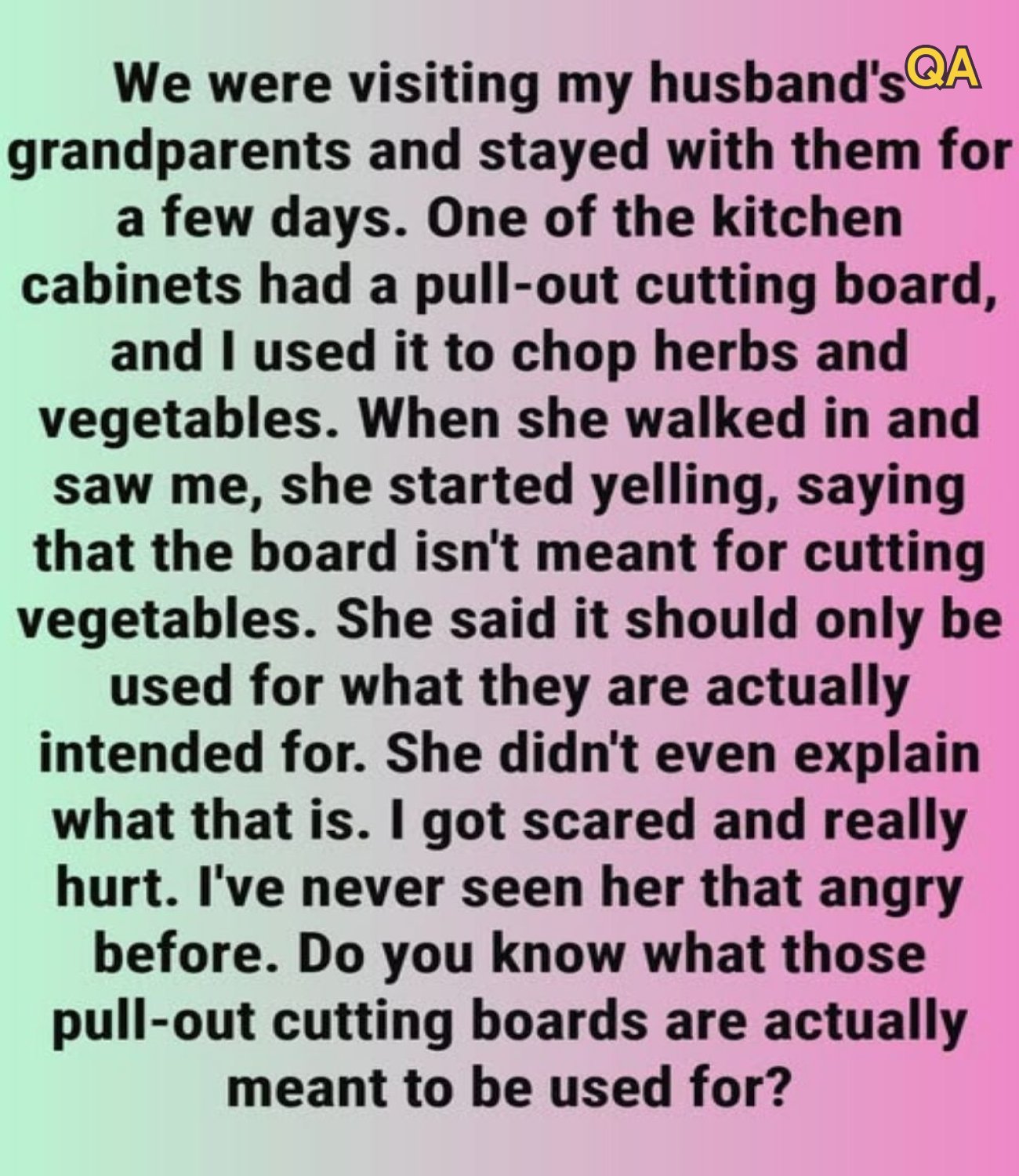
Have you ever pulled out that wooden board built into an old kitchen cabinet and wondered why it was there?
Most people assume it was simply an old-fashioned cutting board.
But there’s a fascinating reason many of these boards were designed the way they were — and it has more to do with homemade bread than chopping vegetables.
It was once a baker’s workspace
Long before modern kitchen islands, stand mixers, and oversized countertops became common, home cooks needed a sturdy surface for preparing dough.
That’s where the pull-out wooden board came in.
Built directly into the cabinetry, the board could be pulled out when needed and pushed away when the work was finished.
Its smooth wooden surface provided a convenient place to:
-
Knead bread dough
-
Roll out pastry
-
Shape loaves
-
Prepare ingredients
-
Mix and work with dough by hand
For families who regularly baked at home, this simple feature could become one of the most useful parts of the kitchen.
And when the baking was finished?
Just slide it back into the cabinet.
No permanent countertop workspace was required.
Why was wood such a popular choice?
Wood wasn’t selected by accident.
Traditional hardwood boards were durable, comfortable to work on, and generally easier on knives than many hard modern surfaces.
Maple, in particular, became a popular choice for kitchen boards because of its strength and relatively fine grain.
With proper care, a quality wooden board could last for years — sometimes decades.
That durability is one reason some older kitchens still have these boards today.
From bread board to cutting board
As kitchen designs changed, so did the way people cooked.
Counter space became more generous, electric appliances became common, and baking no longer required the same amount of dedicated preparation space.
The pull-out board gradually became something more familiar:
an everyday cutting and preparation surface.
Today, similar boards can be found in everything from traditional kitchens to renovated homes, although many people have no idea what inspired their original design.
And there’s another reason people love them
There’s something strangely comforting about these old kitchen features.
A pull-out wooden board isn’t flashy.
It doesn’t have buttons, screens, or smart technology.
But imagine what might have happened on one decades ago.
Someone mixing flour and water.
A parent teaching a child how to knead dough.
A grandmother shaping a family recipe.
A loaf being prepared for dinner.
Then, when the work was finished, the board disappeared neatly back into the cabinet.
A tiny piece of kitchen history
Modern kitchens may have beautiful countertops, expensive appliances, and clever storage systems.
But sometimes the most interesting design features are the ones that look completely ordinary.
That old wooden board wasn’t necessarily just a place to chop vegetables.
For generations of home cooks, it may have been a miniature baking station built right into the kitchen.
So the next time you pull one out, take a closer look.
You might not just be using an old cutting board.
You could be using a little piece of kitchen history that was designed for homemade bread long before today’s modern conveniences existed.