
Why Are Gas Tanks Located on Different Sides in Various Cars?
Few everyday driving details create more confusion than pulling up to a fuel pump and discovering that the fuel door is on the opposite side of the vehicle. It can mean repositioning the car, choosing another pump, or stretching a hose across the bodywork. Although it may seem like an inconsistent design choice, the location of a car’s fuel filler door is the result of engineering, manufacturing, safety, and vehicle-layout decisions.
There is no single worldwide rule requiring the fuel door to be placed on the driver’s side or passenger’s side. Instead, automakers choose a location that works best for a specific model’s underbody design, fuel tank shape, exhaust system, suspension components, crash structures, and market requirements. The result is a mix of vehicles with left-side and right-side fuel doors, even among cars made by the same manufacturer.
Fortunately, drivers do not need to guess. Most modern vehicles include a small but useful dashboard symbol that indicates the correct side for refueling. Understanding that icon, along with the reasons behind fuel-door placement, can make stops at the gas station simpler and offer a clearer view of how much engineering goes into an ordinary car feature.
There Is No Universal Side for a Fuel Door
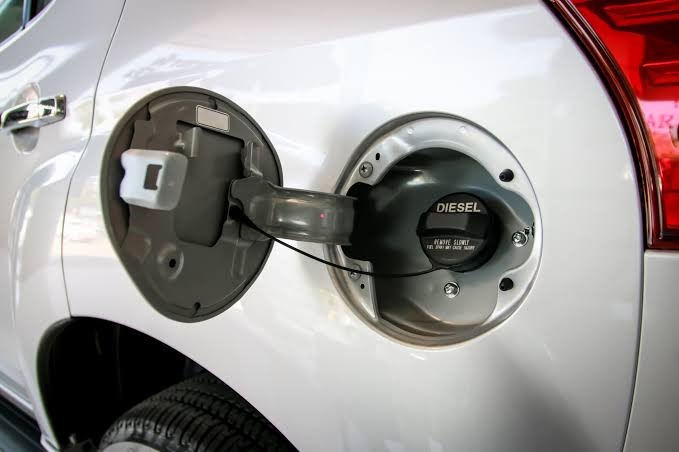
Fuel doors vary from one vehicle to another because automakers are not generally required to place them on one particular side. A vehicle sold in the United States may have its filler door on either side, and the same is true in many other markets. Some drivers assume that cars designed for right-hand traffic place fuel doors on the passenger side, while vehicles for left-hand traffic place them on the other side. In practice, the pattern is far less consistent.
Automakers often use existing vehicle platforms across multiple countries. A platform is the underlying architecture that can support several different models, engines, and body styles. Keeping the fuel tank and filler-neck design consistent across versions can reduce development complexity and manufacturing costs. This may lead to a fuel-door position that does not appear to match local driving conventions.
Historical design choices also matter. Once a vehicle family has been engineered around a particular tank and filler-neck arrangement, changing the system can require substantial redesign. The filler opening, cap or capless system, vapor-control components, body panels, and plumbing all have to work together. For that reason, a familiar fuel-door location may remain in place through several generations of a model.
Vehicle Packaging Is the Main Engineering Consideration
The fuel door is only the visible entry point to a larger system. Behind it is a filler pipe or filler neck that routes fuel into the tank. The tank itself must fit safely into the underside of the vehicle while leaving room for many other essential components.
Engineers must consider the placement of the exhaust system, rear suspension, driveshafts on some vehicles, battery packs in hybrids, spare-wheel storage, cargo-floor structure, and crash-protection zones. The route from the fuel door to the tank needs to be practical, durable, and compatible with the body design. A shorter or less complicated filler-neck route may be preferable when space is limited.
Fuel tanks are not always simple rectangular containers. Their shape can be adapted to fit around structural parts of the vehicle. In many passenger cars, the tank is located toward the rear and low in the vehicle, where it can be protected by the body structure and accommodated within the available space. Pickup trucks, sports cars, hybrid vehicles, and larger SUVs can have very different layouts, which may affect where the filler opening is installed.
Weight distribution can also be considered during vehicle development. Fuel adds significant mass, particularly when a tank is full. However, the side of the fuel door alone does not determine a vehicle’s balance. The location, shape, and mounting of the entire tank are much more important than the position of the exterior filler opening.
Safety Standards Focus on Fuel-System Integrity

Fuel-system design is governed by safety and environmental requirements. In the United States, Federal Motor Vehicle Safety Standard No. 301 addresses fuel-system integrity, including requirements intended to limit fuel leakage in certain crash conditions. Internationally, regulations such as United Nations Regulation No. 34 also address the prevention of fire risks associated with vehicle fuel systems.
These standards are focused on performance and protection rather than requiring every fuel door to be on the same side. Manufacturers must demonstrate that their fuel systems meet applicable regulatory requirements for the markets in which they sell vehicles. This encourages careful placement of tanks, lines, connections, and protective structures.
Modern fuel systems also include equipment designed to control fuel vapors. Gasoline can evaporate, and those vapors contribute to air pollution if released into the atmosphere. Vehicles use sealed fuel-system components and evaporative-emissions controls to capture and manage vapors. The filler neck, fuel cap, or capless filling system is part of this broader emissions-control design.
As a result, choosing a fuel-door location is not simply a styling decision. The visible door must work with a system that satisfies packaging, durability, emissions, and safety objectives.
Why Fuel Doors Do Not Always Match Traffic Direction
It may seem more convenient for a fuel door to face away from passing traffic when a vehicle is parked at a roadside fuel station. Yet most modern refueling happens at dedicated stations where pumps are designed to serve vehicles from either side. Many stations also use hoses that can reach across a vehicle when necessary, although drivers should follow the station’s instructions and avoid pulling hoses in a way that could damage the vehicle or equipment.
Traffic direction is only one possible factor, and it is usually outweighed by the vehicle’s physical design. A manufacturer may also build left-hand-drive and right-hand-drive versions of a model without moving the fuel filler to the opposite side. Doing so could require different body panels, filler pipes, fuel-tank parts, and assembly procedures.
This does not mean convenience is ignored. Designers consider how drivers open the door, where the fuel cap can be stored, how the door interacts with the body panels, and whether the setup is easy to use in real-world conditions. But convenience must fit within the larger engineering plan.
The Dashboard Arrow Shows Which Side to Use
The easiest way to identify the fuel-door side is to look at the fuel gauge on the instrument panel. On many cars, a small arrow appears next to the fuel-pump symbol. The arrow points toward the side of the vehicle where the fuel filler door is located.
For example, an arrow pointing left means the fuel door is on the left side of the car. An arrow pointing right means it is on the right. This feature is especially helpful when driving a rental car, borrowing a family member’s vehicle, or switching between multiple cars.
The arrow is widely used, but drivers should not assume that every vehicle has one. Older models and some instrument-cluster designs may not include it. If there is no arrow, the owner’s manual can confirm the fuel-door location and provide instructions for opening it. In many vehicles, the door opens by pressing its outer edge; others use a lever, button, or central-locking mechanism.
It is also important not to confuse the fuel-pump icon with other dashboard warning lights. A low-fuel warning indicates that the vehicle should be refueled soon, while the small directional arrow—when present—is simply an orientation guide.
Fuel Door Placement and Modern Vehicle Technology
The transition toward hybrid and electric vehicles is changing vehicle packaging, but it has not eliminated the need for careful design. Hybrid models may need space for both a conventional fuel system and a high-voltage battery. Engineers must integrate these components while preserving passenger room, cargo capacity, structural performance, and service access.
Battery-electric vehicles do not have gasoline tanks, but they still need a charging port. Like fuel doors, charging ports can appear in different locations: on the rear quarter panel, front fender, grille area, or another part of the body. The location depends on electrical architecture, charging-cable access, styling, crash considerations, and manufacturing choices.
For drivers, the practical lesson remains similar: become familiar with the vehicle before arriving at a station or charging point. A quick check of the dashboard, exterior bodywork, or owner’s manual can prevent unnecessary maneuvering.
How to Refuel Safely and Efficiently
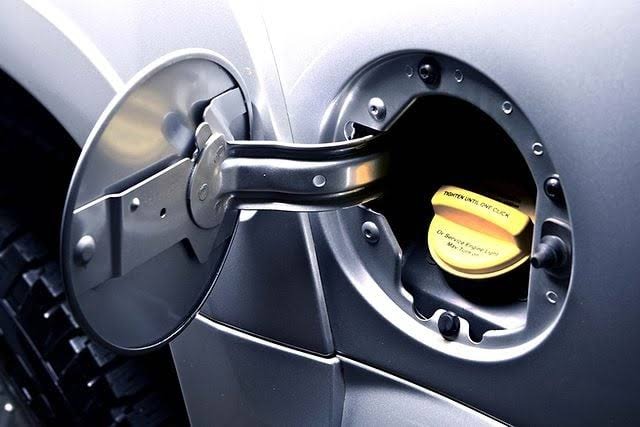
Regardless of which side the fuel door is on, safe refueling practices are more important than the position of the pump. The U.S. Environmental Protection Agency recommends turning off the engine while refueling and avoiding overfilling the tank after the nozzle shuts off automatically. Continuing to add fuel can interfere with the vehicle’s vapor-recovery and evaporative-emissions systems.
Drivers should also avoid smoking or using open flames near fuel pumps. Gasoline vapors are flammable, so it is sensible to minimize distractions and follow posted station guidance. If a fuel spill occurs, notify station staff and follow their instructions.
When selecting a pump, approach slowly and align the fuel door with the nozzle area. This reduces the need to reposition the car. If the hose does not reach comfortably, it is generally better to use another pump than to pull or stretch the hose across the vehicle in an unsafe or awkward manner.
Why the Difference Matters Less Than It Seems

The side of a car’s fuel door can feel like a small inconvenience, but it reflects the many compromises involved in automotive engineering. Designers must make room for mechanical systems, meet safety and emissions requirements, preserve useful interior space, and control manufacturing costs. A left-side or right-side fuel door is therefore not usually a sign that one car is better designed than another.
For everyday drivers, the dashboard arrow is the most useful detail to remember. It takes only a moment to check, and it can save time at the pump. The next time a fuel door seems to be on an unexpected side, the explanation is likely not a mistake. It is the outcome of an engineering decision made far below the surface of the vehicle.
Sources
- National Highway Traffic Safety Administration: Federal Motor Vehicle Safety Standards
- Electronic Code of Federal Regulations: FMVSS No. 301, Fuel System Integrity
- United Nations Economic Commission for Europe: Vehicle Regulations
- U.S. Environmental Protection Agency: Gasoline Standards and Fuel Information
- U.S. Environmental Protection Agency: Vehicle and Fuel Emissions Testing
- National Highway Traffic Safety Administration: Vehicle Safety Information
Disclaimer: This content is intended for entertainment purposes only and is not based on real events.