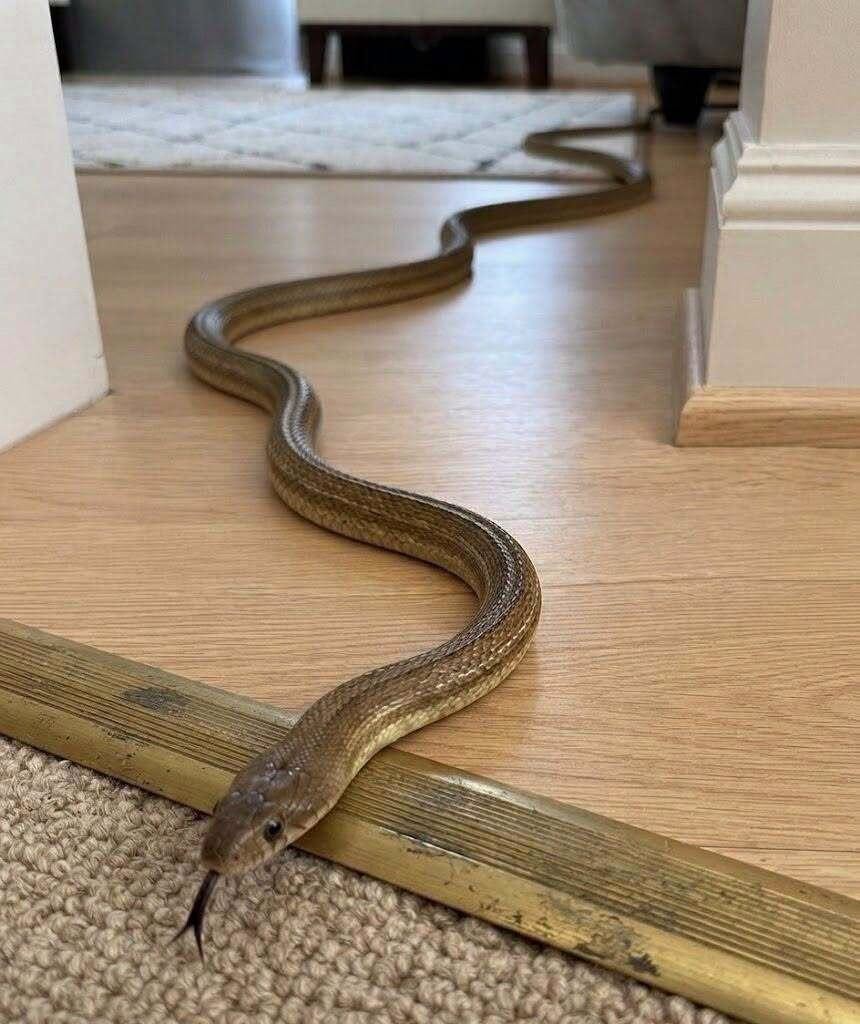
Finding a Snake Inside Your Home: What to Do and How to Prevent It
Discovering a snake inside a house can be unsettling, particularly when its species is unknown. In most cases, however, a snake has not entered with any interest in people. It is usually following food, looking for cover, or responding to changing outdoor temperatures. A calm, cautious response protects everyone in the home while allowing trained local professionals to manage the situation safely.
Why Snakes Enter Homes
Snakes are wild animals that generally avoid direct contact with people. When one appears indoors, it is often because the building offers access to shelter, warmth or prey. Rodents, small lizards, frogs, insects and other animals can attract snakes to yards and, in some circumstances, into garages, basements, crawl spaces or living areas.
Weather can also influence snake movement. In warmer periods, snakes may be more active while searching for food or breeding habitat. During unusually hot, dry, cold or wet weather, they may seek more stable conditions in protected places. Homes can provide shaded areas, warm surfaces, moisture near plumbing, or quiet spaces where a snake can temporarily hide.
A snake may enter accidentally while moving along a wall, fence line, foundation or drainage route. It may also be drawn to a structure where rodents have already found a way in. For this reason, a snake encounter can sometimes signal a separate home-maintenance issue, such as gaps around pipes, damaged screens, unsecured vents or a rodent problem.
Species and risks vary greatly by location. Many snakes are harmless to people and contribute to local ecosystems by helping control rodents. Nevertheless, it is not safe to assume that an unfamiliar snake is harmless based on its colour, markings, size or behaviour. Accurate identification can be difficult, and a frightened animal may react defensively if it is approached or handled.
Common Ways Snakes Get Into a House
Snakes can use surprisingly small openings. Their flexible bodies allow some species to pass through gaps that appear too narrow at first glance. A careful exterior inspection can help identify likely entry points, especially near ground level.
- Cracks or openings in foundations and exterior walls
- Gaps beneath exterior doors or garage doors
- Unscreened or damaged crawl-space, attic and foundation vents
- Torn window screens or windows left open without secure screening
- Gaps around utility lines, plumbing pipes, cables and air-conditioning units
- Unsealed drains, damaged grates or openings near drainage systems
- Open doors leading from a garage, patio or garden into the home
Garages, sheds, basements and crawl spaces are common places to notice wildlife because they are less frequently used and may contain stored materials. Boxes, stacked wood, garden tools and other clutter can create hiding places for both snakes and the small animals they may follow.
What to Do If You Find a Snake Indoors
The most important step is to remain calm and keep a safe distance. Do not try to determine the species by moving closer, and do not attempt to pick up, trap or chase the snake. Even species that are not medically significant can bite if they feel threatened, and attempting to handle an unfamiliar snake increases the chance of an avoidable injury.
Move People and Pets Away From the Area
Keep children, visitors and pets away from the room or area where the snake was seen. Dogs and cats may become curious and approach quickly, while children may not recognize the risk of disturbing wildlife. If it can be done without going near the animal, close interior doors to limit the snake’s movement within the home.
Watch From a Safe Distance
If possible, observe the snake from far away so you can tell a professional where it is located. Do not corner it or block it with objects. A snake may move into a concealed place if disturbed, making removal more complicated. If it leaves the building on its own and nobody has been exposed to a bite, it is usually best to let it continue away from the property.
Contact the Appropriate Local Service
Call local animal control, a licensed wildlife removal provider, a state or regional wildlife agency, or another qualified service available in your area. The correct contact depends on local rules and the species present. In regions where medically significant venomous snakes occur, local wildlife authorities can often provide guidance about who should respond.
When calling, provide the address, the room or location, whether the animal is still visible, and whether children or pets are present. A photo taken from a safe distance may be useful for identification if local authorities request it, but do not move closer or use flash photography to obtain one.
What Not to Do When a Snake Is in Your Home
Well-intentioned actions can create more risk than the snake itself. Avoid relying on internet identification charts, improvised traps, chemical repellents or methods that could harm household members, pets or wildlife. Many products marketed as snake repellents have limited evidence of effectiveness, and some approaches can violate local wildlife rules.
- Do not touch, grab, pin, lift or attempt to relocate the snake yourself.
- Do not try to kill it. This can increase the risk of a defensive bite and may be unlawful in some places.
- Do not use glue traps, fumigants, poisons or fire.
- Do not rely on appearance alone to decide whether it is harmless.
- Do not allow pets to investigate or attempt to catch it.
- Do not place containers over the animal unless a trained local authority specifically instructs you to do so.
A respectful, hands-off response is both safer and more humane. Snakes are part of many ecosystems, and most encounters can be resolved without injury to people, pets or the animal.
What to Do if a Snake Bite Occurs
Any snake bite should be treated seriously, particularly if the species is unknown. Seek urgent medical assessment or contact emergency services according to local guidance. Do not wait for symptoms to develop, and do not attempt to capture the snake for identification. If it can be done safely, a photograph from a distance may help professionals, but medical care should never be delayed to obtain one.
Public-health guidance commonly advises people to remain as calm and still as possible, remove tight items such as rings or watches near the affected area, and follow instructions from emergency responders. Do not cut the bite area, try to suck out venom, apply ice, use a tourniquet, consume alcohol or take unapproved remedies. These actions can cause additional harm or delay effective treatment.
Pet owners should contact a veterinarian or emergency veterinary service promptly if they suspect a pet has been bitten. Animals may hide discomfort or show signs that are not immediately obvious, so professional advice is important.
How to Prevent Snakes From Entering Your House
Prevention focuses on two practical goals: reducing access to the building and making the surrounding property less attractive as shelter or hunting habitat. No single measure guarantees that wildlife will never visit a yard, but routine maintenance can substantially reduce the likelihood of an indoor encounter.
Seal Potential Entry Points
Inspect the exterior of the home regularly, paying particular attention to areas near the ground. Repair foundation cracks, close openings around pipes and utility lines, and replace worn weatherstripping. Install door sweeps on exterior doors and check that garage doors close close to the ground. Repair damaged window screens and use durable, appropriately sized mesh on vents and crawl-space openings without restricting needed ventilation.
Because buildings differ in design and local wildlife varies, homeowners may benefit from a professional inspection if they repeatedly find snakes, rodents or other wildlife near the structure. A qualified contractor or wildlife professional can help identify gaps that are easy to overlook.
Reduce Hiding Places Around the Property
Maintain a clear area around the home’s foundation where possible. Keep grass and vegetation trimmed, remove unnecessary debris, and store firewood, lumber and equipment neatly away from the house. Compost piles, dense ground cover, rock piles and stacked materials can create shelter for small animals and reptiles, particularly if they are located close to exterior walls.
These measures do not require turning a garden into an empty space. The goal is sensible maintenance: keep frequently used areas tidy, avoid dense clutter beside entrances, and inspect outdoor items before moving them. Gloves and closed footwear can provide additional protection while working in areas where wildlife may be concealed.
Address Rodent and Insect Activity
Rodent control is often one of the most effective long-term prevention strategies. Secure household waste, clean up spilled birdseed and pet food, store food in sealed containers, and repair access points that allow mice or rats into garages and walls. If rodent activity is persistent, consider an integrated pest-management approach that emphasizes sanitation, exclusion and professional advice.
Reducing prey around a home makes the property less appealing to snakes. It also improves overall household hygiene and can limit damage caused by rodents.
The Ecological Role of Snakes
Although a snake indoors is not welcome, snakes have an important role in many environments. They are predators of rodents and other small animals, helping to maintain ecological balance. They also serve as prey for birds, mammals and other wildlife. Their presence outdoors may indicate a functioning local habitat, though it also reminds residents to maintain appropriate boundaries between wildlife and living spaces.
Wildlife agencies generally encourage people to avoid unnecessary harm to native species and to use trained professionals when removal is needed. This approach supports public safety while recognizing that a snake found near a home is usually behaving naturally rather than acting aggressively.
When to Seek Professional Wildlife Advice
Professional assistance is especially important when a snake is inside the living area, cannot be located after being seen, may be in a room with children or pets, or appears repeatedly around the property. It is also appropriate to seek expert help when residents do not know which species occur locally or when the home has recurring wildlife entry issues.
Local wildlife agencies, animal-control departments and licensed removal professionals can provide region-specific information. Their guidance is more reliable than generalized online advice because it accounts for local laws, protected species, seasonal activity and the types of snakes found in the area.
Final Thoughts on Finding a Snake in Your Home
Finding a snake inside your home can be alarming, but the safest response is straightforward: keep your distance, protect children and pets, avoid handling the animal, and contact qualified local help. Once the immediate situation has been resolved, inspect the home for openings and reduce conditions that attract rodents and provide shelter.
Most snake encounters are manageable when people respond calmly and avoid taking unnecessary risks. Practical exclusion measures, regular property maintenance and reliable local advice can help prevent future visits while allowing wildlife to remain where it belongs: outdoors.
Sources
Disclaimer: This content is intended for entertainment purposes only and is not based on real events.