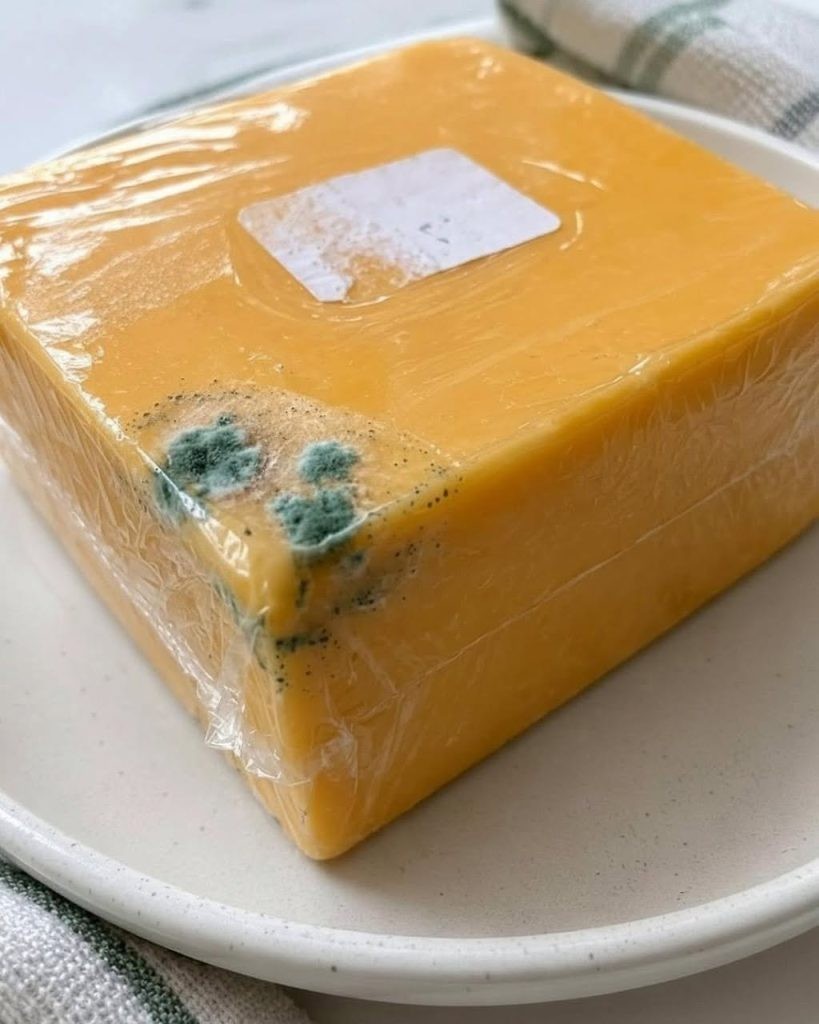
Finding a green, blue, white, or fuzzy spot on cheese can be unpleasant, but it does not automatically mean every cheese product belongs in the bin. The safest response depends on the cheese’s texture, moisture content, packaging, and whether mold is an intentional part of how that variety is produced.
Food-safety guidance makes an important distinction between firm cheeses and soft cheeses. On a hard block of cheese, mold often remains relatively close to the surface, meaning a generous section can sometimes be removed. In moist or soft cheeses, however, mold can spread below the visible surface more easily. In those cases, discarding the product is generally the safer option.
Understanding this difference can reduce unnecessary food waste while helping households make cautious, evidence-based choices. It is also important to remember that the color, smell, or appearance of mold alone cannot reliably identify whether it is harmless or potentially unsafe.
Why Mold Grows on Cheese
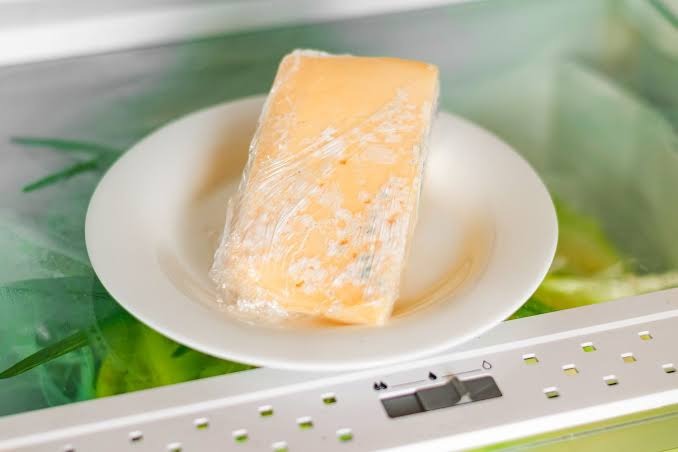
Molds are microscopic fungi that reproduce through tiny spores in the air. These spores can settle on food, including cheese, and may grow when conditions are suitable. Moisture, nutrients, oxygen, storage temperature, and time all influence whether mold becomes visible.
Cheese is especially susceptible because it contains nutrients such as proteins and fats, while different cheese varieties retain different amounts of water. Softer cheeses usually contain more moisture than aged, hard cheeses. That moisture makes it easier for mold and other microorganisms to move through the food beyond the area that can be seen.
Mold growth may occur because cheese has been stored for a long time, handled with an unclean knife, exposed to air, or kept in packaging that traps excess moisture. Cheese can also develop mold if it is left unrefrigerated for too long or cross-contaminated by moldy foods nearby.
Not all mold is necessarily harmful, and mold has an important role in making certain cheeses. However, consumers should not assume that an unexpected mold patch is safe simply because it resembles a mold used in cheese production.
Some Cheeses Are Made With Mold on Purpose
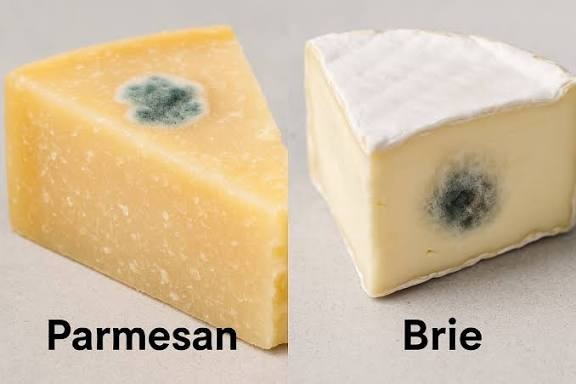
Blue cheese, Roquefort, Stilton, and Gorgonzola are well-known examples of cheeses made with carefully selected mold cultures. These cheeses commonly contain blue-green veins created by species of Penicillium that are introduced under controlled production conditions.
The molds used in commercial cheesemaking are selected and managed to produce the flavor, aroma, and appearance associated with the finished cheese. Their presence is expected and is not the same as finding an unfamiliar fuzzy patch on a cheese that was not intended to be mold-ripened.
Some soft-ripened cheeses, including Brie and Camembert, also have an edible white rind formed by specific cultures. A white rind that is normal for a properly stored Brie or Camembert should not automatically be treated as spoilage.
However, even intentionally mold-ripened cheese can spoil or become contaminated with unwanted microorganisms. If it develops an unusual color, unexpected fuzzy growth, a markedly unpleasant odor, or signs of poor storage, it is prudent to avoid eating it. People should follow the producer’s storage instructions and discard products that are past their use-by date or show signs of deterioration.
Hard Cheese: When Trimming Mold May Be an Option
Hard and firm cheeses are denser and generally contain less moisture. Common examples include cheddar, Parmesan, Pecorino, Gouda, Swiss, Asiago, and aged provolone. Because these cheeses have a compact structure, mold is less likely to penetrate as deeply as it can in soft, wet foods.
The United States Department of Agriculture advises that mold on hard cheese may sometimes be handled by cutting away the affected area. The recommended approach is to remove at least one inch, or about 2.5 centimeters, around and below the visible mold. This margin matters because microscopic mold threads may extend farther than the spot visible on the surface.
To do this as safely as possible, keep the cheese on a clean surface and use a clean knife. Avoid dragging the knife through the mold and then using the same blade on the portion you intend to keep. Instead, cut well away from the affected area and discard the moldy section immediately. Then rewrap the remaining cheese in clean packaging and return it to the refrigerator.
This advice applies to a small mold spot on a solid block of hard cheese. It should not be treated as permission to keep cheese that is extensively moldy, slimy, leaking, badly discolored, or showing other signs of spoilage. If mold appears throughout the cheese, if the product is shredded or sliced, or if there is any uncertainty about its condition, discarding it is the more cautious choice.
Why Moldy Soft Cheese Should Usually Be Discarded
Soft cheeses require more caution because their high water content can allow mold to spread beneath the surface. The visible patch may represent only part of the contamination. Cutting away what can be seen does not reliably remove mold roots, bacteria, or other microorganisms that may have spread through the food.
Food-safety authorities generally recommend discarding soft cheese when unexpected mold is present. This includes products such as cream cheese, cottage cheese, ricotta, fresh mozzarella, burrata, mascarpone, cheese spreads, and processed cheese slices.
Soft-ripened cheeses such as Brie and Camembert need a more specific assessment because their white outer rind is expected. But if these products develop mold that is not characteristic of the cheese, such as unusual green, black, pink, or fuzzy growth, they should be discarded rather than trimmed.
The same discard-first principle applies to crumbled, shredded, grated, and sliced cheese. These products have many exposed surfaces, making it difficult to isolate contamination. Mold can spread between pieces or through packaging, even when only one area appears visibly affected.
What About Mold on Semi-Soft Cheese?
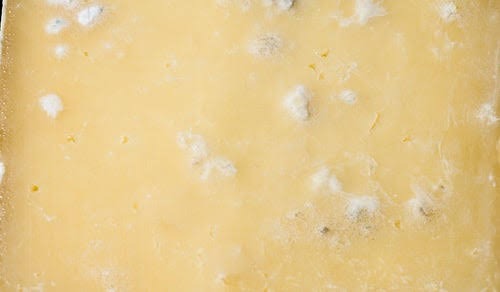
Semi-soft cheeses fall between hard and soft varieties, which can make decisions less straightforward. Examples may include Havarti, Monterey Jack, Muenster, and some varieties of mozzarella. Because these cheeses contain more moisture than aged hard cheese, a conservative approach is appropriate.
When mold is found on a semi-soft cheese, particularly if it is in slices, shreds, or a moist package, discarding it is usually the safest decision. Consumers who are unsure whether a cheese is firm enough to trim should avoid guessing. The cost of replacing a questionable product is generally lower than the risk of consuming food that may be contaminated.
Mold Color and Smell Are Not Reliable Safety Tests
It is tempting to judge food by color or odor, but these signs do not provide a dependable safety assessment. Blue, green, white, gray, black, and orange molds can appear on food, and color does not identify the species or determine whether it can produce harmful compounds.
Likewise, cheese may smell normal even when unwanted mold is present. Some cheese varieties naturally have strong aromas, making smell especially difficult to interpret. A sour, rancid, or unusually unpleasant odor can indicate spoilage, but the absence of a bad smell does not prove that a product is safe.
Consumers should also avoid tasting moldy cheese to “check” whether it is acceptable. Tasting is not a reliable safety test and can expose a person to microorganisms or irritants. When food-safety guidance recommends disposal, it is best not to sample the product.
Mycotoxins and the Limits of Visual Inspection
Some molds can produce substances known as mycotoxins. These compounds are associated with particular mold species and particular growing conditions. Not every mold produces mycotoxins, and not every food with mold has them. Still, consumers cannot determine this by looking at mold or identifying its color.
For this reason, safety advice focuses on the characteristics of the food rather than trying to identify the mold at home. The low-moisture structure of a hard cheese means that a small isolated spot can often be removed with a substantial margin. In soft foods, including soft cheese, the possibility of unseen spread is greater, so disposal is advised.
People with weakened immune systems, pregnant people, older adults, and very young children may be more vulnerable to foodborne illness. These groups should be particularly careful with foods showing signs of spoilage and should follow medical advice tailored to their circumstances.
How to Store Cheese to Reduce Unwanted Mold
Good storage can help cheese last longer and reduce the chance of unwanted mold growth. Most cheese should be refrigerated promptly and kept at the temperature recommended by the manufacturer. Refrigerators should be kept at or below 40°F, or 4°C, according to food-safety guidance.
Hard cheese is often best wrapped in clean cheese paper, wax paper, or parchment paper and then loosely covered or placed in a container. This allows the cheese to breathe while limiting excessive drying. Plastic wrap may be useful for short periods, but tightly sealing some cheeses can trap moisture and encourage undesirable surface growth.
Soft cheese should remain in its original packaging when possible and should be kept tightly covered after opening. Use clean utensils every time cheese is handled. Do not return a knife that has touched other foods to the cheese package, and avoid leaving cheese at room temperature for extended periods.
It is also wise to check cheese regularly. If condensation develops inside the packaging, replace damp wrapping with clean, dry material where appropriate. Keep moldy foods away from other foods in the refrigerator, and clean shelves or containers if a product has spoiled.
A Simple Safety Rule for Moldy Cheese
The most practical rule is based on texture and moisture. For a small, isolated spot of unexpected mold on a solid block of hard cheese, cutting away at least one inch around and below the mold can be an acceptable food-safety approach. Use a clean knife, avoid cross-contamination, and rewrap the remaining cheese properly.
For soft cheese, fresh cheese, cheese spreads, grated cheese, shredded cheese, sliced cheese, and cheese with extensive or uncertain mold growth, discard the product. Do not rely on mold color, smell, or taste to decide whether it is safe.
When in doubt, the safest choice is to throw the cheese away. This approach protects health while still recognizing that not every small mold spot on a firm, aged cheese requires discarding an entire block.
Sources
Disclaimer: This content is intended for entertainment purposes only and is not based on real events.