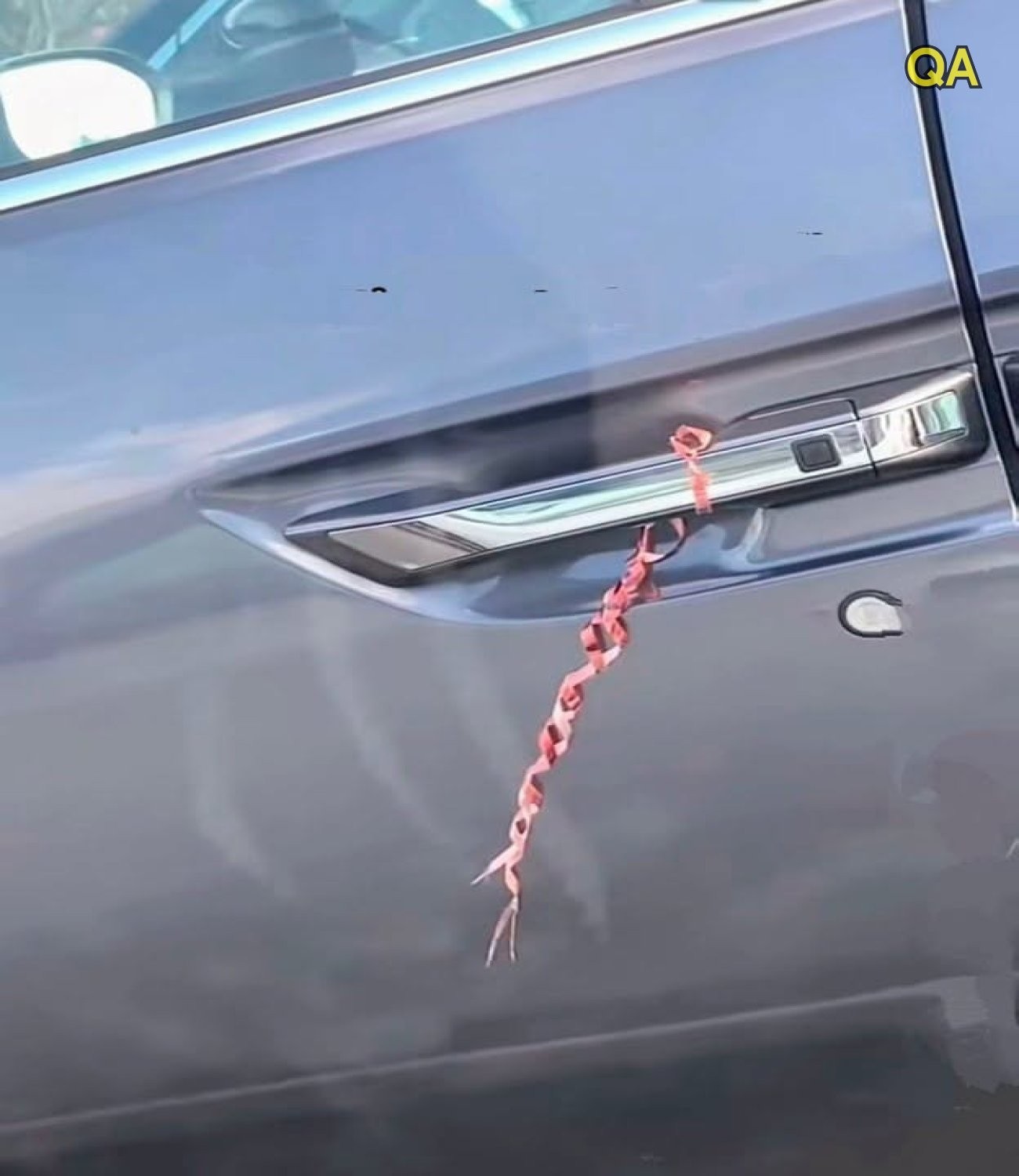
Finding a piece of string, ribbon, wire, or another unfamiliar object on a car door handle can be unsettling. A person returning from a shopping trip may immediately wonder whether someone touched the vehicle deliberately, whether it is a prank, or whether it signals a more serious safety concern.
Online videos and social-media posts have amplified one particular explanation: that string or wire placed on a car door handle is a tactic used to distract or target drivers. These posts can be alarming because they connect an ordinary but unusual sight with fears about personal safety and kidnapping.
However, there is no reliable evidence that a piece of string on a vehicle door handle is, by itself, a recognized or widespread sign that a person is being targeted. Viral claims should not be treated as confirmed safety alerts without information from law enforcement or other credible authorities. The practical response is neither panic nor dismissal: stay aware, assess the immediate situation calmly, and seek help if anything genuinely appears unsafe.
Why the String-on-Car-Door-Handle Story Became Popular
The story gained traction through short social-media videos showing ribbon, string, or similar material tied to vehicle handles in parking areas. In some clips, people speculate that the object was intentionally placed there. Comment sections often fill quickly with possible explanations, including theft, surveillance, attempted abduction, pranks, or harmless accidents.
Social media can spread useful local information, but it can also spread claims before anyone has verified them. A brief video usually cannot establish who placed an object on a vehicle, when it was placed there, or why. Without those details, a frightening explanation may feel convincing while remaining unproven.
Stories involving unexplained objects are especially likely to travel widely online. They are visual, easy to understand, and emotionally memorable. A loose ribbon can be photographed in seconds; a dramatic theory can be repeated in a caption; and viewers may share the post as a precaution. Yet sharing a possibility does not turn it into evidence.
Public-safety experts commonly encourage people to distinguish between awareness and assumption. Awareness means noticing one’s surroundings, using well-lit areas when possible, and responding to immediate warning signs. Assumption means deciding that a particular object has one specific meaning without credible evidence.
Is String on a Car Door Handle a Kidnapping Signal?
There is no broadly verified law-enforcement guidance establishing that string, ribbon, zip ties, or wire on a car door handle is a standard kidnapping signal. Claims that these items are routinely used to target drivers have circulated for years in different forms, often without a documented source, police bulletin, case number, or official investigation supporting the wider allegation.
That does not mean every unexplained item on a vehicle should be ignored. Someone may have touched a car for many reasons, including a prank, accidental contact, advertising, a misplaced decoration, or conduct that deserves police attention. The key point is that the presence of string alone cannot identify intent.
In a genuine emergency, authorities investigate the totality of the circumstances. Relevant details may include suspicious behavior nearby, attempts to enter vehicles, damage, stolen property, threatening notes, surveillance footage, witness accounts, and reports of similar incidents in the same location. A single unexplained object is not enough to confirm a criminal pattern.
It is also important to avoid repeating unverified claims in ways that may create unnecessary fear. Misinformation can overwhelm local police departments with reports that lack actionable details, spread anxiety in communities, and distract attention from verified safety alerts. If a post claims that a new tactic is being used locally, look for confirmation from the police department, municipal government, or established news organizations before treating it as fact.
Possible Ordinary Explanations for an Object on a Car Handle
An unfamiliar item on a vehicle can have many non-threatening explanations. Wind may carry lightweight material across a parking lot. A ribbon from a nearby gift, balloon, event decoration, or clothing item may become caught on a handle. Children or other passers-by may leave something behind without considering how it will appear. In some cases, another driver may mistakenly believe they are marking their own vehicle or identifying a car in a crowded lot.
Parking areas are also busy environments. Shopping bags, packaging, flyers, receipts, cords, and decorative materials can move around easily. A person who sees an item after returning to their car may not know how long it has been there or whether it was noticed earlier.
None of these possibilities can explain every situation. Rather, they illustrate why it is not accurate to assign a dangerous meaning to string or ribbon without supporting facts. Context matters. An object found in an otherwise calm, public place is different from an object found alongside damaged locks, a suspicious person lingering nearby, or direct threats.
What to Do If You Find String, Ribbon, or Wire on Your Car
If you find something unusual on your car door handle, begin by taking a breath and looking around. You do not need to touch the object immediately, especially if doing so makes you uncomfortable. Your personal safety is more important than removing an item from a vehicle.
Move to a safer, populated area if needed
If you feel uneasy, return to the store, go to a staffed area, or stay near other people. Many shopping centers, workplaces, transit facilities, and garages have customer-service personnel or security staff who may be able to walk with you to your car or observe the area.
If you are alone and believe you may be in immediate danger, call emergency services. If the situation does not appear urgent but you suspect deliberate vehicle tampering, contact the local non-emergency police number or property management. Explain what you observed without presenting an unverified online theory as fact.
Look for additional signs, not just the object
From a safe location, consider whether anything else seems wrong. Are there signs of damage to the door, lock, windows, tires, or ignition area? Is anyone behaving suspiciously, attempting to approach you, or watching vehicles? Have you noticed a person following you from inside a store or across a parking lot?
One item of string may have an innocent explanation. Several concerning details together may justify asking for assistance or reporting the situation. If there is evidence of possible damage or tampering, photographs can be useful for insurance, property management, or police reports. Avoid handling anything that appears hazardous or unfamiliar.
Trust discomfort without escalating assumptions
Personal intuition can be valuable. If a situation feels wrong, it is reasonable to leave, ask for help, call someone, or wait in a public place. At the same time, feeling uneasy does not require assuming that a specific crime is underway. A calm, practical decision can protect your safety while avoiding unnecessary panic.

Everyday Parking Lot Safety Tips
Rather than focusing on one viral claim, it is more useful to follow general safety practices that apply in many public settings. These habits can reduce vulnerability and help people respond confidently when something unexpected happens.
- Park in a well-lit area when available, especially after dark.
- Keep keys ready before walking to the vehicle, rather than searching through a bag beside the car.
- Stay alert to your surroundings and avoid becoming fully absorbed in a phone while walking.
- Check the area around and inside the vehicle before getting in.
- Lock doors after entering the car and leave the area promptly if you are concerned.
- Ask store staff, security personnel, a colleague, or a friend for an escort if you do not feel safe.
- Report immediate threats, attempted break-ins, or suspected criminal activity to local authorities.
These recommendations are not meant to place responsibility for crime on individuals. Safety is a shared public concern involving businesses, community design, law enforcement, and social support systems. Still, simple planning can help people feel more prepared in unfamiliar or busy environments.
How to Evaluate Viral Safety Warnings
Before sharing a frightening safety post, pause and check whether it includes verifiable information. Does it name a location, date, police department, case reference, or official statement? Does the post distinguish between what was observed and what the creator assumes happened? Has a reliable local news outlet reported the same information?
A warning that says “this happened to a friend” or “share with every woman you know” may be emotionally compelling, but it is not automatically credible. Posts may be based on misunderstandings, isolated incidents, old reports shared as new, or fabricated stories. Even well-intentioned users can unintentionally spread inaccurate information.
Checking official channels is especially important when a claim involves crime, public danger, health, or emergency response. Police departments and local governments may issue alerts when there is a confirmed threat to the public. Reputable news organizations generally seek comment from authorities and identify what is known, unknown, and alleged.
Digital literacy is part of modern personal safety. Being informed means remaining open to credible warnings while resisting the pressure to accept every viral explanation. This balanced approach helps communities focus on documented risks and practical solutions.
When to Contact Police or Security
You may wish to contact police, security staff, or property management if you see someone attempting to access vehicles, notice clear signs of forced entry or damage, receive threats, believe you are being followed, or observe conduct that creates an immediate safety concern.
When reporting a situation, provide concrete details: the location, time, description of people or vehicles involved, direction of travel, and any visible damage. If it is safe to do so, note license plate information. Do not confront someone you believe may be acting suspiciously, and do not put yourself at risk to gather evidence.
For an urgent threat or emergency, use the emergency number in your country or region. For concerns that are not immediate emergencies, use a local non-emergency reporting channel. This distinction helps emergency dispatchers prioritize people who need urgent assistance.
The Bottom Line: Stay Alert, but Avoid Panic
A piece of string on a car door handle can be surprising, but it is not proof that someone intends harm. The popular claim that such objects are established kidnapping markers is not supported by reliable evidence as a general rule. Treating every unfamiliar item as a confirmed threat can increase fear without improving safety.
A more effective response is simple: remain aware of your surroundings, move to a public or staffed place if you feel uncomfortable, ask for help when needed, and report credible signs of tampering or suspicious behavior. Verify viral warnings through official sources before sharing them.
Staying calm does not mean being careless. It means responding to facts, context, and immediate safety needs rather than letting an alarming social-media theory determine what an ordinary object must mean.
Sources
Disclaimer: This content is intended for entertainment purposes only and is not based on real events.