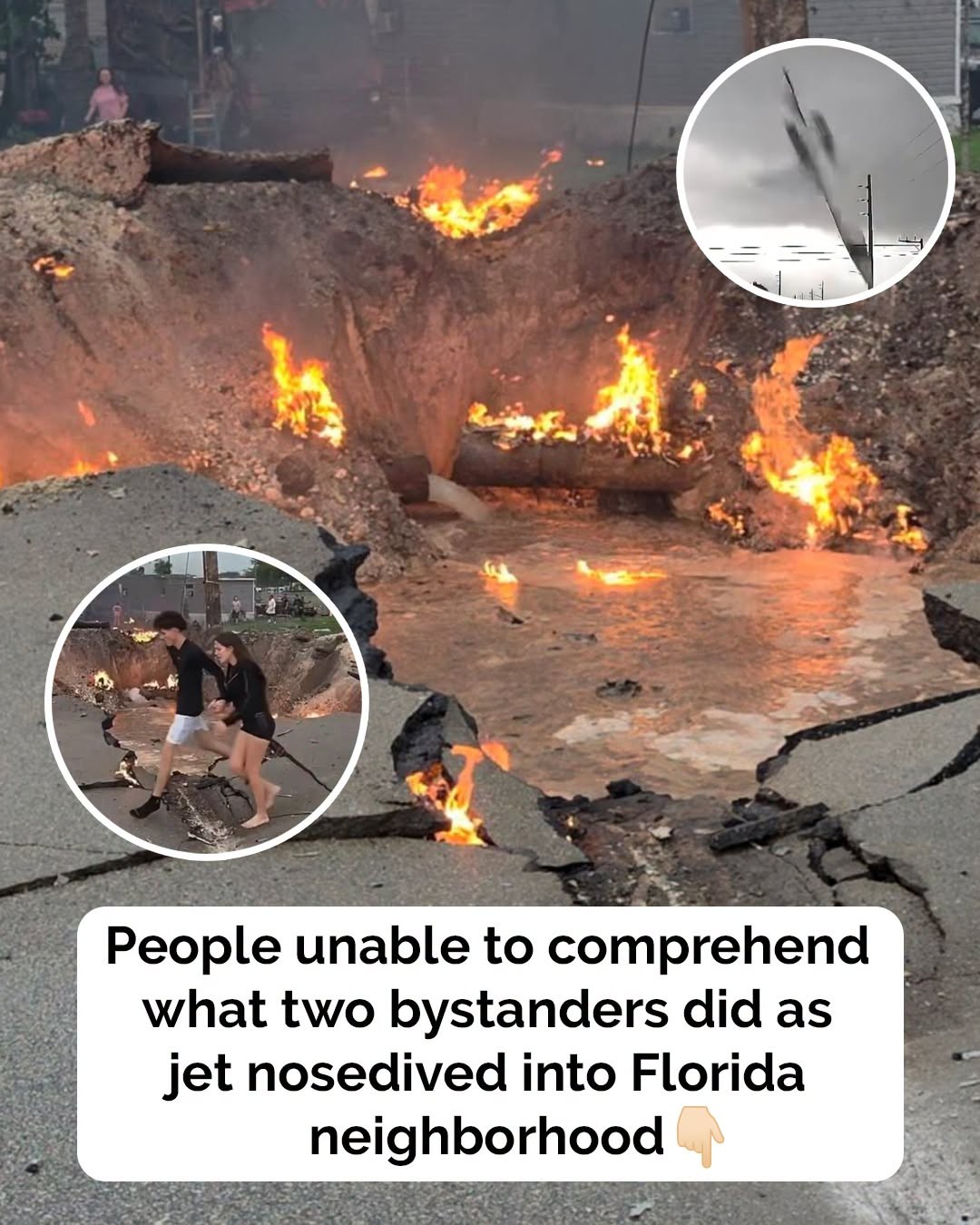
A quiet afternoon in a Florida neighborhood turned into a major emergency when a private business jet suddenly descended and crashed near a residential area. Within moments, emergency crews were responding, roads were closed, and nearby residents faced an uncertain situation.
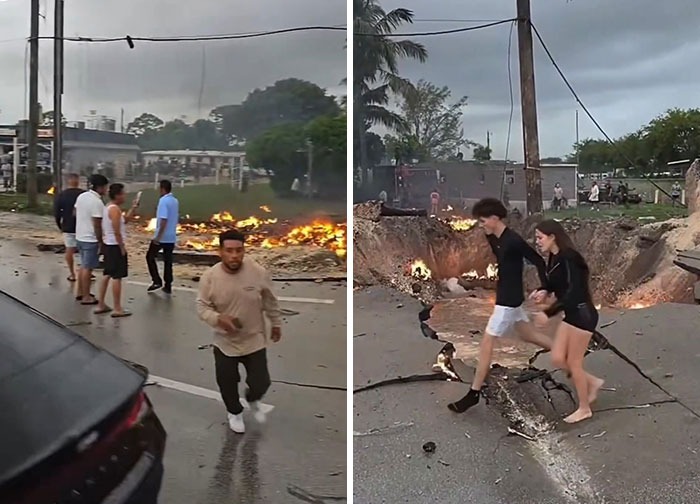
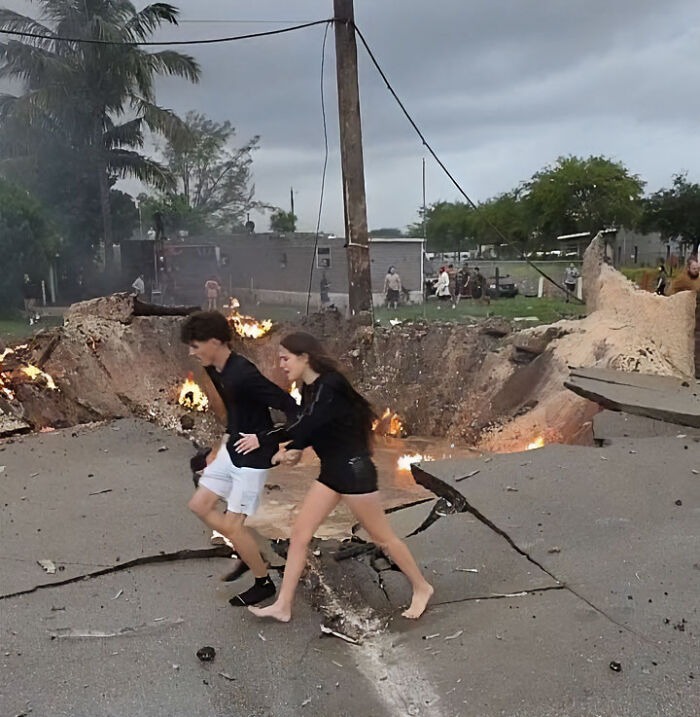
But as videos of the incident began circulating online, another detail attracted attention. Footage shared on social media appeared to show a man and a woman walking without shoes near damaged pavement and scattered debris.
Some viewers questioned why the pair appeared to be walking through an area where dangerous objects might still be present. Others urged people not to judge them too quickly, pointing out that they could have been local residents who had just experienced a frightening and confusing event.
Their identities and circumstances have not been established in the information available. Meanwhile, the circumstances surrounding the aircraft crash remain under investigation.
A Business Jet Crashes Near a Florida Neighborhood
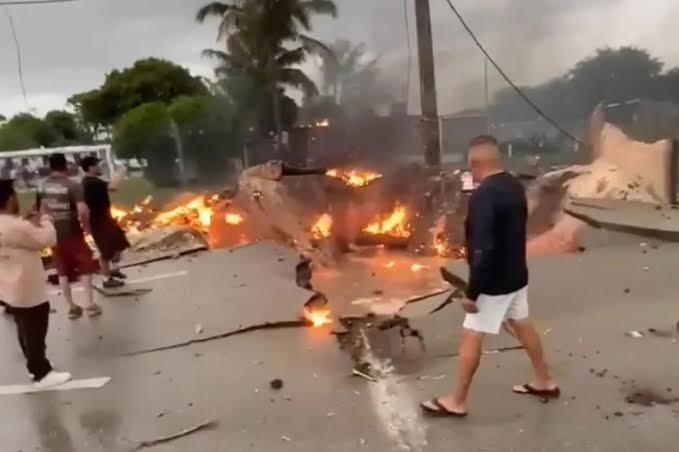
The incident happened on November 1, 2026, near Military Trail and 10th Avenue North in Palm Beach County, Florida.
The aircraft was a Learjet 60 operated by Aurora Aviation, doing business as Upper Jet. According to federal aviation authorities, it had departed Austin-Bergstrom International Airport in Texas and was traveling toward North Eleuthera Airport in the Bahamas.
At approximately 12:50 p.m. local time, the aircraft crashed in the Greenacres area.
The impact created a large crater near a roadway and a nearby residential community. Debris was scattered across the surrounding area, prompting an extensive emergency response.
The accident had serious consequences for the people aboard. U.S. transportation officials confirmed that all nine occupants of the aircraft lost their lives.
Authorities also worked to protect people living nearby. Approximately 600 residents from a nearby mobile home community were evacuated and relocated to temporary shelters while emergency crews assessed the scene.
Why Two Barefoot Bystanders Attracted Attention
As footage from the area spread online, viewers began discussing the appearance of two people walking without shoes near the damaged roadway.
The images prompted questions about whether they understood the potential risks around them. Following an aircraft accident, the surrounding area may contain sharp fragments, damaged materials, unstable surfaces, and other hazards that are difficult to identify from a distance.
Walking through such an area without appropriate footwear could expose someone to unnecessary risks.
However, the available footage does not explain who the individuals were, why they were there, or whether they had any connection to nearby homes.
They may have been residents who had suddenly found themselves close to the incident. They may also have been trying to understand what had happened around them.
Without additional information, it would be unfair to describe their actions as careless or deliberate.
A short video can show what people were doing at one particular moment, but it cannot necessarily explain what they experienced before the camera began recording.
What Happened During the Aircraft’s Final Minutes?
One of the most important parts of the investigation involves the aircraft’s final communications with air traffic control.
Recordings described by Reuters indicate that the crew reported ice accumulation and moderate turbulence while traveling through difficult weather conditions.
The crew was looking for a smoother route. Shortly afterward, the situation became increasingly urgent.
The pilot declared an emergency and reported that the aircraft was descending rapidly. According to the published recording, the reported descent rate increased from approximately 10,000 feet per minute to 20,000 feet per minute.
The pilot then warned air traffic control that the aircraft was going to crash into the ground.
The final reported communication included the words, “We’re out of time.”
Flight-tracking information cited by Reuters indicated that the vertical descent rate briefly exceeded 32,000 feet per minute.
These communications provide investigators with an important account of the final moments. However, they do not by themselves establish why the aircraft lost control or what specific technical or environmental factors caused the emergency.
Weather Conditions Become a Major Focus
Weather conditions are among the key areas being examined by investigators.
Heavy rainfall and thunderstorms were reported in the region around the time of the accident. The aircraft crew had also communicated concerns about ice accumulation and turbulence.
These details have raised important questions about the conditions the Learjet encountered while approaching South Florida.
However, aviation accidents rarely have a simple explanation. Investigators must examine several possible contributing factors before reaching a conclusion.
The investigation includes reviewing weather information, radar data, aircraft maintenance records, flight operations, and communications with air traffic control.
The NTSB is also examining recovered aircraft components to understand what happened during the final part of the flight.
According to the Associated Press, investigators found pieces of an important aircraft tail component, known as the elevator, more than a mile from the main impact area. This indicates that the aircraft began breaking apart before reaching the ground.
The cockpit voice recorder is another important item investigators have been searching for. If recovered and usable, it could provide additional information about the crew’s conversations and decisions during the emergency.
The Human Impact on the Neighborhood
Although the nine people aboard the aircraft were the most direct victims of the accident, the crash also affected the surrounding community.
Residents were forced to leave their homes while emergency personnel secured the area. Roads near the crash site were closed, and investigators needed access to the surrounding properties and debris field.
The disruption extended beyond the immediate impact location.
For people living nearby, an ordinary afternoon had suddenly become an experience involving emergency vehicles, temporary relocation, and uncertainty about when they could safely return home.
Initial public statements indicated that there were no immediate reports of injuries or fatalities among people on the ground. However, investigators later reported that one person on the ground had suffered a leg injury while inside a vehicle near the crash area.
This later information illustrates why early reports during a developing emergency can change as authorities gather more complete details.
Why People Should Avoid Aircraft Accident Sites
The footage of the two barefoot individuals also highlights an important safety issue.
After an aircraft accident, an area may remain dangerous even when the most visible emergency activity appears to have ended.
Debris can be scattered far beyond the main impact location. Some materials may have sharp edges, while other areas may contain unstable structures or damaged utility equipment.
People who are not involved in rescue operations should avoid entering restricted areas or approaching wreckage.
Anyone who discovers aircraft debris should leave it where it is and notify the appropriate authorities. Moving objects could create additional risks and interfere with the investigation.
Emergency responders and investigators need a safe, controlled environment to carry out their work.
Investigators Still Have Important Questions to Answer
The National Transportation Safety Board is leading the investigation with support from the Federal Aviation Administration.
Its work will involve reconstructing the aircraft’s final flight, examining the wreckage, reviewing weather conditions, and analyzing communications between the crew and air traffic controllers.
The agency has emphasized that determining the cause requires time and careful examination of the available evidence.
A preliminary report is expected to provide an account of the known facts, but it will not necessarily establish the probable cause. A complete investigation may take considerably longer.
Until the findings are released, explanations involving weather, aircraft systems, maintenance, or operational decisions should be treated as areas of investigation rather than established conclusions.
A Reminder to Respond With Caution and Compassion
The Florida crash left nine families facing an enormous loss and disrupted the lives of hundreds of people in the surrounding community.
The footage of two people walking barefoot near the area may have attracted attention online, but their actions should not become a reason for unsupported accusations.
People respond differently when confronted with an unexpected emergency. A short recording rarely provides enough context to understand their decisions.
The more important priority is the ongoing investigation, the safety of the surrounding community, and support for everyone affected.
As investigators continue examining the Learjet’s final flight, the circumstances behind the accident and the experiences of those nearby deserve careful, responsible reporting.