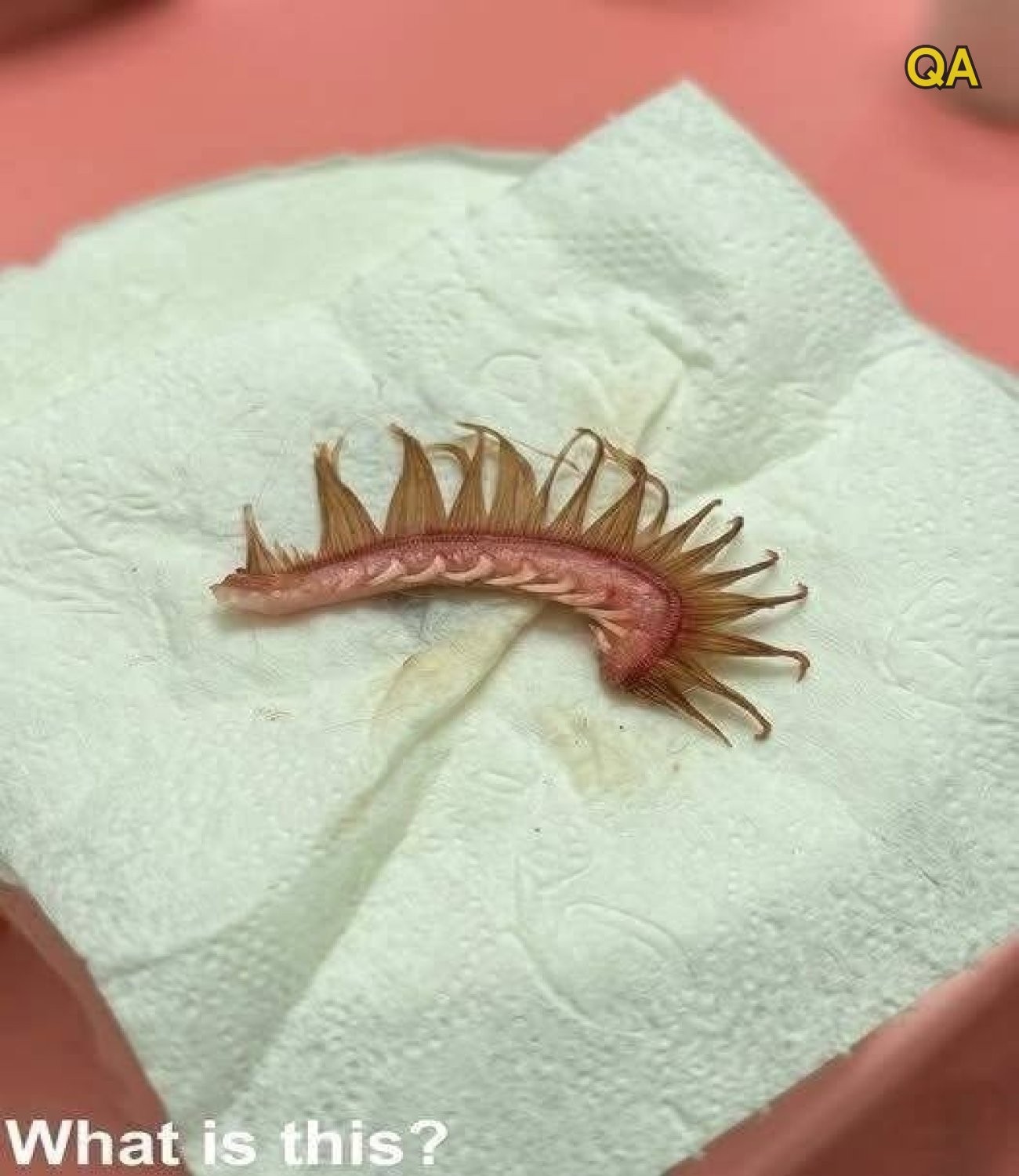
Finding something unusual in a dog’s coat can be an unsettling experience. Pet owners know their animals well, so a sudden change in appearance, an unfamiliar lump, or an odd object tangled in fur can quickly lead to concern. In this case, what initially appeared to be a potentially serious issue turned out to have a surprisingly ordinary explanation: a pair of false eyelashes caught in the dog’s fur.
The story is a lighthearted reminder that unusual objects can sometimes look far more alarming than they are. At the same time, it highlights an important point for responsible pet owners: it is sensible to remain calm, inspect the situation carefully, and know when a veterinary professional should be involved.
An Alarming Discovery in a Dog’s Fur
During a routine moment with the dog, the owner noticed a translucent, unfamiliar object tangled in the animal’s coat. It did not immediately resemble a leaf, mud, burr, or other common piece of outdoor debris. Its shape and texture looked unusual enough to create understandable anxiety.
When people notice something unexpected on a pet, their minds may jump to health-related explanations. Parasites, skin conditions, plant material, insect stings, and foreign objects are all possibilities that owners may consider. However, visual appearances alone are not always reliable, especially when an object is wet, dirty, flattened, or woven into fur.
In the account, the dog showed no obvious signs of distress. He remained relaxed, wagged his tail, and did not appear bothered by the object. While a comfortable dog is generally reassuring, behaviour alone cannot rule out every health concern. Some animals may hide pain or discomfort, and certain skin problems can be subtle in their early stages.
That is why a calm, methodical approach is useful. Rather than pulling forcefully at an object or assuming the worst, owners can first look for signs that indicate whether the issue may require prompt veterinary attention.
Why Everyday Objects Can Look So Unusual When Wet
False eyelashes are designed with thin fibres arranged along a flexible strip. When dry, they are usually easy to recognize as a cosmetic accessory. When soaked with water, dust, or moisture from grass, however, the fibres can clump together and lose their familiar shape. They may look stringy, translucent, or organic, particularly when attached to dark or thick fur.
The same effect can occur with many ordinary materials. Wet tissue, fishing line, plastic packaging, adhesive strips, artificial flowers, fabric fibres, and discarded cosmetic products may become difficult to identify once they are outdoors. Dogs often pick up debris during walks because their coats brush against grass, shrubs, fences, benches, and other surfaces.
Long-haired dogs can be especially likely to collect unexpected items. Fine objects may become hidden beneath the outer layer of the coat, only becoming visible later when the fur shifts or is brushed. Curly-coated breeds and dogs with feathering around the legs, ears, chest, and tail may also retain leaves, seed heads, twigs, and litter more easily than short-coated dogs.
In this situation, gently rinsing the object with water made its identity clearer. As it softened and separated, the once-mysterious material was recognized as a pair of waterlogged false eyelashes. The relief was immediate, and the earlier worry gave way to laughter.
How to Safely Check an Unusual Object on Your Dog
If an unfamiliar object is caught in a dog’s fur, the safest response is usually to slow down and assess the situation. A gentle examination can help distinguish loose debris from something attached to the skin or embedded in the coat.
Begin by keeping the dog calm. Speak softly, offer reassurance, and avoid sudden movements that could make the animal pull away. Good lighting is helpful, as shadows and thick fur can make an object seem different from what it is. If possible, ask another person to hold a light or calmly distract the dog with a treat.
Next, carefully part the fur around the object. Look for whether it is resting on the coat, wrapped around hair, stuck to the skin, or attached to something that appears to be part of the body. Do not tug if there is resistance. Pulling could hurt the dog, tighten a mat, or worsen an injury if the object is embedded.
For loose material, a comb or fingers may be enough to remove it. A small amount of lukewarm water can sometimes help reveal the texture of an object, as it did in this case. If the material is attached with adhesive, use caution. Avoid harsh cleaning chemicals, solvents, or products not intended for pets, since these may irritate the skin or be harmful if licked.
If there is any uncertainty, a veterinarian or qualified veterinary clinic can advise whether the dog should be seen. Sending a clear photograph to a clinic may be useful in some situations, although a photo should not replace an examination when a pet appears uncomfortable or unwell.
When a Strange Object May Require Veterinary Advice
Many objects caught in a dog’s fur are harmless, but some situations need professional attention. Owners should contact a veterinarian promptly if an object appears embedded in the skin, is near the eye, ear, mouth, paw, or genital area, or cannot be removed without pulling.
Medical advice is also important if a dog shows signs of pain, swelling, bleeding, limping, persistent licking, scratching, redness, discharge, or sudden behavioural changes. These signs do not identify a specific condition on their own, but they can indicate irritation, injury, infection, or another problem worth assessing.
Ticks are another reason to inspect a dog closely after walks, particularly in areas where they are common. Unlike loose debris, a tick may be attached directly to the skin. Pet owners who suspect a tick should use an appropriate removal method or seek veterinary guidance, especially if they are unsure what they are seeing.
It is also important to act quickly if a dog has chewed or swallowed an unknown item. Some household and outdoor materials can create choking hazards or digestive problems. A veterinarian can provide the most appropriate advice based on the item, the amount involved, the dog’s size, and any symptoms.
The Importance of Routine Grooming and Post-Walk Checks
Routine grooming is not only about maintaining a neat appearance. It can help owners notice changes in the skin and coat, remove debris before it becomes tangled, and identify ticks, mats, or small wounds early. The frequency of grooming depends on a dog’s breed, coat type, activity level, and environment.
After walks in parks, wooded areas, long grass, or busy urban spaces, a quick inspection can be worthwhile. Check the paws, between the toes, under the collar or harness, around the ears, and along the belly. Dogs with longer coats may benefit from a gentle brush-through after outdoor activities.
Owners can also reduce the chance of fur collecting debris by keeping the coat clean and appropriately trimmed. Professional groomers can offer practical recommendations for individual coat types, but any significant skin concern should be assessed by a veterinarian rather than treated as a grooming issue.
Why Pet Owners Often Imagine the Worst
The emotional reaction in this story is easy to understand. Companion animals are important family members for many people, and uncertainty about their health can be stressful. When an object looks unfamiliar, the lack of an immediate explanation can make serious possibilities feel more likely than they actually are.
This response is not unusual. People are naturally more alert to possible dangers involving those in their care. In the moment, a strange object can seem like evidence of a major problem, even when the eventual explanation is simple. The key is not to dismiss concern, but to balance it with observation and practical next steps.
A dog’s overall condition can offer useful context. Is the animal eating and drinking normally? Is it walking comfortably? Is it interested in usual activities? Does it react when a particular area is touched? These details can help owners decide whether the situation is likely to be minor or whether veterinary advice is needed.
In the false-eyelash incident, the dog’s relaxed behaviour and the eventual inspection both pointed toward a harmless answer. The discovery was funny precisely because the initial concern had been so intense. What looked like an alarming mystery was simply a discarded cosmetic item transformed by water and fur.
Keeping Walks Safer for Dogs and Communities
The incident also offers a small but useful reminder about litter. Cosmetics, packaging, tissues, plastic fragments, and other discarded items can end up in parks, pavements, and green spaces where animals may encounter them. While false eyelashes caught in fur may be harmless, other litter can be more problematic if chewed or swallowed.
Proper disposal of personal-care products and everyday waste helps keep shared outdoor areas cleaner for pets, wildlife, and people. Dog owners can also stay attentive during walks, particularly when a dog is curious about items on the ground. Teaching a reliable “leave it” cue can be valuable, though training methods should be positive, consistent, and suited to the individual dog.
A Funny Outcome With a Practical Lesson
The mystery object in this story was not a parasite, infection, or emergency. It was a soggy pair of false eyelashes that had become tangled in a dog’s coat. Once water and closer inspection revealed the truth, a stressful moment became a memorable and amusing one.
Still, the broader lesson is practical. Strange objects in a dog’s fur should be checked carefully rather than ignored or removed roughly. Most may be harmless debris, but an owner should seek veterinary help when an object is embedded, difficult to remove, close to a sensitive area, or accompanied by signs of discomfort or illness.
For pet owners, the best approach is often simple: pause, look closely, keep the dog calm, and let the evidence guide the next step. Sometimes the answer will be ordinary, unexpected, and even funny. When it is not clear, professional veterinary advice remains the most reliable source of reassurance.
Sources
Disclaimer: This content is intended for entertainment purposes only and is not based on real events.