Why Do Milk Jugs Have That Strange Circular Indentation?
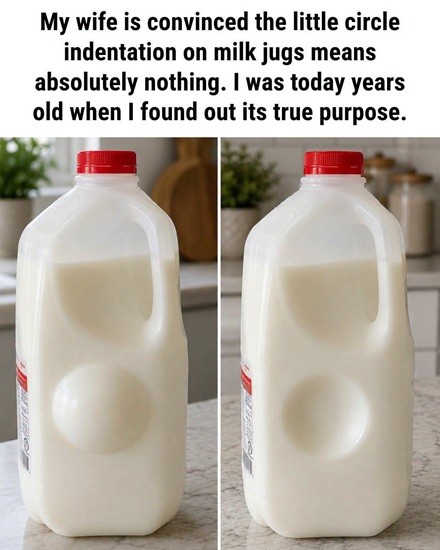
If you have ever picked up a plastic gallon milk jug, you may have noticed a large circular indentation molded into one of its sides. It is such a noticeable feature that many people have wondered why it is there.
Over the years, several explanations have circulated online. Some claim the indentation works as a pressure-release mechanism. Others suggest that it pops outward when milk begins to spoil.
The truth is less dramatic, but arguably more interesting.
That circular indentation is primarily part of the jug’s molded structural design. Its exact function can vary depending on the manufacturer, container shape and engineering specifications, but it is closely connected to the way lightweight plastic packaging is designed to handle weight, movement and everyday use.
What Are Milk Jugs Made Of?
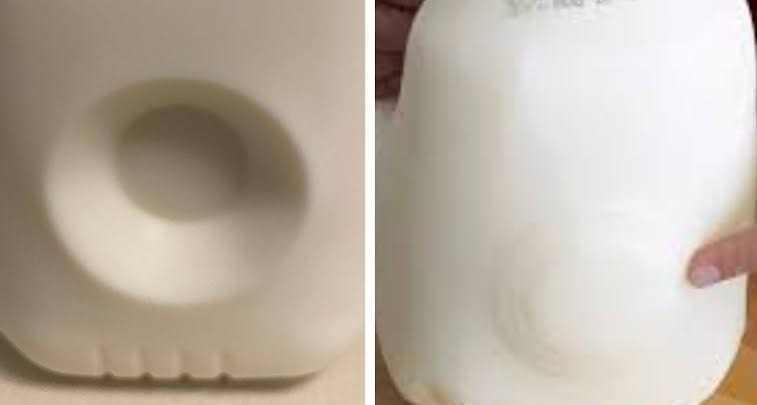
Most familiar translucent plastic milk jugs are made from high-density polyethylene, or HDPE.
HDPE is commonly used for food and beverage packaging because it is relatively lightweight, durable and suitable for forming into different shapes.
Milk jugs are generally produced using a process called blow molding. During manufacturing, heated plastic is shaped inside a mold to create the finished container.
This means features such as the handle, curves, corners, ribs and circular indentation can all be incorporated directly into the jug.
The container is therefore more than simply a thin piece of plastic shaped into a bottle. Its geometry is carefully considered as part of the overall design.
Why Does the Jug Need So Much Structural Design?
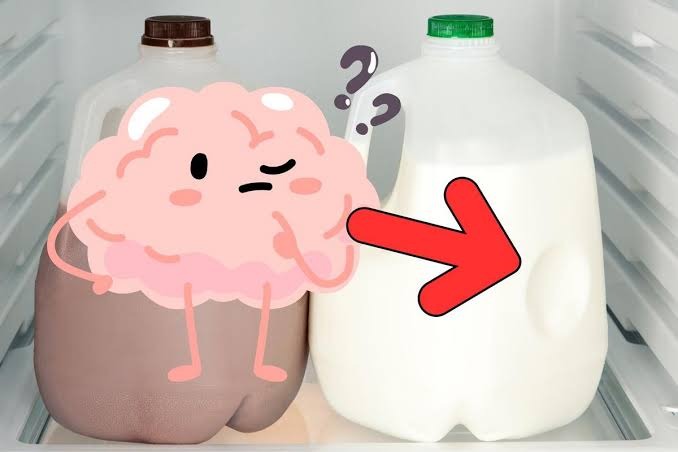
A gallon of milk is heavy.
The plastic container itself needs to remain lightweight enough to manufacture efficiently, but it must also hold a substantial amount of liquid without becoming difficult to handle.
One obvious solution would be to make the walls much thicker.
However, using significantly more plastic would increase material consumption and manufacturing costs. Instead, packaging engineers can use the shape of the container itself to improve its structural performance.
This is a common principle in engineering.
A thin, completely flat surface can behave differently from a surface containing curves, ribs, recesses or other molded features. Changing the geometry can affect how the material bends and how forces are distributed.
The circular indentation is one example of this principle.
The Circle Changes How the Plastic Panel Behaves
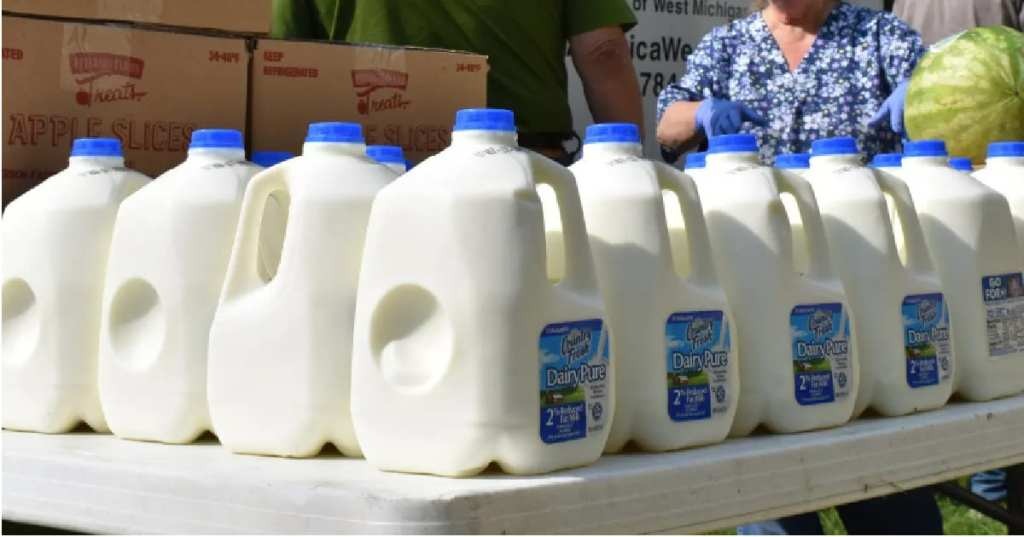
A broad, flat section of thin plastic can flex relatively easily.
When a recessed circular shape is molded into that panel, the geometry changes. Depending on the particular jug design, this can influence the panel’s stiffness and how it responds when the container is squeezed, lifted or exposed to other forces.
It is important not to assume that every milk jug uses the indentation in exactly the same way.
Different manufacturers can use different molds, dimensions, plastic thicknesses and structural designs. As a result, the precise engineering purpose of a circular recess may vary from one container to another.
What can be said more generally is that the indentation is part of the jug’s overall structural geometry.
Is the Circle Really a Pressure-Release Valve?
This is one of the most common explanations found online.
It is easy to understand why the theory sounds convincing. Plastic containers can deform when internal or external conditions change, particularly when temperature changes affect the contents or air inside a package.
However, the circular indentation should not be thought of as a mechanical pressure valve.
There is no separate valve hidden inside the circle that simply opens whenever pressure becomes too high.
The indentation remains part of the plastic wall.
Like other flexible sections of the container, it can move or deform as the jug responds to physical conditions. But that is different from saying that it was specifically designed to function as a pressure-release device.
What About the Claim That It Pops Out When Milk Spoils?
Another popular explanation says the indentation will move outward when milk goes bad.
This claim contains a small grain of physical reasoning but is misleading when presented as a universal rule.
Some forms of microbial activity can produce gases. In certain sealed food packages, gas accumulation can cause swelling or other changes in the container.
However, the circular indentation on a milk jug is not a reliable freshness indicator.
A change in the shape of a plastic container can be influenced by several factors, including temperature, handling and the flexibility of the particular container.
Spoiled milk does not necessarily cause the circular panel to pop outward.
For that reason, consumers should never use the position of the indentation alone to determine whether milk is safe to drink.
How Milk Jugs Survive Transportation
Before a gallon of milk reaches your refrigerator, the container goes through a surprisingly long journey.
It may be filled and capped at a processing facility, moved through equipment, grouped with other containers, transported to a store, placed into refrigeration and eventually carried home by a customer.
During that process, the jug experiences movement, vibration and ordinary handling.
The container therefore needs to balance two seemingly opposite characteristics.
It needs to be flexible enough to avoid unnecessary brittleness, but rigid enough to maintain its shape and protect the contents.
Molded features can help engineers achieve that balance.
The circular indentation is just one component of a much larger system that includes the jug’s handle, base, corners, neck and sidewalls.
The Handle Creates Another Challenge
Think about what happens when you lift a full gallon jug by its handle.
The weight of the milk places forces on the handle and the surrounding plastic.
The container must be able to withstand those forces without becoming excessively difficult to carry or compromising the seal.
This is another reason why plastic packaging rarely consists of perfectly flat walls.
Different areas can be shaped according to the forces and handling conditions they are expected to experience.
Ribs, curves, grooves and recessed sections can all influence how a thin plastic container behaves.
Why Manufacturers Try to Use Less Plastic

There is another important factor: material efficiency.
If a container can provide sufficient performance while using less plastic, manufacturers can reduce the amount of resin required for each package.
For one jug, the difference might seem insignificant.
But milk is packaged on a very large scale. Even a small reduction in material per container can become substantial when multiplied across millions of units.
A lighter empty container can also reduce the amount of material that needs to be produced and transported before the package is filled.
That does not mean the circular indentation exists solely to save plastic. Rather, it is one part of a broader approach to designing lightweight packaging that remains functional.
The Circle Is Only One Part of the Jug
It can be tempting to look at the circular indentation as an isolated feature.
In reality, the entire jug works as a single structure.
The base supports the container.
The handle allows it to be lifted.
The neck and cap provide the opening and closure.
The side panels contain the milk.
The curves and recessed areas influence how the plastic responds to forces.
All of these elements have to work together.
That is why changing one part of a container’s geometry can affect its overall behavior.
Why Different Milk Jugs May Look Different
If you compare milk jugs from different brands or regions, you may notice that the shape of the indentation varies.
Some may have a large, pronounced circular recess. Others may have different shapes or structural features altogether.
That is perfectly normal.
Packaging companies use different molds and engineering specifications. They may also use different plastic thicknesses and container dimensions.
Consequently, there is no single explanation that should automatically be applied to every plastic milk jug.
The safest general description is that the indentation is a molded structural feature whose precise role depends on the particular container design.
What Should You Do If a Milk Jug Looks Swollen?
This is where the distinction between packaging design and food safety becomes important.
The indentation itself should not be treated as a freshness test.
Instead, pay attention to the overall condition of the product.
Milk should be stored according to the instructions on the package and appropriate food-safety guidance. If a container appears unusually swollen, damaged or leaking, or if there are other reasons to suspect improper storage, it is better to avoid consuming the product.
A molded feature on the side of a jug should never be treated as a substitute for proper food-storage practices.
Everyday Packaging Contains More Engineering Than You Might Expect
The milk jug is not unique.
Look closely at many plastic containers and you will find molded features that appear decorative or unnecessary at first glance.
Water bottles may have grooves running around their sides.
Detergent bottles can contain recessed grip areas.
Plastic food containers often have reinforced edges and ridges.
These features can affect strength, flexibility, handling and manufacturability.
Packaging engineers have to balance several competing goals at once:
- Strength
- Flexibility
- Material efficiency
- Manufacturing cost
- Ease of handling
- Transportation
- Appearance
- Consumer convenience
A successful package has to perform reliably throughout its entire journey.
So, What Is the Circular Indentation Really For?
There isn’t one universal answer that applies identically to every milk jug.
The circular recess is best understood as part of the container’s molded structural geometry. Its shape can influence how the relatively thin plastic panel behaves under normal loads and deformation.
It should not be treated as a guaranteed pressure valve or a reliable indicator that milk has spoiled.
Those popular explanations simplify a more complicated piece of packaging engineering.
The real story is actually quite fascinating.
A gallon jug needs to hold a heavy liquid while remaining lightweight, inexpensive to manufacture and practical to carry. Rather than simply making the entire container thicker, engineers can use carefully designed shapes to influence how the plastic performs.
That small circular indentation is one visible reminder of that process.
So the next time you reach into the refrigerator and notice the strange circle on a milk jug, you do not need to look at it as a mysterious hidden button.
It is a small piece of engineering hiding in plain sight.
And like many ordinary objects around us, the simplest-looking details can have surprisingly thoughtful design behind them.