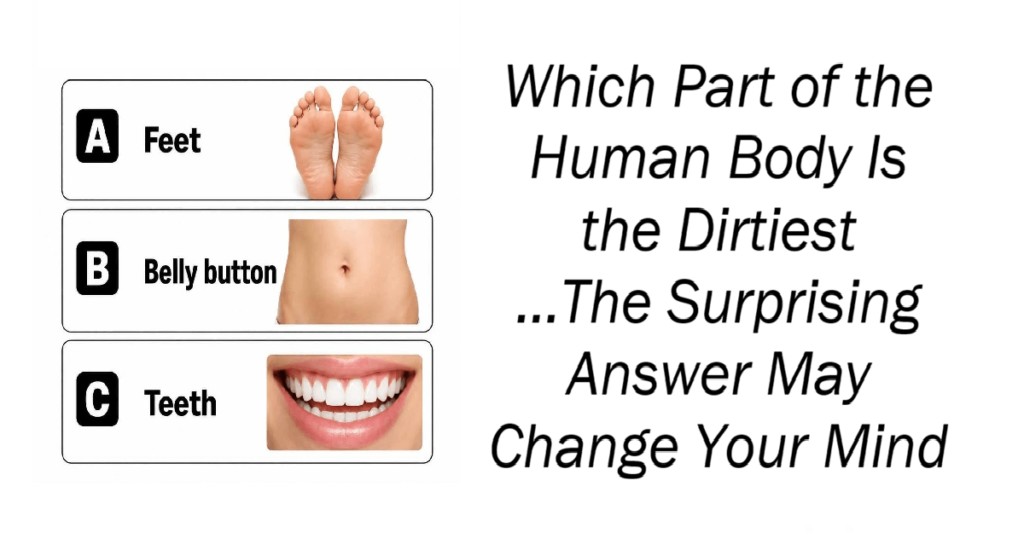
A simple question often appears in online quizzes and health discussions: which part of the human body is the dirtiest? The usual choices are feet, teeth and mouth, or the belly button. While the belly button is frequently presented as the surprising answer, the science is more nuanced than a multiple-choice question suggests.
There is no medically accepted single “dirtiest” part of the body. The answer depends on what “dirty” means. It could refer to visible soil, sweat, body odor, the number of microorganisms, the variety of microbial species, or the likelihood that an area may develop a hygiene-related problem. Each body site has a different environment and a distinct community of microorganisms.
From a microbiome perspective, the belly button is notable because research has found unexpectedly diverse bacterial communities there. However, the mouth also contains a highly complex ecosystem, and the feet can provide favorable conditions for odor-causing bacteria and fungi. Rather than treating normal microbes as something alarming, it is more useful to understand how they work and how ordinary hygiene supports healthy skin, teeth, and feet.
What Does “Dirty” Mean in Human Health?
In everyday language, “dirty” often means covered in grime, sweat, or unpleasant odor. In medicine and microbiology, the term is less useful because bacteria are not automatically harmful. Healthy people naturally carry a vast number of microorganisms on their skin, in their mouths, and throughout their digestive systems. This collection of bacteria, fungi, viruses, and other microbes is known as the human microbiome.
Many microorganisms coexist with humans without causing disease. Some help occupy space and use resources that might otherwise be available to potentially harmful organisms. On the skin, the normal microbial community is part of the body’s protective barrier. In the mouth, many microbes are normal residents, although dental plaque can contribute to cavities and gum disease when it is allowed to build up. The goal of hygiene is therefore not to eliminate every microorganism, which would be impossible and unnecessary, but to reduce buildup and support healthy conditions.
Scientists also distinguish between the total amount of microbial material and microbial diversity. One area may contain a large number of microorganisms but relatively few types. Another may support a broad range of species because its temperature, moisture, skin oils, oxygen level, and exposure to the outside environment create many small ecological niches.
Why the Belly Button Is Often Called the Dirtiest Body Part
If a quiz defines “dirtiest” as the area that can host a particularly diverse range of bacteria, the belly button is often the intended answer. The navel is a small skin fold that can retain moisture, natural oils, lint, dead skin cells, and residue from soaps or lotions. Because it is recessed and easy to overlook during bathing, it may receive less routine cleaning than the arms, legs, hands, or face.
Researchers involved in the Belly Button Biodiversity project at North Carolina State University examined bacteria living in volunteers’ navels and found a striking variety of bacterial types. The project helped illustrate an important point about the microbiome: even a small and seemingly ordinary part of the body can contain a complex ecosystem. Different people may have very different bacterial communities in the same body location, influenced by factors such as personal habits, climate, clothing, skin characteristics, and daily activities.
That finding does not mean belly buttons are inherently unsafe. Most microbes found on healthy skin are harmless in their usual setting. A belly button does not need harsh antiseptics, frequent scrubbing, or aggressive cleaning. In fact, overly vigorous cleansing can irritate the skin and disrupt its natural protective barrier.
For most people, washing the outer navel gently with water and mild soap during a regular shower is sufficient. It is important to rinse away cleanser and dry the area carefully, especially when moisture tends to remain in the fold. People with a very deep navel may use a clean, soft cloth to dry the area rather than rubbing forcefully.
The Mouth and Teeth: A Complex Oral Microbiome
The mouth is another strong candidate in any discussion about the body’s microbial communities. It is constantly exposed to food, drinks, saliva, air, and contact with the hands or oral-care products. The oral cavity includes several different environments, including the tongue, cheeks, gums, teeth, and the spaces around the teeth. Each can support different types of microorganisms.
Dental plaque is a sticky biofilm that forms on teeth. It contains bacteria and other components from saliva and the mouth. Plaque is normal, but if it is not regularly removed, bacteria can use sugars from food and drink to produce acids that damage tooth enamel. This process can contribute to tooth decay. Plaque accumulation near the gumline can also irritate the gums and contribute to gingivitis, an early and reversible form of gum inflammation.
The American Dental Association recommends brushing teeth twice a day with fluoride toothpaste and cleaning between teeth daily with floss or another interdental cleaner. Regular dental visits can help identify cavities, gum problems, and other oral-health concerns early. These habits are more meaningful than trying to label the mouth as “dirty,” because they address the factors that influence oral health.
Bad breath can also be linked to bacteria, food particles, dry mouth, tobacco use, or dental conditions. Cleaning the tongue gently, staying hydrated, and maintaining regular oral hygiene may help. Persistent bad breath, bleeding gums, pain, or sensitivity should be discussed with a dentist, since these symptoms can sometimes signal an issue that requires professional care.
Feet: Moisture, Odor, and Fungal Growth
Feet may not always have the broadest bacterial diversity, but they are often associated with sweat and odor for understandable reasons. Feet contain many sweat glands and commonly spend hours inside socks and shoes. Warmth, limited airflow, and moisture can create conditions that allow bacteria and fungi to thrive.
Foot odor is usually caused when bacteria break down components of sweat and dead skin cells, producing odor-causing compounds. Sweat itself is largely odorless. Shoes and socks that remain damp can make the problem more noticeable, particularly after exercise, work shifts, or hot weather.
Moist environments can also encourage fungal conditions such as athlete’s foot. Athlete’s foot may cause itching, scaling, cracking, or irritation, often between the toes. It is common and usually treatable, but persistent symptoms or spreading irritation should be assessed by a healthcare professional. People with diabetes, reduced circulation, weakened immune systems, or ongoing foot wounds should seek medical advice promptly for foot concerns.
Practical foot hygiene includes washing feet regularly, drying carefully between the toes, changing socks each day or after heavy sweating, and allowing shoes to dry between uses. Breathable footwear and moisture-wicking socks may be helpful for people who sweat heavily. Wearing sandals or shower shoes in communal locker rooms and pool areas can also reduce direct contact with damp surfaces.
Other Body Areas Also Have Unique Microbial Communities
The belly button, mouth, and feet are not the only parts of the body where microbes live. The skin microbiome differs greatly from one area to another. Oily areas, such as the forehead and upper back, support organisms adapted to skin oils. Moist areas, including underarms and skin folds, support different communities than dry areas such as the forearms. The hands encounter many outside surfaces, but regular handwashing reduces the spread of germs that can cause infection.
The underarms are particularly associated with body odor because sweat and skin secretions can be metabolized by bacteria. This is a normal biological process, not a sign that someone is unhealthy or unclean. Bathing, clean clothing, and deodorant or antiperspirant products can help manage odor according to personal preference.
It is also important to remember that a person’s microbiome changes over time. Age, diet, environment, medications, illness, skin-care practices, and antibiotic use can all influence microbial communities. Scientists continue to study these relationships, and research does not support simplistic claims that more bacteria always equals poorer hygiene or worse health.
Healthy Hygiene Habits Without Overcleaning
Good personal hygiene is generally straightforward. It does not require sterilizing the body or using strong antibacterial products on normal skin every day. The U.S. Food and Drug Administration has noted that there is insufficient evidence that over-the-counter antibacterial soaps are more effective than plain soap and water for routine use by consumers. Washing correctly and consistently is usually what matters most.
A balanced hygiene routine can include the following:
- Wash hands with soap and clean running water, especially before eating, after using the toilet, and after coughing, sneezing, or handling waste.
- Bathe or shower regularly based on activity level, climate, and individual needs.
- Clean the outer belly button gently and dry it afterward.
- Brush teeth twice daily with fluoride toothpaste and clean between teeth once a day.
- Wash feet and dry between the toes, particularly after sweating.
- Change underwear and socks regularly, and wear clean clothes after exercise.
- Keep cuts clean and covered when appropriate, following medical guidance for wound care.
Harsh scrubbing, repeated use of strong antiseptics, or excessive washing can lead to dryness, irritation, and disruption of the skin barrier. People with eczema, psoriasis, allergies, or sensitive skin may benefit from fragrance-free products and advice from a qualified clinician or dermatologist.
When to Speak With a Healthcare Professional
Normal body bacteria, sweat, and mild odor are usually not reasons for concern. However, medical advice can be useful if there is ongoing redness, swelling, pain, warmth, rash, unusual discharge, bleeding, or a persistent unpleasant smell that does not improve with gentle hygiene. A painful or draining belly button, for example, deserves professional evaluation rather than repeated home cleaning.
Dental care is also important when there is tooth pain, swollen or bleeding gums, loose teeth, persistent bad breath, or sensitivity that continues. For feet, seek care for persistent itching or scaling, sores that do not heal, increasing redness, or signs of infection. Timely attention is especially important for people with diabetes or conditions that affect circulation and immune function.
The Bottom Line: There Is No Single Dirtiest Body Part
The viral question has an appealing surprise answer: the belly button can support an impressive diversity of bacteria and is often overlooked during washing. In that limited sense, it is reasonable to say that the navel is a notable microbial habitat.
But science does not identify one universal “dirtiest” body part. The mouth contains a complex microbiome and requires daily care to prevent dental disease. Feet are prone to moisture, odor, and fungal growth because of shoes and sweat. Skin folds, underarms, hands, and other areas each have their own microbial environments.
The most useful message is not to fear bacteria. Most microorganisms that live on and in the body are normal parts of human biology. A routine built around gentle washing, sound oral care, clean socks and clothing, and attention to persistent symptoms is usually enough to support everyday health.
Sources
- North Carolina State University: Belly Button Biodiversity research
- American Dental Association: Home oral care guidance
- CDC: When and how to wash your hands
- U.S. Food and Drug Administration: Soap, hand hygiene, and consumer safety information
- Mayo Clinic: Athlete’s foot symptoms and causes
- World Health Organization: Oral health fact sheet
Disclaimer: This content is intended for entertainment purposes only and is not based on real events.