
You walk into a hotel room, place your luggage down, and immediately notice the neatly made bed.
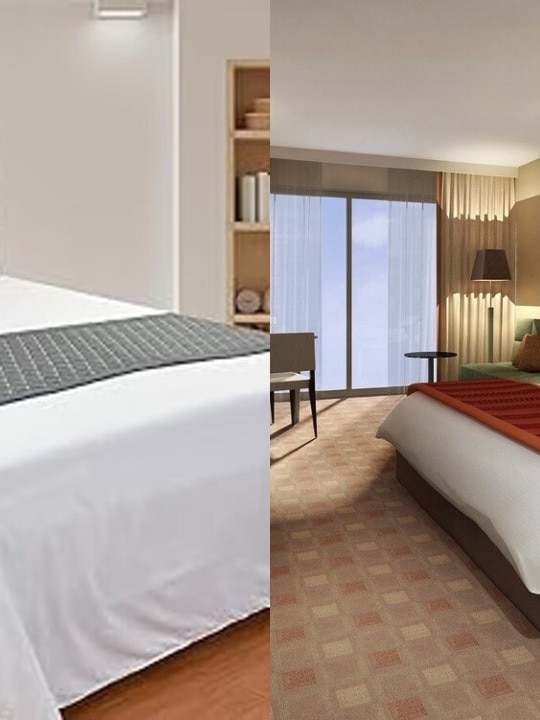
The sheets are usually bright white. The pillows are carefully arranged. And across the lower part of the bed sits a narrow strip of colorful fabric.
Have you ever wondered why it is there?
Known as a bed runner, this small piece of fabric is one of those hotel details that many guests notice without ever thinking about its purpose. It may look purely decorative, but it can also serve several practical functions.
From protecting bedding to providing a convenient place for belongings, the bed runner is a simple design feature that combines appearance with everyday usefulness.

What Is a Hotel Bed Runner?
A bed runner is a relatively narrow piece of fabric positioned horizontally across the lower portion of a hotel bed.
Unlike a blanket or duvet, it usually covers only a small section of the bed. Hotels often choose fabrics with colors, patterns, or textures that contrast with the main bedding.
There is no universal design.
Some runners are brightly colored, while others use subtle patterns that match curtains, carpets, wall decorations, or other elements of the room.
Their exact purpose can also vary from one hotel to another.
For some properties, the runner is primarily a decorative feature. For others, it provides a practical surface for guests to place certain belongings.
The important point is that a bed runner is not necessarily intended to be a replacement for regular bedding.
A Practical Layer Between Guests and the Sheets
One of the simplest explanations for the popularity of bed runners is that they can provide an additional layer between everyday objects and the main bedding.
Travelers do not always use a hotel bed exclusively for sleeping.
Someone might sit on the edge while putting on shoes, place a handbag nearby, or temporarily set down a jacket or other belongings.
A narrow runner provides a designated area for some of these activities without requiring guests to place everything directly onto the central sleeping surface.
Because the runner is relatively small, it can also be easier to remove and launder than a large duvet or blanket.
This makes it a practical addition in an environment where rooms need to be cleaned and prepared repeatedly.
Why Are Bed Runners Often Darker?
There is a noticeable visual pattern in hotel rooms.
The main bedding is frequently white or another light shade, while the runner may be dark blue, burgundy, gray, brown, gold, or another contrasting color.
There is a practical reason this combination makes sense.
A darker decorative fabric can be less visually affected by minor marks than a bright white surface.
That does not mean a darker runner is inherently cleaner.
It simply means that hotels can choose a fabric and color that is visually forgiving while still being easy to maintain.
The material itself matters as well. Bed runners are often made from fabrics selected for durability and repeated cleaning.
A Convenient Place for Personal Belongings
Another useful feature is convenience.
Imagine arriving at your room after a long journey.
You have a bag, jacket, phone, book, or other personal belongings in your hands. The bed is right there, offering a large, flat surface.
Instead of placing everything in the middle of the bed, the runner can act as a visual reminder of where certain items can temporarily go.
For some travelers, it is also a convenient place to sit while putting on shoes.
The runner is positioned exactly where a person might naturally sit at the foot of the bed, making the placement surprisingly practical.
The Housekeeping Advantage
Hotel housekeeping requires efficiency.
A room may need to be cleaned and prepared for another guest within a limited amount of time. Large pieces of bedding can require considerable effort to wash, dry, fold, and replace.
A smaller decorative textile can be easier to handle.
If a hotel uses a runner as part of its room design, staff can maintain that item separately from the larger bedding components.
However, it is important not to assume that every hotel uses bed runners specifically to reduce cleaning work. Hotel housekeeping policies vary considerably.
The runner is simply one design element that can be maintained independently.
The Decorative Purpose Is Still Important
Although practical uses are often discussed, the visual role of the bed runner should not be overlooked.
Hotel rooms frequently use neutral colors for major furniture and bedding.
White sheets, cream walls, wooden furniture, and neutral carpets can create a clean and comfortable atmosphere, but too much uniformity can also make a room appear visually plain.
A colorful runner solves that problem with very little effort.
A narrow strip of patterned fabric can introduce color, texture, and contrast without requiring the hotel to replace major furnishings.
It can also reinforce the property’s branding.
For example, a hotel with a particular color palette may use the same shades in its bed runners, curtains, cushions, artwork, and other decorative elements.
Why Hotels Like White Bedding
The colorful runner makes even more sense when considered alongside the popularity of white hotel bedding.
White creates a strong visual impression of cleanliness and simplicity.
It also allows housekeeping staff and guests to easily notice visible marks that need attention.
From an interior design perspective, white bedding can make a room appear brighter and more spacious.
The runner then provides contrast.
Instead of covering the entire bed with a heavily patterned blanket, the hotel can keep the primary sleeping area simple while adding personality at the bottom.
This combination has become recognizable in hotel design around the world.
Is the Runner Actually for Hygiene?
This question deserves a careful answer.
It is reasonable to say that a bed runner can provide a washable surface between certain belongings and the primary bedding.
However, it would be inaccurate to suggest that every bed runner exists specifically as a formal hygiene barrier.
Hotels have different designs, cleaning standards, and operating procedures.
The runner may primarily be decorative in one property and more practically useful in another.
Its ability to protect bedding depends on how guests use it and how frequently it is cleaned.
Therefore, the most accurate explanation is that bed runners can serve a combination of decorative, practical, and protective functions, rather than having one universal purpose.
What You Should Actually Do With It
If you are staying at a hotel, there is no need to treat the runner as mysterious equipment.
You can simply think of it as a decorative textile that may also provide a convenient surface at the foot of the bed.
If you want to place belongings on it, common sense still applies.
Avoid putting dirty shoes or potentially messy items directly onto hotel bedding or textiles.
If you are unsure whether a particular item should go on the bed, luggage rack, desk, or floor, the luggage rack or another designated surface is generally a better choice.
The runner is not a substitute for proper hygiene practices.
Why Such a Small Detail Gets So Much Attention
The interesting thing about bed runners is that they demonstrate how hotel design often combines several purposes into one small object.
A guest may see decoration.
A designer may see color balance.
A housekeeping team may see another washable textile.
A traveler may see a convenient place to sit or temporarily put belongings.
All of those interpretations can be true at the same time.
That is what makes seemingly ordinary hotel details interesting.
The objects around us often have multiple functions that are easy to overlook because we become accustomed to seeing them.
Other Hotel Details Worth Noticing
Once you understand the purpose of the bed runner, you may start noticing other small details in hotel rooms.
Why are there so many pillows?
Why is the desk positioned where it is?
Why do many hotels use neutral curtains?
Why are electrical outlets placed near the bedside?
Why does the room often have a luggage rack?
Each feature is usually the result of some combination of comfort, practicality, design, maintenance, and guest expectations.
Good hotel design is often less about creating spectacular individual objects and more about making dozens of small decisions work together.
Conclusion: A Small Detail With Several Purposes
The next time you enter a hotel room and see a colorful strip of fabric across the bottom of the bed, you will know that it is called a bed runner.
It may add color and elegance to an otherwise simple white bed.
It can provide a convenient surface at the foot of the bed.
It may help keep certain everyday items away from the main bedding.
And because it is a separate, relatively small textile, it can be maintained independently from larger bedding pieces.
Most importantly, however, the bed runner is a reminder that hotel design is rarely accidental.
Even the smallest details can serve several purposes at once.
What looks like a simple decoration may actually represent a thoughtful combination of style, convenience, maintenance, and practical design.
And sometimes, the most interesting discoveries are hiding in plain sight, right at the foot of the bed.