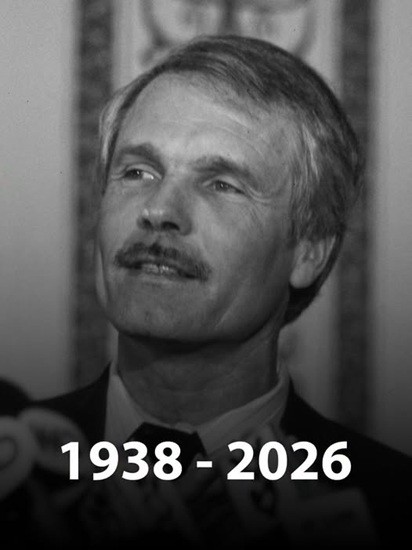
Ted Turner, the pioneering media entrepreneur and founder of CNN, died on May 6, 2026, at the age of 87. His death marked the end of a career that spanned more than six decades and helped reshape television news, cable broadcasting, professional sports and philanthropy.
Turner was best known for creating CNN, the first major television network built around continuous 24-hour news coverage. But his influence extended far beyond news. He helped develop the concept of nationally distributed cable television, built major entertainment networks, invested heavily in sports and devoted a significant portion of his wealth to environmental and humanitarian causes.
Who Was Ted Turner?
Ted Turner was born Robert Edward Turner III on November 19, 1938, in Cincinnati, Ohio.
He grew up in a family involved in the outdoor advertising business. After his father died in 1963, Turner took control of the family company while still a young man.
Rather than simply maintaining the existing business, he began looking for opportunities in broadcasting and television.
That decision eventually led him from a regional advertising company to one of the most influential media businesses of the twentieth century.
Turner attended Brown University but did not graduate. Much of his business education came through practical experience, particularly as he expanded his family’s advertising operations and later moved into broadcasting.
From an Atlanta Television Station to a National Network
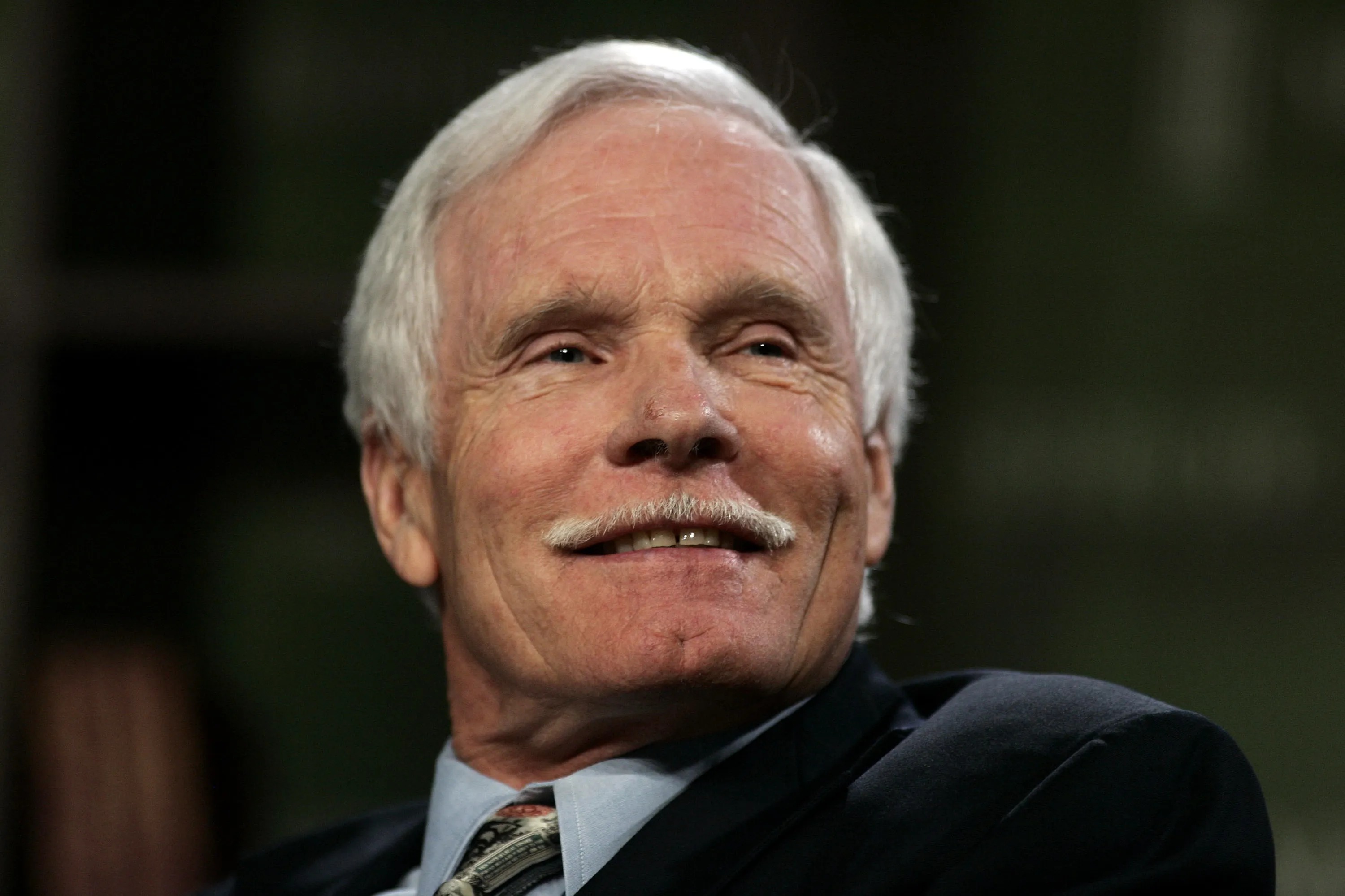
In 1970, Turner purchased a struggling UHF television station in Atlanta, Georgia.
The station faced strong competition from established broadcasters, so Turner looked for inexpensive programming that could attract viewers. Its schedule included older movies, syndicated programs and sports.
But Turner saw an opportunity that went beyond the station’s local audience.
With the development of satellite distribution, television signals could be delivered to cable systems across the country. Turner began using that technology to distribute his Atlanta station nationally.
A local television station could suddenly reach viewers hundreds or even thousands of miles away.
The strategy eventually helped create Turner Broadcasting System, better known as TBS.
Turner understood that cable television could break down the geographic limitations that had traditionally defined local broadcasting. A station did not necessarily have to serve only its home city if it could distribute compelling programming across the country.
That idea became one of the foundations of his media empire.
Ted Turner and the Atlanta Braves
Sports became an important part of Turner’s broadcasting strategy.
He purchased the Atlanta Braves in the 1970s and made the team’s games a major part of his television programming.
As TBS expanded across the United States, Braves games became available to viewers far beyond Georgia.
This helped the team develop a much broader national following than a traditional regional sports franchise might have achieved.
Turner understood the value of live sports. Unlike older movies or syndicated programs, sporting events gave viewers a reason to return to a channel at a specific time.
He later became associated with the Atlanta Hawks and other sports ventures.
Turner was also an accomplished sailor. In 1977, he captained Courageous to victory in the America’s Cup, one of the most prestigious competitions in international sailing.
His success on the water reflected the same competitive personality that shaped his business career.
The Creation of CNN
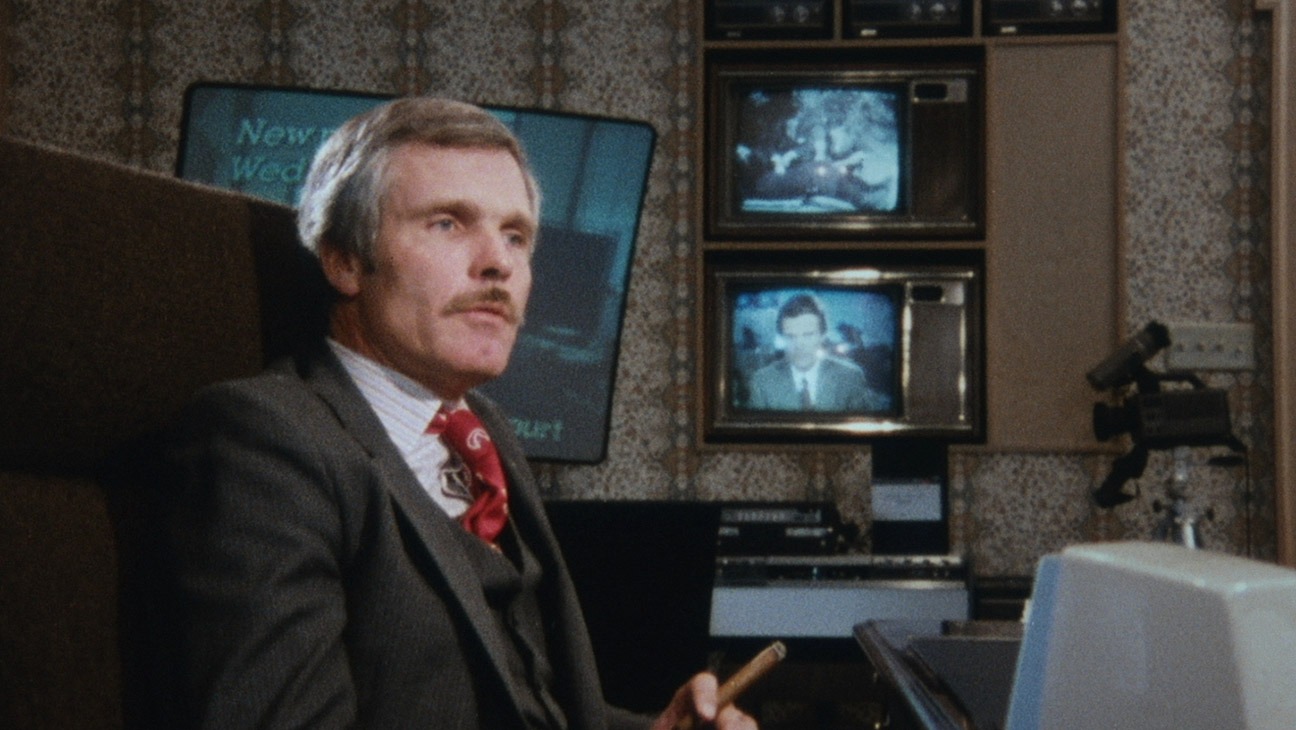
Turner’s greatest contribution to the media industry began with a simple question: What if television news were available all the time?
Before 1980, American television news was largely organized around scheduled broadcasts. Major networks delivered news at specific times, particularly in the evening.
If a major event happened outside those hours, broadcasters could interrupt regular programming, but there was no major national television network dedicated entirely to news around the clock.
Turner believed that could change.
He envisioned a network where viewers would not have to wait for the next scheduled newscast.
That idea became the Cable News Network, or CNN.
CNN officially began broadcasting on June 1, 1980.
The concept was considered highly ambitious. Running a television network 24 hours a day required a large number of journalists, producers, technical staff and broadcasting facilities.
There was also no guarantee that enough viewers would watch continuous news to make the business sustainable.
Turner continued investing in the network despite those doubts.
How CNN Changed Television News
CNN’s importance was not simply that it broadcast more news.
It changed the relationship between television and time.
Under the traditional model, viewers adjusted their schedules around news programs.
CNN reversed that relationship.
The news was always available, allowing viewers to turn on the television whenever they wanted an update.
That model became particularly valuable during major breaking-news events.
CNN could remain on the air for hours while information developed. Reporters could provide continuing updates, conduct interviews and remain connected to events as they unfolded.
The network gradually expanded its reporting operations in the United States and internationally.
By the early 1990s, CNN had become an internationally recognized news organization.
Its coverage of the Persian Gulf War in 1991 became one of the most important moments in the network’s history. Viewers around the world could follow developments through continuous television coverage rather than waiting for later summaries.
CNN’s success encouraged competitors to launch their own 24-hour news networks.
Eventually, continuous news became a standard part of television broadcasting.
CNN’s Influence on Modern Digital News
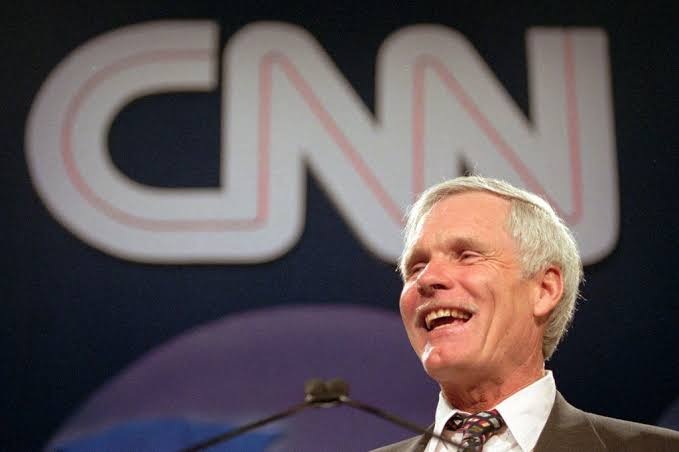
Turner could not have predicted the internet, smartphones or social media when CNN launched.
However, the principle behind the network became even more important in the digital era.
Modern audiences expect news to be available almost immediately.
Breaking events can now be followed through websites, mobile applications, livestreams and social media platforms.
The technology is completely different from the satellite and cable systems of the early CNN era, but the basic expectation is similar: people want access to information whenever an important event happens.
In that sense, Turner’s original idea helped establish a media culture in which news no longer had to wait for a scheduled broadcast.
Turner Broadcasting and Other Major Networks
CNN was only one part of Turner’s media empire.
His company eventually developed several major television brands.
TBS
TBS became an important cable network featuring movies, entertainment programming and sports.
Its national distribution helped demonstrate the potential of cable television as a mass-market medium.
TNT
TNT developed into another major entertainment network and eventually became an important destination for sports programming.
Cartoon Network
Cartoon Network created a dedicated television destination for animated programming.
It later became one of the best-known children’s and family entertainment brands in the world.
Turner Classic Movies
Turner Classic Movies, commonly known as TCM, focused on classic films and became particularly popular among movie enthusiasts.
These networks reflected Turner’s belief that cable television could serve specialized audiences rather than relying on a single general-interest programming model.
The MGM Investment
Turner’s appetite for major deals also led him into the film industry.
In the 1980s, he became involved in the acquisition of MGM/UA.
The transaction created significant financial pressure, and Turner later sold substantial portions of the company.
However, he retained valuable rights connected to a large library of movies and television content.
Those assets later became strategically important to his television businesses.
The MGM experience demonstrated both the ambition and risks associated with Turner’s business style.
Not every major investment worked as planned.
But he repeatedly demonstrated a willingness to make enormous bets when he believed they could create long-term value.
Turner’s Attempt to Acquire CBS
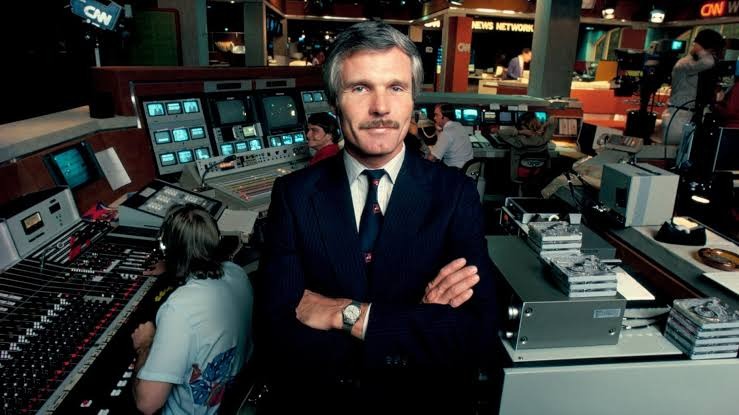
In 1985, Turner attempted to take over CBS, one of America’s most established television networks.
The effort was unsuccessful.
Nevertheless, the attempted takeover demonstrated how far Turner had come.
He was no longer simply an unconventional broadcaster operating a television station in Atlanta. He was challenging some of the largest and most established institutions in American media.
His rise also illustrated how quickly cable television was changing the balance of power within the industry.
Turner Broadcasting Merges With Time Warner
In 1996, Turner Broadcasting merged with Time Warner in a deal valued at approximately $7.5 billion.
The transaction brought CNN, TBS, TNT and other Turner properties into a much larger media company.
For Turner, the merger represented a major achievement after decades of building his broadcasting empire.
However, it also meant that he no longer had the same level of independent control over the businesses he had created.
The situation became more complicated after Time Warner entered into its massive merger with AOL.
The AOL Time Warner deal was initially presented as a landmark combination of traditional media and the emerging internet economy. Instead, the transaction became one of the most widely discussed corporate disappointments of its era.
Turner’s influence within the company gradually declined, and he eventually left the Time Warner board in 2006.
By then, the networks he had created had developed identities and audiences far beyond their founder.
Ted Turner’s $1 Billion Commitment to the United Nations
Turner’s influence extended far beyond business.
In 1997, he announced a commitment of up to $1 billion to support the United Nations and related causes.
At the time, the pledge was regarded as an extraordinary act of individual philanthropy.
The United Nations Foundation was established in 1998 to help advance initiatives connected to Turner’s commitment.
The organization has supported work involving global health, women and children, environmental issues, peace and security and international cooperation.
Turner’s pledge also helped change perceptions of what large-scale individual philanthropy could accomplish.
Rather than simply making traditional charitable donations, he helped create an institution capable of supporting international programs over the long term.
Turner and Environmental Conservation
Environmental conservation became another major focus of Turner’s later life.
He acquired large areas of land across the United States and used portions of his properties for conservation and wildlife management.
American bison became particularly associated with Turner’s conservation efforts.
The Turner Foundation, established in 1990, supported initiatives involving land conservation, water quality, biodiversity and sustainable energy.
The Turner Endangered Species Fund also focused on protecting and restoring threatened wildlife.
These efforts became an important part of Turner’s legacy outside the media industry.
Captain Planet and Environmental Education
Turner’s environmental interests also influenced popular culture.
He was involved in the creation of the animated series Captain Planet and the Planeteers, which debuted in 1990.
The series introduced younger audiences to environmental issues through entertainment.
The Captain Planet Foundation later supported environmental education and youth projects.
The program demonstrated another aspect of Turner’s approach: using media not only to entertain audiences but also to draw attention to issues he considered important.
The Goodwill Games
Turner’s interest in sports also extended into international diplomacy.
In 1986, he launched the Goodwill Games in Moscow during the Cold War.
The event was intended to encourage international sporting competition at a time when political tensions had affected major international athletic events.
The Goodwill Games never reached the scale of the Olympic Games, but the project reflected Turner’s willingness to use sports as a way of connecting people across political boundaries.
A Businessman With a Strong Personality
Turner became famous for his outspoken personality.
He was known for making bold statements and challenging established institutions.
Supporters saw his confidence and willingness to take risks as major strengths.
Critics sometimes viewed the same qualities as impulsive or unnecessarily provocative.
Both sides of that assessment became part of his public image.
Turner was not a conventional corporate executive. He often preferred large ideas, aggressive competition and unconventional strategies.
That approach produced both major successes and significant setbacks.
Ted Turner and Jane Fonda
Turner’s personal life also attracted considerable public attention.
He married three times and had five children.
His third marriage was to actress and activist Jane Fonda. They married in 1991 and divorced in 2001.
Because both were prominent public figures, their relationship received substantial media coverage throughout the 1990s.
After their divorce, both continued pursuing their own professional and philanthropic interests.
Turner’s Health in Later Life
In 2018, Turner publicly disclosed that he had been diagnosed with Lewy body dementia.
The progressive neurological condition can affect cognition, movement and other functions.
In the years that followed, Turner made fewer public appearances.
By then, however, the organizations and institutions he had helped create had already become independent parts of American media and philanthropy.
CNN had been operating for decades.
TBS, TNT and Cartoon Network had become established television brands.
His philanthropic organizations had developed their own programs and histories.
Ted Turner Dies at 87
Turner Enterprises announced that Ted Turner died peacefully on May 6, 2026, surrounded by members of his family.
He was 87.
His death prompted tributes from journalists, media organizations, sports figures, environmental groups and international institutions.
CNN remembered the founder who had transformed the possibilities of television news.
The Atlanta Braves remembered the owner who helped expand the team’s national profile.
The United Nations Foundation recognized the philanthropist whose enormous 1997 commitment helped establish the organization.
Environmental organizations highlighted his efforts to protect land and wildlife.
The wide range of tributes reflected the unusual breadth of Turner’s career.
What Is Ted Turner’s Greatest Legacy?
Turner’s career included major successes, failed investments, corporate battles and controversial decisions.
But his influence on television news is difficult to dispute.
When Turner launched CNN in 1980, a national 24-hour television news network was still an unproven idea.
CNN survived its difficult early years.
It expanded internationally.
Competitors eventually adopted the same basic model.
Continuous news became a standard part of the television industry.
The concept later extended naturally into digital journalism, livestreaming and social media.
Turner did not create every technology that made modern news possible.
But he helped establish the expectation that news should be available whenever audiences wanted it.
A Legacy Beyond CNN
Remembering Ted Turner only as the founder of CNN would leave out much of his story.
He helped develop nationally distributed cable television.
He used sports to build television audiences.
He created or helped establish major brands such as TBS, TNT, Cartoon Network and Turner Classic Movies.
He won the America’s Cup.
He launched the Goodwill Games.
He committed $1 billion to United Nations-related causes.
He invested heavily in environmental conservation.
He supported efforts focused on reducing global security threats.
And he helped bring environmental education to younger audiences through popular television.
Few media executives have left such a diverse legacy.
Conclusion
Ted Turner died at 87 after a career that transformed much more than the television industry.
He recognized the potential of cable television when it was still developing.
He believed audiences would want access to news around the clock.
He took that idea and turned it into CNN.
The network’s success helped establish 24-hour news as a major category of television and influenced the way audiences later consumed information through digital platforms.
But Turner’s legacy also extends into sports, environmental conservation, international philanthropy and entertainment.
The media landscape of 2026 looks very different from the television world Turner entered in the 1970s. Cable television faces competition from streaming platforms, while news is increasingly consumed through websites, smartphones and social networks.
Yet one of Turner’s central ideas remains familiar.
News should be available whenever people want to know what is happening.
That principle became one of the defining features of modern media.
Ted Turner did not simply build a television network.
He helped change the way the world receives news.