The Controversial Obituary of Kathleen Dehmlow: A Story That Sparked Global Dialogue

Introduction: An Obituary Unlike Any Other
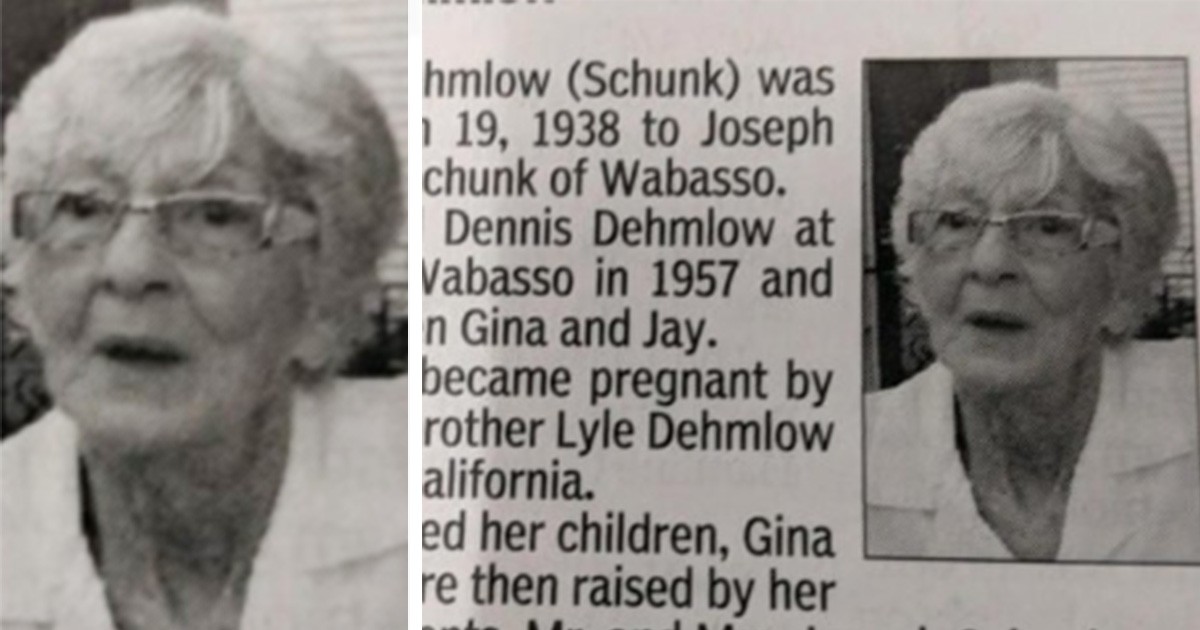
Obituaries are traditionally written as respectful tributes, chronicling the lives and achievements of those who have passed away. However, the obituary of Kathleen Dehmlow, published in the Redwood Falls Gazette in 2018, upended expectations and ignited waves of conversation worldwide. What began as a seemingly conventional notice soon revealed deeply personal family grievances that not only shocked readers but also prompted broader discussions about grief, forgiveness, and the evolving public nature of family narratives.
Kathleen Dehmlow: The Life Outlined in Her Obituary
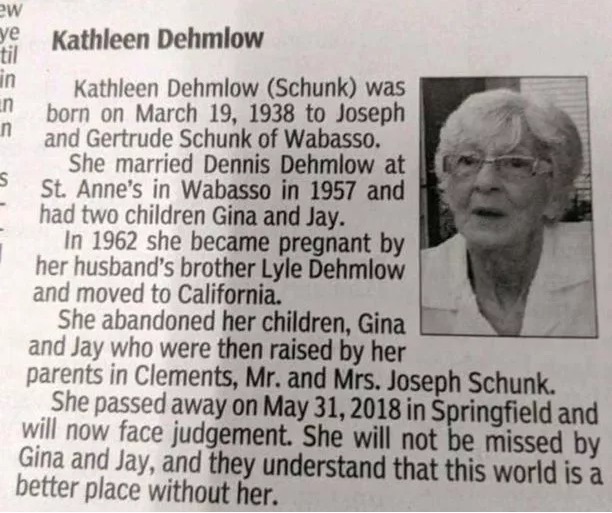
Kathleen Dehmlow was born in Springfield, Minnesota, to parents Gertrude and Joseph. She passed away peacefully on March 31, 2018, at the age of 80. The opening lines of her obituary followed the customary format, chronicling milestones such as her marriage in 1957 and the birth of her two children, Gina and Jay.
Yet the obituary diverged sharply from common custom by revealing painful family history. It stated that in 1962, Kathleen became pregnant by her brother-in-law, an event which led her to move to California and leave her children Gina and Jay to be raised by their grandparents.
A Shocking Final Statement
The closing lines of the obituary were particularly blunt and unprecedented: “She will not be missed by Gina and Jay, as they understand that this world is a better place without her.” This harsh assessment, so rarely seen in a forum usually reserved for respect and reflection, quickly caught global attention, with the obituary being widely shared and debated on social media and news platforms.
The Gazette removed the obituary from its online publication the following day after facing significant backlash and public debate regarding its tone and content.
The Family’s Perspective: A Need to Be Heard
In the wake of the publication and global reaction, Kathleen’s son, Jay Dehmalo, shed light on the reasons for the obituary’s unique tone. According to Jay, both he and his sister Gina experienced deep-seated pain from their mother’s decisions decades earlier. In interviews cited by media such as the Fraser Coast Chronicle, he explained that Kathleen had rarely been present in their lives after moving away.
Jay described a childhood devoid of contact—no birthday cards, rare visits, and a sense of being overlooked. He recounted that even when Kathleen did visit, her focus was on her new family, leaving her original children feeling invisible. “Gina and I were standing in the room, just standing there, and she didn’t even acknowledge us,” Jay recalled, emphasizing the emotional distance that persisted throughout their upbringing.
Jay also noted that Kathleen had two other children with her brother-in-law, further distancing herself from Gina and Jay. Their feelings of abandonment were exacerbated by a family dynamic fraught with dysfunction and silence about the pain endured by the siblings.
The Broader Family’s Reaction and Societal Response
Kathleen’s surviving sister, Judy, described the obituary as “nasty” and said it deeply hurt the wider family. From her perspective and that of other relatives, the public airing of grievances came as a personal affront and source of renewed pain.
At the same time, Jay maintained that extended family members could not understand the difficulties he and his sister experienced. He referenced a culture of silence: “Nobody talked about anything,” he said, reflecting the generational reticence often found in families facing trauma or scandal.
Obituaries and the Public Sphere: Changing Customs and Controversies
The virality of Kathleen Dehmlow’s obituary reflects significant shifts in how people process grief, anger, and unresolved emotions publicly. Traditionally, obituaries were handled as private family affairs or composed with decorum for public newspapers. Yet in the digital age, they have increasingly become a forum not just for tributes but for airing family narratives—sometimes including past grievances or attempts at closure.
Experts in grief counseling and family history note that such displays can be cathartic for those left behind but may also fuel controversy and misunderstanding. According to Dr. Kenneth Doka, a senior consultant for the Hospice Foundation of America, families sometimes use obituaries as a form of “last word” or personal vindication, especially when longstanding hurts remain unaddressed. He advises that while honesty can be healing, obituaries should ideally balance truth with sensitivity to the living and the dead.
The response to Kathleen Dehmlow’s obituary on social media was varied. Some expressed empathy for Gina and Jay, understanding their desire to finally have their feelings acknowledged. Others criticized the harshness, suggesting that public forums may not be appropriate venues for sharing such intimate pain. The viral nature of the story points to broader social questions around privacy, public memory, and the changing role of legacy in the era of social media.
Global Reactions and Media Commentary
Internationally, the obituary inspired articles, opinion pieces, and online discussions examining not only the particulars of the Dehmlow family but also the meaning and purpose of obituaries more generally. Social media users weighed in, with some emphasizing the importance of compassion and reconciliation, while others defended Gina and Jay’s right to speak their truth.
Commentators like journalist Jim Purcell noted the destructiveness of unchecked hatred, pointing out that “carrying hate around just destroys the hated and the hater.” This reflection echoed long-standing philosophical and psychological advice, urging families to seek understanding and healing where possible, rather than perpetuate cycles of anger and censure.
The story spurred further debates about the ethics of obituary publication. Newsrooms and online platforms reconsidered their policies, emphasizing the need for editorial oversight and discretion, particularly when emotionally charged or potentially harmful material is submitted.
The Impact of Viral Obituaries on Grief and Legacy
The viral spread of this story underscores the evolving landscape of memorialization in the digital age. While newspapers and online forums once provided carefully controlled spaces for remembrance, social media has introduced a new dynamic—where stories, even those meant to be private, can gain worldwide attention in a matter of hours.
For families like the Dehmlows, this can intensify both the pain and the need for conversation about difficult pasts. According to grief therapist Dr. Alan Wolfelt, public expressions of pain can serve as a step toward healing but must be approached thoughtfully. Obituaries, he argues, should ideally foster reconciliation rather than division, even when acknowledging life’s hardest truths.
At the same time, the phenomenon points to wider cultural debates. As societies become more open about mental health, trauma, and the complexities of family life, stories such as Kathleen Dehmlow’s provide valuable insight into how unresolved history can shape both individual and collective identity.
Conclusion: Lessons from a Controversial Family Story
Kathleen Dehmlow’s obituary became more than a local curiosity; it was a catalyst for global dialogue about grief, truth, and the responsibilities of memorialization. While the specific details and emotions involved were unique to one family, the responses underscored universal themes of forgiveness, understanding, and the human desire for closure.
As society continues to grapple with how best to honor the dead while respecting the suffering of survivors, this episode offers important lessons. It highlights the need for compassion, honesty, and thoughtful public discourse—reminding us that every life, and every story, contains complexities rarely captured in a few paragraphs.
Sources
Disclaimer: This content is intended for entertainment purposes only and is not based on real events.