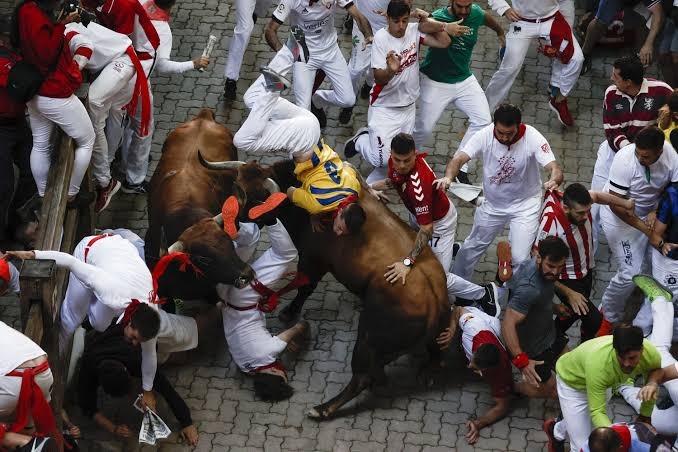
Every July, the historic streets of Pamplona, Spain, come alive with one of Europe’s most recognizable cultural festivals. The San Fermín Festival attracts visitors from around the world who gather to experience its colorful traditions, music, parades, local cuisine, and the famous morning running event that has become an international symbol of the celebration.
The 2026 festival once again drew thousands of participants and spectators as the opening running event took place through Pamplona’s old town. Local authorities reported that several participants required medical attention following the run, while emergency teams and healthcare personnel responded quickly in accordance with the festival’s well-established safety procedures. Officials continue to monitor each day’s events as the week-long celebration progresses.
Beyond the headlines, San Fermín represents centuries of history, community traditions, religious heritage, and cultural identity. Understanding its origins helps explain why the festival continues to attract international attention while also prompting ongoing discussions about public safety, tourism, and tradition.

What Is the San Fermín Festival?
The San Fermín Festival is an annual celebration held in Pamplona, the capital of Spain’s Navarre region. Taking place each year from July 6 through July 14, the festival honors Saint Fermín, one of the city’s patron saints.
Although many international visitors associate the event primarily with the Running of the Bulls, the celebration includes concerts, traditional music, cultural performances, parades, religious ceremonies, fireworks, local markets, and family-friendly activities throughout the city.
Residents proudly wear white clothing paired with the festival’s signature red scarf and sash, creating one of the world’s most recognizable festival traditions.

The Running Event
Each morning during the festival, specially designated routes through Pamplona’s historic streets are used for the traditional running event.
According to local authorities, the first official run of the 2026 festival was completed in just over two minutes. Emergency medical teams stationed along the route provided assistance to several participants who sustained minor injuries, while officials confirmed that safety protocols remained in place throughout the event.
Every year’s event is carefully organized with barriers, medical personnel, security officers, and crowd management measures designed to respond quickly whenever assistance is needed.

A Tradition With Deep Historical Roots
Historians trace the origins of the running tradition back several centuries, when livestock was moved through the streets toward the city’s market and bullring.
Over time, local residents began accompanying the animals during the morning journey, eventually transforming the practical activity into a ceremonial tradition that became part of the San Fermín Festival.
Today, the event is recognized worldwide and remains closely connected to Pamplona’s cultural identity.
Ernest Hemingway’s Influence
International interest in San Fermín increased significantly after American author Ernest Hemingway featured the festival in his 1926 novel The Sun Also Rises.
The novel introduced generations of readers to Pamplona and helped establish the festival as one of Spain’s best-known cultural celebrations.
Since then, visitors from dozens of countries have traveled to experience the atmosphere, architecture, gastronomy, and traditions of the historic city.

Safety Measures Continue to Evolve
Festival organizers work closely with local authorities each year to improve participant safety.
Measures include route barriers, controlled entry points, emergency medical stations, surveillance systems, veterinary supervision, and public guidance explaining participation rules.
Officials also encourage visitors who do not intend to participate to watch from designated viewing areas rather than entering the running route.
Balancing Tradition and Modern Perspectives
Like many historic cultural events, San Fermín inspires a range of viewpoints.
Supporters see it as an important expression of regional history, community identity, and cultural heritage. Others encourage ongoing discussions about public safety, tourism management, and animal welfare.
These conversations continue respectfully each year while local authorities work to preserve tradition alongside modern safety standards.

Why the Festival Remains Globally Recognized
San Fermín is far more than a single morning event. Throughout the week, visitors experience music, local cuisine, historic architecture, fireworks displays, traditional costumes, and celebrations that reflect centuries of Spanish culture.
The festival demonstrates how longstanding traditions can continue evolving while remaining meaningful to local communities and fascinating to visitors from around the world.
A Reflection on Cultural Curiosity
The San Fermín Festival continues to capture global attention because it combines history, tradition, community spirit, and cultural identity in a way few celebrations can. While news reports often focus on the daily running event, the festival itself represents a much broader celebration of Pamplona’s heritage.
Human curiosity has always drawn people toward unique cultural traditions. By learning about their historical origins, modern safety practices, and cultural significance, we gain a deeper appreciation for how communities preserve their customs while adapting to contemporary expectations.
Sources
-
Pamplona City Council – Official San Fermín Festival Information.
-
Government of Navarre – Tourism and Cultural Heritage.
-
Encyclopaedia Britannica – San Fermín Festival.
-
Reuters – Coverage of the 2026 San Fermín Festival.
-
UNESCO – Intangible Cultural Heritage resources.