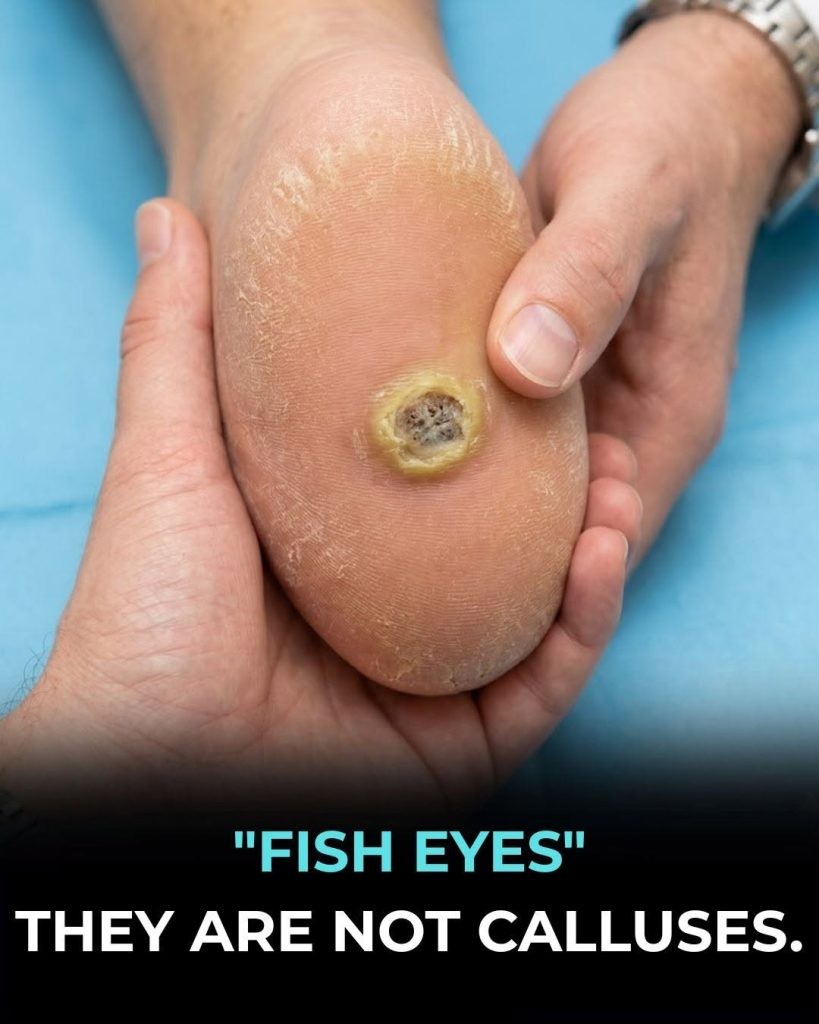
Understanding Plantar Warts: When a “Fish Eye” on Your Foot Is More Than a Callus
Introduction: What Are “Fish Eyes” on the Feet?
Small, rough, and circular spots that appear on the soles of the feet are sometimes called “fish eyes,” named for their unique appearance. These spots are frequently mistaken for calluses, especially when they appear in areas that experience frequent pressure, such as the heels or balls of the feet. However, in many cases, these spots could actually be plantar warts—a widespread dermatological condition that warrants attention due to its cause, symptoms, and implications for health.
Causes: The Role of Human Papillomavirus (HPV)
Plantar warts are caused by specific strains of the human papillomavirus (HPV), a large group of viruses that can infect the skin or mucous membranes. According to the Centers for Disease Control and Prevention (CDC) and Mayo Clinic, HPV enters the skin through tiny cuts or breaks that may go unnoticed. Once inside, the virus prompts local skin cells to grow more rapidly, forming thickened, rough lesions. Because these warts develop on weight-bearing areas of the foot, such as the soles, the body’s pressure causes them to be pushed inward, creating discomfort and complicating identification and removal.
Contrary to popular belief, plantar warts do not have “roots.” Rather, the wart tissue invaginates deeper into the skin’s layers, sometimes making treatment more difficult. These lesions may display tiny black dots—often misidentified as seeds or roots—which are actually small blood vessels that have clotted due to the infection.
Differentiating Plantar Warts from Calluses
Because both plantar warts and calluses appear as thickened skin on the feet, they are often confused. However, several key features distinguish them:
- Origin: Calluses develop as a protective response to repeated friction or pressure on the skin. In contrast, plantar warts arise from viral infection.
- Appearance: Calluses tend to be more uniform and smooth, and the skin lines (natural ridges and patterns) of the foot continue across them uninterrupted. Plantar warts, by contrast, may break these lines and often feature black dots beneath the surface.
- Sensitivity: Calluses are usually not painful unless they become excessively thick. Plantar warts can be painful, especially when squeezed from the sides or when direct pressure is applied during walking, leading to a sensation comparable to stepping on a stone.
Who Is at Risk for Plantar Warts?
While anyone can develop plantar warts, certain groups are more susceptible. These include:
- Children and teenagers who are frequently barefoot in public places, such as school gyms and swimming pools.
- Athletes who use communal locker rooms or showers.
- Individuals with a weakened immune system, which can result from medical conditions or immunosuppressive treatments.
The virus responsible for plantar warts thrives in warm, moist environments, including communal showers, public swimming-pool areas, and the floors of gym changing rooms. Walking barefoot in these places can significantly increase the risk of infection. Contact with contaminated surfaces or shared items, like towels or footwear, are common vectors for virus transmission.
How Plantar Warts Develop and Spread
Plantar warts often emerge gradually, sometimes taking weeks or even months to become noticeable after initial exposure to the virus. Some people may develop a single, small lesion, while others might develop clusters of warts known as “mosaic warts.” Because plantar warts are located on the soles of the feet, they can cause particular discomfort after standing or walking for long periods.
The contagious nature of the virus means that the infection can also spread to other people, or even to different parts of the same individual’s feet or body. The risk of transmission is higher when the skin is already broken or when communal porous surfaces are involved. The World Health Organization (WHO) and other public health authorities recommend taking preventive measures, especially in communal settings, to reduce this risk.
Symptoms and Complications
Symptoms associated with plantar warts vary, but common features include:
- A rough, grainy, or fleshy lesion that disrupts normal skin lines on the sole of the foot.
- Small black dots within the wart, which are actually clotted blood vessels.
- Pain or tenderness when standing or walking, especially if the wart is located on a pressure point.
- Discomfort when the lesion is squeezed from the sides, more so than with direct pressure.
Most plantar warts are benign and will resolve as the body’s immune system naturally clears the infection. However, in some instances, they can persist for months or years, multiply, or lead to secondary bacterial infections if picked at or improperly treated.
Treatment Options: From Home Remedies to Medical Therapies
Fortunately, many cases of plantar warts do not require medical intervention, as they eventually clear up on their own. In cases where treatment is desired—either due to pain, size, persistence, or spreading—several evidence-based options are available.
Over-the-Counter Treatments
Topical treatments containing salicylic acid are often recommended. Salicylic acid, available in a variety of strengths and forms (gels, plasters, and ointments), works by gradually removing infected skin layers. Consistency and patience are necessary, as these treatments may need to be applied over several weeks.
Cryotherapy
Cryotherapy is a professional treatment in which the wart is frozen with liquid nitrogen. This method destroys wart tissue and can be effective, but multiple sessions may be required. Some people experience pain, redness, or blistering after treatment, which is usually temporary.
Other Medical Therapies
For cases that do not respond to initial therapies, medical professionals may recommend alternative approaches, such as:
- Stronger prescription medications (e.g., cantharidin, immunotherapy agents)
- Laser therapy to remove wart tissue
- Minor surgical removal (performed under local anesthesia)
- Immunomodulatory medications, especially for patients with weakened immune systems
It is important to consult a healthcare professional before attempting self-removal, especially for individuals with diabetes, poor circulation, or neuropathy (reduced sensation in the feet), as these conditions heighten the risk of complications.
Preventing Plantar Warts: Public Health and Individual Tips
Preventing plantar warts involves both personal hygiene and public health measures. The following steps can help minimize the risk of infection and transmission:
- Keep feet clean and dry.
- Wear sandals or protective footwear in communal showers, locker rooms, and pool areas.
- Do not share personal items such as towels, socks, or shoes.
- Refrain from picking at or trying to cut out warts to avoid virus spread and secondary infection.
- Change socks daily and allow shoes to air out to reduce moisture buildup.
If you suspect you have a plantar wart, particularly if it is painful, rapidly growing, bleeding, or unresponsive to over-the-counter treatment, consult a healthcare provider for assessment and guidance.
For individuals with underlying health conditions such as diabetes or circulatory problems, timely medical advice is crucial to prevent serious complications, such as infections or ulcers.
Expert Opinion and Societal Considerations
Dermatologists and podiatry experts underscore that plantar warts are common and treatable but emphasize the value of early intervention. Delaying treatment may lead to discomfort, spreading, or more extensive medical procedures. Experts also note the importance of public awareness in communal settings, as simple measures like wearing flip-flops and maintaining general hygiene reduce the spread of HPV.
From a societal perspective, widespread awareness campaigns and education—especially in schools, sports facilities, and public pools—can help reduce the incidence of plantar warts. Internationally, the importance of hygiene in preventing communicable skin conditions is a shared public health message.
Conclusion: Recognizing and Responding to Plantar Warts
What appears to be a simple “fish eye” on the sole of the foot should be examined carefully, as it may represent more than a harmless callus. Recognizing the clinical features of plantar warts, adopting preventive strategies, and seeking medical care when needed promote foot health and overall well-being. With the right knowledge and precautions, individuals can minimize discomfort and reduce the risk of spreading these common but manageable infections.
Sources
- Centers for Disease Control and Prevention (CDC) on Plantar Warts
- World Health Organization (WHO) on HPV
- Mayo Clinic: Plantar Warts Overview
- NHS: Warts and Verrucas
- DermNet NZ: Plantar Wart
Disclaimer: This content is intended for entertainment purposes only and is not based on real events.