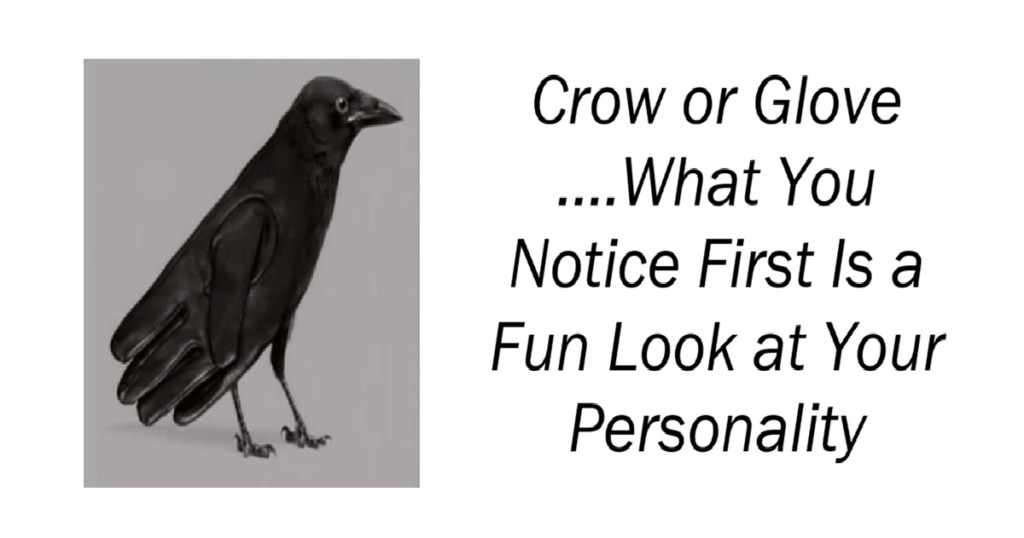
Optical illusions offer a lighthearted way to explore how the human brain interprets visual information. In the crow-or-glove image, some people immediately notice a bird, while others first see a glove. The difference can be surprising, entertaining, and a useful reminder that perception is not always as simple as it seems.
What Is the Crow or Glove Optical Illusion?
The crow or glove illusion is a type of ambiguous image: a picture designed, intentionally or otherwise, to support more than one interpretation. Depending on which lines, edges, shadows, and shapes your eyes and brain prioritize, the image may resemble a crow or another dark bird. To someone else, the same visual details may look more like the fingers, palm, or outline of a glove.
Images like this are popular online because they create an immediate question: “What did you see first?” They are easy to share, invite comparison, and often lead to friendly conversations among family members, friends, classmates, or colleagues. People may be genuinely puzzled that another person can look at exactly the same image and reach a different conclusion within seconds.
That reaction is understandable. Vision is not simply a camera-like recording of the world. The eyes collect light, but the brain must organize that information into meaningful objects. It does so rapidly, drawing on visual cues such as contrast, contours, color, scale, motion, context, and past experience. When an image contains incomplete or competing cues, more than one interpretation can feel plausible.
Why People See Different Things in the Same Image
Human perception involves both sensory input and mental interpretation. In visual science, this is sometimes described as a combination of “bottom-up” and “top-down” processing. Bottom-up processing begins with the details arriving through the visual system: lines, brightness, angles, and shapes. Top-down processing involves knowledge, expectations, attention, and previous experiences that help the brain make sense of those details.
For example, a person who first notices a pointed form, a rounded head shape, or what appears to be a beak may interpret the image as a crow. Another viewer may focus on forms that resemble fingers or a wrist opening and decide that the picture is a glove. Neither response is inherently more accurate as a reflection of personality. Instead, each response shows one possible way of organizing uncertain visual information.
Attention also matters. When people are told that an image may contain a bird, they may be more likely to search for bird-like features. If they are told it could be a glove, they may begin noticing hand-shaped elements. This does not mean they are being influenced unfairly; it reflects a normal feature of perception. Expectations can guide where attention goes and which visual explanation seems most likely.
Viewing conditions can make a difference as well. Screen size, brightness, image quality, distance from the display, and even the amount of time spent looking at an image can affect what a viewer notices. Someone may initially see a crow, then spot the glove after turning their phone, zooming in, or hearing another person describe what they saw.
Does Seeing a Crow or a Glove Reveal Your Personality?
It can be fun to read playful descriptions associated with optical illusions, but it is important to keep the claims in perspective. Seeing a crow first or seeing a glove first is not a scientifically validated measure of personality, intelligence, emotional health, creativity, or decision-making ability.
Reliable personality assessment requires carefully developed tools that are tested across large and diverse groups. Researchers examine whether a test is consistent, whether it measures what it claims to measure, and whether its results can be meaningfully interpreted. A single ambiguous image viewed for a few seconds does not meet those standards.
Online visual quizzes often suggest that one answer means a person is more analytical, while another indicates that they are more imaginative or intuitive. These statements may sound appealing because they are broad enough to feel personally relevant. However, they should be treated as entertainment rather than evidence-based psychological conclusions.
A healthier and more accurate takeaway is that people naturally differ in what captures their attention first. Those differences may be influenced by context, familiarity, visual habits, expectations, and chance. They do not define a person’s identity or place them into a fixed category.
A Fun Interpretation of What You Noticed First
If you saw the crow first, you may have been drawn to the image’s overall outline or to details that suggested an animal form. Many people associate birds with observation, movement, and the outdoors, so recognizing a crow can become an enjoyable prompt for talking about nature, symbolism, or visual detail.
If you saw the glove first, your attention may have settled on familiar object-like shapes, such as fingers or a hand. Gloves are everyday items with a distinctive form, and the brain is especially efficient at recognizing common objects from partial visual information.
These interpretations should remain playful. The most interesting aspect of the crow-or-glove image is not whether one result is “better,” but the fact that the same arrangement of visual information can lead to different immediate impressions. That shared surprise is what makes optical illusions enduringly popular.
How Optical Illusions Help Explain Visual Perception
Optical illusions are more than social-media curiosities. Scientists and educators use them to demonstrate important principles of perception. They show that what people consciously experience is the brain’s best interpretation of available information, not always a direct copy of physical reality.
Some illusions rely on perspective. A line may appear longer because of the direction of nearby lines, even when both lines are identical in length. Others depend on color and lighting. A surface can appear lighter or darker depending on the surrounding shades, because the visual system constantly compares nearby areas to estimate illumination.
Ambiguous images, including crow-or-glove style pictures, highlight another principle: perceptual organization. The brain tries to separate figure from background and identify coherent objects. When the evidence supports two possible objects, perception can switch between them. Once a viewer recognizes the second interpretation, it may become difficult to “unsee” it.
This flexibility is usually helpful in daily life. Real-world environments are full of incomplete views, shadows, visual clutter, and rapidly changing scenes. The brain must make fast predictions about what it is seeing. Optical illusions reveal the shortcuts and assumptions that make this speed possible.
The Role of Experience, Context, and Culture
Prior experience can influence object recognition. People are generally quicker to identify items they encounter often, whether those are household objects, animals, letters, tools, or visual symbols. A person who spends time birdwatching may notice a bird-like shape quickly, while a person focused on fashion, crafts, or work equipment may be more likely to notice the glove-like pattern.
Context can be equally influential. If an image appears beside an article about wildlife, viewers may be primed to see a crow. If it appears near a discussion of winter clothing or safety gear, a glove may come to mind first. This is a normal example of how the brain uses surrounding information to interpret an uncertain scene efficiently.
Language and cultural familiarity can also shape perception. People tend to recognize objects and categories that are meaningful in their own daily lives. While the underlying visual system is shared across humans, the labels, memories, and associations brought to an image can vary widely.
For that reason, the crow or glove illusion is best enjoyed as a conversation about perspectives rather than a contest. Asking others what they noticed first can lead to interesting discussions about attention, memory, visual cues, and the many ways people make sense of the world.
How to Enjoy Optical Illusions Responsibly
Optical illusions are generally harmless entertainment, but they are most useful when presented honestly. Avoid treating a viral image as a medical, psychological, or personality test. A person’s first impression of an ambiguous image cannot diagnose conditions, predict future behavior, or establish personal strengths and weaknesses.
If you share the crow or glove image, consider framing it with a simple question: “What do you see first?” Let people answer without pressure and without suggesting that one response carries a hidden meaning. This makes the experience inclusive and keeps the focus on visual curiosity.
It can also be a good educational activity for children and adults. Try asking what specific features led someone to see a crow or a glove. Did they notice a shape that looked like a beak? Did they focus on lines that resembled fingers? Comparing answers helps demonstrate how attention changes perception.
For anyone who experiences sudden, persistent, or concerning changes in vision, an online illusion is not an appropriate source of guidance. Visual symptoms should be discussed with a qualified healthcare professional or eye-care provider. Optical illusions are designed to be ambiguous, while genuine vision concerns require individualized assessment.
Why the Crow or Glove Question Remains So Appealing
The lasting appeal of the crow-or-glove illusion comes from its simplicity. There are no complicated rules, no score to calculate, and no wrong answer. A brief glance can produce an immediate reaction, while a longer look may reveal a completely different interpretation.
It also reminds people that perception is personal without suggesting that reality is unknowable. Most of the time, human vision works remarkably well. People identify faces, navigate spaces, read words, and respond to changing conditions with extraordinary speed. Yet ambiguous images reveal that perception is an active process, shaped by the brain’s effort to create order from visual information.
Whether you noticed a crow or a glove first, the most meaningful result is simply that you participated in a small demonstration of how the mind works. Share the image with others, compare your first impressions, and enjoy the moment when a familiar shape suddenly transforms into something else.
Sources
Disclaimer: This content is intended for entertainment purposes only and is not based on real events.