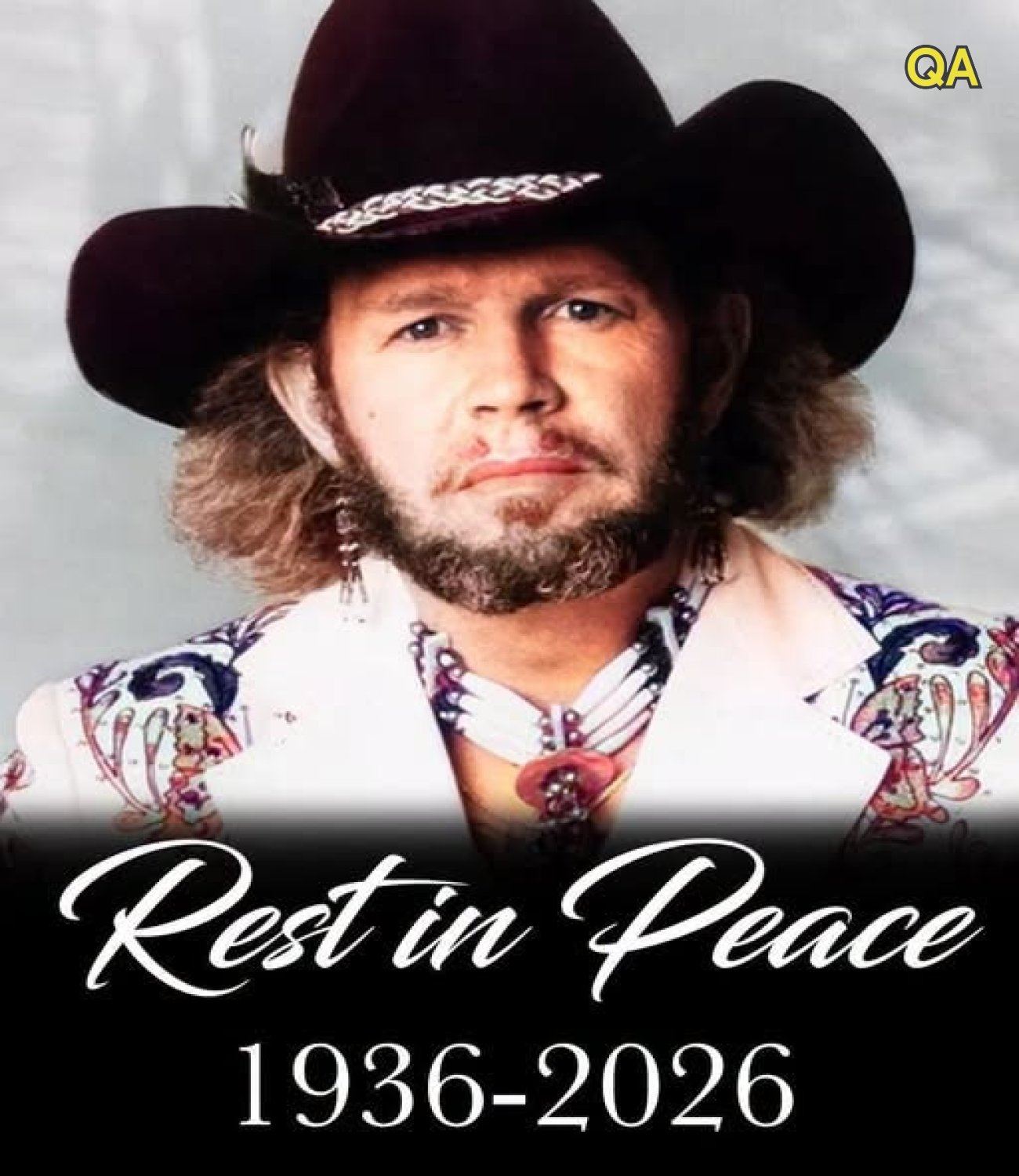
A guitar, a weathered voice, and a reputation that seemed larger than life helped make David Allan Coe one of the most recognizable figures associated with outlaw country. For decades, his music attracted listeners who appreciated its independence, working-class themes, and unconventional storytelling.
When news emerged that Coe had died at age 86 on April 29, 2026, the reaction was understandably complicated. Some listeners remembered the songwriter behind influential country recordings. Others remembered the controversies that surrounded parts of his career. Still others simply remembered a performer who seemed determined to live outside the traditional boundaries of Nashville music.
Coe’s death was confirmed by his representative, and his wife, Kimberly Hastings Coe, also confirmed the news. No cause was publicly disclosed in the initial reports.
His story is therefore more interesting than a simple celebration or criticism. It is the story of an artist whose career reflected the changing culture of American country music, the mythology surrounding the outlaw tradition, and the complicated relationship audiences can have with creative figures.
Who Was David Allan Coe?
David Allan Coe was born on September 6, 1939, in Akron, Ohio. He eventually became an important figure in the outlaw country movement, a musical tradition associated with artists who resisted some of the polished conventions of mainstream Nashville.
His path into music was unusual. His early life involved significant instability, and he spent time in reform institutions and correctional facilities. During these years, songwriting became part of his creative development.
By the late 1960s, Coe had begun establishing himself as a musician. His debut album, Penitentiary Blues, appeared in 1969 and reflected elements of the experiences that had shaped his early life.
Rather than presenting himself as a conventional country entertainer, Coe developed a distinctive persona. He sometimes performed in rhinestone clothing and became associated with the nickname “The Mysterious Rhinestone Cowboy.”
That combination of country tradition and unconventional image helped him stand apart from many performers of his generation.
The Rise of Outlaw Country
To understand David Allan Coe, it helps to understand the cultural environment in which his career developed.
During the 1970s, country music was changing. Some musicians wanted greater creative control over their recordings and performances. They were interested in bringing elements of rock, blues, folk, and other traditions into country music.
This movement eventually became known as outlaw country.
Artists such as Waylon Jennings and Willie Nelson became central figures in the movement, while Coe developed his own place within the broader tradition. The “outlaw” label was not necessarily about a single musical sound. It was also about independence, individuality, and resistance to established expectations.
Coe’s background and public image fit naturally into that mythology.
His songs often presented characters who lived outside conventional social expectations. They dealt with work, relationships, loneliness, independence, travel, and the frustrations of ordinary life.
For many listeners, that directness was part of his appeal.
Songs That Became Part of Country Music History
Although Coe’s public image sometimes attracted more attention than his songwriting, his musical contributions are significant.
He wrote songs that became successful recordings for other country artists. One of the best-known examples was “Would You Lay with Me (In a Field of Stone),” recorded by Tanya Tucker. The song reached No. 1 on Billboard’s Hot Country Songs chart.
Coe was also the songwriter behind “Take This Job and Shove It,” which became a major hit for Johnny Paycheck. The song resonated with working people and eventually became part of the cultural vocabulary surrounding workplace frustration.
Other songs associated with Coe include “The Ride” and “You Never Even Called Me by My Name.”
The latter became particularly memorable because of its unusual structure and humor. It demonstrated one of Coe’s strengths as a songwriter: the ability to combine traditional country storytelling with self-awareness and irreverence.
His music was not always designed to fit comfortably into a single category.
That may be one reason his work remained recognizable even as musical trends changed.
The Mythology Behind His Public Image
David Allan Coe’s career cannot easily be separated from the mythology surrounding him.
Country music has long had a tradition of larger-than-life personalities. Stories about difficult childhoods, life on the road, personal reinvention, and independence often become part of an artist’s public identity.
Coe was particularly associated with that tradition.
Some stories connected to his life have been repeated for decades, sometimes becoming difficult to separate from documented history. This is common with performers whose careers develop around strong public personas.
It is important, therefore, to distinguish between verified biographical information and stories that have become part of an artist’s mythology.
A compelling story is not necessarily a documented fact.
This distinction matters because celebrity biographies often become simplified over time. An unusual detail may be repeated by one publication, then another, and eventually appear to be established history simply because it has been repeated so frequently.
The same principle applies to stories surrounding Coe.
His real life was already remarkable enough without needing to exaggerate it.
Why His Legacy Remains Controversial
Remembering David Allan Coe also requires acknowledging that his career included significant controversy.
Some of his recordings contained material that drew criticism for offensive racial, sexual, and social language. Several underground albums released during the early 1980s became particularly controversial.
Coe’s defenders have sometimes argued that his artistic persona was intentionally provocative and that parts of his work were misunderstood. Critics, meanwhile, have argued that the language itself should not be dismissed simply as performance.
Both perspectives form part of the historical discussion surrounding his music.
This is where the idea of separating an artist from their work becomes complicated.
A listener can recognize the importance of a songwriter’s contribution to a genre while also acknowledging that some material has aged poorly or remains difficult for modern audiences.
Cultural standards change over time. Words and ideas that appeared in entertainment decades ago can be interpreted differently by later generations.
That does not erase history. Instead, it gives audiences an opportunity to examine how popular culture reflects the values, tensions, and disagreements of the period in which it was created.
The Human Side Behind the Persona
Behind the rhinestones, songs, interviews, and larger-than-life stories was a person whose life included complicated relationships and difficult experiences.
Reports following Coe’s passing noted that he was survived by his wife, Kimberly Hastings Coe, and several children. His family relationships were not always simple, and some relatives have spoken publicly about periods of distance.
That part of his story provides an important reminder.
Public personalities are often reduced to the image they create. Fans may know the stage character better than the individual who exists away from the spotlight.
For musicians particularly associated with rebellion or independence, that distinction can become even stronger.
The audience sees the performer.
The family sees the person.
Those perspectives do not necessarily tell the same story.
Why Outlaw Country Still Matters
The influence of outlaw country extends beyond the musicians who originally defined the movement.
The genre helped demonstrate that country music could accommodate artists who did not fit neatly into conventional expectations.
It also helped establish a broader idea of authenticity in popular music.
Listeners were not necessarily looking for perfection. They wanted personality, distinctive voices, memorable stories, and performers who appeared to have lived through something before putting those experiences into music.
Coe represented one version of that tradition.
His career also demonstrates that authenticity is not always simple. A performer can be sincere while also creating a carefully constructed public persona.
In other words, the “outlaw” identity itself can become part of the performance.
That tension between reality and mythology is one reason audiences remain fascinated by musicians from earlier generations.
What Science and Psychology Can Tell Us About Musical Memory
There is also a scientific reason people can remain emotionally connected to music long after the cultural moment that produced it has passed.
Research in psychology and neuroscience has shown that music can become strongly associated with autobiographical memories. A particular song may remind someone of childhood, a relationship, a particular place, or an important period in life.
This phenomenon helps explain why musical legacies can survive across generations.
People do not experience songs only as collections of sounds. Music can become connected to memories, emotions, social experiences, and personal identity.
That does not mean a song objectively contains a particular emotional meaning. Rather, individuals build associations through their own experiences.
This may help explain why two listeners can hear the same David Allan Coe song and reach completely different conclusions.
One person may hear nostalgia.
Another may hear humor.
Someone else may focus on the lyrics.
Another listener may simply appreciate the melody or storytelling.
There is no single psychological response to music.
Cultural Memory Versus Historical Fact
The story of David Allan Coe also illustrates a broader question: how do cultural legends develop?
A public figure’s reputation is shaped by interviews, newspaper stories, recordings, photographs, fan communities, biographies, documentaries, and social media.
Over time, these sources interact.
A colorful anecdote can become part of an artist’s mythology. A controversial statement can become the defining feature of a career. A successful song can outlive the circumstances in which it was written.
This process is not unique to country music.
It happens with actors, athletes, writers, musicians, politicians, and other famous figures.
The human brain naturally looks for narratives. We prefer stories with beginnings, turning points, conflicts, and conclusions.
Real lives are rarely that neat.
That is why careful sourcing matters when discussing historical personalities.
Remembering David Allan Coe Without Simplifying Him
The easiest way to remember a complicated artist is to choose one version of the story.
He was either a country legend or a controversial figure.
He was either an influential songwriter or a performer whose work created serious discomfort.
But history rarely works that way.
David Allan Coe could be an important songwriter and a controversial cultural figure at the same time.
His influence on country songwriting can be studied without endorsing every part of his catalog. Likewise, criticism of his work does not require pretending that his contributions to the genre never existed.
A balanced historical perspective allows both realities to remain visible.
His best-known songs became part of the American country music tradition. His unusual career helped shape the mythology of outlaw country. At the same time, controversial elements of his catalog remain part of the discussion surrounding his legacy.
That complexity is not a weakness in the historical record.
It is part of the record.
A Legacy That Will Continue to Be Debated
David Allan Coe died on April 29, 2026, at the age of 86. His representative confirmed the news, while reports stated that no cause was publicly disclosed.
His passing closes one chapter in the history of outlaw country, but it does not end the discussion surrounding his work.
Future listeners will encounter his songs in different ways. Some may discover him through classic country playlists. Others may encounter his songwriting through artists who recorded his compositions. Some may study his career as an example of the complicated relationship between artistic freedom, cultural change, and public controversy.
Each generation will make its own judgment.
Perhaps that is ultimately what makes a musical legacy interesting.
A song can survive its creator. A story can become separated from its original moment. A performer can be remembered differently by fans, critics, relatives, and historians.
And sometimes the most honest conclusion is that all of those perspectives contain part of the truth.
Final Reflection: Why We Remain Curious About Complicated Lives
The fascination with David Allan Coe is not simply about country music.
It is about human curiosity.
We want to understand how people become who they are. We want to know which parts of a public persona are authentic, which stories became mythology, and how an individual’s work can influence a culture long after its original moment has passed.
Coe’s life offers no perfectly simple answer.
It contains music, ambition, reinvention, controversy, creativity, and a carefully constructed public identity. His career reminds us that famous people are rarely just one thing.
Perhaps that is why stories about musicians continue to attract attention long after the final performance.
We are not only listening to songs.
We are trying to understand the people, cultures, and memories behind them.
And in the end, that curiosity may be one of the most enduring parts of human culture.
Sources
Los Angeles Times – David Allan Coe obituary
The Guardian – David Allan Coe obituary
The Washington Post / Associated Press – David Allan Coe obituary
CBS News / Associated Press – David Allan Coe dies at 86
Entertainment Weekly – David Allan Coe obituary and career overview
People – David Allan Coe’s family and personal life