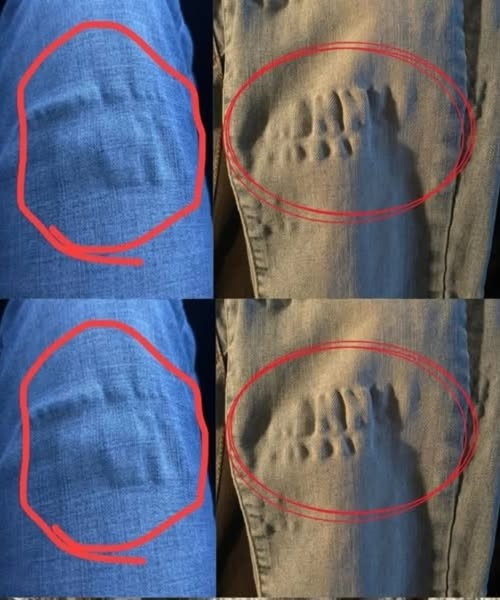
You pull your favorite pair of jeans from the washing machine, expecting them to look almost exactly as they did before.
Instead, something seems wrong.
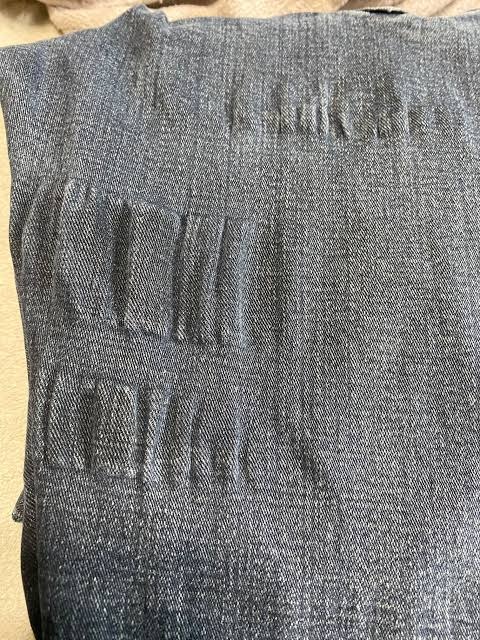
The denim has developed strange ripples around the thighs, seams or pockets. Some areas look slightly twisted, while others seem to have tiny waves running through the fabric.
At first, you might wonder whether the jeans are permanently damaged.
Fortunately, that is not always the case.
These wrinkles and ripples are often the result of how denim reacts to water, heat, stitching and movement during washing and drying. Understanding what causes the problem can help you protect your jeans and keep them looking better for longer.
The Most Common Reason: Uneven Shrinkage
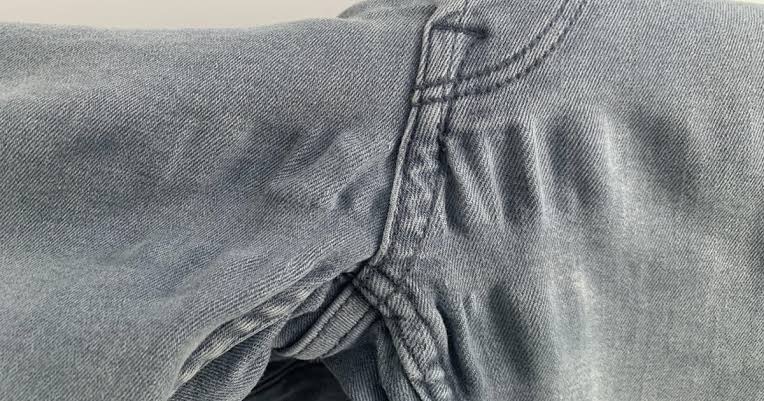
One of the biggest reasons jeans develop ripples after washing is uneven fabric shrinkage.
Traditional denim is commonly made from cotton, and cotton fibers can contract when exposed to moisture and heat.
The important detail is that different parts of a pair of jeans may not react in exactly the same way.
Seams, pockets, waistbands and reinforced areas contain multiple layers of fabric and stitching. These sections may behave differently from the larger, flatter areas of denim.
When one part contracts slightly more than another, the fabric can begin to pull against itself.
The result can be puckering, rippling or a wavy appearance.
This effect may become particularly noticeable after washing jeans in hot water or placing them in a high-temperature dryer.
Why Seams Are Often the First Place You Notice It
Look closely at the areas where your jeans are rippling.
You may notice that the problem is concentrated around seams or stitched sections.
That is not necessarily a coincidence.
A seam contains thread and multiple layers of fabric. When the surrounding cotton changes size during washing, the stitching can influence how the material contracts.
Instead of shrinking evenly in every direction, the fabric may pull toward the seam.
This can create the familiar wavy appearance that makes freshly washed jeans look strangely distorted.
Manufacturing Tension Can Also Play a Role
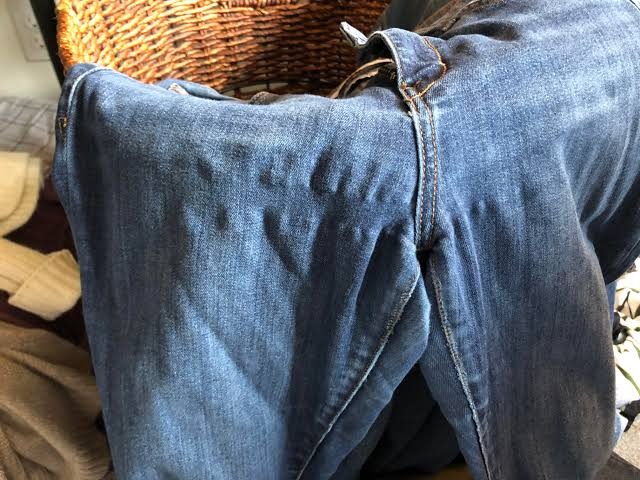
Not every ripple is caused by something you did in the laundry.
Sometimes the problem begins during manufacturing.
When denim is cut, stretched, stitched and assembled, the material experiences mechanical tension.
A pair of jeans may look perfectly smooth when it leaves the factory. However, washing can release some of the tension that developed during manufacturing.
Once the fabric becomes wet and then dries, previously hidden stresses can become visible.
This can result in twisting or puckering along certain seams.
The effect can occur in inexpensive jeans, but it is not exclusive to budget clothing. Even well-made denim can change slightly after repeated washing because fabric naturally responds to moisture, heat and mechanical movement.
Stretch Jeans Have Their Own Challenges
Modern jeans often contain more than cotton.
Many popular styles use a small amount of elastane or spandex to provide stretch and improve comfort.
This makes the jeans easier to move in, but it can also change how the fabric responds to washing.
Cotton and synthetic stretch fibers do not behave identically when exposed to heat and repeated washing.
Over time, excessive heat can affect the elasticity of stretch fibers.
As the different fibers respond differently, the denim may become more prone to distortion, particularly around areas that experience frequent movement.
This is one reason manufacturers often recommend avoiding unnecessarily high temperatures when washing stretch denim.
Your Washing Machine May Be Making Things Worse
Another factor is how much clothing you put into the washing machine.
It can be tempting to fill the drum as much as possible to save time.
But an overloaded machine gives clothing less room to move freely.
Jeans can become twisted around other garments, especially heavier items such as towels or sweatshirts.
During the washing cycle, the denim may be repeatedly pulled, folded and compressed.
That mechanical stress does not necessarily create permanent damage by itself, but it can contribute to distortion when combined with heat and shrinkage.
A less crowded washing machine allows clothing to move more naturally and can reduce unnecessary twisting.
High Heat Is Often the Biggest Laundry Mistake
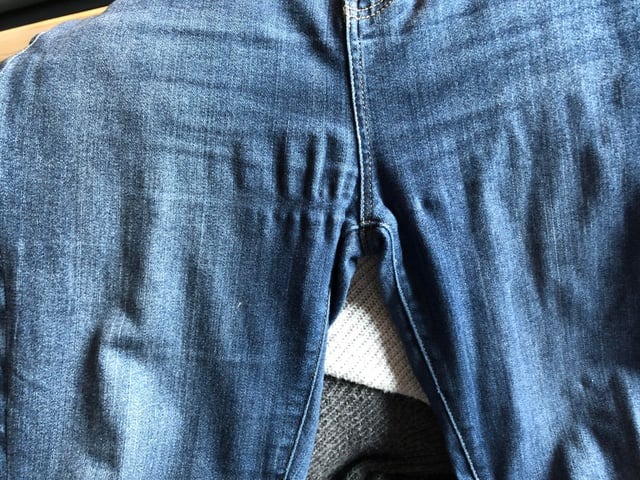
If your jeans regularly come out with new ripples, take a close look at your dryer settings.
High heat can be particularly hard on denim.
The combination of moisture, heat and tumbling causes cotton fibers to contract while the fabric is repeatedly moving.
This can encourage wrinkles and puckering to become more pronounced.
Stretch denim may be even more sensitive because its elastic fibers can be affected by repeated exposure to high temperatures.
That does not mean you can never put jeans in a dryer.
Rather, using a lower temperature and avoiding unnecessary over-drying can be a gentler approach.
Why Air Drying Can Help
Air drying is one of the simplest ways to reduce heat-related changes in denim.
After washing, gently reshape your jeans while they are still damp.
Pay particular attention to the waistband, seams, pockets and legs.
Then allow them to dry naturally in a suitable location.
Air drying removes the intense heat and tumbling associated with machine drying.
It can also help preserve the original shape of the garment.
For people who want their jeans to maintain their fit and appearance for as long as possible, this small change can make a noticeable difference.
Turn Your Jeans Inside Out Before Washing
Another simple habit is turning jeans inside out before putting them into the washing machine.
This can help reduce surface friction and protect the visible exterior of the denim.
It is particularly useful for darker jeans because repeated washing can gradually affect their appearance.
Turning the garment inside out also exposes the interior to much of the washing action while keeping the outer surface somewhat more protected.
Although this will not completely prevent rippling caused by shrinkage or construction, it is a useful part of a gentler denim-care routine.
Cold Water Is Usually the Safer Choice
Temperature matters.
Washing jeans in cold or cool water generally exposes the fibers to less heat-related stress than a hot wash.
For many everyday pairs of denim, cold washing is sufficient for removing ordinary dirt and maintaining freshness.
A gentle cycle can also reduce the amount of mechanical stress placed on the fabric.
The goal is not to avoid washing jeans entirely.
Instead, it is to find a balance between cleaning the garment and avoiding unnecessary stress.
Can You Fix Jeans That Already Have Ripples?
The good news is that some rippling may improve.
If the distortion is primarily caused by temporary wrinkling rather than permanent fiber or construction changes, gently reshaping the jeans while damp may help.
Lay the jeans flat or hang them carefully, smooth the fabric with your hands and allow them to dry naturally.
For more stubborn wrinkles, light steaming may help relax the fabric.
However, avoid applying excessive heat.
If the rippling is caused by permanent shrinkage, stitching tension or damaged stretch fibers, it may not disappear completely.
In that situation, professional alteration may be an option depending on the location and severity of the distortion.
A Simple Denim-Care Routine
If you want to reduce the chances of your jeans developing unwanted ripples, a few habits can make a difference.
Wash jeans in cold or cool water.
Turn them inside out before washing.
Choose a gentle cycle when appropriate.
Avoid stuffing too many clothes into the machine.
Keep jeans away from heavy items that can twist around them.
Use a lower dryer temperature if machine drying is necessary.
Avoid leaving denim in a hot dryer longer than needed.
Air dry whenever practical.
Reshape the jeans while they are still damp.
These steps are simple, but together they reduce exposure to the combination of heat, moisture and mechanical stress that can change the shape of denim.
The Bottom Line
Those strange waves appearing on your jeans after laundry may look mysterious, but there is usually a practical explanation.
Uneven shrinkage, stitching tension, stretch fibers, an overloaded washing machine and excessive dryer heat can all contribute to puckering and distortion.
The good news is that many of these problems can be prevented with a gentler washing routine.
Your jeans do not necessarily need special treatment every time they go into the laundry.
They simply benefit from less heat, less twisting and a little more attention to how they are washed and dried.
And the next time your favorite pair comes out of the machine looking slightly different, don’t panic. Before assuming they’re ruined, reshape them, let them air dry and give the fabric some time to settle.
Sometimes, the best way to keep denim looking good is simply to treat it a little more gently.