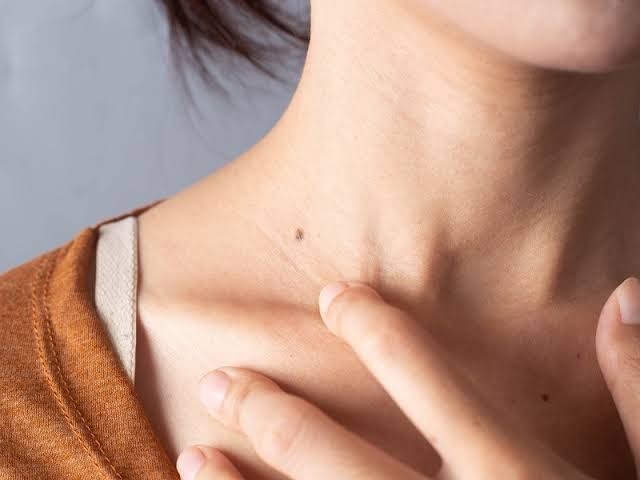
Moles are common skin features that have attracted attention for centuries. In many societies, people have attached symbolic meanings to moles based on where they appear on the face or body. A mole on the forehead may be linked in folklore with wisdom or leadership, while one on the cheek may be associated with emotion, relationships, or sensitivity. These ideas remain popular in conversations, traditional face-reading practices, and cultural storytelling across different parts of the world.
It is important to separate symbolism from science. Modern medicine does not support the idea that the position of a mole can predict personality, financial success, relationships, intelligence, or future events. A person’s character and life outcomes are influenced by complex factors, including upbringing, education, opportunities, health, choices, relationships, and wider social circumstances.
From a medical perspective, most moles are harmless collections of pigment-producing skin cells called melanocytes. However, learning to notice changes in a mole can be valuable for skin health. This article explores the traditional meanings commonly connected with moles on the forehead, cheek, chin, and neck while providing evidence-based guidance on when to seek medical advice.

Why Do People Attach Meanings to Moles?
Human beings have long searched for meaning in visible physical features. Before modern medical knowledge became widely available, appearance was often interpreted through spiritual, social, or symbolic frameworks. Facial features, birthmarks, lines on the hands, and moles could be viewed as signs of temperament, fortune, or life direction.
These beliefs developed differently across regions and communities. Some traditional systems of face reading, for example, regard the face as a symbolic map of a person’s experiences or perceived qualities. In other traditions, moles have been considered beauty marks, signs of luck, or reminders of family heritage. The exact interpretation can vary greatly: a mole considered favourable in one community may have no particular meaning in another.
These traditions can be appreciated as folklore and cultural history rather than as a method for making decisions about someone’s abilities or identity. Assigning fixed personality traits to people based on appearance can lead to inaccurate assumptions. Cultural beliefs may be interesting to explore, but they should not replace evidence-based medical care or a fair understanding of other people.

What Is a Mole From a Medical Perspective?
A mole, medically called a nevus, is usually a small area of skin with more pigment-producing cells than the surrounding skin. Moles can be flat or raised and may appear in shades of tan, brown, black, pink, red, or skin tone. Their appearance depends on skin type, genetics, sun exposure, age, and other biological factors.
Many people develop moles during childhood and adolescence. It is also common for their number and appearance to change gradually over time. Some moles are present at birth, while others develop later. The American Academy of Dermatology notes that most moles are benign, meaning they are not cancerous.
Nevertheless, any new, unusual, or changing spot deserves attention. Skin cancer, including melanoma, can sometimes resemble a mole or develop in an existing mole. Checking your skin periodically and speaking with a qualified healthcare professional about concerning changes are practical steps that have nothing to do with folklore.
1. A Mole on the Forehead: Traditional Associations With Intelligence and Leadership
In some folk traditions, the forehead represents thought, planning, authority, and vision. For this reason, a mole on the forehead is sometimes associated with intelligence, ambition, confidence, or leadership. Traditional interpretations may describe a person with this feature as determined, thoughtful, and willing to take responsibility.
These associations likely reflect the symbolic role of the forehead rather than any biological connection. Because the forehead is a prominent part of the face, it has often been linked with the mind and with a person’s public presence. In art, literature, and historical portraiture, facial expressions and features have frequently been used to suggest wisdom, seriousness, or social status.
What Does a Mole in the Middle of the Forehead Mean in Folklore?
A mole located near the middle of the forehead is sometimes given special significance in cultural interpretations. It may be connected with intuition, reflection, concentration, or carefully considered decision-making. Some people regard this placement as a symbolic reminder to trust personal judgment and approach challenges with patience.
However, there is no scientific evidence that a mole in the centre of the forehead indicates intelligence, intuition, or leadership potential. Skills such as decision-making and leadership develop through learning, experience, emotional awareness, communication, and opportunity. A person’s physical appearance cannot measure these qualities.
For anyone with a forehead mole, the most useful consideration is practical: because this area receives frequent sun exposure, protecting it with shade, hats, and broad-spectrum sunscreen can help reduce sun damage. If the spot changes noticeably, a dermatologist or other healthcare professional can assess it.
2. A Mole on the Cheek: Cultural Links to Emotion and Relationships
Cheek moles are often especially noticeable, and in many cultures they have been viewed as distinctive beauty marks. Traditional interpretations commonly connect a mole on the cheek with emotional depth, warmth, compassion, or strong personal bonds. In some forms of folklore, it may suggest that an individual values family, friendship, loyalty, and close relationships.
Some traditions distinguish between the left and right cheek, assigning different meanings to each side. These meanings are not consistent across cultures, however, and no universal system exists. A left-cheek mole may be linked with sensitivity in one source, while another may give the same symbolism to the right cheek or reject the distinction entirely.
Do Cheek Moles Reveal Emotional Intelligence?
They do not. Empathy, emotional intelligence, and relationship skills cannot be identified by a facial feature. These qualities are expressed through how people listen, communicate, respond to others, manage conflict, and show care over time.
Still, the popularity of cheek-mole symbolism reveals something meaningful about social history. The cheeks are closely associated with facial expression, blushing, smiling, and visible emotion. It is understandable that people would connect this area with affection and sensitivity in storytelling and traditional symbolism.
As with other areas of the face, cheeks can receive substantial ultraviolet exposure. Daily sun protection is a sensible part of skin care, particularly for people who spend time outdoors. Sunscreen is not a substitute for medical assessment, but it can help reduce damage from ultraviolet radiation when used alongside protective clothing and shade.
3. A Mole on the Chin: Symbolism of Stability and Determination
In traditional interpretations, a mole on the chin may represent persistence, practicality, adaptability, and stability. The chin has often been symbolically connected with resolve because it is part of the face associated with posture, expression, and perceived confidence. Folklore may therefore describe a person with a chin mole as someone who works steadily toward long-term goals.
Some beliefs also associate the chin with home life, work, or later stages of life. A mole in this position may be interpreted as a sign of gradual progress, resilience through change, or an ability to create security through consistent effort. These ideas can be appealing because they emphasise constructive qualities such as patience and perseverance.
Is a Chin Mole a Sign of Career Success?
No medical or scientific evidence links a chin mole with career achievement, wealth, or professional progress. Career outcomes depend on a broad range of real-world conditions, including education, training, access to opportunities, economic circumstances, workplace conditions, support networks, and individual goals.
Folklore about determination can nevertheless offer a useful cultural conversation starter. It can remind people that lasting progress often comes from effort, adaptability, and learning rather than from luck or physical signs. The difference is that these qualities are developed through actions and circumstances, not predetermined by a mole’s location.
People who shave, use cosmetic products, or experience frequent friction around the chin may notice irritation near a mole. Avoid picking or attempting to remove a mole at home. If it becomes irritated repeatedly or changes in appearance, seek professional advice rather than using unverified home treatments.
4. A Mole on the Neck: Folklore About Change and Opportunity
A mole on the neck has acquired a range of meanings in cultural traditions. Some interpretations connect it with personal transformation, communication, spirituality, or openness to new experiences. Others describe it as a symbol of unexpected opportunities or changes in life direction.
The neck is a natural focus for symbolic interpretation because it connects the head and body. In metaphorical language, it can represent the relationship between thought, voice, identity, and everyday action. As a result, traditions may associate neck moles with the ability to adapt, express oneself, or navigate transitions.
What Does a Neck Mole Symbolise?
There is no single answer. Depending on the tradition, a neck mole may be said to represent adaptability, good fortune, expressive communication, travel, or personal growth. Such meanings are cultural stories, not predictions. They should be approached with curiosity and respect for their origins rather than treated as proven information.
From a health perspective, the neck can be easy to overlook during a skin self-check, especially the back of the neck and the area near the hairline. Asking a trusted person for help or using mirrors can make it easier to inspect places that are difficult to see. Sun-protective clothing and hats can also help protect the neck during outdoor activities.
How to Monitor Moles: The ABCDE Guide
While cultural symbolism can be harmless entertainment, changes in moles should be taken seriously. Health organizations often recommend using the ABCDE guide as a way to notice features that may need medical evaluation:
- A for Asymmetry: One half of the spot does not look like the other half.
- B for Border: The edges appear irregular, uneven, blurred, or poorly defined.
- C for Color: The spot contains multiple colours or has an unusual, changing colour.
- D for Diameter: The spot is larger than about 6 millimetres, although melanomas can be smaller.
- E for Evolving: The mole changes in size, shape, colour, elevation, or symptoms over time.
Itching, bleeding, crusting, tenderness, or a sore that does not heal are also reasons to contact a healthcare professional. Another useful concept is the “ugly duckling” sign: a spot that looks noticeably different from the other moles on your body may warrant attention, even if it does not match every ABCDE feature.
These guidelines are not intended to diagnose skin cancer at home. Many harmless moles can have unusual features, and only a trained clinician can make an appropriate assessment. A dermatologist may examine the skin with a dermatoscope and, if needed, recommend further testing.
When Should You See a Healthcare Professional?
Consider arranging a medical appointment if you notice a new or changing mole, especially one that looks different from your other spots. It is also sensible to seek advice if a mole begins to bleed without an obvious injury, becomes persistently itchy or painful, or changes after remaining stable for a long time.
People with many moles, a personal or family history of melanoma, fair skin that burns easily, a history of significant sun exposure, or a weakened immune system may have a higher risk of skin cancer. Individual risk varies, so a healthcare professional can offer guidance suited to your medical history.
Early assessment matters because skin cancers are generally more manageable when identified promptly. At the same time, there is no need to panic over every ordinary mole. The goal is awareness: know what is normal for your skin, protect it from excessive ultraviolet exposure, and ask for qualified advice when something seems new, different, or concerning.
Final Thoughts on Mole Meanings and Skin Health
Moles have inspired generations of stories about personality, destiny, beauty, and luck. A forehead mole may be associated in folklore with leadership, a cheek mole with compassion, a chin mole with determination, and a neck mole with change or opportunity. These interpretations are part of cultural imagination and can be appreciated as traditions rather than factual predictions.
Your personality, relationships, achievements, and future are not written in the location of a mole. They are shaped by your actions, values, experiences, communities, opportunities, and choices. The most reliable meaning a mole can have is medical: it is a feature worth knowing well enough to notice if it changes.
Enjoy cultural symbolism with a thoughtful perspective, but make skin health decisions using reliable medical information. If you are uncertain about a mole, a healthcare professional is the best source of personalised guidance.
Sources
Disclaimer: This content is intended for entertainment purposes only and is not based on real events.