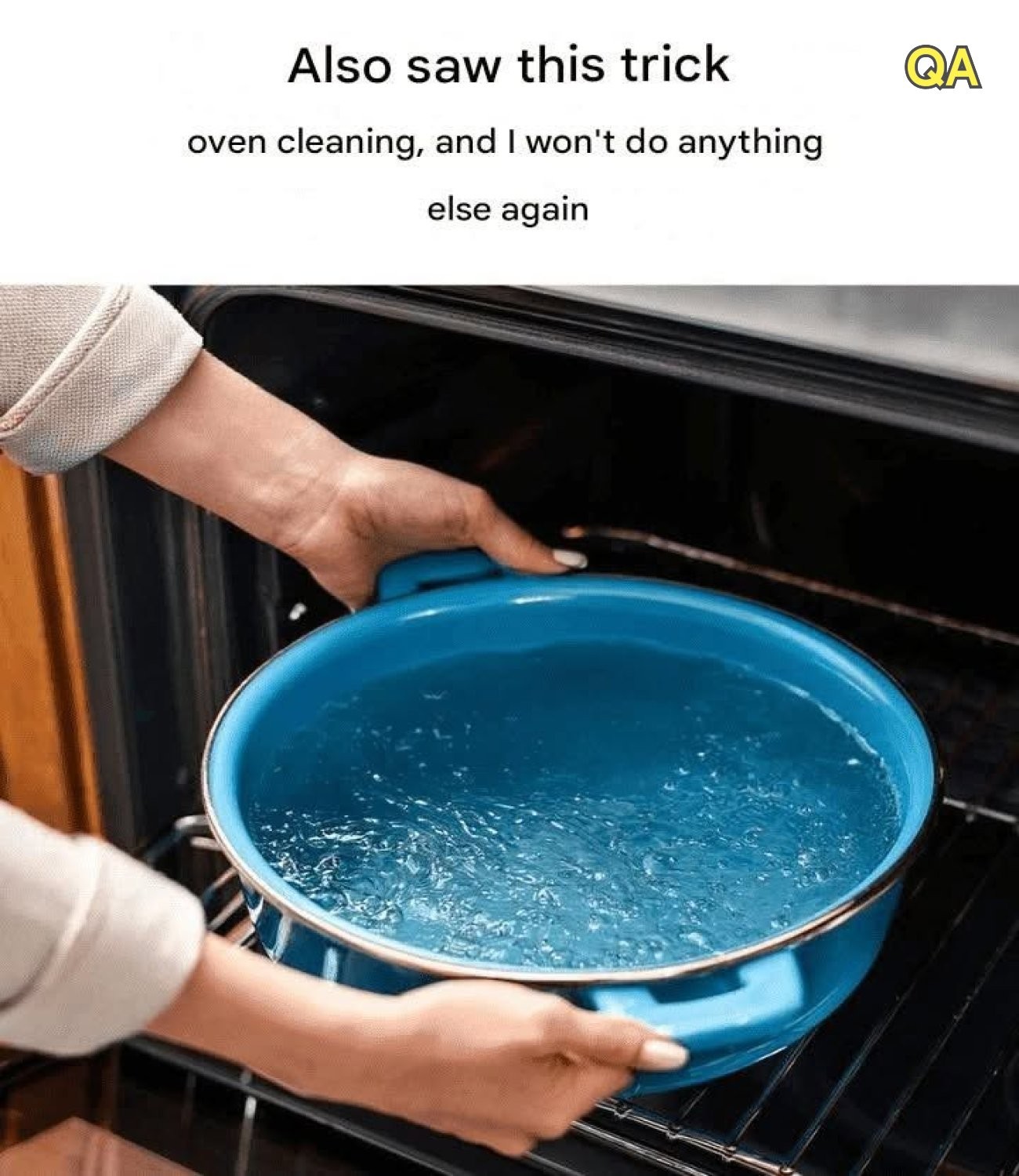
Cleaning an oven is a household task that is easy to delay. Small splatters from roasting, bubbling sauces, melted cheese, and oil from baking trays can gradually become baked onto the oven floor, walls, and door. Once residue has been repeatedly exposed to high heat, it may become harder to remove with a quick wipe.
A simple water-based steam-cleaning method can make routine oven cleaning more manageable. The approach uses heat and moisture to soften fresh or moderate food residue before it is wiped away with a soft cloth or non-abrasive sponge. It is not a replacement for every deep-cleaning method, particularly when an oven has heavy carbonised deposits, but it can reduce the amount of scrubbing needed for regular maintenance.
The key consideration is safety. Ovens differ in their interior coatings, cleaning systems, and manufacturer instructions. Before using water in a heated oven, check the appliance manual to confirm whether it has a steam-clean function or permits a manual steam-cleaning approach. Following the manufacturer’s guidance is especially important for self-cleaning, pyrolytic, convection, and specialty ovens.
Why Oven Grease and Food Residue Become Difficult to Remove
Oven grime is usually a mixture of food particles, fats, sugars, sauces, and cooking oils. When spills remain in the oven, they are heated repeatedly during later cooking sessions. Over time, this can dry and harden the residue onto interior surfaces.
Grease is particularly challenging because it can spread in a thin layer and capture dust or food particles. Sugary foods can also leave stubborn marks when they boil over or caramelise. The longer these deposits remain exposed to heat, the more effort they may require to remove.
Steam does not chemically dissolve every type of baked-on residue. Instead, warm water vapour raises humidity inside the oven and can help rehydrate or soften certain deposits. This makes the residue easier to lift with gentle wiping. The method works best as preventive maintenance or for relatively recent spills, rather than as a guaranteed solution for severe buildup.
How Water-Based Oven Steam Cleaning Works
When water is heated in an oven-safe dish, it produces water vapour. In a closed oven cavity, the warm moisture can settle on interior surfaces and help soften dried food particles. After the oven has been switched off and allowed to cool to a safe temperature, the loosened residue may wipe away more easily.
Many modern appliances include a dedicated steam-clean setting. These programmes commonly use a relatively low-temperature cleaning cycle and a shallow amount of water placed in a specified part of the oven. Instructions vary by brand and model, so the manual should always take priority over general online cleaning advice.
If an oven does not have a steam-clean programme, a manual method may be suitable only where the manufacturer allows it. Never assume that a method recommended for one appliance is appropriate for another. Some surfaces, seals, components, and door designs have specific care requirements.
What You Need for a Basic Oven Steam-Cleaning Method
A water-based approach requires only a few supplies. Avoid introducing extra ingredients unless the appliance manufacturer specifically recommends them.
- Clean water: Plain water is usually sufficient for creating steam.
- An oven-safe dish: Use a sturdy glass, ceramic, or metal dish that is explicitly rated for oven use.
- A soft microfibre cloth or sponge: These are suitable for wiping softened grime without harsh abrasion.
- A non-abrasive plastic scraper: This may help lift small stubborn areas if the oven manual permits it.
- Protective oven gloves: These are useful when handling hot cookware, though the dish should be removed only when it is safe to do so.
Do not use a cracked dish, a container not designed for oven temperatures, or a vessel filled so high that water could spill. Hot water and steam can cause burns, while spills may create additional cleaning work or damage unsuitable materials.
Step-by-Step Guide to Steam Cleaning an Oven Safely
1. Read the Appliance Manual First
Start with the oven’s care and use guide. Look for sections on steam cleaning, manual cleaning, self-cleaning cycles, approved cleaners, and prohibited materials. A built-in steam-clean cycle should be used exactly as described by the manufacturer.
If the manual advises against placing water in the oven cavity or against using a particular cleaning method, follow that instruction. Manufacturer guidance is more reliable than general cleaning trends because it is specific to the appliance’s materials and design.
2. Begin With a Completely Cool Oven
Never add water to an oven that is still hot from cooking. Allow the oven and its racks to cool fully first. Pouring cool water onto hot glass, enamel, or metal surfaces can create a sudden temperature change, which may damage materials. Starting with a cool appliance also lowers the risk of steam burns.
Remove oven racks, trays, thermometers, and any other removable accessories if the manual recommends doing so. Use a dry cloth, soft brush, or handheld vacuum suitable for household crumbs to remove loose food particles from the base of the oven.
3. Place Water in an Oven-Safe Dish
Fill an oven-safe dish with water, leaving enough space at the top to reduce the chance of splashing or overflow. Position it carefully on a stable rack. If your oven has a dedicated steam-clean system, follow its instructions on the correct water amount and placement instead of using a separate bowl.
Plain water is the simplest choice. It creates the moisture needed for the process without leaving behind additional substances that may be unsuitable for particular oven surfaces.
4. Use the Recommended Steam-Clean Setting or Temperature
If the oven has a steam-clean programme, select that cycle and allow it to run for the stated time. For a manual technique permitted by the manufacturer, use only the temperature and duration specified in its guidance. There is no universal setting that is safe or effective for every oven.
Keep the oven door closed while the cycle is operating. Opening it can release hot vapour quickly and increase the risk of burns. Children and pets should be kept away from the appliance during heating and cooling.
5. Allow the Oven to Cool Before Wiping
When the cleaning cycle has ended, turn off the oven and wait until the interior is cool enough to clean safely. This step should not be rushed. The dish and any remaining water may stay hot for some time, and steam can escape when the door is opened.
Use care when opening the door, standing slightly to one side rather than directly in front of it. Follow the appliance manual’s advice on removing the water dish. If there is any uncertainty about whether it is safe to handle, allow more cooling time.
6. Wipe Down the Interior Gently
Once the oven is safely cool, use a damp soft cloth or non-abrasive sponge to wipe the interior surfaces. Work gradually around the floor, side walls, back wall, and inside of the door. The aim is to lift softened residue without damaging enamel, glass, heating elements, gaskets, or protective coatings.
For a stubborn small patch, gently repeat the wiping process. A plastic scraper may be appropriate for some oven surfaces, but only if the manufacturer allows it. Avoid steel wool, abrasive scouring pads, sharp metal blades, or forceful scraping. These products can scratch surfaces and may make future residue more likely to stick.
7. Dry the Oven and Replace the Racks
Finish with a clean, dry cloth to remove excess moisture. Let the interior air-dry completely before using the oven again. Replace racks and accessories only when they are clean and dry. This final step helps ensure that leftover moisture does not remain trapped around components or door seals.
Does Steam Cleaning Remove All Baked-On Grease?
Steam cleaning can be effective for light grease, fresh splatters, and ordinary food residue. It is especially useful when performed regularly, before spills have been repeatedly heated. The moisture can make wiping less laborious and may reduce the need for stronger cleaning products during routine care.
However, it has clear limits. Thick layers of old grease, dark carbonised residue, and heavily baked-on spills may not come off after one steam-cleaning cycle. In these cases, the oven may require repeated gentle cleaning or a cleaning product approved for that specific model.
Self-cleaning ovens require particular attention. Pyrolytic self-cleaning cycles use very high temperatures to turn food residue into ash, and they are different from lower-temperature steam-clean functions. Consult the manual before using any additional cleaner or attempting to combine cleaning methods. Some manufacturers caution against using commercial oven cleaners in self-cleaning ovens because they may harm interior finishes or components.
Should You Add Vinegar, Baking Soda, or Other Ingredients?
Homemade cleaning advice often suggests adding vinegar, baking soda, lemon, or dishwashing liquid to oven-cleaning routines. These ingredients are not automatically appropriate for every appliance. Vinegar is acidic, while baking soda is mildly abrasive when used as a paste. Either may be unsuitable for certain coatings, seals, or manufacturer-approved cleaning systems.
Most importantly, household cleaning products should never be mixed casually. The United States Centers for Disease Control and Prevention warns that bleach should not be mixed with other cleaners or disinfectants. Combining bleach with acids, including vinegar, can produce dangerous gases. Store cleaning products in their original containers, read labels carefully, and use good ventilation whenever an approved cleaning product is needed.
For a steam-based method, water alone is generally the most straightforward option. If an oven remains greasy after steaming, consult the appliance manual for a compatible cleaner rather than experimenting with mixtures.
How to Keep an Oven Cleaner Between Deep Cleans
Regular small habits are usually more effective than waiting for severe buildup. A cleaner oven can also make it easier to notice spills before they become difficult to remove.
- Wipe fresh spills after cooling: Clean up drips and splashes once the oven is safely cool, before they are baked on during the next use.
- Use suitable cookware: Choose roasting pans, baking sheets, and casserole dishes with adequate depth to contain liquids and fats.
- Place trays carefully: Ensure dishes are level and leave enough room for food to expand without overflowing.
- Inspect the oven regularly: A quick check after roasting or baking can identify residue early.
- Clean racks separately if permitted: Follow the manual for rack care, as some racks should not be left in place during certain self-clean cycles.
- Avoid lining the oven unless approved: Foil or liners placed in the wrong area can interfere with heat circulation or damage surfaces in some appliances.
When to Use a Professional or Manufacturer-Approved Cleaning Method
If smoke, unusual odours, damaged enamel, a malfunctioning door seal, or persistent residue affects normal oven use, review the manufacturer’s support information or contact a qualified appliance technician. Cleaning should not involve dismantling heating elements, electrical components, or gas connections.
For day-to-day cleaning, a water-based steam method can be a practical, low-cost first step when it is approved for the appliance. Its greatest value is not as a miracle cure for every stain, but as a gentle maintenance technique that helps prevent ordinary grease and food residue from becoming a larger task.
Final Thoughts on Steam Cleaning an Oven
The simple oven-cleaning trick is to use warm moisture strategically: steam can soften everyday grime and make it easier to wipe away. It is a useful approach for people who want to reduce aggressive scrubbing and maintain their oven more consistently.
Success depends on realistic expectations and safe practice. Steam cleaning is most useful for light-to-moderate residue, while severe baked-on grease may need additional manufacturer-approved treatment. Always consult the manual, use an oven-safe container, let the appliance cool fully, and avoid mixing household chemicals.
With routine attention to spills and periodic gentle cleaning, oven maintenance can become less time-consuming and more manageable.
Sources
Disclaimer: This content is intended for entertainment purposes only and is not based on real events.