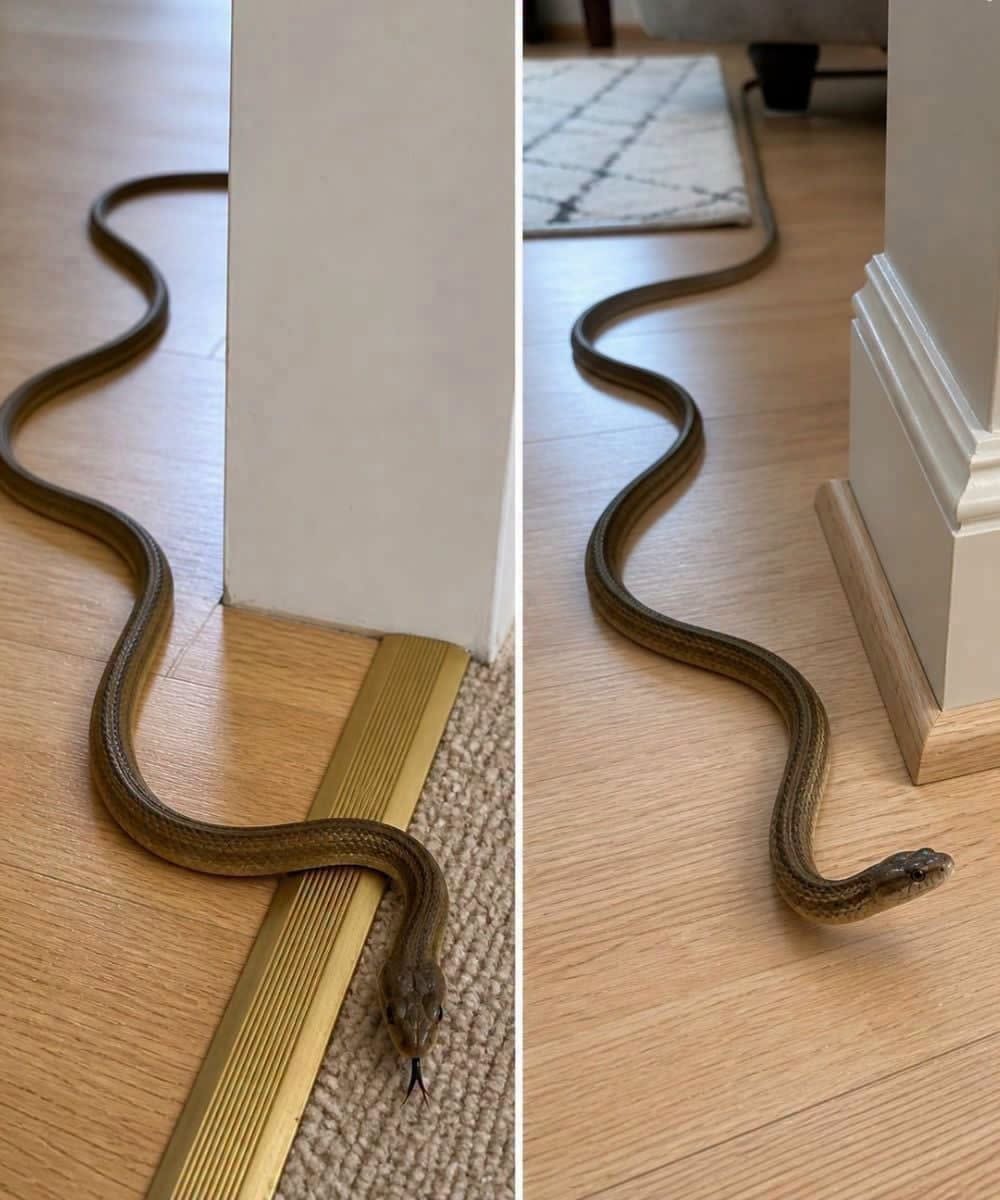
Imagine walking into your home on an ordinary afternoon. Everything feels familiar and peaceful until you notice something unexpected near a doorway, storage area, or corner of the room. A long shape moves quietly, and for a moment, your entire attention is focused on one question: could there really be a snake inside?
For many homeowners, this situation creates immediate surprise. Snakes have been part of human stories and imagination for thousands of years, often appearing as mysterious creatures connected with nature, transformation, and the unknown. However, from a scientific perspective, a snake entering a home is usually not a dramatic event. It is often a simple example of an animal responding to its environment.
Understanding why snakes enter houses helps people replace fear with knowledge. These reptiles are usually searching for basic needs such as shelter, suitable temperatures, water, and food. Learning about their behavior can help homeowners respond calmly and reduce future encounters.
Why Would a Snake Enter a House?
A home may seem like an unusual place for wildlife, but from an animal’s perspective, buildings can sometimes provide the same things found in natural habitats.
Snakes are not typically entering homes because of people. Instead, they are often following environmental conditions that make an area attractive.
Small openings around buildings can create pathways. Gaps near doors, spaces around pipes, damaged screens, cracks, garages, and storage areas can sometimes provide access points.
Once inside, snakes may find quiet places where they can remain hidden. Dark corners, unused rooms, piles of stored materials, and sheltered spaces can feel similar to natural hiding areas.
The reason for entering is often connected to survival rather than curiosity.
.png?fit=max&ixlib=php-4.1.0&w=2000)
The Search for Food and Shelter
One of the biggest reasons wildlife enters human spaces is the availability of resources.
Snakes are predators that feed on smaller animals. If an area has insects, rodents, or other small creatures, it may naturally attract snakes looking for food.
This does not mean that every snake sighting indicates a serious problem. In many cases, the animal is simply moving through an area where conditions happen to be favorable.
A property with fewer hiding places and fewer food sources is generally less attractive to many types of wildlife.
Keeping storage areas organized, reducing outdoor clutter, and managing common household pests can help make homes less appealing to unexpected animal visitors.
Weather and Seasonal Changes
Environmental conditions influence animal behavior. Snakes, like many reptiles, respond to changes in temperature because they depend on outside conditions to regulate their body temperature.
During very warm periods, some snakes may search for cooler locations. During cooler seasons, they may look for protected areas that offer warmth and shelter.
A house can accidentally provide these conditions. Spaces under buildings, garages, basements, and sheltered areas may feel comfortable compared with the outdoor environment.
What appears unusual to humans may simply be a normal response from an animal adapting to changing surroundings.
Cultural Views of Snakes Around the World
Snakes have held many different meanings across cultures throughout history.
Some traditions view snakes as symbols of renewal, wisdom, or transformation because of their ability to shed their skin. Other stories portray them as mysterious creatures connected with nature and hidden knowledge.
These cultural interpretations show how strongly humans have been fascinated by snakes. Their quiet movement, unusual appearance, and connection with the natural world have inspired countless stories and artistic traditions.
Modern science approaches snakes differently. Researchers study their biology, behavior, and role in ecosystems to better understand their place in nature.
Both perspectives reveal something important: snakes have always captured human attention.

What to Do If You Find a Snake Indoors
Seeing a snake inside your home can be surprising, but a calm response is usually the best approach.
The first priority is creating distance. Avoid trying to touch, corner, or catch the animal. Like many wild creatures, a snake may react defensively if it feels threatened.
If possible, keep children and pets away from the area. Giving the animal space reduces stress for both the snake and the people nearby.
In situations where identification is uncertain, contacting local wildlife services or trained professionals can be a safer option. They have experience handling different species and can help remove the animal appropriately.
Avoid approaching unfamiliar wildlife closely. Many animals can be difficult to identify without proper training, and keeping distance allows for a safer solution.
Preventing Future Snake Encounters
After a snake has left or been safely removed, prevention becomes the main focus.
Homeowners can reduce the chances of future encounters by making the environment less attractive to wildlife.
Helpful steps include:
Inspecting the outside of the home for gaps or openings
Repairing damaged screens and sealing entry points
Keeping storage spaces organized
Reducing unnecessary outdoor debris
Maintaining areas around the home
Addressing common pest issues
These steps do not only help with snakes. They can also reduce visits from other wildlife looking for shelter.

Snakes and the Balance of Nature
Although people may feel surprised when they encounter snakes, these reptiles play important roles in ecosystems.
Snakes are part of natural food chains and can help maintain balance among different animal populations.
Learning about wildlife encourages people to see animals as part of the larger environment rather than as something completely separate from human life.
As cities and neighborhoods expand, interactions between people and wildlife become more common. Understanding animal behavior helps communities coexist more effectively.
Replacing Fear With Understanding
Many fears come from uncertainty. When people do not understand why an animal behaves a certain way, the situation can feel more alarming.
Knowledge changes that perspective.
A snake entering a home is usually not a mysterious event. It is often the result of simple environmental factors: shelter, food, temperature, and access points.
By learning how wildlife behaves, homeowners can make better decisions and respond with awareness rather than panic.
Conclusion: Curiosity Helps Us Live Alongside Nature
A snake appearing in a home may create an unforgettable moment, but the story behind it is often much simpler than people imagine. These reptiles are usually responding to their surroundings and searching for basic needs rather than seeking interaction with humans.
Throughout history, snakes have inspired myths, traditions, and scientific curiosity. They remind us that the natural world exists all around us, even near our own homes.
The most valuable response is not fear, but understanding. When we learn why animals behave the way they do, we become better prepared to share our spaces with the wildlife around us.
Sources
National Geographic. Educational resources on reptiles, animal behavior, and ecosystems.
Smithsonian National Museum of Natural History. Information on biodiversity and reptile biology.
Encyclopaedia Britannica. Reference materials on snakes, reptiles, and natural history.
National Wildlife Federation. Wildlife education resources and human-wildlife interaction guidance.