The Hidden History of WD-40: Why That Blue-and-Yellow Can Is Actually a Cold War Miracle
September 29, 2026

Introduction: Everyday Items and Their Unexpected Origins
Every household or workspace contains items that are so familiar, they almost fade into the background. Duct tape, flashlights, screwdrivers, and the unmistakable blue-and-yellow can of WD-40 are part of our daily routines and maintenance rituals. While their use is often taken for granted, the stories behind these items can be unexpectedly complex.
Of these, WD-40 stands out as a product with a unique history, its ubiquity matched only by the mystery surrounding its origin. Far from a mere garage staple, WD-40’s genesis is intimately linked to one of the twentieth century’s most dramatic periods: the Cold War era.
The Birth of WD-40: An Aerospace Solution
WD-40 wasn’t created for households or even automobiles. The product’s roots trace back to 1953, when it was developed in San Diego, California, by a group of chemists at the Rocket Chemical Company. Their original mission was to devise a formula capable of preventing corrosion and rust on the Atlas missiles, a key component of the United States’ arsenal during the early Cold War. The urgency of the task was driven by the specific needs of the military and aerospace industry, where malfunctioning equipment could have serious implications for national security.
The Atlas missiles were among the first intercontinental ballistic missiles deployed by the U.S. Air Force. These missiles, which were pivotal in the deterrence strategies of the Cold War, faced a significant problem: corrosion and rust from moist coastal air threatened their operational reliability. Protecting them from these environmental hazards became a priority for engineers and scientists at the Rocket Chemical Company.
The Meaning Behind the Name: An Exercise in Persistence
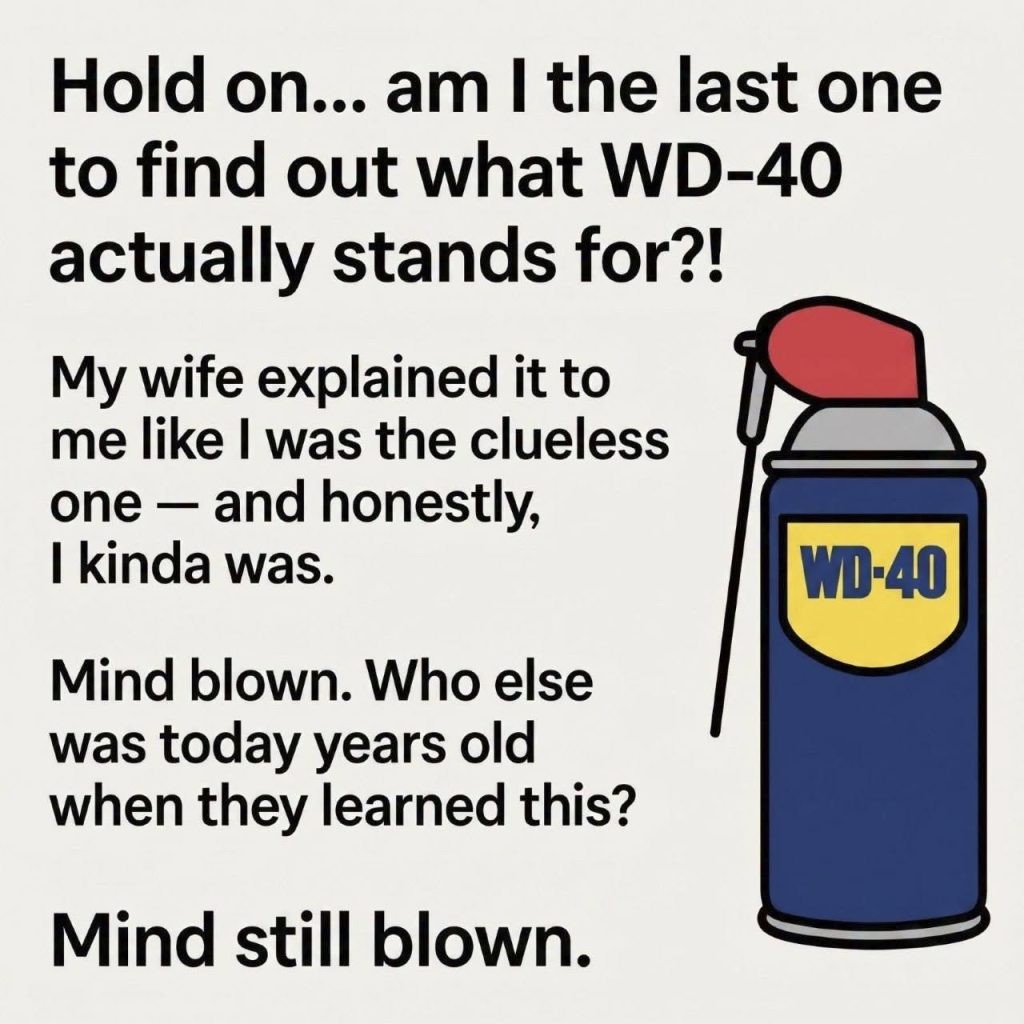
In pursuit of a perfect formula, the team experimented with numerous chemical combinations. The result would eventually become WD-40—standing for “Water Displacement, 40th formula.” As its name succinctly reveals, the successful formula was the team’s 40th attempt. This iterative process is a testament to scientific problem-solving and persistence—reminiscent of countless innovations whose success depended on meticulous trial-and-error work.
The formula was never patented, a decision made to preserve its secrecy rather than expose its specifics. Even today, the exact recipe remains a closely guarded trade secret, giving WD-40 an air of mystique.
From the Missile Program to Mainstream Adoption
For several years, WD-40 was used exclusively by the military and defense contractors, especially those dealing with the Atlas missile program. Its ability to displace moisture, prevent corrosion, and lubricate metal made it invaluable for maintaining missile components and other sensitive hardware.
The transition from specialized military tool to household favorite began when the Rocket Chemical Company recognized WD-40’s broader potential. By the late 1950s, the company began selling WD-40 in consumer-sized cans, targeting the automotive and industrial markets. The product was marketed as an all-purpose lubricant, moisture protectant, and corrosion inhibitor.
Cultural Impact: WD-40 Becomes a Household Name
The migration of WD-40 from military use to the average garage was rapid. Its practicality for a wide range of applications—loosening stuck bolts, silencing squeaky hinges, and cleaning metal surfaces—helped ensure its place in American homes. The blue-and-yellow can quickly became a fixture in workshops, kitchens, and sheds across the country.
WD-40’s reputation grew through word-of-mouth and testimonials, as people discovered new uses beyond the original intentions. From lubricating bicycles to restoring garden tools and even untangling fishing lines, its versatility was widely recognized. The brand smartly encouraged these stories, collecting and sharing customer-submitted accounts of innovative WD-40 uses.
Today, WD-40 is available in more than 176 countries and territories, with countless applications documented by professional mechanics, hobbyists, and everyday consumers alike.
Science and Technology: Why Is WD-40 So Effective?
The effectiveness of WD-40 stems from its blend of chemicals designed to penetrate, lubricate, and protect. While the exact formula remains secret, experts generally agree that it includes a mix of mineral oil, hydrocarbons, and other agents tailored for corrosion prevention and water displacement.
WD-40 does not rely solely on lubrication; its primary function is as a water displacement agent, which allows it to repel moisture, prevent rust, and improve the performance of metal surfaces. Unlike heavier greases or oils, WD-40 evaporates slowly, leaving a thin, protective film that does not build up or gum surfaces.
In scientific and industrial communities, WD-40 is respected for its consistency, reliability, and flexibility. Its use within aerospace and engineering sectors paved the way for continued research into corrosion-resistant technologies, influencing the development of similar products and standard maintenance practices.
Global Reach and Economic Significance
WD-40’s global popularity is more than a household phenomenon—it’s an economic story about innovation, branding, and consumer trust. The WD-40 Company, headquartered in San Diego, has become a case study in successful product marketing. Its decision to focus on quality and customer engagement, rather than overwhelming consumers with a multitude of product variations, has helped them maintain strong brand recognition.
With annual revenues in the hundreds of millions, WD-40 continues to expand its product line, offering specialized variations (such as WD-40 Specialist) for automotive, industrial, and marine applications. Despite competition, WD-40’s brand leadership remains unchallenged largely because of its proven formula and consistent results.
Expert Perspectives and Industrial Applications
Industry specialists, mechanics, and engineers regularly praise WD-40 for its simplicity and reliability. According to experts, the product’s ability to displace moisture is its most critical feature, especially in climates where humidity and corrosion threaten expensive equipment and infrastructure.
Scientific journals have documented the improvements WD-40 enabled in maintenance routines for everything from aerospace hardware to manufacturing equipment. Its use in preventing rust has contributed to longer lifespans for machinery, safer working conditions, and reduced repair costs across many industries.
While WD-40 is sometimes mistakenly used for applications it wasn’t designed for—such as firearms or bike chains—experts advise understanding its strengths and limitations. For example, while WD-40 can clean and free stuck parts, it is not suitable as a heavy-duty lubricant for high-friction mechanisms.
Societal and International Reactions
WD-40 is respected not only in the United States but also internationally. Governments, military agencies, and private companies in Europe, Asia, Africa, and Australia utilize WD-40 in maintenance routines. Its worldwide distribution reflects global trust in its formula and performance.
Societal reactions to WD-40’s rise are often enthusiastic, with many seeing the product as a symbol of ingenuity and practical problem-solving. Its presence in “life hack” lists and do-it-yourself guides demonstrates the universal appeal of simple tools with broad applications.
WD-40’s environmental impact is regularly assessed, with the company emphasizing compliance with regulations and responsible usage. As societies become more conscious of chemical safety and sustainability, WD-40 Company continues to adapt its practices in manufacturing and packaging to minimize environmental footprint.
Conclusion: WD-40’s Enduring Legacy
WD-40’s journey from a Cold War innovation to a household essential encapsulates the intersection of science, technology, and everyday life. Its unique story reflects both the ingenuity of postwar American industry and the adaptability of useful products as they migrate from specialized fields to mainstream use. Its legacy is built on persistence, practical research, and a commitment to customer-driven innovation.
Next time you reach for WD-40, remember you are using a product shaped by history, advanced by science, and embraced by millions around the globe—a small can with a big story.
Sources
Disclaimer: This content is intended for entertainment purposes only and is not based on real events.