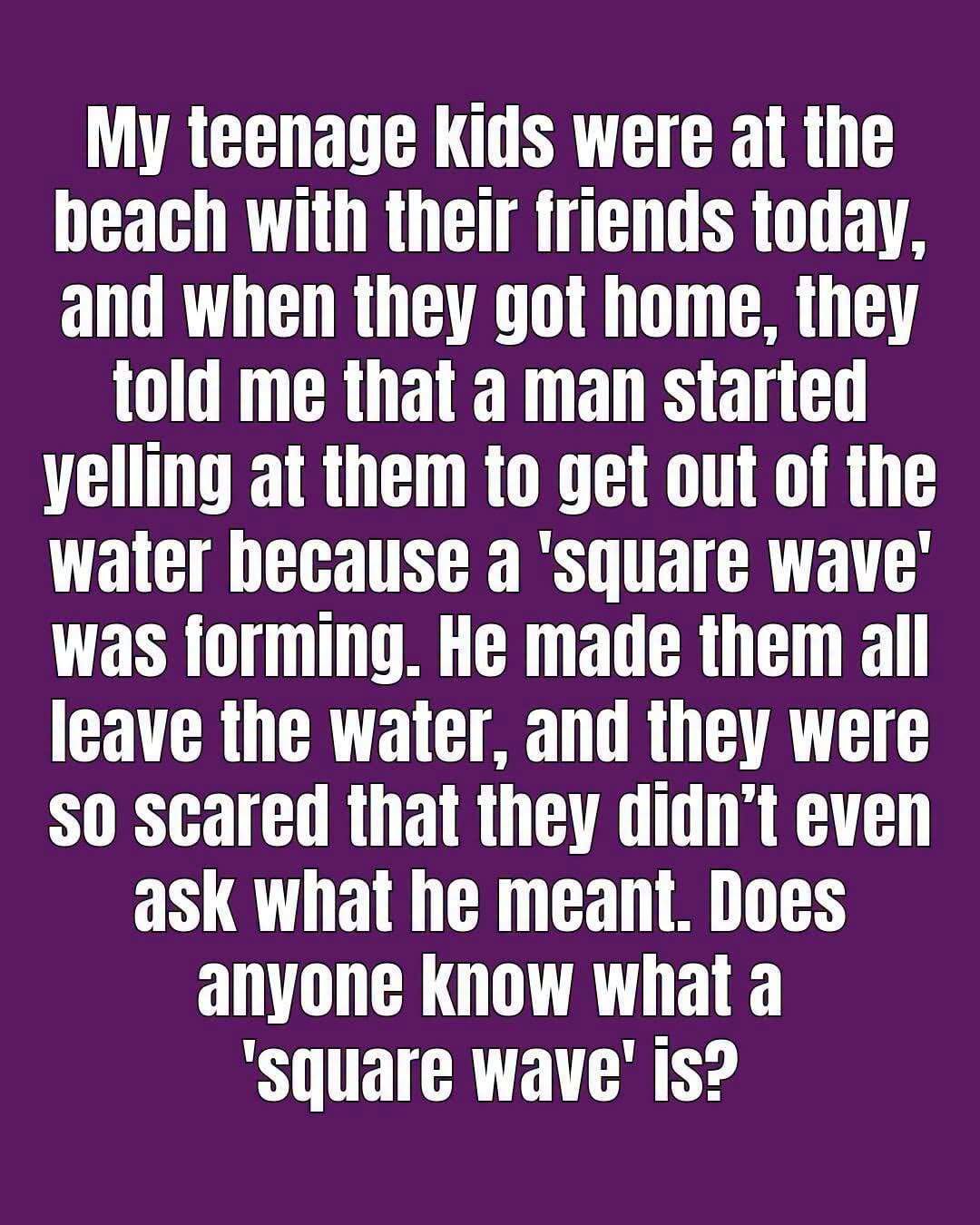
You are standing on a beach when something unusual catches your attention.
Instead of rolling toward the shore in the familiar rhythm of ordinary waves, the ocean appears to form a giant grid. Lines of water seem to cross one another at almost perfect angles, creating square or diamond-shaped patterns across the surface.
The scene can look almost too organized to be natural.
But this unusual appearance has a scientific explanation. What are commonly called “square waves” are usually the visible result of different wave systems traveling in different directions and interacting with one another.
Although the pattern can be fascinating to watch, it is also a useful reminder that ocean conditions can change quickly and that the surface does not always reveal how much energy is moving through the water.
What Are Square Waves?
The term “square waves” is commonly used to describe a sea state in which two sets of waves cross at an angle, creating a distinctive checkerboard or grid-like appearance.
Scientists generally refer to this phenomenon as a cross sea.
Rather than representing a single unusual type of wave, the pattern develops when wave systems moving in different directions overlap.
One set of waves may be generated by local winds, while another swell may have traveled a considerable distance from a distant weather system.
When the two systems meet, their interaction can create the geometric appearance that people recognize as square waves.
The individual waves themselves are not actually square.
It is the arrangement of several wave systems that creates the visual illusion.
How Does a Cross Sea Form?
The ocean is rarely influenced by only one source of wave energy.
Wind blowing across the surface transfers energy into the water and produces waves. When weather conditions change, older waves can continue traveling even after the wind that created them has weakened.
These waves, known as swells, can travel long distances.
At the same time, another weather system may generate a new wave pattern from a different direction.
When these two systems eventually meet, their crests can intersect.
From above or from the shoreline, the crossing waves may produce a remarkably regular pattern.
The phenomenon can be especially noticeable when the two wave systems have similar wave heights and wavelengths and approach one another at a substantial angle.
Why Does the Ocean Look Like a Grid?
The grid-like appearance comes from the geometry of the intersecting wave systems.
Imagine two groups of parallel lines crossing each other.
Where the lines meet, they create a series of squares or diamond shapes.
Ocean waves can produce a similar visual effect.
The surface rises and falls according to the combined movement of the different wave systems. Depending on the angle and characteristics of the waves, the resulting pattern can look surprisingly organized.
However, the appearance can change quickly as wind direction, wave height, wavelength, and currents change.
What looks like a neat pattern from the beach may therefore disappear within a relatively short period.
Are Square Waves Dangerous?
The unusual appearance itself is not necessarily a sign of an immediate emergency.
However, cross seas can indicate complicated water conditions.
When waves travel in different directions, the surface can become less predictable. Instead of experiencing a consistent rhythm, swimmers and small boats may encounter waves arriving from more than one direction.
This can make maintaining balance more difficult.
For inexperienced swimmers, changing wave directions may also make it harder to judge when to enter or leave the water.
Small boats can experience additional movement as waves approach from different angles, making navigation more challenging.
The important point is that the pattern should not be treated as a harmless visual curiosity simply because it looks calm from a distance.
What Happens Beneath the Surface?
One reason cross seas can be difficult to interpret is that the visible surface tells only part of the story.
Ocean waves involve the movement of energy through the water.
As different wave systems pass through the same area, their combined effects can produce changing surface conditions.
At one moment, the sea may appear relatively orderly.
A few moments later, a larger wave can arrive from another direction.
This is why experienced water users pay attention not only to individual waves but also to the overall sea state, wind conditions, currents, weather forecasts, and local warnings.
Where Are Square Waves Seen?
Cross seas can occur in many parts of the world’s oceans.
They are not limited to a single location.
The phenomenon can develop wherever different wave systems meet, particularly in areas influenced by changing weather patterns, distant swells, or shifting winds.
Some coastal locations become well known for photographs of cross seas because local geography and prevailing weather conditions can make the phenomenon more visible.
One frequently discussed location is the Île de Ré area near the French Atlantic coast, where unusual wave patterns have occasionally attracted attention.
However, seeing a cross sea is not evidence that a particular location is always dangerous or that the phenomenon occurs there continuously.
Ocean conditions are constantly changing.
Why Photos Can Make Square Waves Look More Dramatic
Many photographs of cross seas are taken from elevated viewpoints.
From above, the intersecting wave systems become much easier to see.
A photograph can therefore make the ocean appear almost perfectly geometric.
From water level, the same conditions may simply look like an unusually choppy sea.
This difference in perspective explains why some images of square waves seem almost impossible.
The ocean is not forming perfect geometric shapes.
The camera is capturing the interaction of several wave patterns from a particular angle.
What Should You Do If You See Square Waves?
The safest response is to observe the conditions rather than immediately entering the water.
If you are on the beach and notice a cross-sea pattern developing, take the opportunity to watch it from a safe location.
Before swimming, check local conditions and pay attention to lifeguard instructions, warning flags, weather information, and beach closures.
If you are already in the water and conditions begin changing unexpectedly, remain calm and move toward a safe exit according to local guidance.
People using small boats, kayaks, or other watercraft should also consider whether the conditions are appropriate for their experience and equipment.
The important principle is simple: unusual water conditions deserve extra attention.
Can You Predict Square Waves?
Modern weather forecasting can provide useful information about wind direction, swell direction, wave height, and other conditions that influence the formation of cross seas.
However, predicting the exact appearance of a particular wave pattern at a particular moment can be more complicated.
Ocean conditions depend on multiple interacting factors.
Wind speed and direction can change.
Distant swells can arrive from different directions.
Currents and coastal geography can influence the way waves behave.
For this reason, a forecast should be treated as one part of a broader assessment rather than a guarantee of exactly what the ocean will look like.
Square Waves and Ocean Science
The fascination surrounding square waves demonstrates how much complexity exists in an environment that can appear simple from shore.
The ocean surface may look like a single moving sheet of water, but it is actually the result of countless interacting forces.
Wind, storms, distant swells, currents, tides, and underwater geography all contribute to the constantly changing appearance of the sea.
A cross sea is therefore not a mysterious formation.
It is an impressive example of wave physics becoming visible on a large scale.
Final Thoughts
Square waves may look unusual enough to seem almost unnatural, but their appearance can be explained by ordinary physical processes.
When wave systems from different directions meet, they can create a striking cross-sea pattern that resembles a giant grid across the ocean.
For observers, the sight can be beautiful and fascinating.
For people entering the water, however, it is a useful reminder to pay attention to changing conditions rather than judging the sea solely by its appearance.
The ocean has a remarkable ability to transform familiar patterns into something unexpected.
And perhaps that is what makes phenomena like square waves so captivating. They show that even in an environment humans have studied for centuries, nature can still produce scenes that make us stop, look twice, and wonder how something so unusual can emerge from simple forces working together.