Cannabis Use and Brain Activity: What New Research Shows
Cannabis use has increased in many parts of the world in recent years, shaped by changing laws, wider social acceptance, medical use programs, and growing availability of commercial cannabis products. For some people, cannabis is used to manage symptoms such as chronic pain, nausea, or sleep difficulties. Others use it recreationally. At the same time, public health researchers continue to examine possible risks, especially for adolescents, young adults, frequent users, and people with a personal or family history of mental health conditions.
A growing body of research suggests that cannabis is not risk-free. Its effects can vary substantially according to the amount used, the concentration of tetrahydrocannabinol (THC), the age at which a person begins using it, frequency of use, method of consumption, and individual health factors. One recent brain-imaging study has added to concerns about the relationship between cannabis use and working memory, a cognitive skill used in everyday decision-making, learning, and problem-solving.
Why Cannabis Research Has Become More Important
The policy debate around cannabis has changed significantly over the past decade. Several countries and U.S. states have introduced medical cannabis programs, decriminalized possession, or established regulated adult-use markets. These changes have made research more important, not less. Better scientific evidence is needed to help patients, clinicians, policymakers, parents, and consumers understand both the potential medical applications and the possible harms.
In the United States, federal restrictions have historically made cannabis research more difficult than research involving many other substances. Discussions about changing cannabis scheduling and expanding scientific access have focused on whether researchers can more easily study potential therapeutic benefits, product safety, dosing, dependence, and long-term health outcomes. However, changes in policy or scheduling do not mean cannabis is harmless, nor do they establish that every cannabis product has medical value.
Medical experts generally stress the importance of separating regulated, evidence-based treatments from broad claims about cannabis. Cannabinoid-based medicines may be appropriate for specific conditions under medical supervision, but this does not automatically mean that smoking, vaping, or consuming high-THC products is safe or effective for everyone.
Study Examines Cannabis Use and Working Memory
Research published in JAMA Network Open examined associations between cannabis use and brain activity during tasks designed to measure cognitive functioning. The analysis included young adults between the ages of 22 and 36 and used functional magnetic resonance imaging, often called fMRI, to observe patterns of brain activity while participants completed several cognitive tasks.
The researchers assessed a range of areas, including working memory, reward processing, emotion-related tasks, language, motor function, relational processing, and social cognition. After using rigorous statistical methods to reduce the likelihood of chance findings, the clearest association was observed during a working-memory task.
Participants with a history of heavy cannabis use showed lower brain activation in regions involved in working memory. Recent cannabis use was also associated with differences in activity during the same type of task. The study does not prove that cannabis directly caused these brain differences. Because it is observational, other factors may contribute, including alcohol or tobacco use, sleep, mental health, education, social circumstances, or pre-existing cognitive differences.

Even with those limitations, the findings are important because working memory plays a central role in daily life. It helps people temporarily hold and use information. For example, working memory is involved when following multistep instructions, comparing prices while shopping, calculating a tip, understanding a complex sentence, planning a route, or keeping track of several tasks at work.
What Working Memory Means in Everyday Life
Working memory is sometimes described as the brain’s mental workspace. It is not simply the ability to remember past events. Instead, it supports the active processing of information in the present moment. Strong working memory can help with attention, reasoning, reading comprehension, academic performance, and decision-making.
Short-term changes in attention and memory are among the better-known effects of THC intoxication. A person who is currently under the influence of cannabis may have difficulty concentrating, learning new information, reacting quickly, or judging time and distance accurately. This is one reason health authorities advise against driving, operating machinery, or undertaking safety-sensitive work after using cannabis.
Questions about longer-term effects are more complex. Studies have produced differing results because cannabis use patterns vary widely and because it is difficult to separate cannabis exposure from other influences. Nevertheless, evidence is strongest for concern when cannabis use begins early, occurs frequently, involves high-THC products, or is associated with cannabis use disorder.
Joshua Gowin, PhD, the study’s first author, emphasized the value of researching both potential benefits and risks as cannabis use becomes more common. That balanced approach is essential. Public discussion can sometimes swing between two oversimplified messages: that cannabis is completely safe, or that it is uniquely dangerous. The scientific reality is more nuanced. Cannabis can have medical relevance in selected settings, but it can also create meaningful risks for some users.
Brain Networks, Focus, and Cognitive Performance
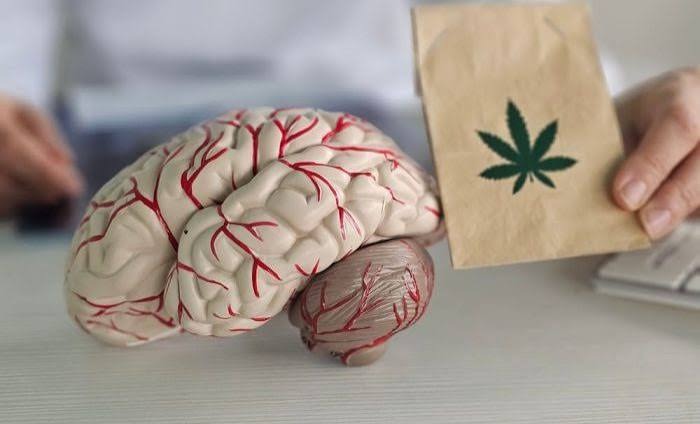
Brain-imaging studies do not provide a simple picture of a “damaged” or “healthy” brain. They measure changes in blood flow related to neural activity, and those measurements must be interpreted carefully. Reduced or altered activation during a task may reflect differences in efficiency, attention, task strategy, recent substance exposure, or other factors. It should not be treated as a diagnosis for an individual person.
Still, researchers are interested in how cannabis may relate to communication among brain networks involved in attention, memory, planning, emotional regulation, and self-referential thinking. THC acts on cannabinoid receptors that are widely distributed in the brain. These receptors are part of the endocannabinoid system, which plays a role in processes including mood, appetite, pain signaling, sleep, and memory.
The amount of THC matters. Today’s cannabis products can contain much higher levels of THC than products available decades ago. Concentrates, extracts, and some vape products may have particularly high potency. Higher potency can increase the likelihood of acute impairment and may raise the risk of problematic use for some people, particularly when products are used frequently or in large amounts.

CBD and THC Are Not the Same
Cannabis contains many chemical compounds, including THC and cannabidiol, known as CBD. THC is the primary intoxicating compound and is responsible for the “high” associated with cannabis. CBD does not usually produce intoxication in the same way, but it is not automatically risk-free and can interact with some medications.
There is widespread public interest in whether CBD can reduce unwanted effects of THC. The evidence remains incomplete and depends on the product, dose, ratio of cannabinoids, route of administration, and the individual using it. It is not accurate to assume that CBD reliably cancels out THC-related impairment, anxiety, or psychosis-related risk. Products marketed as containing CBD may also vary in quality and labeling accuracy, especially where regulation is limited.
Consumers should be cautious about broad wellness claims. The U.S. Food and Drug Administration has approved one prescription CBD medicine for certain rare seizure disorders, but it has not approved most over-the-counter CBD products for treating anxiety, pain, insomnia, or other common conditions. People who take prescription medication, are pregnant or breastfeeding, or have liver disease should speak with a qualified healthcare professional before using CBD products.
Cannabis, Psychosis, and Mental Health Risk
One of the most serious areas of concern involves psychosis. Psychosis refers to a loss of contact with reality that can include hallucinations, delusions, severely disorganized thinking, or marked confusion. It is a medical issue that requires prompt professional assessment, particularly when someone may be at risk of harming themselves or others or is unable to care for themselves.
Research has found an association between cannabis use and psychotic disorders, with stronger associations reported among frequent users and users of high-potency cannabis. However, this relationship is not simple. Most people who use cannabis do not develop schizophrenia or another chronic psychotic disorder. At the same time, cannabis may contribute to symptoms or trigger episodes in people who already have a vulnerability due to genetics, personal mental health history, family history, or other environmental factors.
Canadian physician and researcher Dr. Daniel Myran has studied cannabis-related health outcomes, including emergency department visits for cannabis-induced psychosis. His research has helped draw attention to the increase in cannabis-related acute care visits in Ontario over recent years. Such findings do not mean every person who experiences a cannabis-related emergency will develop a long-term condition. They do, however, reinforce the need for clear public information and early access to mental health support.
Young people deserve particular attention. The brain continues to develop through adolescence and into early adulthood. Public health agencies including the U.S. Centers for Disease Control and Prevention state that cannabis use during adolescence can affect attention, memory, learning, and school performance. Early and frequent use is also associated with a greater risk of cannabis use disorder.
Understanding Cannabis Use Disorder
Cannabis use disorder occurs when a person continues using cannabis despite negative effects on health, relationships, school, work, finances, or responsibilities. Signs can include craving, using more than intended, unsuccessful efforts to cut down, spending substantial time obtaining or using cannabis, and continuing despite problems caused or worsened by use.
Dependence can develop, and some people experience withdrawal symptoms when they stop after regular use. These may include irritability, sleep difficulties, lower appetite, restlessness, anxiety, and cravings. Withdrawal is typically not medically dangerous in the way withdrawal from some other substances can be, but it can be uncomfortable and may make reducing use difficult without support.
Evidence-based help is available. A primary care clinician, addiction specialist, mental health professional, or local substance-use service can help a person assess their use and identify treatment options. Behavioral therapies, practical coping strategies, sleep support, and treatment for co-occurring anxiety, depression, or trauma can all be important parts of care.
How to Make More Informed Decisions About Cannabis

People who choose to use cannabis can reduce some risks by avoiding driving or operating machinery while impaired, avoiding mixing cannabis with alcohol or other substances, and being cautious with high-THC products. Edibles require special care because their effects can take longer to begin and may last longer than inhaled cannabis. Taking more before the initial dose has taken effect can lead to unexpectedly intense impairment.
Those with a personal or family history of psychosis, schizophrenia, bipolar disorder, or severe anxiety should discuss cannabis use with a healthcare professional. Pregnant and breastfeeding individuals are also advised by health authorities to avoid cannabis because of potential risks to fetal and infant development. Parents and caregivers should store cannabis products securely and out of the reach of children, especially edible products that may resemble ordinary food or candy.
The latest brain-imaging research adds useful evidence to an evolving scientific conversation. It suggests that heavy and recent cannabis use may be associated with altered brain activity during working-memory tasks. The study should not be interpreted as a final answer to every question about cannabis and cognition, but it supports a cautious, evidence-based approach.
As laws and public attitudes continue to change, reliable health information remains essential. Cannabis may have legitimate medical roles in carefully defined circumstances, yet it can also affect memory, attention, mental health, and daily functioning. Understanding those risks helps individuals make decisions that are informed rather than driven by marketing, stigma, or assumptions.
Sources
- JAMA Network Open: Cannabis Use and Brain Activity Study
- CDC: Cannabis and Health Effects
- World Health Organization: Cannabis Fact Sheet
- U.S. Food and Drug Administration: Cannabis and Cannabis-Derived Products
- Health Canada: Cannabis and Mental Health
- Reuters: Health and Policy Reporting
- BBC News: Health Coverage

Disclaimer: This content is intended for entertainment purposes only and is not based on real events.