
What the ‘G’ on a Stick Shift Means: History, Engineering, and Its Enduring Role
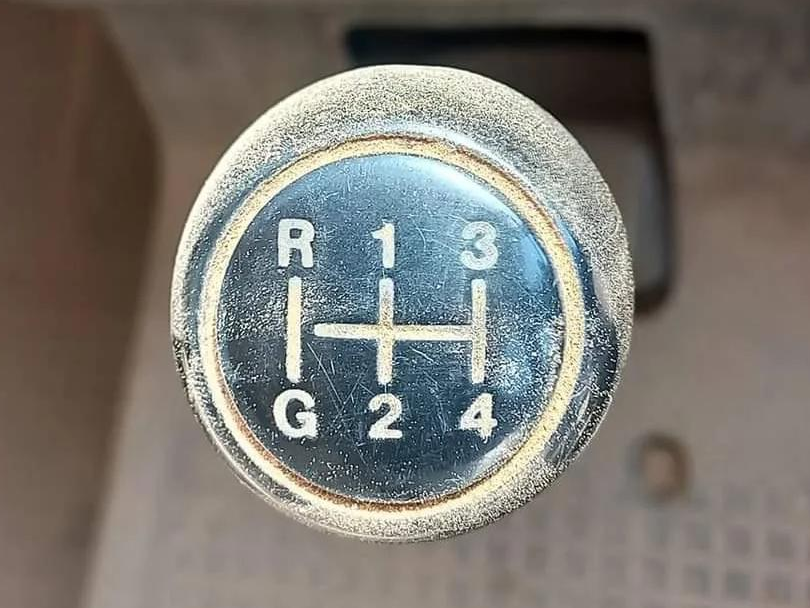
For generations of motorists—particularly among Generation X and the older cohort of Generation Z—the familiar pattern of “1 to 6” gears on a manual transmission and the occasional sports mode on modern cars are universally recognized. Yet, some vehicles, especially those designed for demanding terrain or hailing from earlier decades, feature a distinctive marking: a gear denoted simply by the letter “G.” While seasoned off-roaders may recognize its value, even many experienced drivers remain unaware of its origins or purpose.
The Obscure G Gear: A Window into Automotive History
Understanding where the “G” gear comes from means reviewing more than a century of vehicle engineering, from the manufacturing of trucks to the development of state-of-the-art off-road machines. While it may seem like an outdated or accidental leftover in the age of advanced automatics and hybrid transmissions, the “G” gear is a purpose-built feature that has influenced some of the world’s most iconic vehicles. For many drivers, it is a bygone curiosity, but for those who know it, the gear embodies critical advances in safety and vehicle capability.
What Does the G Gear Stand For?
The “G” gear is an abbreviation for Gelände, the German word for “terrain.” Its automotive heritage is most directly tied to Mercedes-Benz, a German manufacturer famous for its engineering rigor. Mercedes named its renowned Geländewagen (G-Class) after this concept, with Gelände signifying all-terrain capability. The G-Class began as a military commission in the 1970s, and the moniker soon became associated with any special ultra-low gear designed for traversing tough, unpaved, or steep landscapes. Over time, the “G” marking was adopted on a variety of vehicles requiring robust traction and torque at low speeds.
Maximum Torque, Minimal Speed: The Engineering of G Gear
The core function of the G gear is straightforward: to deliver exceptional control and power at extremely low speeds. Activating the G gear engages an ultra-low gear ratio—significantly greater than that of first gear. This amplifies torque at the wheels, making it possible for a vehicle to climb sharp inclines, tow heavy loads from a stationary position, plow through mud or sand, and crawl over rocks with a precision impossible in standard gear ranges. The result is a powerful crawl that is unusable in everyday city or highway driving but essential in conditions where forward momentum is critical to safety and performance. In challenging off-road or work environments, this gear prevents stalling or loss of control—potentially life-saving advantages.
The “Granny Gear”: A Nickname Born From Utility
Within the trucking and agricultural communities, the G gear is more commonly nicknamed the “granny gear” or sometimes “ground gear.” Both terms reflect the gear’s penchant for slow, methodical movement. Automobile magazines like MotorTrend describe the effect as akin to a measured, cautious shuffle—precisely what is required when towing or navigating unstable ground. Despite its gentle name, the granny gear embodies rugged, hardworking engineering, built to address the rigors of moving bulk through obstacles that would otherwise render a typical transmission helpless.
Where the G Gear Ratio Sits in a Manual Transmission
Traditional manual transmissions for commercial vehicles often included this ultra-low gear for carrying massive loads or safely tackling steep, treacherous grades. Technically, G or granny gear ratios typically range from 6.0:1 to over 7.0:1. By comparison, first gear on most modern manuals sits between 3.0:1 and 4.0:1. This difference translates into a crucial mechanical edge, allowing vehicles with relatively moderate engines to move heavy freight up slopes that would otherwise be nearly impossible to ascend without stalling or losing traction. In the early eras of trucking, the absence of such ratios could result in catastrophic loss of control, especially on unstable ground.
A Century of the Granny Gear: From Early Innovation to Modern Use

The story of the granny gear closely follows the evolution of manual transmission itself. In 1894, French innovators Louis-Rene Panhard and Emile Levassor designed a pioneering three-speed manual. By the close of the 19th century, engineers like Louis Renault refined these systems with the invention of the differential axle, improving power distribution and drivability. Early engines severely limited what these transmissions could do, but progress accelerated rapidly. Cadillac’s introduction of the synchronized manual in 1928 was a game changer, making shifting smoother and less demanding. The late 1930s and 1940s saw the rise of semi-automatic and fully automatic transmissions, setting the stage for a technological divergence that would define vehicle performance through the next century.
Heavy Load, Steep Grade: The Commercial Trucking Problem
The need for a granny gear became especially clear as trucking boomed through the 20th century. With vehicles hauling 10,000 to 30,000 pounds or more, routes often led drivers up hazardous hills or across primitive, muddy tracks. Engines in these decades simply did not offer the torque of today’s models; losing momentum on a climb—not uncommon with a laden truck—could spell disaster, as even braking systems sometimes failed to check the backward slide of a fully loaded vehicle. For safety and practicality, ultra-low transmission ratios became an industry necessity, granting drivers the leverage to get moving under virtually any conditions.
Industry Response: Granny Gear Becomes Standard
Truck manufacturers responded by engineering transmissions that featured a dedicated ultra-low gear at the bottom of the shift sequence. This allowed drivers to get heavy loads moving without risking a stall. Once moving, drivers would double-clutch through the traditional gears. Major automakers including Ford, GM, and Ram equipped manual transmissions in their workhorses with first-gear ratios between 5.0:1 and 6.0:1 until the close of the 20th century. For generations, mastering the use of the G gear was a rite of passage for professional truckers and essential for those traversing the most difficult roads.
The NP435: An Icon of the Granny Gear Era
Among American trucks, Ford’s NP435 transmission exemplifies the utility-driven design of granny gears. Debuting in 1986, this 4-speed manual boasted a first gear ratio of 6.68:1—a prime example of torque-maximizing engineering. However, as engines grew more powerful and two-speed transfer cases became common, such configurations gradually disappeared from most consumer vehicles. By 1987, Ford shifted to closer-ratio 5-speeds, reflecting broader industry trends toward engine-driven, rather than strictly transmission-driven, solutions.
Why the G Gear Disappeared From Passenger Cars
The decline of the G or granny gear from most consumer vehicles is rooted in two key developments: advances in engine output, and the rise of multi-speed and automatic transmissions. By the late 1980s and 1990s, average cars and SUVs could generate more power and torque than heavy-duty semis from decades before. At the same time, innovations like the two-speed transfer case allowed drivers to engage a secondary low-range without the complexity of a dedicated crawler gear in the primary transmission. The waning popularity of manually shifted vehicles further diminished demand. By 2021, manual transmissions made up just 1% of new U.S. car sales, a figure that has rebounded only slightly since, supported largely by automotive enthusiasts.
The Porsche 959: G Gear in a Supercar
Despite its association with trucks and off-road vehicles, the G gear also appeared in some of the world’s most advanced cars—none more legendary than the 1986 Porsche 959. Conceived as both a legal road car and an off-road race winner, the 959 housed a 6-speed manual transmission. However, its first gear position was marked with a “G” rather than the typical “1”—an idiosyncratic solution to a very modern engineering challenge: compliance with tough noise regulations. With its 450-horsepower, twin-turbocharged engine, the 959 could otherwise not have met stringent European standards at typical shifts points. The G gear enabled the car to pass through the regulatory sound test at a lower RPM, lowering emissions and meeting regulations without diminishing its tremendous performance and off-road capability.
The G Gear in Practice: Regulation and Performance
European noise compliance required vehicles like the 959 to remain below set decibel levels during controlled pass-by tests. The “G” gear solved this by serving as a crawler gear—operationally “first” but at a ratio that kept engine speed and exhaust noise low during testing. As a result, the car passed the legal requirements while retaining a full spectrum of performance for racing, rallying, and high-speed driving. It was more than a paperwork fix: in real-world use, automotive journalists praised the short G gear for making the 959 unexpectedly capable in dense urban traffic, giving a supercar true slow-speed responsiveness. The car famously won the Paris-Dakar Rally, using its low-gear crawling ability to conquer unpaved desert stages, proving the dual identity of the G gear—it excelled at both technical compliance and practical off-road mastery.
The Modern Shift: Fewer Manuals, Fewer G Gears
Today, the G gear is considered by many as a relic from the analog past. As of 2021, manual transmissions made up less than 2% of new car sales in the United States. Surveys estimate that only about 18% of American drivers know how to drive a stick shift, a figure that continues to drop as automatics become smarter, faster, and more fuel efficient. Technological shifts have rendered extreme ultra-low gear ratios largely unnecessary in everyday vehicles—modern engines deliver unprecedented torque, and electronic aids provide better control with less driver input. Manual gearboxes have all but disappeared from the mainstream, and with them, the G gear has become a rare sight.
Yet, certain off-road and niche vehicles periodically revive the granny gear for specific applications. Understanding the function and history of this gear forms an important part of mechanical literacy—not only as a symbol of rugged necessity but also as an example of problem-solving in design, where every mark on the gear gate carries the lessons of decades of engineering evolution.
The 2021 Ford Bronco: The G Gear Makes a Comeback
The reintroduction of the granny gear in the 2021 Ford Bronco attracted industry attention as a rare homage to classic 4×4 design. The Bronco’s seven-speed manual is, in reality, a six-speed with an additional crawler gear—positioned as a dedicated ultra-low ratio. This design provides serious off-roaders with maximum torque and throttle control at crawling speeds unattainable through most standard transfer cases. As a result, the Bronco reconnects with the mechanical logic of older commercial vehicles, offering a tangible link to the heritage of the G gear in a thoroughly modern package.
Why Knowing the G Gear Still Matters
Understanding what the “G” position does transforms a driver’s relationship with their machine. The G gear is not a vestige or mistake; every appearance is the result of deliberate engineering for very real challenges—whether confronting a slippery forest trail, starting a heavy truck up a muddy hill, or sneaking a supercar past strict sound inspectors. For the few vehicles that retain it, and for those learning about it for the first time, the G gear is an enduring lesson in how innovation is often driven by the slowest, most controlled, and most difficult moments in driving—not the fastest.
The Lasting Symbolism of the G Gear
The simple “G” on a gear shift stands as a reminder of the problem-solving nature of automotive engineering. From German military off-roaders, to American trucks, to one of history’s most advanced supercars, the G gear tells a story of adaptation, regulation, and real-world need. Its ongoing relevance—however rare—shows that even as driving changes forever, every symbol in a vehicle is there for a reason shaped by history.
A.I. Disclaimer: This article was created with AI assistance and edited by a human for accuracy and clarity.
Sources
Disclaimer: This content is intended for entertainment purposes only and is not based on real events.