Lady Jane Grey: The Tragic Story of England’s Nine Days’ Queen
Introduction: A Cold Morning in History
On a bleak February morning in 1554, inside the parameters of the Tower of London, a young woman dressed in black stood silently at the window. This woman was Lady Jane Grey, whose brief reign as Queen of England lasted only nine days but whose legacy has endured for centuries. The events leading to this moment represent one of the saddest stories of England’s Tudor era, revealing the interplay between royal blood, ambition, religion, and political intrigue.
Royal Roots: Born into the Wrong Bloodline
Lady Jane Grey was born most likely in 1537 to Henry Grey, Marquess of Dorset, and Lady Frances Brandon. Frances was the daughter of Mary Tudor, King Henry VIII’s younger sister, making Jane the great-granddaughter of Henry VII, the first Tudor monarch. In the power structure of Tudor England, Jane’s royal lineage was both a privilege and a perilous liability; any individual with a distant claim to the throne was vulnerable to manipulation and political intrigue.
The Greys were a notably ambitious family, with their estate at Bradgate Park in Leicestershire remembered for its strict and unloving atmosphere. Jane’s upbringing was shaped by parental expectations and the cold realities of royal politics, eventually opening a pathway to critical events that would seal her fate.

Education and Intellectual Formation
Jane’s intellectual abilities distinguished her from her peers. Around the age of nine or ten, her parents arranged for her to live in the household of Catherine Parr, Henry VIII’s widow. Catherine, who had remarried to Thomas Seymour, promoted a culture of learning and Protestant reform in her household. Jane flourished academically and spiritually there, mourning Catherine’s death as a chief mourner before returning home when Thomas Seymour fell from grace.
Back at Bradgate, Jane’s education was overseen by John Aylmer, a Cambridge scholar who later became Bishop of London. She mastered Latin, Greek, and Italian, wrote letters to notable religious reformers across Europe, and engaged in deep theological debates. Roger Ascham, a prominent scholar, once found Jane engrossed in Plato’s Phaedo amidst her family’s absence, highlighting her preference for intellectual pursuits over aristocratic leisure. Jane confided in Ascham that only her studies brought her happiness, in contrast to the grief and strictness that surrounded her daily life.
The Political Context: A Dying Boy King
Jane’s cousin, Edward VI, ascended to the throne at the age of nine in 1547. Edward was fiercely Protestant and committed to religious reform. However, in early 1553, Edward fell gravely ill—most historians believe he suffered from tuberculosis. With Edward’s imminent death, the issue of succession became urgent, particularly as his elder half-sister Mary, the next legal heir, was a devoted Catholic.
For Edward and his advisors, preserving Protestant reforms became essential. This context set the stage for the most powerful man in England, John Dudley, Duke of Northumberland, to advance a controversial succession plan.
John Dudley’s Plot and Jane’s Forced Marriage
John Dudley, controlling England’s government, sought to retain his power by ensuring a Protestant heir. Jane, with her royal blood and Protestant convictions, was ideal. In May 1553, Jane was married to Dudley’s son, Lord Guildford Dudley. Evidence suggests Jane objected to the marriage, driven by her parents’ coercion and threats, though the exact degree of resistance remains debated by historians.
Edward VI, meanwhile, crafted a legal document called “My Devise for the Succession,” excluding Mary and Elizabeth on grounds of illegitimacy. The plan named Jane as the heir, formally signed by powerful figures within Edward’s council. Upon Edward’s death on July 6, 1553, secret preparations began for the announcement and transition.

Jane’s Unwilling Ascension
On July 9, Jane was summoned to Syon House, where she learned of Edward’s death and her new royal status. Jane’s own testimonies, documented in later communications with Mary, reveal profound emotional distress; she claimed the crown was not hers by right and did not desire it. Nonetheless, powerful men—including Northumberland and her parents—pressed her into accepting.
The next day, Jane was ceremoniously escorted to the Tower of London as the new queen. Her entrance was met with silence by London’s crowds, foreshadowing the instability of her rule.
Reign and Overthrow: The Nine Days’ Queen
Jane’s reign was short-lived. Mary, from East Anglia, asserted her claim to the throne and rallied support. Many English people, regardless of religious affiliation, believed Mary was the rightful heir. Northumberland attempted to confront Mary militarily, but support waned, and Jane’s council shifted allegiance.
On July 19, 1553, Mary was proclaimed queen. Jane’s father symbolically removed the canopy signifying her royalty, marking Jane’s transition from monarch to prisoner. The Tower of London, which had housed kings and queens on the eve of their coronation, now became Jane’s prison.
Imprisonment and Hope for Mercy
Mary entered London triumphantly, moving Jane to the custody of Nathaniel Partridge, the Gentleman Gaoler. Initial indications pointed toward mercy—Mary understood that Jane was a pawn in political games and did not intend to execute her cousin.
Northumberland faced execution for his central role in the succession plot. Jane’s reflections on his conversion to Catholicism at the scaffold highlighted her steadfastness and integrity. For a while, Jane and Guildford Dudley lived in hope, with speculation about release circulating in London.
The Wyatts’ Rebellion and Jane’s Doom
Mary’s decision to marry Prince Philip of Spain generated widespread unease among the English population. Protestant opposition intensified, fearing foreign influence and a resurgence of Catholic rule. Sir Thomas Wyatt the Younger led a rebellion in January 1554, nearly reaching London before its collapse. Jane had no involvement, but her father’s participation in the rebellion sealed her fate.
With Jane alive, she remained a rallying point for Protestant dissent. Spanish diplomats and Mary’s councilors recommended a decisive action to secure the throne, leading to the order for Jane’s execution.
Final Days: Faith in Debate and Farewell Letters
Mary sought to save Jane’s soul, sending John Feckenham, Dean of St Paul’s, to the Tower in hopes of converting her to Catholicism. Their discussions turned into theological debates, with Jane defending Protestant doctrines against Feckenham’s Catholic assertions. The conversation was preserved and disseminated soon after, contributing to her posthumous reputation.
The night before her execution, Jane wrote a farewell letter to her sister Katherine in a Greek New Testament, urging her to value spiritual knowledge over worldly riches. She also composed notes to her father, offering comfort in their shared tragedy, and thanked Sir John Brydges for his kindness during her confinement. Jane’s calm and composure in these exchanges highlighted her maturity and deep religious conviction.

The Execution: Calm and Dignified in Death
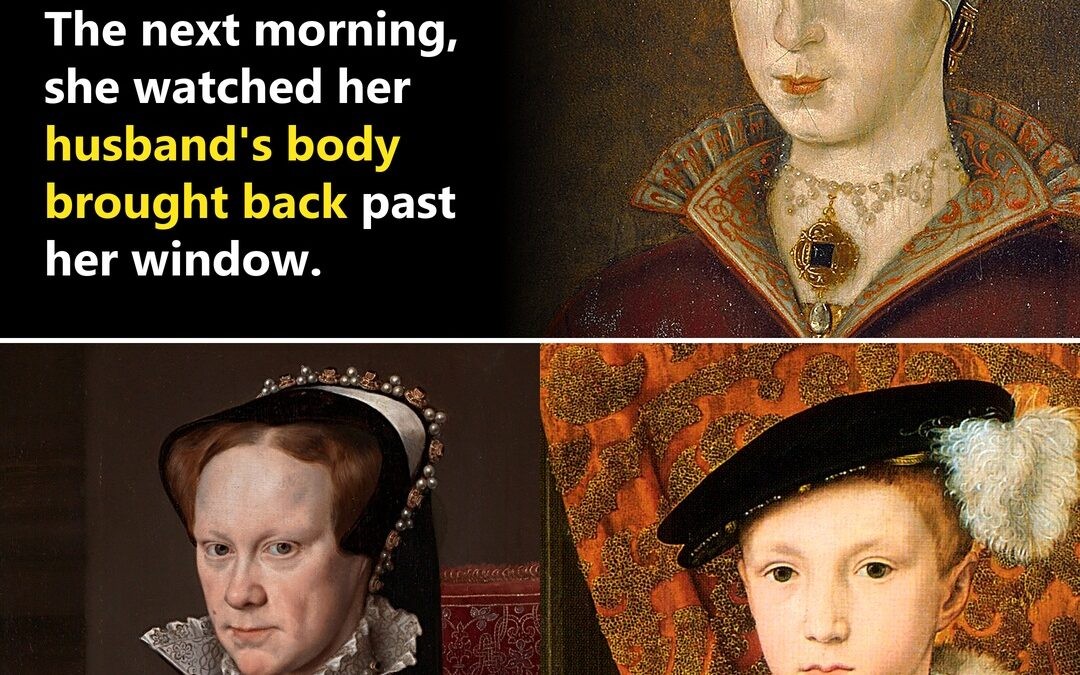
On February 12, 1554, Jane watched her husband’s body return after his execution. When offered a final meeting with Guildford, Jane declined, believing their reunion awaited them in eternity. In the hour before her death, Jane prepared herself with prayers and composed demeanor.
She walked to the scaffold with her ladies and Feckenham, clad in the black gown she had worn at her trial. The execution occurred within the Tower’s walls, reserved for high-born prisoners whose deaths were to be kept from the public eye. Jane addressed the onlookers, expressing innocence regarding the events that made her queen and affirming her Christian faith. She recited Psalm 51 and forgave the executioner. Blindfolded, she struggled to find the block, ultimately assisted by someone nearby. Her last words echoed Christ’s, “Lord, into thy hands I commend my spirit.”
Aftermath: Legacy and Remembrance
Jane was buried without a grave marker in the Chapel of St Peter ad Vincula. Her father was executed similarly, while her mother, Frances, was pardoned and returned to court, later remarrying. Guildford’s brothers, imprisoned in the Beauchamp Tower, left carvings of their family and names, some visible today. The family’s fortunes rose and fell, notably with Robert Dudley serving later as Earl of Leicester under Queen Elizabeth I, herself affected by the succession crisis that end Jane’s life.
Transformation into Protestant Martyr
Within months, Jane’s writings—including her debate with Feckenham and words from the scaffold—were widely published and circulated among reformists in England and abroad. John Foxe’s Acts and Monuments (Foxe’s Book of Martyrs) enshrined Jane as an exemplary Protestant martyr, revered for her willingness to die rather than renounce her faith. For centuries, English Protestants viewed Jane as a saint and symbol of religious integrity.
The Enduring Image: Art and Memory
French painter Paul Delaroche’s Execution of Lady Jane Grey (1833) immortalized Jane visually. The painting, housed in the National Gallery in London, depicts Jane blindfolded in white satin, reaching for the execution block, surrounded by grieving attendants. While not historically accurate in details, Delaroche’s portrayal captures the emotional gravity of the moment and has shaped public memory ever since.
Conclusion: Words Beyond the Tower
Lady Jane Grey, a teenager thrust unwillingly onto the throne, remains a powerful figure in English history. Her intellectual prowess, composure in adversity, and spiritual conviction marked her brief journey from monarchy to martyrdom. The words she left, in letters, debates, and farewell speeches, survived the confines of the Tower and continue to speak to new generations nearly five centuries later.
Sources
Disclaimer: This content is intended for entertainment purposes only and is not based on real events.