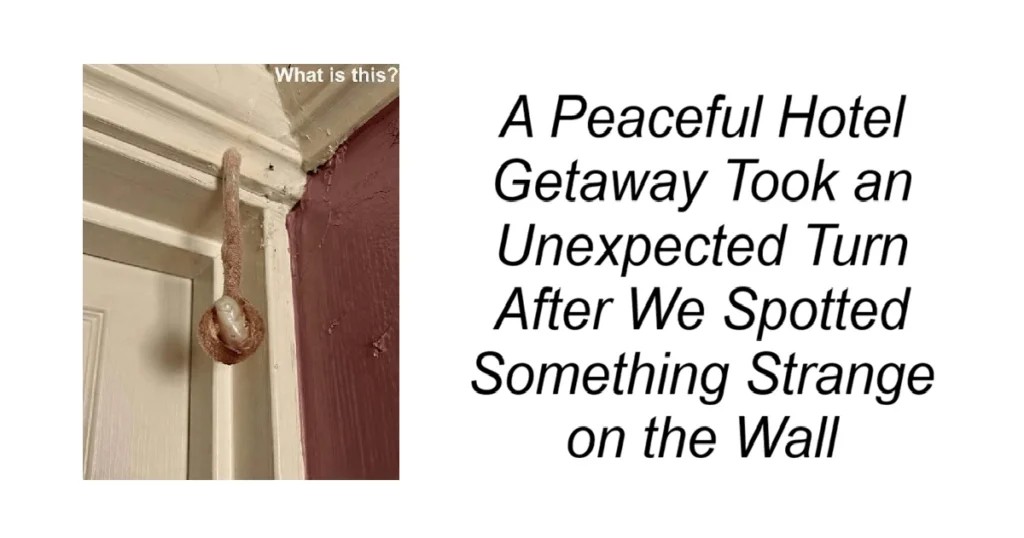
A hotel getaway is usually planned as a chance to slow down, rest, and enjoy a change of scenery. Guests often choose a hotel room because it offers comfort, privacy, clean surroundings, and a break from everyday responsibilities. Yet even the most carefully maintained indoor spaces can occasionally reveal an unexpected connection to the natural world.
That was the feeling behind an unusual hotel-room discovery: a small, unfamiliar mark on a wall that appeared at first to be a minor imperfection. It could easily have been mistaken for dried paint, a stain, or a blemish left in an overlooked corner. A closer look, however, suggested that it was not part of the wall at all. It appeared to be a small mud structure made by an insect commonly known as a mud dauber wasp.
Finding a mud dauber nest indoors can be surprising, especially in a hotel room that otherwise looks clean and orderly. Still, the presence of a nest does not automatically indicate poor cleanliness or unsafe conditions. Insects can enter buildings through small openings, temporarily opened windows, ventilation gaps, service areas, or exterior access points. When they find a sheltered surface, some species may begin building a nest before the structure is noticed.
The experience offers a useful reminder for travelers and hotel operators alike: unusual signs of wildlife indoors should be reported promptly, handled calmly, and assessed by trained staff or pest-management professionals when necessary.
What Looked Like a Wall Mark Was a Mud Dauber Nest
Mud daubers are wasps known for constructing nests with mud. The common name “mud dauber” is used for several kinds of solitary wasps, and their nests can vary in shape depending on the species. Some resemble small tubes arranged side by side, while others look like compact clumps or individual mud cells attached to protected surfaces.
These structures are very different from the large, papery nests often associated with social wasps such as yellowjackets or hornets. Mud daubers generally live solitary lives. Rather than sharing a nest with a large worker colony, a female mud dauber typically builds and provisions individual cells for her offspring.
The nest-building process is remarkably specialized. The adult wasp collects wet soil or mud, carries it to a suitable site, and gradually forms a small chamber. Depending on the species, the chamber may then be supplied with prey for developing larvae. Once the cell is completed and sealed, the young insect develops inside before eventually emerging.
Because these nests are often built in quiet, sheltered places, they may be found under eaves, in sheds, garages, covered porches, storage spaces, and occasionally inside buildings. A room that is vacant for a period, an area near an exterior wall, or a space with an unnoticed entry point may provide enough protection for nesting activity.
Why Mud Dauber Wasps May Appear Indoors
Hotels, homes, offices, and other buildings are not completely isolated from their outdoor environments. Doors open and close throughout the day, windows may be opened for ventilation, and maintenance areas often contain utility openings or gaps around pipes and fixtures. Even modern buildings can have small access points that are difficult to see during a routine visual inspection.
Mud daubers are attracted to sheltered locations rather than to indoor living spaces specifically. A quiet wall, ceiling corner, ledge, or recess can offer protection from rain, wind, and direct sunlight. If an insect gains access to such an area, it may use the location for nest construction.
Seasonal conditions can also play a role. Wasps are generally more active during warmer months, although activity depends on local climate and species. Hotels located near gardens, wooded areas, water features, parks, or natural landscapes may be more likely to encounter outdoor insects around the property. That does not mean guests should expect wildlife indoors; it simply illustrates why regular building inspections and preventive maintenance are important.
In many cases, one small nest may have been created over a limited period and may not represent an ongoing issue. However, repeated sightings of nests, active insects indoors, or visible entry points should be investigated so that the source can be addressed appropriately.
Does a Mud Dauber Nest Mean a Hotel Room Is Unclean?
Not necessarily. Cleanliness and pest prevention are related, but they are not identical. A well-cleaned room can still occasionally be accessed by an insect from outdoors. Mud daubers do not typically build nests because of crumbs, food waste, or poor housekeeping in the same way that some other pests may be drawn to readily available food sources.
A mud nest on a wall may instead point to a sheltered surface and a possible route of entry. It could have been built before a room was occupied, during a period when a window or door was open, or in a location that was not obvious during a standard cleaning process. Small structures can blend into textured walls, corners, behind furnishings, or areas near ceiling lines.
Nevertheless, guests are right to expect accommodation providers to respond when something unusual is found. Reporting the discovery allows staff to inspect the area, remove the nest safely if appropriate, check nearby locations, and consider whether maintenance work is needed. A prompt response also helps ensure that the room remains comfortable for guests and that any insect activity is managed responsibly.
How Hotels Should Respond to an Indoor Wasp Nest Report
Professional hospitality service depends not only on preventing problems but also on responding effectively when unexpected issues arise. When a guest reports a suspected insect nest, hotel staff should acknowledge the concern, assess the situation without delay, and avoid making assumptions about the type of insect or level of risk.
The safest response may include moving the guest to another room if there is uncertainty, arranging for trained maintenance personnel or a licensed pest-management provider to inspect the area, and documenting the issue for follow-up. If a nest is inactive or located in a place that can be safely accessed, removal may be straightforward. If there is visible insect activity, staff should avoid disturbing it unnecessarily and seek appropriate professional guidance.
After removal, the hotel can inspect potential entry points around windows, vents, wall openings, exterior doors, and utility connections. Preventive steps may include repairing screens, sealing gaps where appropriate, reviewing cleaning checklists for less visible areas, and monitoring exterior locations where mud daubers may be nesting.
Clear communication matters as much as the practical response. Guests should be told that the report has been taken seriously, what action is being arranged, and whether there are any temporary precautions they should follow. A calm, respectful approach can turn an unsettling moment into an example of attentive customer service.
Are Mud Dauber Wasps Dangerous to People?
Most mud daubers are generally considered less defensive than many social wasps because they do not protect a large communal colony. They are often observed flying alone and may focus on nest building or foraging rather than interacting with people. However, all wasps should be treated with caution. Any stinging insect may sting if handled, trapped, or threatened.
People with a known allergy to insect stings should take particular care around any wasp or bee activity. The U.S. Centers for Disease Control and Prevention notes that insect stings can cause reactions ranging from temporary local discomfort to serious allergic responses in some individuals. Anyone who develops signs of a severe allergic reaction, such as difficulty breathing, swelling of the face or throat, faintness, or widespread hives, should seek emergency medical help immediately.
For most travelers, the practical advice is simple: do not touch an unfamiliar nest, do not attempt to scrape it off a wall, and do not spray or disturb an active insect in a confined room. Contact hotel staff and allow trained personnel to determine the appropriate next step.
What Guests Should Do After Finding Something Unusual in a Hotel Room
An unfamiliar spot, nest, insect, or other maintenance concern does not have to ruin a trip. Taking a few sensible steps can help guests protect their comfort while giving hotel staff the information needed to respond.
- Take a clear photograph from a safe distance if documentation is needed.
- Do not touch, remove, crush, or disturb the suspected nest.
- Notify the front desk or hotel management as soon as possible.
- Ask staff to inspect the area and explain the next steps.
- Request another room if there is active insect activity or if the situation makes the room uncomfortable.
- Keep luggage and personal belongings away from the immediate area until staff have assessed it.
Guests can also share feedback after their stay in a factual and measured way. A useful review describes what was observed, how the hotel responded, and whether the concern was resolved. This approach helps future travelers understand the situation while giving the property useful information about maintenance and service.
The Ecological Role of Mud Daubers
Although an indoor nest is not something most hotel guests expect to see, mud daubers are part of broader ecosystems. Many wasps act as predators of other insects and spiders, helping regulate populations in gardens and natural environments. Their role in local ecology is one reason why wildlife management often focuses on safe removal and prevention rather than unnecessary harm.
Experts generally emphasize that identifying insects accurately is important. “Mud dauber” is a broad common name, and appearance alone may not always be enough to identify a species. A pest-management professional, local extension service, or qualified entomologist can offer more reliable guidance when identification is necessary.
For hotels, this balance is especially relevant. The goal is not to create a completely sterile relationship with the environment, which is unrealistic in properties surrounded by outdoor landscapes. Instead, the goal is to maintain clean, secure, guest-ready rooms while preventing insects from entering indoor areas and responding responsibly when they do.
Why Small Travel Surprises Can Become Lasting Memories
Travel memories are not always limited to famous landmarks, scenic views, or special meals. Sometimes a minor and unexpected detail becomes the story people remember most. A small mud structure on a hotel wall may not have been part of the plan, but it can provide an interesting glimpse into how closely human spaces and natural environments can overlap.
The key difference is how the situation is handled. A calm guest response, attentive hotel staff, and appropriate professional assessment can keep a surprising discovery from becoming a larger concern. It also reinforces an important point: an isolated wildlife encounter indoors does not automatically define the overall quality of a hotel, but it does deserve a prompt and thoughtful response.
In the end, a peaceful hotel stay can still remain peaceful after an unexpected discovery. A closer look at a strange mark on the wall may reveal an ordinary natural phenomenon rather than a mystery. With clear communication and sensible precautions, guests can return to enjoying their trip while hotels use the experience to strengthen their maintenance and prevention practices.
Sources
Disclaimer: This content is intended for entertainment purposes only and is not based on real events.