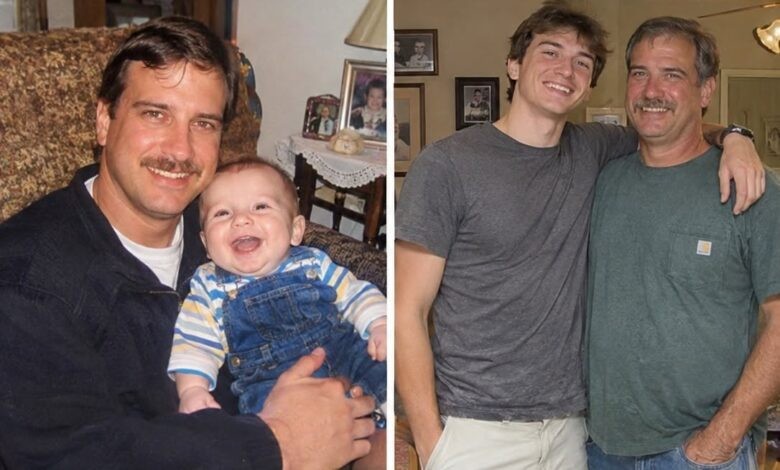
Editor’s note: This rewritten piece is presented as a work of fiction. The characters, events, locations, and band referenced in the narrative are not presented as verified real-world reporting.
A House Made Quiet by Grief
After his father’s funeral, Jamie Collins returned to the home they had shared for years and found himself unable to move a pair of worn work boots from the front hallway. They were ordinary boots: brown leather, cracked at the toes, marked with old mud from a factory parking lot. Yet they seemed to hold the full weight of a relationship that had become distant long before his father, Ray, died.
For five years, Jamie had paid his father $250 in rent on the first day of every month. He had resented it deeply. The arrangement felt cold and punitive, especially after Jamie’s eighteenth birthday, when Ray handed him a small note listing the amount due instead of offering a card or a simple birthday greeting.
Jamie believed he understood his father. Ray was a man who worked long shifts at a manufacturing plant, kept food in the house, paid bills, and drove Jamie to appointments. But he rarely spoke about feelings, dreams, or memories. After Jamie’s mother died from a serious illness when he was a child, the warmth seemed to disappear from the family home.
What Jamie did not know was that silence can conceal many things: sorrow, fear, regret, love, and a desperate effort to make amends.
Before the Silence, There Was Music
Jamie’s earliest memories of his parents were filled with sound. Ray played guitar on the living-room sofa. Jamie’s mother, Annie, sang from the kitchen, often using a wooden spoon as a pretend microphone. Their home was not glamorous, but it was joyful. Jamie would join them with a small toy guitar and imagine he was performing for a packed arena.
Those small family performances ended after Annie became ill. Her diagnosis changed the rhythm of the household, and after her death, Ray put his guitar away. Music, once a source of connection, became associated with a loss he could not explain to his son.
Ray continued to provide for Jamie in practical ways. He worked more hours, maintained the household, and tried to create stability. But he did not know how to communicate his grief. Jamie experienced that emotional withdrawal as rejection. Their conversations became brief, functional, and increasingly tense.
As a teenager, Jamie discovered old photographs of his father performing with a local rock band called the Low Lanterns. In the pictures, Ray looked almost unrecognizable: long-haired, energetic, smiling broadly under stage lights. Newspaper clippings suggested the group had attracted large local audiences and had been offered opportunities beyond their hometown.
Ray refused to discuss that period of his life. To Jamie, the refusal confirmed a painful belief that his father did not trust him with the truth.
A Son’s Dream and a Father’s Fear
Jamie taught himself guitar as a teenager using a secondhand acoustic instrument, online tutorials, and persistence. He began writing songs in his bedroom, including one called “Kitchen Light,” inspired by memories of his mother singing at the end of the day.
When Jamie found a community-college music production program, he hoped his father would understand. Instead, Ray told him to choose a more dependable path. Music, Ray said, did not pay the bills.
For Jamie, those words were devastating. He saw them as evidence that his father disliked his music and did not believe in his ability. The two argued after Ray interrupted a late-night recording session and called the sound a distraction. Jamie accused him of resenting anything that brought him happiness.
Ray’s response was quiet but revealing: he said he could not bear to watch Jamie waste his life as he believed he had wasted his own.
Neither man understood the other. Jamie saw criticism where Ray felt fear. Ray believed he was protecting his son from disappointment, instability, and heartbreak. In trying to protect Jamie, however, he pushed him farther away from the creative work that gave him meaning.
This conflict reflects a common challenge in families affected by bereavement. Grief does not always appear as tears or open conversation. It can emerge as withdrawal, irritability, excessive work, avoidance, or an intense focus on financial security. While those responses may be understandable, they can also leave loved ones feeling isolated.
The Box Left Behind
On the evening of Ray’s funeral, his longtime friend Frank Russo arrived carrying a carefully sealed cardboard box. Frank had been Ray’s closest friend since their years in the Low Lanterns, although Jamie had never understood the depth of their shared history.
Inside the box, Jamie found Ray’s old leather vest, concert passes, guitar picks, photographs, and mementos from the band’s early years. One photograph showed Annie standing beside a stage, smiling at Ray as he performed. It was an image of his parents before illness, distance, and grief had reshaped their lives.
Among the keepsakes was a brass key labeled with the address of an industrial unit on the edge of town.
Jamie drove there that night. Behind the unmarked door was a fully equipped recording studio: acoustic treatment, microphones, instruments, amplifiers, a mixing desk, computers, and a drum booth. The studio was clean, functional, and clearly built with care. On one stand sat Jamie’s old black acoustic guitar, the instrument he had thought was lost years earlier. Its damaged body had been professionally repaired, and it had been restrung.
The discovery forced Jamie to reconsider everything he thought he knew. His father had not thrown away the guitar or dismissed Jamie’s talent entirely. He had quietly preserved it.
A Message of Regret and Love
At the studio, Jamie found a video recorded by Ray before his death. The message explained the history Ray had been unable to share in person.
Ray had once been the guitarist and songwriter for the Low Lanterns. The group had attracted interest from record labels and had been offered a chance to tour. Around the same time, Annie learned she was pregnant with Jamie. Ray chose to leave the band because he did not want to repeat the absence he had experienced with his own frequently traveling father.
He took a factory job, intending to return to music later. Instead, family life became his priority, and the casual music sessions with Annie and young Jamie became the happiest performances of his life.
After Annie’s death, Ray could no longer separate music from pain. He became afraid that Jamie might suffer similar loss if he committed himself to music and failed, or if he loved something deeply and lost it. Ray’s attempt to steer Jamie toward a safer future was rooted in unresolved grief, but it had caused real emotional harm.
In the video, Ray apologized without asking Jamie to forgive him. He acknowledged that providing money, housing, and practical support had not been enough. A parent’s role, he said, should include helping a child find joy as well as security.
Ray also revealed that he had built the studio with Frank and other former bandmates during weekends that Jamie assumed were fishing trips. The space was intended to give Jamie a genuine opportunity to pursue music, if that was what he wanted.
The Meaning of the Rent Money
Ray’s final revelation was hidden in a drawer beneath the mixing desk. Jamie found sixty envelopes, each labeled by month. Every envelope contained the $250 Jamie had left on the kitchen table over five years.
Ray had saved the full amount: $15,000.
His note explained that the money was not meant as punishment or profit. He wanted Jamie to learn that he could work, meet responsibilities, and survive difficult periods. But Ray had failed to explain his intentions, allowing the monthly exchange to become another symbol of distance between them.
The gesture did not erase the hurt Jamie experienced. It did not restore the conversations they never had or allow Ray to apologize face to face. Still, it offered Jamie a fuller understanding of his father: a flawed, grieving man who loved his son but often expressed that love in ways that were confusing and painful.
Frank later confirmed that Ray had worried constantly about the damage he had done to their relationship. He had repaired Jamie’s guitar, helped build the studio despite illness, and listened quietly when Jamie played music upstairs. Ray had heard “Kitchen Light” many times and learned the guitar part by ear.
Finding a Way Forward Through Music
Jamie eventually returned to the studio. On a Thursday evening, he met Frank and the surviving former members of the Low Lanterns for rehearsal. They invited him to play, not as a replacement for Ray, but as a musician with his own voice and future.
Jamie chose “Kitchen Light.” His father had created an instrumental recording of the song, leaving an empty vocal track for Jamie. The recording included a brief musical reference to a song Annie had loved, played gently and completely—a detail that mattered because Ray had once been unable to finish playing it after her death.
Jamie’s first performance was imperfect. His voice shook, and grief interrupted his concentration. But the band gave him time. They started again when he needed to start again. In that moment, music became less about technical perfection and more about remembrance, support, and connection.
Over time, Jamie used the money his father saved to enroll in the music production program he had once wanted to attend. He continued working while studying and began playing regularly with Frank and the other musicians. They revived the Low Lanterns name as a tribute, while creating something new together.
Grief, Communication, and Family Legacy
Kitchen Light is ultimately a story about the limits of unspoken love. Ray cared for Jamie, but fear and grief prevented him from showing that care clearly. Jamie loved his father, but years of resentment made it difficult to see anything beyond the hurt.
The story does not suggest that grand gestures can solve every family conflict. They cannot. Repair is often incomplete, particularly after someone has died. However, it shows how learning a loved one’s fuller story can change the way people understand their own past.
For Jamie, the studio was not simply an inheritance. It was evidence that his father had been listening. The repaired guitar, saved envelopes, unfinished recording, and old photographs created a bridge between the father he remembered and the father he had never fully known.
At the end of each performance, Jamie plays the final notes of “Kitchen Light” on Ray’s old Gibson. He keeps a wooden spoon on the studio desk in memory of Annie. The room that once represented Ray’s private regret becomes a place where a son can make music, remember his family, and choose his own future.
Sources
The narrative above is fictional. The following credible resources provide general information about grief, bereavement, and emotional support:
Disclaimer: This content is intended for entertainment purposes only and is not based on real events.