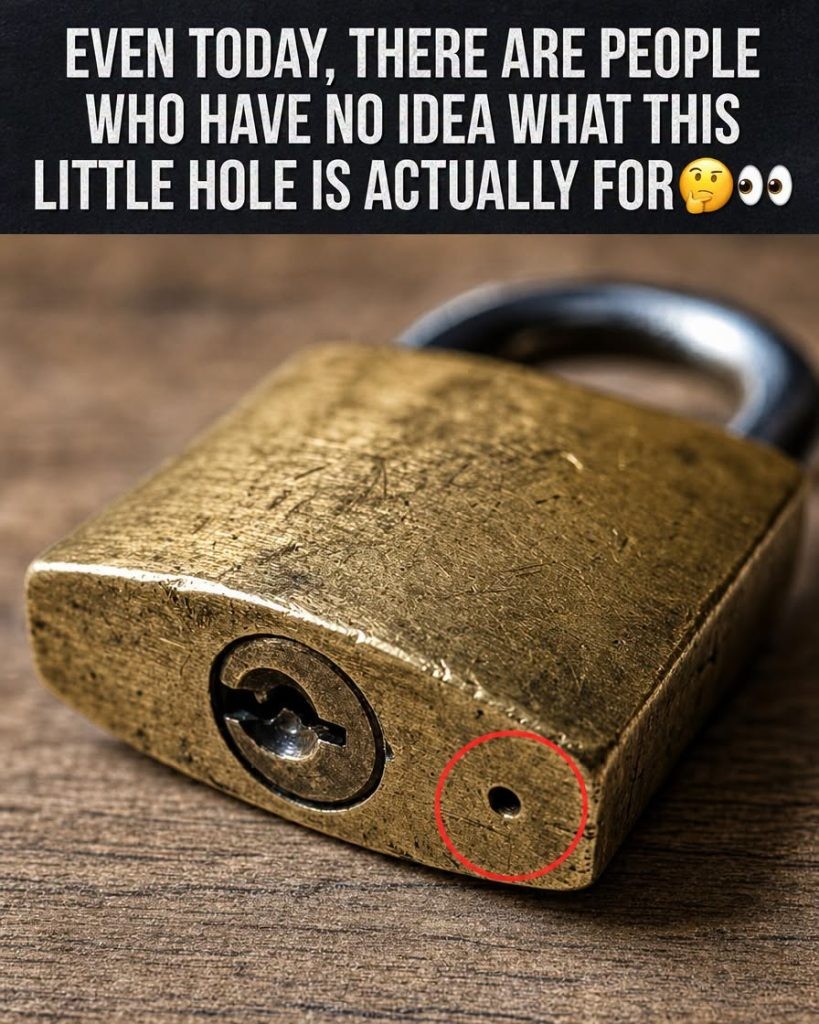
Small holes on the bottom of a padlock are easy to overlook. On many common padlocks, especially models designed for gates, sheds, lockers, fences, storage areas, and other outdoor uses, these openings are part of a practical engineering design. They can help manage moisture, support maintenance, and improve the long-term reliability of the lock’s internal mechanism.
However, there is no single universal explanation for every hole found on every padlock. The exact purpose depends on the lock’s manufacturer, construction, material, security rating, and intended environment. In many cases, a small opening is a drainage feature. In others, it may be connected to assembly, lubrication, or the design of the locking mechanism. Understanding these differences can help users care for padlocks properly and select the right product for indoor or outdoor security needs.

Why Padlocks Need Protection From Moisture
Padlocks are frequently exposed to challenging conditions. A lock installed on an outdoor gate may face rain, morning dew, humidity, dust, airborne salt, freezing temperatures, and repeated temperature changes. Even a lock used inside a garage, basement, or storage unit can be affected by damp air and condensation.
Moisture is a major concern because the internal parts of a traditional padlock are small and closely fitted together. A typical pin-tumbler padlock includes a keyway, springs, pins, a plug or cylinder, and a locking mechanism that holds the shackle in place. If water enters the housing and remains inside, it can promote corrosion on metal parts. Corrosion may eventually make the key harder to insert or turn, cause the shackle to stick, or interfere with the lock’s ability to open and close consistently.
For this reason, many outdoor padlocks are designed with features intended to limit the effects of water exposure. These may include weather-resistant covers, stainless-steel components, brass cylinders, protective coatings, sealed bodies, and small openings that allow moisture to leave the lock.
Drainage Holes Help Water Escape
One of the most common purposes of small holes near the bottom of a padlock is drainage. Water can enter a padlock through the keyway, around the shackle openings, or through small gaps in the outer casing. Once inside, gravity causes moisture to move toward the bottom of the lock body.
A drainage hole can provide a route for trapped water to escape rather than collect around the internal mechanism. This does not make a padlock completely waterproof, but it can reduce the amount of standing moisture inside the housing. By allowing water to drain away, the design may lower the risk of rust and help the lock perform more reliably over time.
Drainage is particularly useful for locks installed outdoors year-round. A padlock on a garden gate or utility shed may be exposed to repeated rainstorms. A lock used near the coast may also encounter humid, salt-laden air, which can accelerate corrosion. In cold climates, water trapped inside a lock can freeze, making the mechanism difficult or impossible to operate until it thaws. Good drainage can help reduce these problems, although it cannot eliminate them entirely.
Some Openings May Be Used for Maintenance
On certain padlock designs, a small opening may also be associated with servicing or lubrication. Locks contain moving parts that can become less smooth over time because of dust, debris, corrosion, or normal wear. Manufacturers may recommend a specific lock lubricant to help maintain reliable operation.
It is important not to assume that every hole is a lubrication point. Some openings are strictly for drainage or are part of the lock’s manufacturing and assembly process. Adding lubricant to an unintended area may not help and could allow excess material to collect inside the lock body. The best approach is to check the product manual, manufacturer website, packaging, or customer support guidance for the specific model.
When lubrication is recommended, products formulated for locks are generally preferable to household oils. Many lock specialists advise avoiding cooking oils, thick grease, or general-purpose oils that may leave a sticky residue. These substances can attract dust and grit, which may eventually make the mechanism less reliable. Dry-film lubricants or products specifically labeled for locks are often used because they are designed to reduce friction without collecting as much debris.
Not Every Padlock Has the Same Internal Design
Padlocks are available in a wide range of designs, from simple brass locks for low-risk indoor use to hardened steel models intended for more demanding applications. As a result, the small holes or openings on their bodies may differ considerably.
Some locks use laminated steel bodies, while others use solid brass, aluminum, zinc alloy, or hardened steel. Certain weather-resistant models have plastic or rubber covers around the keyway and shackle to limit water entry. High-security padlocks may use enclosed or protected shackle designs, specialized cylinders, and more tightly controlled body construction. A lock that appears similar on the outside may therefore have a very different internal layout.
In some products, a hole may be related to the placement of a retaining pin, a spring, or another internal component used during assembly. In others, it may be positioned specifically to allow drainage. This is why visual inspection alone cannot always confirm a hole’s purpose. Product documentation remains the most reliable source of model-specific information.
How Water and Corrosion Affect a Lock
Corrosion is an electrochemical process that can affect many metals when they are exposed to water and oxygen. Rust is the common term for corrosion involving iron or steel. Although padlocks may have protective plating or coatings, those protective layers can wear over time, particularly when a lock is exposed to rain, dirt, physical contact, and changing temperatures.
Corrosion does not always appear immediately. A lock may begin to feel stiff before visible rust is noticeable. The key may require more force to turn, the shackle may not spring open as freely as before, or the mechanism may feel rough. These are useful signs that maintenance may be needed.
Outdoor conditions can make corrosion more likely. High humidity increases the amount of moisture in the air, while salt exposure can be especially demanding on metal hardware. For locks used near seawater, on boats, or in coastal areas, marine-grade or corrosion-resistant materials can offer important advantages. Stainless steel and brass are often selected for their corrosion resistance, although no material is immune to all environmental conditions.
Choosing a Padlock for Outdoor Use
The right padlock depends on where and how it will be used. A small lock designed for a school locker or indoor cabinet may not provide the same weather protection as a lock intended for a gate, tool shed, trailer, or outdoor storage container.
When shopping for an outdoor padlock, look for product information that addresses weather resistance, corrosion resistance, and intended use. Manufacturers may describe a lock as weatherproof, outdoor-rated, marine-grade, rust-resistant, or suitable for harsh environments. These terms should be considered alongside the lock’s size, shackle clearance, body material, and security features.
A protective keyway cover can help reduce the entry of rain and dirt. Covered shackles may reduce exposure and make the shackle more difficult to access with tools. A lock with a drainage feature may be useful in wet environments, but it should be viewed as one part of a broader weather-resistance design rather than a guarantee that water cannot enter.
For valuable property, security should also be evaluated separately from weather resistance. A lock can be resistant to rain yet still be unsuitable for a high-risk location. Users should choose a lock that is appropriate for the item being secured and ensure that the hasp, chain, gate, or storage unit is also strong enough for the application.
Practical Padlock Maintenance Tips
Regular care can extend the useful life of a padlock, particularly when it is exposed to outdoor conditions. Maintenance does not need to be complicated, but it should be done thoughtfully and according to manufacturer instructions.
First, inspect the lock periodically. Look for dirt around the keyway, visible corrosion, damage to the shackle, worn protective covers, or signs that the key is becoming difficult to turn. If the lock has been exposed to heavy rain or salt spray, wiping the exterior with a clean, dry cloth may help remove surface moisture and debris.
Second, use a suitable lubricant only when needed and only in the locations recommended by the manufacturer. A small amount is usually sufficient. Applying too much product can create buildup, especially in dusty settings. If the keyway becomes clogged with debris, a lock-specific cleaner or compressed air may be appropriate, provided this is consistent with the product maker’s guidance.
Third, do not force a stiff key or shackle. Excess force can bend a key, damage the cylinder, or worsen an existing mechanical issue. If a lock is frozen, it should be thawed carefully using a product intended for frozen locks or by allowing it to warm naturally. Open flames and improvised heating methods should be avoided because they can damage finishes, seals, or nearby materials.
Finally, replace a lock that has become severely corroded, unreliable, or visibly damaged. A padlock that no longer operates consistently may leave property inaccessible or provide less dependable security. Replacement is often the practical choice when internal wear or corrosion has progressed beyond simple maintenance.
Why Small Design Details Matter
The tiny holes at the bottom of many padlocks are a useful example of how small engineering decisions can influence everyday durability. A simple drainage opening may help reduce the amount of water that remains inside a lock after rain or condensation. In some designs, an opening may also relate to servicing or the assembly of internal parts.
These features are especially relevant because padlocks are often expected to work for years with little attention. They may be left outside through changing seasons, exposed to dust and moisture, and operated only occasionally. A design that helps water escape or supports appropriate maintenance can improve the chance that the lock will still function when it is needed.
Still, users should avoid making assumptions based solely on appearance. Not every small opening serves the same purpose, and not every padlock is intended for prolonged exposure to harsh weather. Checking the manufacturer’s instructions, choosing an appropriate outdoor-rated model, and performing occasional maintenance are the most dependable ways to protect a padlock’s performance.
Conclusion
Small holes near the bottom of a padlock commonly serve as drainage openings that help water escape from the lock body. By reducing trapped moisture, they can help limit corrosion and support smoother operation in wet or humid conditions. Depending on the model, similar openings may also be related to maintenance access or internal assembly.
For the best results, use a padlock suited to its environment, follow the manufacturer’s care guidance, avoid unsuitable oils, and replace locks that have become badly corroded or unreliable. What looks like an insignificant detail can play a practical role in making an everyday security device more durable and dependable.
Sources
Disclaimer: This content is intended for entertainment purposes only and is not based on real events.