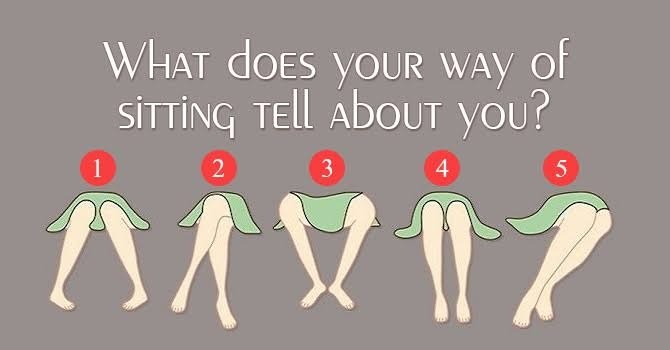
People sit in remarkably different ways. One person may cross an ankle over a knee during a conversation, while another keeps both feet firmly on the floor. Someone may lean forward while listening, then settle back or tuck their legs beneath them when they feel more comfortable. These everyday habits can make body language seem like a simple window into personality and emotion.
In reality, sitting posture is more complicated. A position may reflect comfort, fatigue, habit, flexibility, pain, the design of a chair, workplace expectations, culture, or the immediate social setting. It can also change from one moment to the next. For that reason, experts generally caution against treating any single gesture or posture as a reliable personality test.
Still, paying attention to sitting habits can be useful. Posture may offer limited clues about how engaged, comfortable, tired, or physically tense a person feels in a particular moment. More importantly, noticing your own sitting patterns can help you make practical adjustments that support comfort during work, study, travel, and relaxation.
This guide examines five common sitting positions, the reasonable interpretations they may have in context, and what current health guidance says about sitting comfortably and moving more often.
Can Sitting Position Really Reveal Personality?
Body language is often discussed as though it can reveal hidden thoughts with certainty. Scientific evidence does not support that kind of confidence. Human communication is influenced by facial expression, voice, words, relationships, cultural norms, environment, and many other factors. A person’s posture is only one small piece of that larger picture.
For example, someone who sits with folded arms may be cold, comfortable, focused, or protecting a sore shoulder. A person who leans forward may be interested in a conversation, trying to hear better, preparing to stand up, or simply adjusting to an uncomfortable chair. The same position can mean different things in different places.
Nonverbal communication researchers commonly emphasize the value of observing patterns rather than isolated gestures. If someone’s posture changes noticeably alongside their tone of voice, facial expression, and behavior, that broader pattern may provide useful context. Even then, it is better to remain curious than to make assumptions.
There is also an important distinction between social interpretation and physical health. While posture does not diagnose personality, remaining in one static position for a long time can contribute to stiffness or discomfort. Public-health organizations generally recommend breaking up prolonged sitting with regular movement, regardless of the exact posture a person prefers.
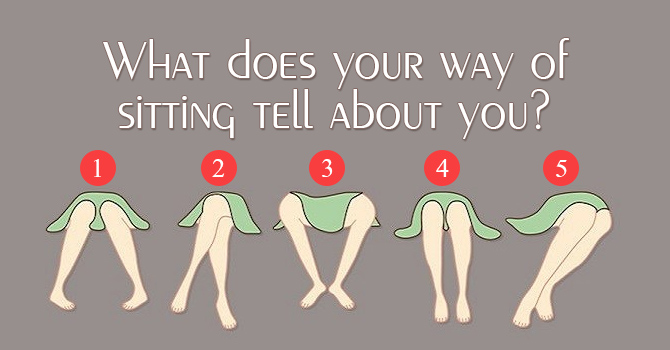
1. The Figure-Four Position: One Ankle Resting on the Opposite Knee
The figure-four position involves placing one ankle across the opposite knee, creating a shape similar to the number four. It is often seen in informal meetings, living rooms, waiting areas, and relaxed social settings. For many people, it is simply an easy and familiar way to sit.
What It May Suggest in Context
Because this position can take up slightly more space than sitting with both feet together, it is sometimes associated with ease, informality, or confidence. A person who uses it during a casual conversation may feel settled in their surroundings. In some professional settings, however, people may avoid it because workplace etiquette varies by culture and organization.
It is not a dependable sign of assertiveness or a particular personality type. Flexibility in the hips, the height of the chair, clothing, footwear, and long-established habits may be more important explanations. People may also switch into this position simply to relieve pressure after sitting in another way.
Comfort Considerations
For most people, briefly sitting in a figure-four position is not a concern. However, if it causes hip, knee, lower-back, or circulation-related discomfort, it may be helpful to change position. People recovering from injuries or managing joint conditions should follow advice from a qualified clinician rather than relying on general posture guidance.
2. Sitting Upright With Both Feet on the Floor
Sitting upright with the feet supported by the floor is common in classrooms, offices, interviews, and formal conversations. Ideally, the shoulders remain relaxed rather than pulled rigidly backward, while the back is supported by the chair where possible.
What It May Suggest in Context
This posture may be associated with attention because it is often adopted when people expect to listen, write, speak, or respond. In a meeting, a person sitting upright may appear ready to participate. During an interview or presentation, it can communicate a sense of attentiveness and professionalism.
However, it should not be interpreted as proof that someone is confident, interested, or comfortable. Many people sit this way because it is expected in formal environments. Others may do so because a chair’s design does not allow them to sit differently.
Practical Ergonomic Benefits
When working at a desk, having both feet supported can help create a stable, comfortable base. Ergonomic guidance often recommends adjusting the chair so the feet rest on the floor or on a footrest, with the screen positioned to reduce unnecessary neck bending. The goal is not to hold a perfectly fixed pose. It is to create a setup that allows comfortable changes of position throughout the day.
A healthy seated posture should feel sustainable, not stiff. If you find yourself straining to stay upright, consider adjusting the chair height, monitor position, desk layout, or lumbar support.
3. Slouching With Rounded Shoulders
Slouching usually involves a rounded upper back, shoulders that move forward, and a head that drifts toward the chest. It is particularly common after long periods of computer work, studying, gaming, reading, or using a mobile phone. Nearly everyone adopts this position occasionally.
What It May Suggest in Context
A slouched posture may occur when someone is tired, physically uncomfortable, absorbed in a task, or relaxing at home. Stress can sometimes affect muscle tension and the way people hold themselves, but posture alone cannot establish that someone is anxious, unhappy, insecure, or disengaged.
It is especially important to avoid making personal judgments based on this position. A person may have chronic pain, limited mobility, vision difficulties, or a chair that does not provide suitable support. They may simply be shifting into the most comfortable position available at that moment.
Why Long Periods of Slouching Can Feel Uncomfortable
Occasional slouching is normal. The greater issue is usually prolonged, uninterrupted sitting in any posture. Spending long periods with the head bent forward or the shoulders rounded may contribute to temporary neck, shoulder, and back discomfort for some people. The Mayo Clinic and other health organizations emphasize regular movement, sensible workstation arrangement, and attention to discomfort rather than chasing a single “perfect” posture.
A useful response is gentle and practical: stand up, walk briefly, roll the shoulders, stretch within a comfortable range, or adjust the screen height. If pain is persistent, severe, or accompanied by other concerning symptoms, professional medical advice is appropriate.
4. Leaning Forward With Hands on the Knees
Leaning forward involves moving the upper body slightly toward another person, a table, or the edge of a chair. The hands may rest on the knees, thighs, desk, or another nearby surface. This position often appears during discussions, problem-solving sessions, sporting events, and situations that require close attention.
What It May Suggest in Context
A modest forward lean can be consistent with active listening and interest. In a conversation, it may signal that someone is following the speaker closely or preparing to respond. It can also accompany excitement, concentration, or a desire to hear better in a noisy space.
Yet the same posture can have practical explanations. Someone may lean forward to rise from a chair, look at a document, relieve back pressure, or compensate for hearing or vision limitations. The meaning depends on the distance between people, facial expression, conversational tone, and the setting.
Respecting Personal Space
In social and professional interactions, a slight forward lean can appear engaged, but moving too close may make others uncomfortable. Respect for personal space remains important, especially when speaking with unfamiliar people or in cultures where conversational distance tends to be greater. The most effective communication combines attention with responsiveness to the other person’s comfort cues.
5. Sitting With Your Legs Tucked Underneath You
Many people sit with their legs folded beneath them, drawn close to the body, or tucked to one side when relaxing on a sofa, armchair, or bed. This position is often linked to informal settings where there is more freedom to move than in a standard office chair.
What It May Suggest in Context
Tucking the legs underneath the body may simply indicate comfort and familiarity. People are often more likely to use flexible, unconventional positions in places where they feel at home. It can also reflect a longstanding habit, personal flexibility, or the type of furniture being used.
Some body-language discussions describe more closed or compact positions as signs of self-protection. That interpretation should be treated cautiously. A person may draw their legs in because the room is cold, the chair is large, their feet do not reach the floor, or they find the position soothing and comfortable. It does not provide a reliable measure of emotional openness or confidence.
When to Change Position
If the legs become numb, stiff, or uncomfortable, shifting position is sensible. Periodic movement helps reduce the discomfort that can arise from holding any seated posture for too long. For desk work, supported feet and a chair that allows easy adjustment are usually more practical than sitting with the legs tucked underneath.
Healthy Sitting Is About Movement, Not Perfection
Many people worry about finding the one correct posture. In practice, the best approach is usually variety. Bodies are designed to move, and even a posture that feels comfortable at first can become tiring when held for hours. Changing positions, standing periodically, and taking short walking breaks can be more realistic and beneficial than trying to remain perfectly upright all day.
The World Health Organization advises adults to limit sedentary time and replace some sitting with physical activity of any intensity. For office workers, students, drivers, and others who must sit for long periods, small habits can make a meaningful difference:
- Adjust your chair so your feet are supported and your shoulders can relax.
- Place frequently used items within easy reach to avoid repeated twisting or straining.
- Position screens at a comfortable height to reduce prolonged downward neck bending.
- Take brief movement breaks during long tasks, calls, or study sessions.
- Alternate between sitting, standing, and walking when your environment allows.
- Pay attention to recurring discomfort and seek qualified healthcare guidance when needed.
These recommendations are not about judging the way anyone sits. They are about creating an environment that supports comfort, concentration, and regular movement.
Final Thoughts: Posture Is One Small Part of Communication
The way you sit can sometimes reflect how you feel in a particular setting, but it does not define your personality, intentions, or emotional state. A figure-four position may signal relaxation, upright sitting may fit a formal occasion, slouching may follow a long day, leaning forward may accompany interest, and tucked legs may simply feel comfortable.
The most reliable way to understand another person is through respectful conversation rather than assumptions based on body language. For your own wellbeing, use posture awareness as a practical tool: notice when you are becoming stiff, tired, or uncomfortable, then give yourself permission to move.
Comfortable seating, regular activity, and attention to individual needs matter far more than trying to adopt a posture that is supposed to project a particular image. The healthiest sitting position is often the one you can change easily.
Sources
Disclaimer: This content is intended for entertainment purposes only and is not based on real events.